
10 Common Solar Installation Mistakes to Avoid in Pakistan

A solar system is a twenty-year investment bolted to your roof, so the mistakes made on installation day stay with you for the life of the system. In short, the most common solar installation mistakes in Pakistan are skipping a proper roof and site assessment, ignoring shade, setting the wrong tilt angle or direction, choosing panels and an inverter on price alone, sizing the system wrong, using weak mounting, sloppy DC wiring, skipping earthing and surge protection, leaving net metering paperwork until the end, and having no plan for cleaning and maintenance. Here is each mistake, what it costs, and how to prevent it.
Most of these mistakes are invisible on handover day. The panels look the same whether the tilt is right or wrong, and a loose connector can pass a test on a cool morning and fail in the heat of June. This guide is written for the homeowner: you do not need to do the work yourself, but you need to know what good work looks like, so you can ask the right questions before you sign, while the work is happening, and before the final payment.
1. Skipping a Proper Roof and Site Assessment
The first mistake happens before a single panel is ordered: nobody properly assesses the roof. A good assessment checks the roof’s age and condition, whether the slab can carry the weight of panels and mounting frames, where water drains during monsoon rain, and how much clear, unshaded space the roof offers once water tanks, stair heads and washing lines are counted.
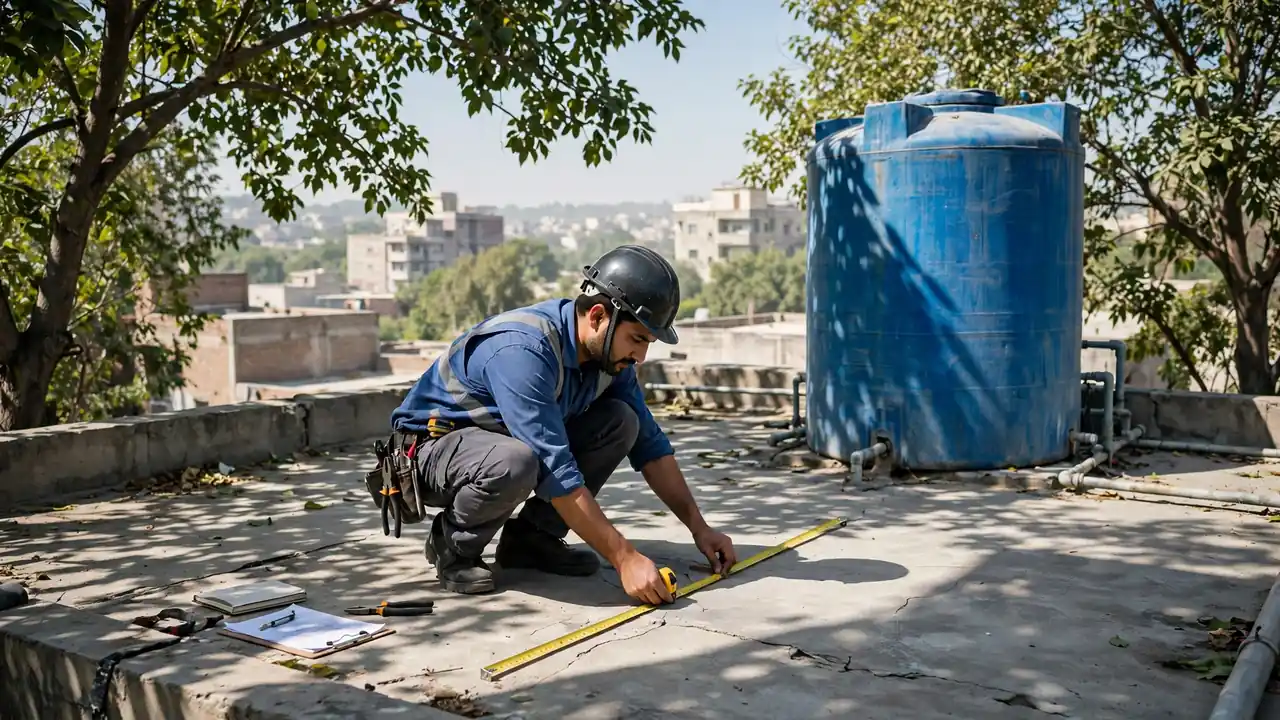
On many Pakistani homes the roof is also the family’s living space, so the usable area is much smaller than the total area. Panels squeezed around a water tank or a stair head end up shaded for part of the day, and a roof that already leaks will leak worse once mounting frames are bolted through it. Ask your installer for a written site assessment: roof condition, available area, shading notes and a layout sketch. If an installer quotes a system size without visiting your roof, that is a warning sign. See our guide to installing solar panels on a weak roof.
2. Ignoring Shade from Tanks, Trees and Neighbouring Buildings
Shade is the quietest output killer in solar. A panel shaded for even part of the day produces far less than a panel in full sun, and in a series string one shaded panel can drag down the panels wired with it. The shade that matters is not just the shade at noon — it is the shadow of the neighbour’s new upper storey at four in the afternoon, the water tank in winter when the sun sits lower, and the tree that will grow taller next year.
The fix is a shading survey done properly: the installer should map shadows across the day and across the seasons, not just glance at the roof at midday. Place panels where they stay clear of shadows longest, and arrange strings so unavoidable shade affects as few panels as possible. Never accept a layout drawn from a satellite image alone.
3. Setting the Wrong Tilt Angle or Direction
Panels in Pakistan perform best when they face south and sit at a tilt matched to the location and the roof. Panels laid flat — a common shortcut — collect dust and water, and lose output because the sun strikes them at a shallow angle most of the year. Panels tilted the wrong way, or pointed wherever the roof happened to face without any correction, give up output every single day for decades.
A fixed tilt is a compromise between summer and winter sun, and the right angle depends on the city: Lahore, Karachi and Islamabad do not share one number. Ask your installer what tilt angle they are using for your city and why, and check that flat roofs get proper tilted frames rather than panels laid directly on the slab. Check the number in our solar panel tilt angle guide for Pakistani cities.
4. Choosing Panels and an Inverter on Price Alone
The cheapest quotation is often the most expensive system. Panels that cost less upfront can have weaker frames, thinner glass, lower efficiency and shorter product warranties, and a cheap inverter may lack the protections and after-sales support you need when something goes wrong. A system built from the cheapest of everything is the system most likely to need repairs, and repairs on a roof are never cheap.
Judge equipment by its warranty terms, its track record in Pakistani conditions, and whether the brand has real after-sales support in your city — not by the quotation total alone. Ask for the exact panel and inverter models in writing, check the product warranty and the performance warranty separately, and confirm who honours the warranty if the installer closes shop. Compare models in our best solar panel brands in Pakistan guide and our solar inverter buying guide.
5. Getting the System Size Wrong
A system that is too small will not cover the load you bought it for, and you will keep paying high bills while wondering why solar “does not work”. A system that is too large wastes money on panels and an inverter you do not need, and surplus generation may earn little. Both mistakes come from the same cause: sizing by guesswork instead of by your actual electricity use.
Proper sizing starts with your electricity bills — ideally a full year of them, so summer air-conditioning load and winter load are both counted — plus a realistic list of the appliances you run and any future load such as an additional air conditioner. The installer should show you the load calculation, not just a round number. Check it against our guide to how many solar panels you need for your home.
6. Weak Mounting and Rushed Fixings
The mounting structure is the part of the system nobody looks at and everybody depends on. In Pakistan’s summer storms, a mounting frame held by too few anchors, fixed with the wrong fasteners, or built from thin, ungalvanised steel will loosen, rust and — in the worst cases — let panels lift or shift.
Good mounting means hot-dip galvanised steel or aluminium frames, the right anchor points for the roof type, waterproofing at every roof penetration, and concrete ballast where the design calls for it. Ask the installer what the structure is made of, how it is anchored to your roof type, and how roof penetrations are sealed. Walk the roof after installation: frames should be square, level and rigid, with no wobble when pushed. Our solar panel mounting structures guide covers the types used on Pakistani roofs.
7. Sloppy DC Wiring and Mixed Connectors
Most solar fires and most mysterious output drops start on the DC side — the wiring between the panels and the inverter. Cables left hanging loose rub against sharp frame edges until the insulation wears through. Connectors from different brands that look identical but do not mate properly run hot. Cables run through standing water corrode. None of this shows from the ground.
Good DC work is tidy work: cables clipped to the rails, kept off the roof surface and out of water, protected where they cross sharp edges, and connectors mated only with their own matching family using the proper crimping tool. Ask the installer which connector family the system uses and confirm that extension cables and spares are the same family. See our solar DC wiring guide and our MC4 connectors guide for what correct DC work looks like.
8. Skipping Earthing, Surge Protection and Isolators
A solar system is an electrical installation on an exposed roof, and it needs the same safety equipment as any other: proper earthing of the frames and the inverter, surge protection devices, and clearly labelled DC and AC isolators that let you — or a firefighter — shut the system down safely. These are the items most often squeezed out of a quotation, because their absence is invisible on handover day.
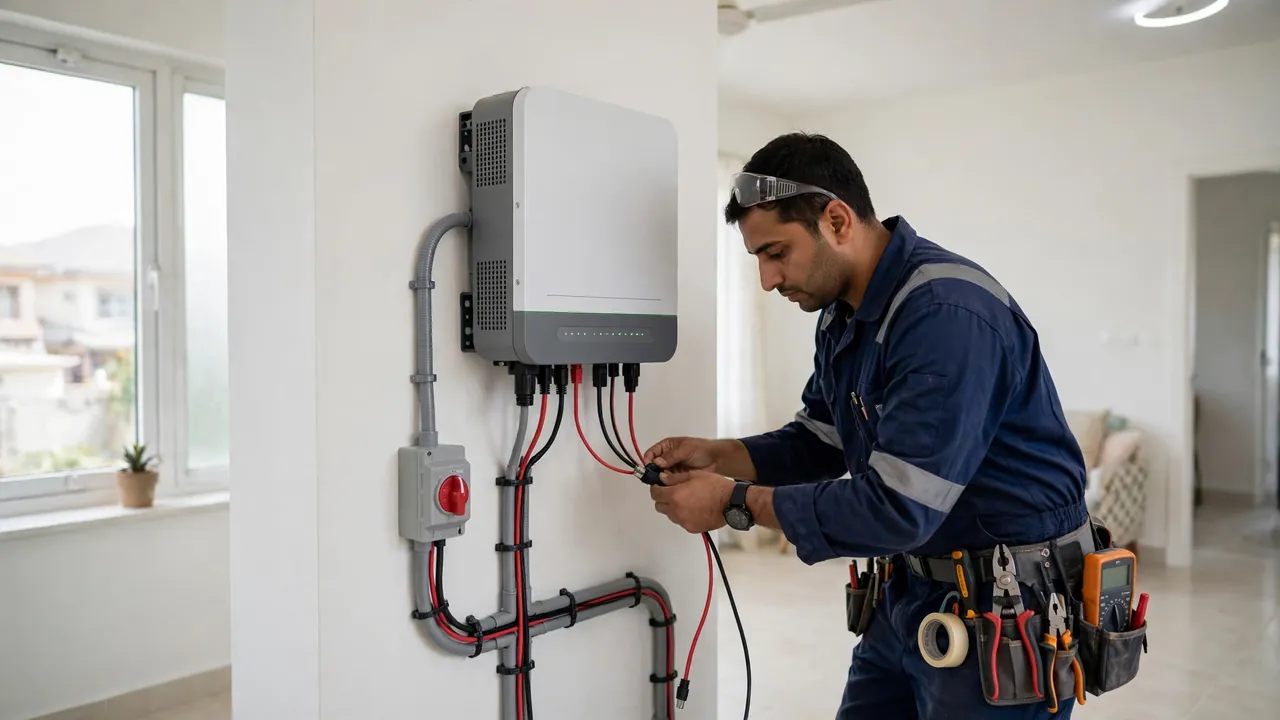
Earthing protects people from a fault; surge protection protects the inverter and the panels from lightning-induced surges; isolators let the system be switched off for maintenance without touching live DC cables. Ask the installer to show you the earthing connection, the surge protection devices and the isolator switches, and confirm the earthing resistance has been tested. Our solar panel earthing and grounding guide and our solar inverter installation guide explain what should be in place before switch-on.
9. Skipping Net Metering Paperwork and Approvals
Many homeowners discover too late that their system lacks the paperwork to export to the grid legally. Net metering needs an application to your distribution company, an approved bidirectional meter, and an inspection — and the process takes time. An installer who says “we will sort the paperwork later” leaves you with a system that can only self-consume, which wastes the daytime generation you paid for.
Start the net metering process before or during installation, not after it. Confirm in writing who files the application, who pays the meter charges, and what the timeline is. Keep copies of every document: the application, the approval, the meter installation record and the final inspection. Without net metering in place, the surplus your system generates has nowhere useful to go.
10. No Plan for Cleaning, Inspection and Maintenance
Solar panels are often sold as “maintenance-free”, and that is the last mistake: believing it. In Pakistan, dust, smog and bird droppings settle on panels, and a dirty panel produces less than a clean one. Cables loosen, connectors age, and mounting bolts work loose over years of heat and monsoon rain. A system never inspected slowly loses output, unnoticed until something fails.
Set a routine from day one: clean the panels regularly — more often in dusty and smoggy months — and inspect frames, fixings, cables, connectors, the inverter display and the earthing at least once or twice a year.
How to Vet Your Installer Before Work Starts
Every mistake above has the same root cause: an installer who was not checked carefully enough. Before you sign, ask for three recent installations you can visit or call, and check them. Get the exact panel and inverter models, the mounting specification, the earthing and protection plan, and the net metering timeline — all in writing in the quotation, not as a verbal promise. Compare at least three quotations; beware one far below the rest without an explanation of what has been left out.
On installation day, be present for the key stages: the roof layout marking, the mounting, the wiring and the first switch-on. Take photographs of the mounting, the wiring and the inverter connections before they are covered up — those photos are your evidence if anything needs fixing later. Before the final payment, walk the whole system with the installer: panels secure and clean, cables clipped, connectors mated, earthing connected, isolators labelled, the inverter running, and the handover documents — manuals, warranties, the system diagram and the net metering papers — in your hand. The US Department of Energy’s step-by-step guide for consumers going solar is a useful cross-check before you sign a contract.
Frequently Asked Questions (FAQs)
What is the most common solar installation mistake in Pakistan?
Skipping a proper roof and site assessment. Panels ordered without checking the roof’s condition, its load capacity, drainage and shading end up in the wrong place on a roof that cannot support them properly — and every other mistake follows from that rushed start.
Can solar panels be installed on a weak roof?
Only if the roof is assessed first and the mounting is designed for it. A weak, cracked or leaking roof should be repaired or reinforced before panels go on, because removing and reinstalling an array to fix a roof is expensive. Ask for a structural check and a written assessment before you sign.
How do I know if my installer is qualified?
Ask for three recent installations you can visit or call, and check the exact panel and inverter models, the mounting specification, the earthing and protection plan, and the net metering timeline in writing. Compare at least three quotations and beware one far below the rest without an explanation.
What tilt angle should solar panels have in Pakistan?
Panels in Pakistan perform best facing south at a tilt matched to the city — Lahore, Karachi and Islamabad do not share one number. Flat roofs need proper tilted frames rather than panels laid directly on the slab, and flat-laid panels collect dust and water. Our tilt angle guide for Pakistani cities gives the city-by-city figures.
Should solar panels face south in Pakistan?
Yes, south-facing is the standard for Pakistan, because it gives the most sunlight across the day. A roof that faces another direction can still work, but the layout needs correction — tilted frames on a flat roof, or a layout that favours the sunniest part of the roof — rather than panels simply following the roof line.
Can a bad solar installation void my panel warranty?
A bad installation can. Panel warranties assume the panels were installed to the maker’s instructions, so incorrect mounting, drilling or wiring can void the product warranty, and an installer who is not authorised by the brand may not be able to claim on your behalf. Keep the installation manual, the warranty documents and photographs of the work.
What should I check on installation day before paying the final amount?
Walk the whole system with the installer: panels secure, level and clean; cables clipped and off the roof surface; connectors fully mated; earthing connected; isolators labelled; the inverter running and showing normal output; and the handover documents — manuals, warranties, the system diagram and the net metering papers — in your hand. Only then make the final payment.
How often should a solar system be inspected after installation?
Clean the panels regularly, more often in dusty and smoggy months, and inspect the whole system at least once or twice a year — frames and fixings, cables and connectors, the inverter display, and the earthing. A gradual drop in output is the earliest sign that something needs attention.