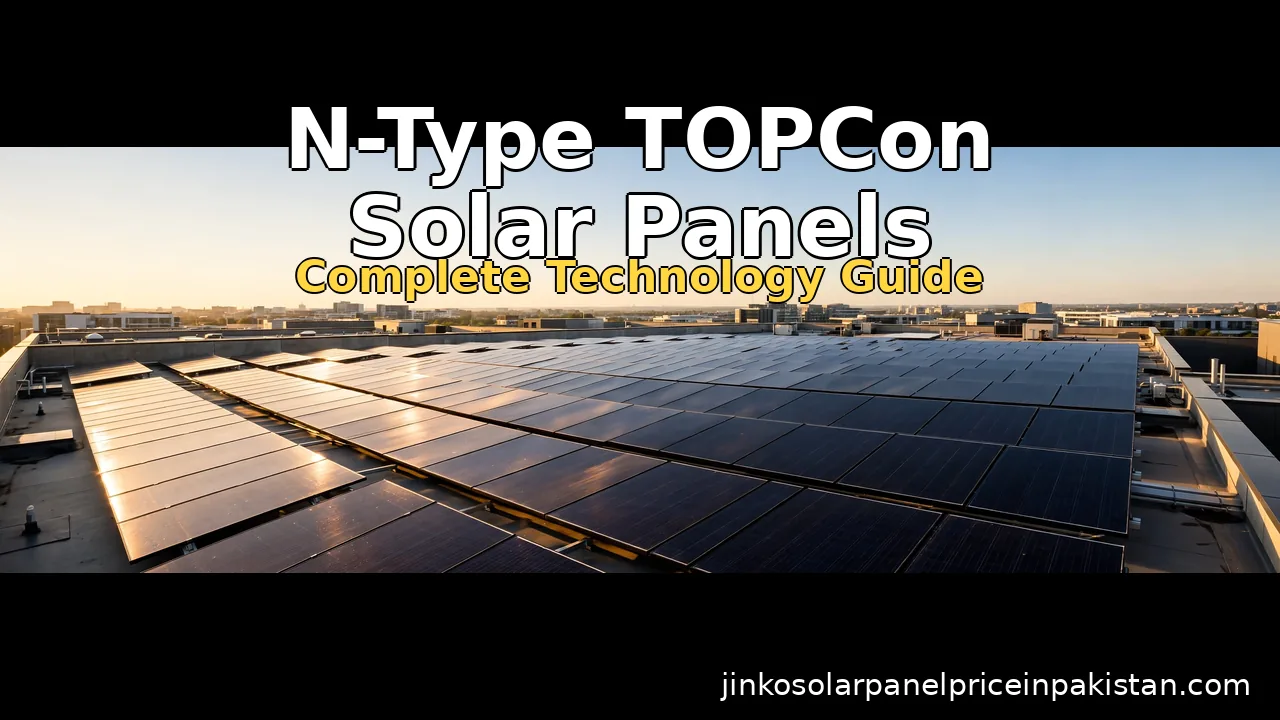
N-Type TOPCon Solar Panels: Complete Technology Guide

N-type TOPCon solar panels are the current mainstream cell technology in the solar industry: they use an n-type silicon wafer with a tunnel oxide passivated contact (TOPCon) on the rear side to cut energy losses where electrons exit the cell. The result is a panel that converts more sunlight into electricity than older P-type PERC panels, loses less output in heat, degrades more slowly over time, and is immune to light-induced degradation. If you are buying solar panels in Pakistan today, understanding this technology helps you read datasheets correctly and avoid paying a premium for a label that is not backed by real cell technology.
What Does TOPCon Mean in Solar Panels?
TOPCon stands for Tunnel Oxide Passivated Contact. It describes the structure on the back of the solar cell, not the panel’s size, brand, or wattage class. Every solar cell has contacts that collect the electricity the cell generates; in older designs, the metal contact sits directly against the silicon, and a surprising amount of energy is lost right there as recombination — electrons and holes recombining before they can leave the cell as useful current.
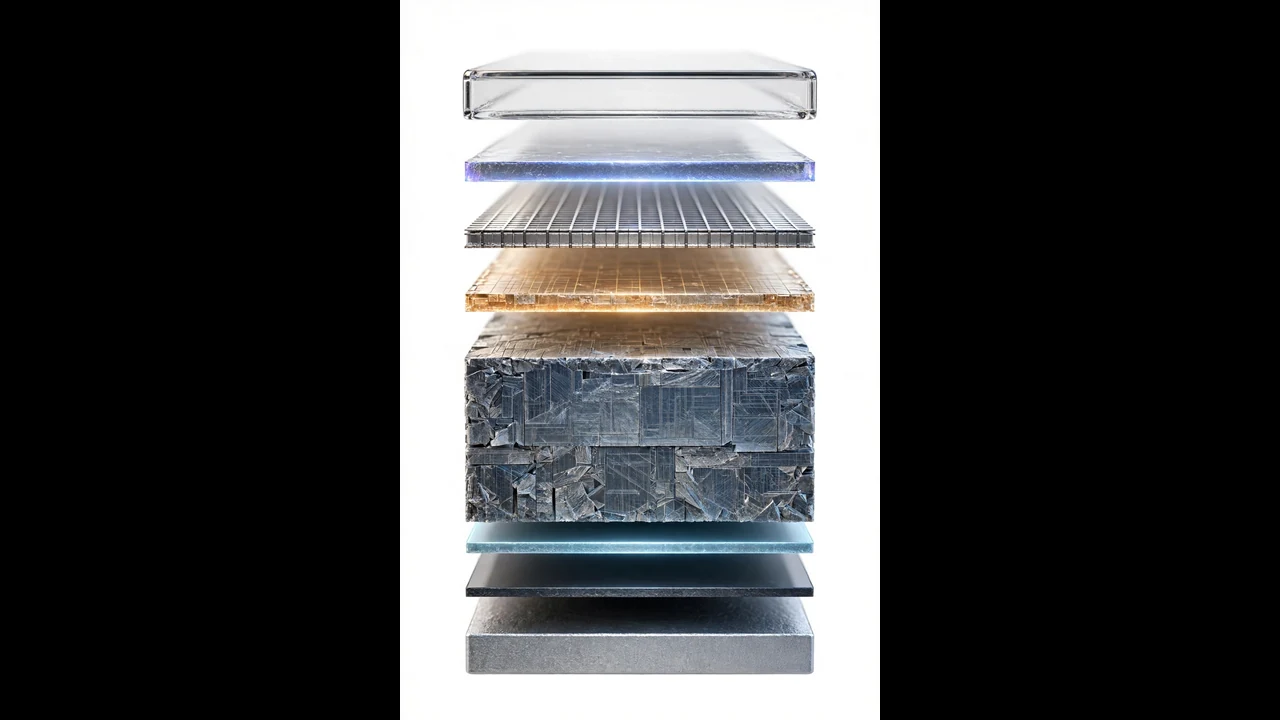
TOPCon solves this with two ultra-thin layers stacked between the silicon wafer and the rear metal contact:
- A tunnel oxide layer — an extremely thin film of silicon oxide that electrically “passivates” the silicon surface, calming the surface defects where recombination happens, while still letting electrons tunnel through it to the contact.
- A doped polysilicon layer — a conductive layer that carries the electrons to the metal fingers with minimal resistance.
Together, these layers let the cell keep far more of the charge carriers it generates. That is why TOPCon cells reach higher conversion efficiencies than the previous mainstream technology, PERC, without needing exotic materials or a fundamentally different factory process — most TOPCon lines are upgrades of existing PERC lines, which is one reason the technology spread so fast. The Fraunhofer ISE Photovoltaics Report (updated July 2026) notes that the global PV market is now dominated by crystalline silicon and n-type TOPCon, confirming that this is the industry’s standard cell technology, not an experimental niche.
How N-Type TOPCon Solar Cells Actually Work
A solar cell generates electricity when sunlight knocks electrons loose inside the silicon. The cell’s job is to sweep those electrons to one contact and the leftover “holes” to the other before they recombine. Two design choices in N-type TOPCon cells make this process more efficient than in older cells.
The N-Type Silicon Base
Silicon wafers are “doped” with tiny amounts of other elements to make them electrically active. P-type wafers are doped with boron; n-type wafers are doped with phosphorus. N-type silicon has two important advantages:
- No boron-oxygen defects: In P-type cells, boron and oxygen in the wafer form complexes under sunlight that permanently destroy a few percent of the panel’s output in the first hours of exposure — this is light-induced degradation (LID). N-type silicon contains no boron, so N-type panels are effectively immune to LID and start their working life with the output their datasheet promises.
- Longer carrier lifetime: Electrons survive longer in n-type silicon before recombining, which means more of the generated charge reaches the contacts. This is a material property, not a marketing claim — it is one of the reasons cell manufacturers switched the base material when they moved to TOPCon.
The Tunnel Oxide Passivated Contact
On the rear side of the wafer, the TOPCon stack (tunnel oxide + doped polysilicon) creates a selective contact: it happily passes electrons while blocking holes. Because the metal contact never touches the raw silicon directly, surface recombination at the rear drops dramatically. In PERC cells, the rear passivation exists too, but the metal contacts punch through it at local points, and those contact points are recombination hotspots. TOPCon’s full-area passivated contact avoids that compromise.
The practical outcome: a TOPCon cell converts a larger share of incoming photons into current, especially in the infrared part of the spectrum that penetrates deep into the wafer — exactly where the improved rear-side collection matters most.
N-Type TOPCon vs P-Type PERC: What’s Different?
PERC (Passivated Emitter and Rear Cell) was the mainstream technology for most of the 2010s and early 2020s, and millions of PERC panels are still working fine on Pakistani rooftops. TOPCon is its successor, not a different product category. Here is how they compare:
| Feature | N-Type TOPCon | P-Type PERC |
|---|---|---|
| Base wafer | N-type (phosphorus-doped) | P-type (boron-doped) |
| Rear contact | Full-area tunnel oxide passivated contact | Local metal contacts through rear passivation |
| Efficiency | Higher — the current commercial mainstream | Lower; mature but plateaued |
| Light-induced degradation (LID) | Effectively immune (no boron) | Suffers initial LID of a few percent |
| Degradation over time | Lower annual degradation in manufacturer warranties | Higher annual degradation |
| Temperature coefficient | Better (less output lost per degree of heat) | Worse |
| Bifacial versions | Very common | Available but less common |
| Low-light performance | Slightly better | Good |
If you want the brand-specific side of this story — how one major manufacturer implements N-type and P-type cells across its product lines — read our N-type vs P-type solar panels compared guide.
Key Advantages of N-Type TOPCon Panels
Higher Efficiency From the Same Roof Area
Because recombination losses are lower, TOPCon panels squeeze more watts out of the same physical panel size. On a typical Pakistani rooftop where space is limited, that means a 10-panel TOPCon array produces more than a 10-panel PERC array of the same dimensions. Commercial silicon module efficiencies have climbed from about 17% to just under 25% over the past decade (Fraunhofer ISE, 2026), and TOPCon is the technology carrying that improvement today.
Slower Degradation, Longer Useful Life
All solar panels lose a small fraction of output each year. TOPCon panels carry lower warranted degradation rates than PERC: manufacturers typically warrant less first-year loss and a lower annual rate afterwards, with 30-year performance warranties now common on N-type TOPCon products versus 25 years on older P-type lines. Combined with LID immunity, a TOPCon panel’s real-world output curve stays closer to its nameplate rating through the years.
Better Performance in Heat
Solar panels lose output as their cell temperature rises — a real concern on Pakistani rooftops where summer cell temperatures far exceed the 25°C test standard. TOPCon cells have a lower (better) temperature coefficient than PERC, so they shed less power on hot afternoons. The difference is a few percent at peak heat, but over a summer of daily generation it adds up to meaningfully more units.
Strong Bifacial Options
Most N-type TOPCon cells are naturally suited to bifacial construction — glass on both sides so the rear face also generates power from reflected light. On elevated or white-painted rooftops, a bifacial TOPCon panel harvests extra energy its monofacial equivalent cannot. Our bifacial solar panel guide explains when the rear-side gain is worth it.
What to Check Before Buying a TOPCon Panel
Because TOPCon commands attention in the market, the label is sometimes misused. A panel box or seller listing that says “TOPCon” is not proof — the datasheet is. Here is what to verify:
- Cell technology line on the datasheet: It should state “N-type TOPCon”, “N-type tunnel oxide passivated contact”, or the manufacturer’s equivalent cell-technology designation. Vague phrases like “advanced N-type cells” without the TOPCon wording deserve a follow-up question to the seller.
- Efficiency and temperature coefficient: Genuine TOPCon panels show higher module efficiency and a lower temperature coefficient than the same brand’s PERC models. If the “TOPCon” panel’s specs look identical to a PERC datasheet, be suspicious.
- Degradation warranty terms: Look for the lower first-year and annual degradation figures and the longer performance warranty period typical of N-type products.
- Serial number verification: For major brands, verify the panel’s serial number through the manufacturer’s official channel before paying. Our walkthrough on how to check a panel’s serial number shows the process step by step.
Also confirm the panel comes from an authorized distributor — grey-market panels may carry genuine-looking labels with no warranty backing. Our Jinko brand guide includes pointers on identifying official supply channels that apply to other major brands as well.
Is N-Type TOPCon Right for a Pakistani Rooftop?
For most grid-tied and hybrid residential systems in Pakistan, yes — and the reasons map directly onto local conditions:
- Hot summers: the better temperature coefficient protects afternoon output when you need cooling the most.
- Limited roof space: higher efficiency means fewer panels for the same system size, leaving room for walkways, water tanks, and future expansion.
- Dust and soiling: TOPCon’s lower internal losses do not make a panel dust-proof, but a higher-efficiency panel loses fewer absolute watts under the same soiling layer — and regular cleaning, which every system needs, restores the rest.
- Long-term ownership: slower degradation and longer performance warranties suit buyers who plan to keep the system for 20+ years.
The one situation where PERC still makes sense is a strict budget build where used or older-stock PERC panels are genuinely available at a discount and roof space is plentiful. For a new purchase at today’s market, TOPCon is the default recommendation of most installers — which is also why verifying authenticity, as described above, matters more than ever.
Check Current Prices in Pakistan
Panel prices move with the market, so this guide stays technology-focused by design. For today’s actual N-type TOPCon panel prices across all major brands in Pakistan — updated every morning from live market data — visit our current solar panel prices in Pakistan page, where every brand table is refreshed daily.
N-type TOPCon carries a small premium — see the jinko solar panel price in pakistan for N-type models and the general solar panel price in pakistan tables on our homepage, updated daily.
Frequently Asked Questions (FAQs)
What does TOPCon stand for in solar panels?
TOPCon stands for Tunnel Oxide Passivated Contact. It refers to the rear-side cell structure — an ultra-thin tunnel oxide layer plus a doped polysilicon layer — that reduces energy losses where electrons exit the cell, allowing higher conversion efficiency than older cell designs.
Are N-type TOPCon panels better than P-type PERC panels?
In the key performance metrics, yes: N-type TOPCon panels offer higher efficiency, immunity to light-induced degradation, lower annual degradation, and a better temperature coefficient than P-type PERC. PERC panels remain functional and reliable, but TOPCon is the technology manufacturers now build their flagship products on.
Do TOPCon panels lose output more slowly over time?
Yes. All panels degrade slightly each year, but N-type TOPCon products carry lower warranted degradation rates — typically a smaller first-year drop and a lower annual rate afterwards — and often come with 30-year performance warranties compared with 25 years on older P-type lines.
Are all TOPCon panels bifacial?
No, though many are. TOPCon describes the cell technology; bifacial describes the panel construction (glass on both sides). Most manufacturers offer both monofacial and bifacial TOPCon models, so check the datasheet’s construction line rather than assuming.
How can I verify a panel is genuinely N-type TOPCon?
Check the official datasheet for an explicit ‘N-type TOPCon’ cell-technology line, compare its efficiency and temperature coefficient against the brand’s PERC models, and verify the panel’s serial number through the manufacturer’s official verification channel before paying.
Do TOPCon panels perform better in hot climates like Pakistan?
Yes. TOPCon cells have a lower temperature coefficient than PERC, meaning they lose less output per degree above the 25°C test standard. On hot Pakistani rooftops this translates into noticeably better afternoon generation during summer.
Can I mix TOPCon and PERC panels in one solar system?
It is not recommended within the same string. Panels in a series string perform to the level of the weakest member, so mixing technologies with different current ratings wastes the better panel’s advantage. Use TOPCon and PERC panels on separate strings or separate inverters if both must be used.