
How to Verify an Original Canadian Solar Panel

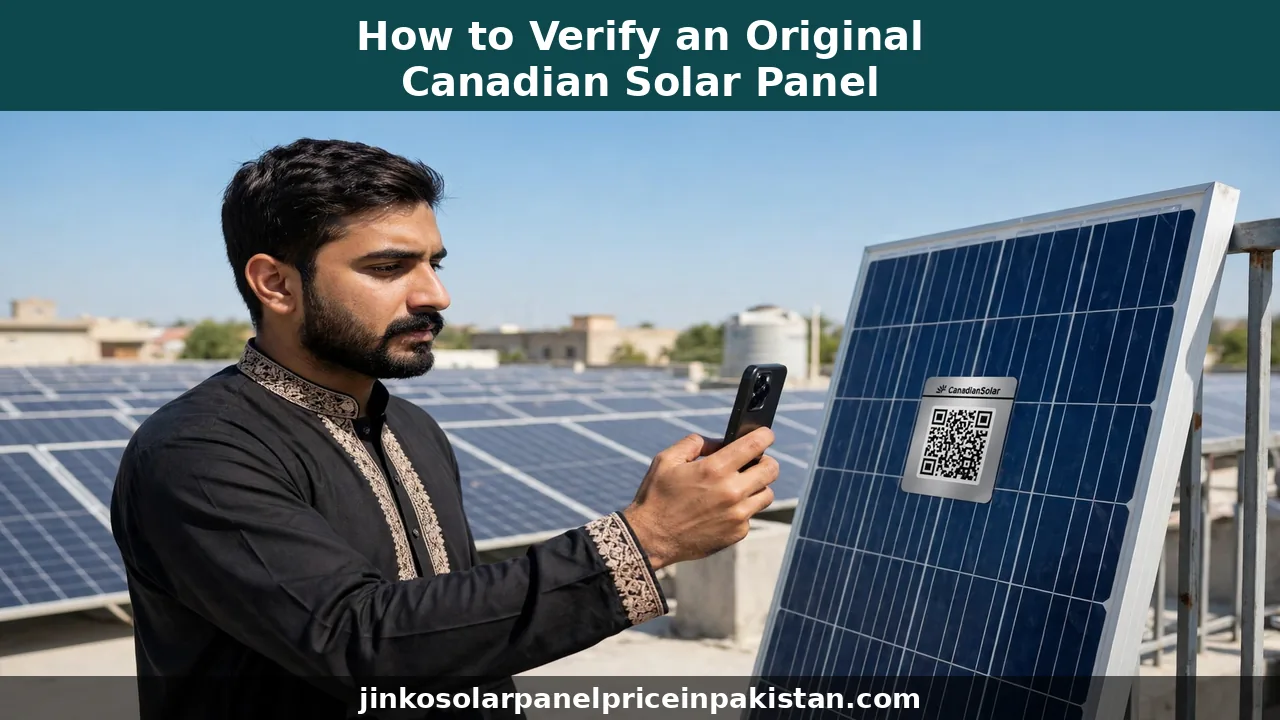
Can you check whether your Canadian Solar panel is original before you pay for it? Yes — and it takes about five minutes. Every genuine Canadian Solar panel carries a unique serial number in three places: under the front glass, on the back label, and on the frame. First, make sure all three numbers match. Then enter the serial number on Canadian Solar’s official query portal at snquerycn.csisolar.com. If the panel is genuine, the portal shows its model, rated power, grade and the country it was shipped to. If the number is not found, do not pay. This guide shows you how to verify original Canadian solar panel stock, and the red flags that mean you should walk away.
Why Fake Canadian Solar Panels Are a Problem in Pakistan
Canadian Solar is one of the most popular solar panel brands in Pakistan. It is a Tier-1 manufacturer, founded in 2001 in Ontario, Canada, with more than 180 GW of modules shipped to over 160 countries. Its HiKu and TopHiKu series are common on Pakistani rooftops — and that popularity has a downside, because its name is misused to sell substandard panels.
A fake or relabelled panel can look almost identical to the real thing. The difference shows up later — lower output than promised, cells that fail early, and no manufacturer warranty when something goes wrong. A panel that cannot be verified is a panel you cannot trust, however good the deal sounds.
The good news is that verification is free. Canadian Solar runs an official serial-number query portal, and you can run the check yourself with nothing more than a phone — before you pay, and again at delivery.
What You Need Before You Start
You need three things, and none of them costs anything:
- The panel itself, or its serial number. The serial number is a long code printed on the label on the back of the panel, near the junction box. The same number also appears under the front glass and on the aluminium frame. Ask the dealer for the full serial-number list with your quotation before you pay anything.
- A phone with a camera and internet. You will compare the three serial-number positions and enter the number into Canadian Solar’s official query portal.
- The panel’s paperwork. Ask for the flash test report for each panel and the purchase invoice. The flash test report is the factory sheet that records the panel’s measured output, and its serial number and wattage must match the panel in front of you.
Method 1: Match the Serial Number in All Three Places
This is the first check to run — one of the three serial numbers cannot be faked without breaking the panel.
Every genuine Canadian Solar panel carries the same serial number in three places:
- Under the front glass. A barcode with the serial number is laminated inside the front glass, near the corner cells. It cannot be peeled off, changed or replaced without shattering the glass.
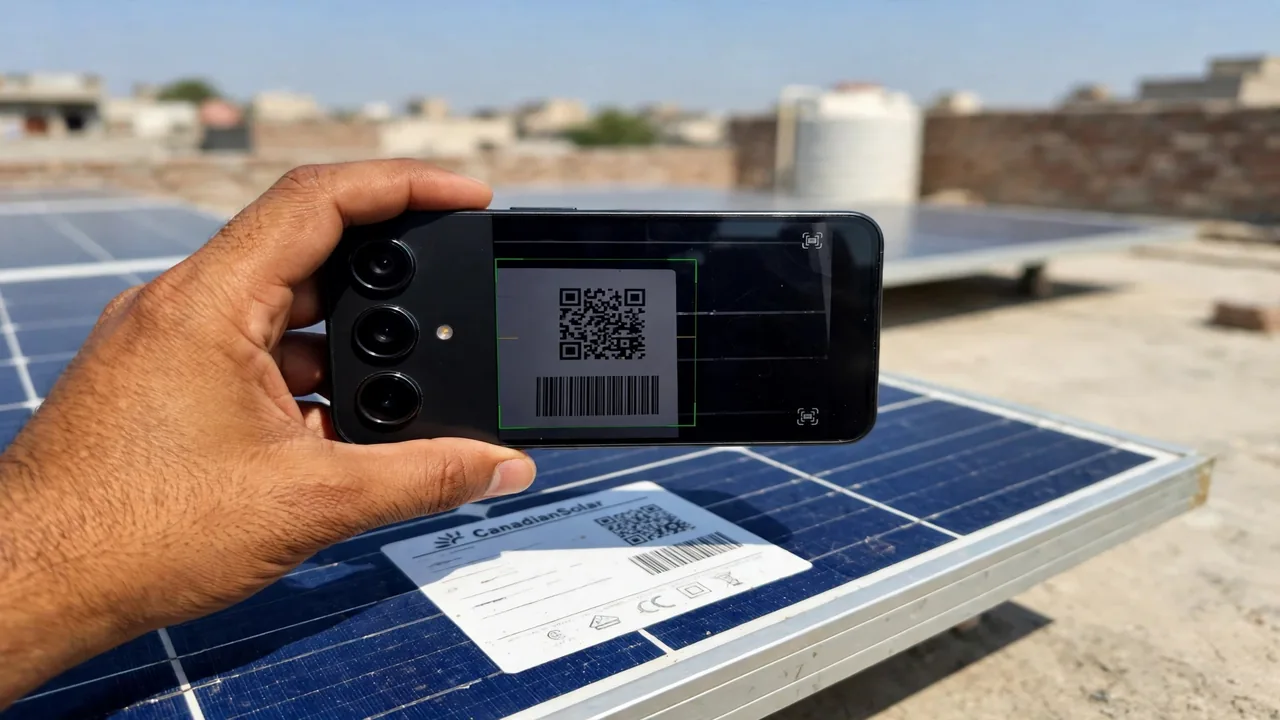
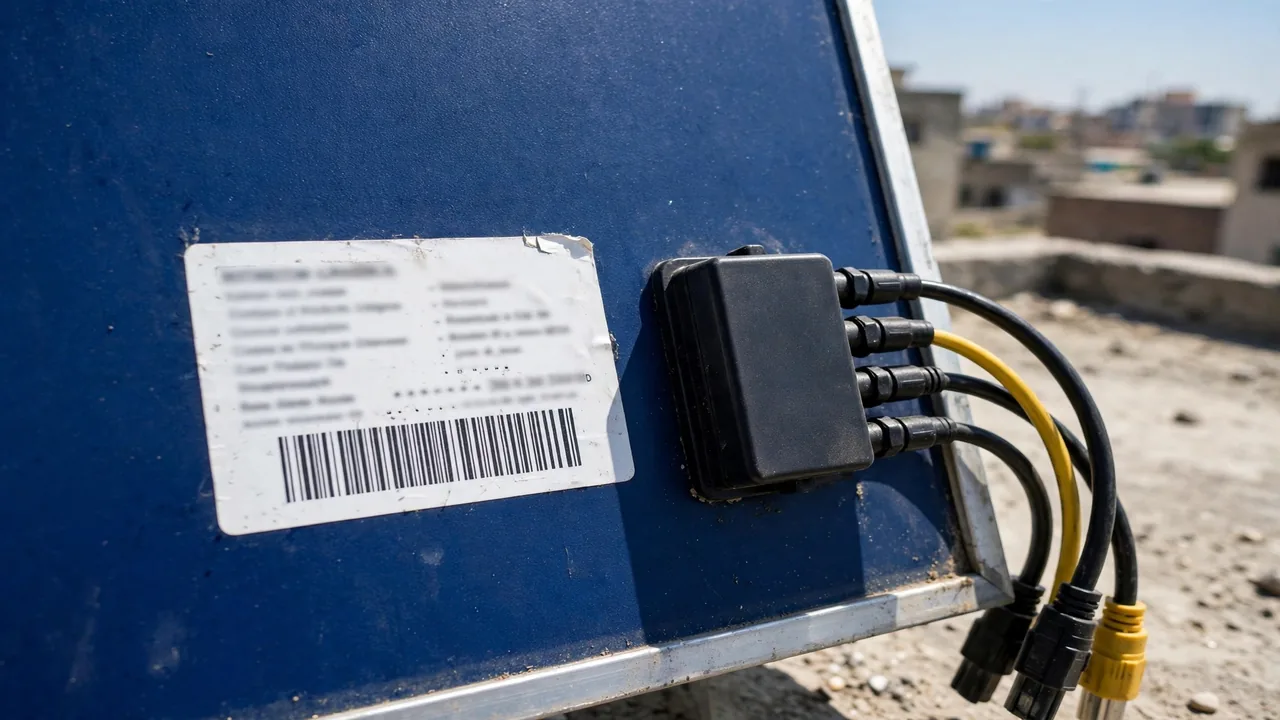
- On the back label. The specification label on the back sheet shows the same serial number, along with the model code, wattage, open-circuit voltage (Voc) and short-circuit current (Isc).
- On the aluminium frame. The serial number is also stamped or laser-engraved on the frame.
Read all three and compare them. They must be identical. If the glass barcode says one number and the back label says another, the panel has been relabelled — walk away. Also check that no two panels in your order share the same serial number. Every genuine panel has a unique number, so a duplicate means at least one of them is fake.
How to Verify Original Canadian Solar Panel Online
Once the three numbers match, confirm the panel in Canadian Solar’s own database. The company runs an official module query portal at snquerycn.csisolar.com, run by CSI Solar — Canadian Solar’s manufacturing arm. It is free, and it works for any panel with a serial number. The company’s main website is canadiansolar.com.
Follow these steps:
- Type snquerycn.csisolar.com into your browser yourself. Do not click a verification link sent by the dealer or found in a random advertisement. Fake verification websites exist, and they will happily tell you a fake panel is genuine.
- Enter the serial number from the panel exactly as printed. Double-check every character: one wrong letter or digit will return a “not found” result even for a genuine panel.
- Enter the anti-counterfeit verification code shown on the page, then submit the query.
- Read the result. A genuine panel returns its module model, standard power, module grade and the country it was shipped to, plus the query count — how many times this serial number has been checked before.
- Check the destination country. The portal states that the warranty is only valid in the country shown. If your panel was shipped to a different country, ask the dealer to explain — grey-market panels can lose their warranty cover in Pakistan.
- Repeat the check for every panel in your order, not just the first one.
If the portal says the serial number is not found, do not accept the panel. If the dealer says the system is down or the panel is “too new to be in the system”, ask for a different panel from the same batch and check that one, or buy elsewhere.
Method 3: Match the Label, Box, Flash Report and Invoice
The online check is the strongest single test, but a relabelled panel can sometimes carry a copied serial number — so match every document against the panel itself:
- Model code: the full model code on the back label must match the code on the box and your quotation. A genuine Canadian Solar panel is sold under the HiKu or TopHiKu name — for example, the current Canadian Solar 585W TOPCon model. If the label says one series and the box says another, something is wrong.
- Wattage and electrical values: the wattage, open-circuit voltage (Voc) and short-circuit current (Isc) on the label must match the flash test report exactly. The flash report is the factory measurement for that exact panel, so its serial number must match too.
- Production date: the date on the label should be consistent with the model generation. A panel labelled as a current series but dated years ago deserves a second look.
- Warranty paperwork: Canadian Solar’s current TOPCon series carries a 12-year product warranty and a 30-year performance warranty, while older series carry a 25-year performance warranty. The warranty card and invoice should name the same model and serial numbers as the panels you received.
Photograph the label, the box and the flash report for every panel before installation. Once panels are mounted, the back label is hard to reach, and those photos are your only record if a problem appears later.
Physical Checks You Can Do in Five Minutes
Before the panels go on the roof, give each one a careful look:
- Packaging: genuine Canadian Solar panels arrive in sealed boxes carrying the Canadian Solar logo, a barcode and the product specifications. Torn or resealed boxes suggest the panels were repacked.
- Frame and glass: the aluminium frame should be straight and clean, with even sealant around the glass. Uneven sealant, scratches, dents or a loose junction box point to refurbished or reject stock.
- Cells: look at the cells through the glass. They should be uniform in colour with no cracks, dark patches or finger marks.
- Junction box: the box on the back should sit firmly with no gaps, and its cables and MC4 connectors should be clean and undamaged.
- Label quality: the back label should be printed clearly, with sharp text and a clean barcode. Blurry printing, spelling mistakes, or a label that peels off easily are all warning signs.
Red Flags That Mean Walk Away
If you see any of these, do not pay:
- The serial number is not found on the official portal. This is the clearest result there is.
- The three serial-number positions do not match. Different numbers on the glass, label and frame mean the panel was relabelled.
- The dealer will not share serial numbers before payment. A genuine seller has nothing to hide — the numbers are printed on the product.
- Two panels share the same serial number. Every genuine panel has a unique number. A duplicate means at least one of them is fake.
- The portal shows a different destination country. The warranty is only valid in the country shown, so a panel shipped elsewhere may have no warranty cover here.
- The label, box and flash report disagree. Different model codes, wattages or serial numbers across the documents mean the paperwork does not belong to the panel.
- No invoice or no warranty paperwork. Undocumented panels are cheaper for a reason: without documents, a warranty claim is very hard to make.
- The panel is sold as A-grade but looks used. Scratches, worn frames or a loose junction box point to B-grade or refurbished stock sold as new.
Our guide on fake vs original solar panel covers these warning signs in more detail, with the checks that apply to every brand — not just Canadian Solar.
What to Do If Verification Fails
If a panel fails the check, stay calm and follow these steps in order:
- Double-check the number first. Retype the serial number slowly and try the query again — a typing mistake is the most common reason for a false “not found”.
- Check a second panel from the same batch. If the second panel verifies fine, the first panel may be the odd one out. If several fail, the whole batch is suspect.
- Tell the dealer and ask for a replacement. Show the dealer the result on your phone. A genuine dealer will replace the panel. A dealer who argues, rushes you, or offers a discount to “settle it” is telling you everything you need to know.
- Do not accept the panel. Refuse delivery of any panel that fails verification, and get the refusal noted on the invoice or delivery note.
- Contact Canadian Solar directly. If the portal cannot find a serial number and the dealer cannot resolve it, email the serial number and photos of the label to verification@csisolar.com — the address the query portal itself gives for further help.
Keep every photo, message and receipt — if you paid in advance and the dealer refuses a refund, that record is what you will need.
Buying From the Right Dealer
Verification protects you after the panels arrive, but the dealer matters just as much. Buy from an established dealer who gives you a proper GST invoice, shares serial numbers before payment, and lets you verify the panels at delivery. Our solar panel verification guide for Pakistan explains the same document checks for other brands.
Be careful with sellers who only operate through social media messages, refuse to share a shop address, or push you to pay in full before you have seen a single serial number.
If you already own Canadian Solar panels, the same steps apply. For Jinko panels, the process is similar but uses Jinko’s own checker, explained in our Jinko serial number check guide. For Longi panels, the steps are in our Longi verification guide.
Check Current Prices
Once your panels are verified as original, the only question left is the price. Check the current canadian solar panel price in pakistan on our Canadian Solar brand page, and the solar plate price in pakistan and solar panel price in pakistan on our homepage, where the tables are updated daily. Knowing today’s figures helps you judge any quotation fairly — and if a quote comes in far below the market, verify the panels carefully before you pay.
Frequently Asked Questions (FAQs)
Where is the serial number on a Canadian Solar panel?
The serial number appears in three places: laminated under the front glass near the corner cells, printed on the specification label on the back of the panel, and stamped or laser-engraved on the aluminium frame. All three must be identical — if they differ, the panel has been relabelled.
How do I verify a Canadian panel online?
Type snquerycn.csisolar.com into your browser yourself, enter the serial number from the panel exactly as printed, enter the anti-counterfeit verification code shown on the page, and submit. A genuine panel returns its model, rated power, grade and destination country. Never use a verification link sent by a seller.
What does the query portal show?
The portal shows the module model, standard power, module grade, the country the panel was shipped to, and how many times the serial number has been checked. It also states that the warranty is only valid in the destination country shown — so check that the country matches where you bought the panel.
Can I verify a Canadian panel before buying it?
Yes — and you should. Ask the dealer for the full serial-number list with your quotation and check the numbers on snquerycn.csisolar.com before you pay anything. A genuine dealer shares serial numbers freely. If a dealer refuses, buy elsewhere.
What should I do if the serial number is not found?
First retype the number slowly — one wrong character gives a false ‘not found’. Try again, then check a second panel from the same batch. If it still fails, do not accept the panel. Tell the dealer, ask for a replacement, and email the serial number with photos of the label to verification@csisolar.com for help.
Does a matching serial number guarantee the panel is original?
It is the strongest single check, but it is not the whole story. A relabelled panel can sometimes carry a copied serial number, so also match the model code, wattage and flash test report against the panel, and check the three serial-number positions, packaging, frame and label for signs of use or repacking.
Can I verify an older Canadian Solar panel?
Try the online check first — the portal covers panels made in recent years. Very old panels without a readable code cannot be checked online, so rely on the label, the flash test report, the invoice and the dealer’s documents instead, and check the glass barcode, back label and frame numbers against each other.
What should I do if the dealer refuses to share serial numbers?
Walk away. Serial numbers are printed on the product itself, so a genuine seller has nothing to hide by sharing them. A dealer who hides serial numbers, pushes for full payment before you see them, or offers a discount to skip the check is not a dealer to trust.