What Is Solar Energy? Complete Guide for Pakistan

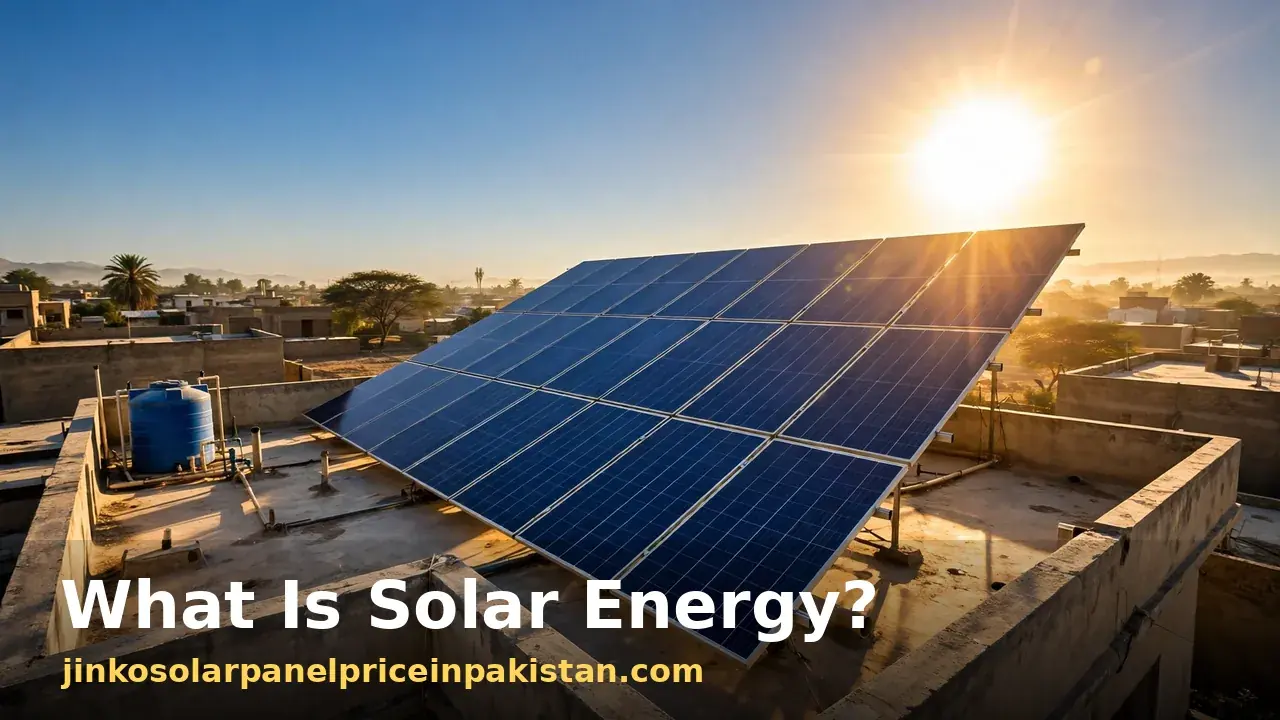
What is solar energy? It is the light and heat radiated by the sun — a free, renewable source of power that a solar panel captures and turns into electricity for your home. Every ray of sunlight carries energy, and the job of a solar panel is to catch that energy and convert it into a form your fans, lights, refrigerator and air conditioner can use. This guide explains what solar energy is, what solar power means, how the energy is captured, and what it can do for a Pakistani home — in plain language, with no jargon. If you already know the basics and want today’s rates, the solar panel price in pakistan tables on our homepage are updated every morning.
What Is Solar Power
Solar power is the usable energy we make from solar energy. The distinction is simple: solar energy is the resource — the sunlight itself — while solar power is the electricity or heat produced from it. When people say “solar power” for a home, they almost always mean electricity generated by panels on the roof, though solar power can also mean hot water from a solar thermal collector.
There are two ways to turn sunlight into solar power. Photovoltaic panels convert light directly into electricity, which is the technology on nearly every Pakistani rooftop. Solar thermal systems capture the sun’s heat instead, usually to warm water. The U.S. Department of Energy’s guide on how solar energy works describes both technologies and the difference between them.
For a homeowner the practical point is this: the sun delivers the energy for free, and your system — panels, inverter, wiring, and optionally batteries — is the equipment that converts it into power you can use. Our how solar panels work guide explains the conversion step by step.
What Is a Solar Panel
A solar panel is a device made of photovoltaic cells that converts sunlight directly into direct-current (DC) electricity. Each cell is a thin slice of silicon treated so that sunlight knocks electrons loose and pushes them in one direction — the photovoltaic effect. Dozens of cells are wired together inside one panel, sealed under tempered glass and held in an aluminium frame, and several panels wired together form an array on your roof.
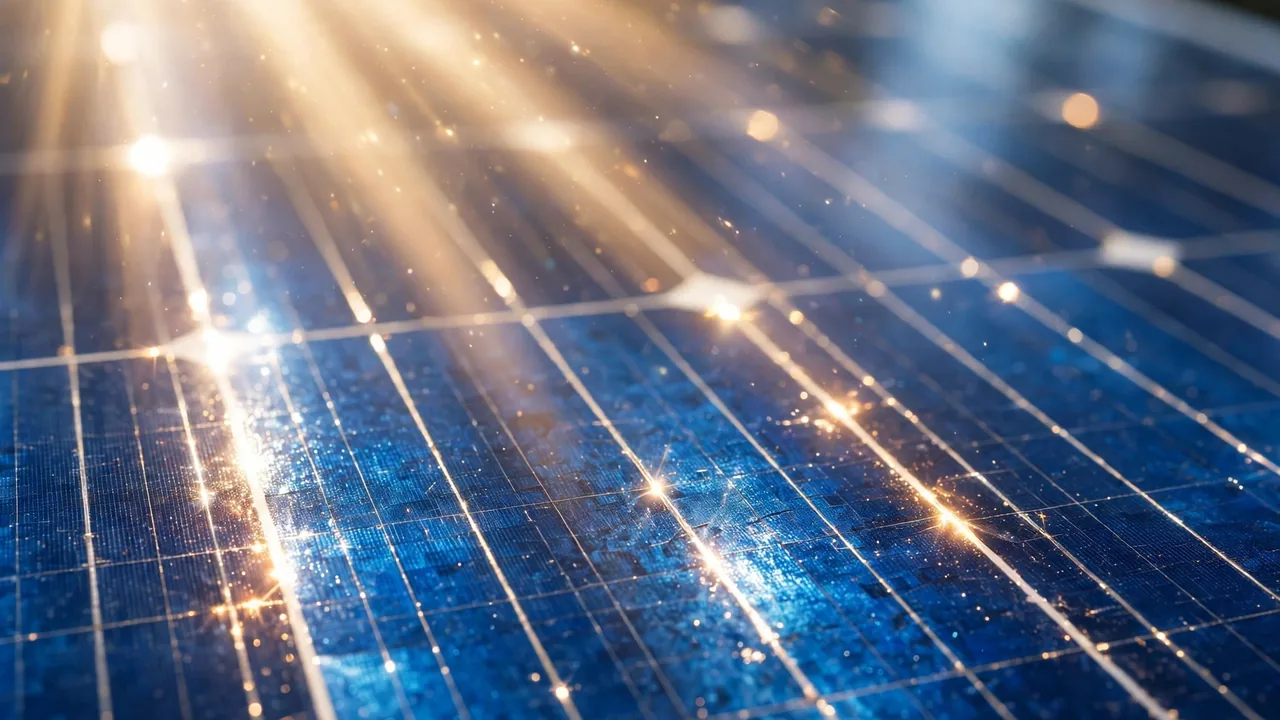
Panels differ mainly in cell technology and build quality. Most homes in Pakistan use monocrystalline panels, and our monocrystalline vs polycrystalline comparison explains the difference, while the N-type TOPCon technology guide covers the newest cell design on the market. Whatever the technology, the definition stays the same: a solar panel is the component that turns light into electricity, and everything else in the system — inverter, structure, wiring, battery — exists to carry, convert or store what the panel produces.
How Solar Energy Is Captured
Sunlight can be captured in two fundamentally different ways, and the U.S. Department of Energy groups all solar technology under these two headings.
Photovoltaic (PV) — Light Into Electricity
Photovoltaic capture uses solar cells to convert light directly into electricity, with no moving parts and no heat engine in between. Photons strike the cell, free electrons, and the cell’s internal electric field organises them into a direct current. The current flows to an inverter, which converts it into the alternating current your home uses. This is the technology behind every rooftop system in Pakistan, from a small home setup to a large commercial array.
Concentrating Solar-Thermal Power — Sunlight Into Heat
Concentrating solar-thermal power (CSP) uses mirrors to focus sunlight onto a receiver, heating a fluid that makes steam to drive a turbine. Unlike PV, CSP produces heat first and electricity second, and it is used mainly in very large power plants in deserts, not on homes. One advantage of CSP is that heat can be stored in molten salts, allowing electricity generation after sunset — a storage trick that home PV systems achieve differently, with batteries.
For Pakistani homeowners, the takeaway is simple: when someone says “solar” for a house, they mean PV. CSP is utility-scale technology, and it does not change what you buy for your roof.
The Two Main Types of Solar Energy
The table below summarises the two types side by side, so you can see at a glance which one belongs on a roof and which one belongs in a desert power plant.
| Photovoltaic (PV) | Concentrating solar-thermal (CSP) | |
|---|---|---|
| How it works | Solar cells convert light directly into electricity | Mirrors focus sunlight to make heat, then steam, then electricity |
| What it produces | DC electricity, converted to AC by an inverter | Heat first; electricity via a turbine |
| Typical scale | Anything from one panel to a solar farm | Large power plants only |
| Use in Pakistan | Rooftops, homes, shops, tube wells, industry | Not used for homes |
| Storage | Batteries or net metering | Stored heat in molten salts |
The global picture shows how dominant PV has become. According to the International Renewable Energy Agency, total installed solar PV capacity reached 1,865 GW worldwide by the end of 2024, with 451 GW added in that year alone — the largest addition of any renewable energy source. IRENA’s solar energy overview also notes that PV is highly modular, ranging from small home kits and rooftop installations to systems in the hundreds of megawatts. Pakistan’s rooftop boom is part of that same global shift.
What Solar Energy Can Power in a Home
A rooftop PV system powers whatever your home needs during sunshine hours: fans, lights, refrigerators, water motors, washing machines and air conditioners all run directly on solar electricity while the sun shines. The inverter sits at the centre of this — it converts the panels’ DC into AC, and shoppers comparing an inverex inverter or any other brand are really comparing how reliably that conversion happens, hour after hour.
After sunset the panels stop producing, so the evening is covered in one of two ways. A battery bank stores the day’s surplus for night use and for load shedding — whether you look at the phoenix battery price in pakistan for tubular options or the lithium battery price in pakistan for modern lithium banks, the battery’s job is the same. Without batteries, a grid-tied system simply offsets what the grid would have supplied while the sun shone, and surplus daytime power is exported through net metering.
Heavier loads need a bigger system, not a different kind of energy. A tube well, a 1.5-ton air conditioner or a full house of appliances all run on the same solar electricity — the question is only how many panels and how much storage the system has. Our sizing guide explains how to work out what your home needs, and the mounting structures guide covers how panels are fixed safely to a Pakistani flat roof.
Solar Energy in Pakistan
Pakistan is a natural home for solar energy: most of the country receives strong sunshine for most of the year, and flat concrete roofs give installers a simple, sturdy surface to work with. That combination — abundant sun plus usable roof space — is why rooftop systems have spread so fast from Karachi to Lahore to Islamabad.
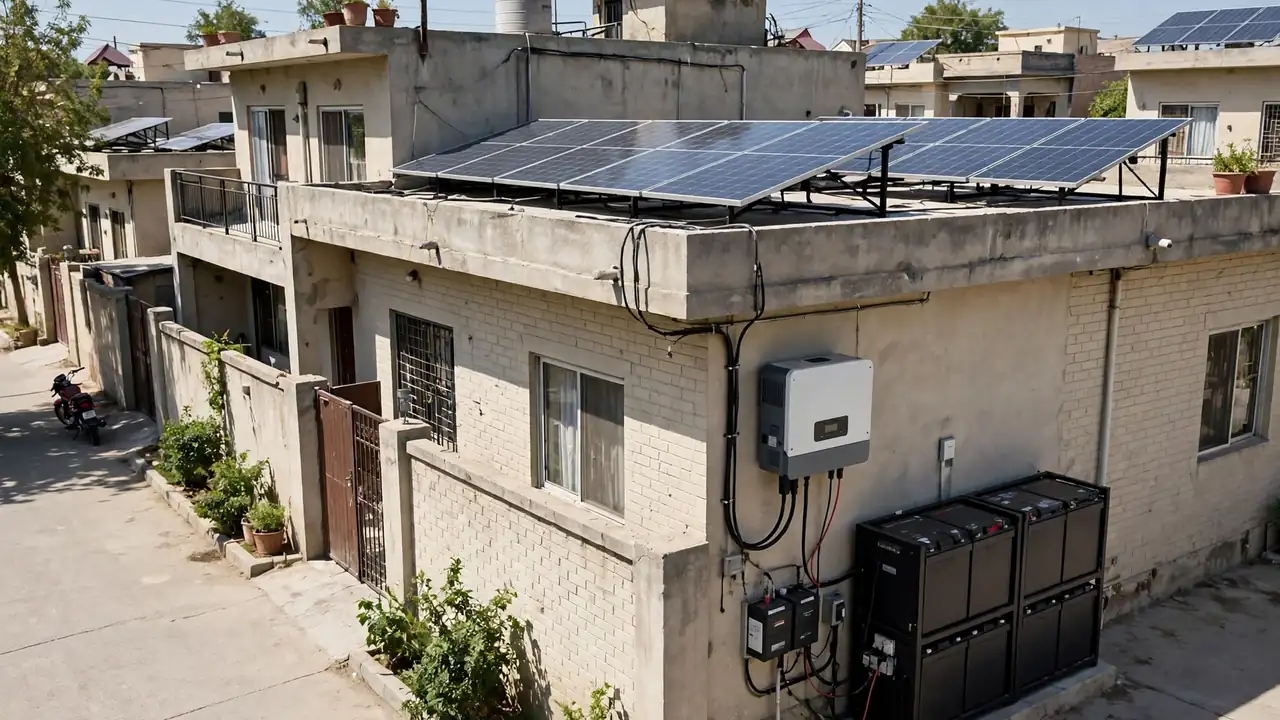
Two local realities shape how solar energy is used here. First, load shedding makes storage valuable: a hybrid system with batteries keeps fans and lights running through an outage, while a purely grid-tied system shuts down with the grid. Second, net metering lets homeowners export surplus daytime electricity to their distribution company, turning the roof into a small power station during sunshine hours. Provincial solar schemes have added further momentum, though their terms change — always check the current scheme details before deciding.
Roof angle and direction matter more than most buyers expect: panels tilted toward the sun at the right angle produce noticeably more than panels laid flat. Our tilt-angle chart for Pakistani cities lists the recommended angle city by city. If you are weighing the financial side, the worth-it guide covers savings and payback honestly, and the complete guide to solar panel costs explains what drives the price of the hardware.
Advantages and Limits of Solar Energy
Solar energy has real strengths, and honest limits. Both matter before you spend on a system.
Advantages. The fuel — sunlight — is free and never runs out. Panels have no moving parts, make no noise and need little maintenance beyond occasional cleaning. A system is modular: you can start with what your roof and budget allow and expand later. And unlike a generator, solar produces no smoke or exhaust on your property.
Limits. Panels produce nothing at night and less on heavily overcast days, so a home that needs power around the clock must pair panels with batteries or the grid. A system needs unshaded roof space, and the inverter and batteries are components that will eventually need replacement, unlike the panels themselves, which keep producing for decades. Upfront cost is the other real limit — the hardware, structure, inverter and installation all cost money before the first unit of electricity is generated — so the decision is about total system cost, not the panel alone.
None of these limits is a reason to avoid solar; they are reasons to size the system honestly and choose an installer who explains them. Our common installation mistakes guide lists the errors that waste money, and the installer vetting checklist shows how to pick someone trustworthy.
Is Solar Energy Right for Your Home?
Work through four questions before deciding. First, does your roof get unshaded sun for most of the day — a shaded roof produces far less, whatever the panels cost. Second, how much electricity do you use in daylight hours, when solar output is highest? Third, how much does load shedding affect you — if outages are frequent, batteries move from optional to essential. Fourth, can your budget cover the full system — panels, inverter, structure, wiring and installation — rather than just the panels?
If the answers point to yes, the next step is a proper site survey and quotations from two or three installers, compared on the same system size and component brands. Shoppers comparing inverter brands will also meet names like crown inverter and itel inverter in the market, and battery shoppers will see dyness lithium battery price in pakistan and fronus lithium battery options quoted alongside the established brands — compare them on warranty, documentation and after-sales support, not on a headline figure alone.
Check Current Solar Panel Prices in Pakistan
Understanding solar energy is the first step; comparing hardware is the second. Our homepage keeps the solar panel price in pakistan tables updated every morning, alongside the solar plate price in pakistan, solar plates price in pakistan and solar panels price in pakistan listings, so you can see what the technology described above actually costs today. The same page carries the solar system price in pakistan overview, the solar inverter price in pakistan table, the solar price in pakistan summary and the solar plate rate for popular wattages — including the solar panel 585 watt price in pakistan today rows, the solar plate price in pakistan 585 entries, the today solar panel price in pakistan tables, the jinko solar panel price in pakistan section, the aiko solar panel price in pakistan row and the inverex solar panel 585 watt price in pakistan listings. Brand buyers can also check the canadian solar panel price in pakistan page directly. And when you browse those lists, remember what each solar panel on them actually does — it turns free sunlight into electricity, silently, on your own roof.
What is solar energy in simple words?
Solar energy is the light and heat that comes from the sun. It is a free, renewable resource: sunlight carries energy, and solar panels capture that energy and turn it into electricity for your home — no fuel, no smoke, no moving parts.
What is solar power?
Solar power is the usable energy made from solar energy — electricity from photovoltaic panels, or heat from solar thermal collectors. Solar energy is the resource (sunlight); solar power is what we produce from it.
What is a solar panel?
A solar panel is a device made of photovoltaic cells that converts sunlight directly into direct-current (DC) electricity. Dozens of silicon cells are wired together inside one panel, sealed under tempered glass in an aluminium frame, and several panels form an array on your roof.
Is solar energy renewable?
Yes. Solar energy is renewable because the sun replenishes it every day — unlike coal, gas or oil, which are used up once burned. A solar panel keeps producing electricity from sunlight for decades with almost no maintenance.
Does solar energy work at night?
No — panels need light to produce electricity, so output stops after sunset. Night-time power comes from batteries charged during the day, or from the grid. This is why hybrid systems in Pakistan pair panels with storage.
What is the difference between solar energy and solar power?
Solar energy is the resource — the sunlight itself. Solar power is the usable output made from that resource: electricity or heat. You collect solar energy with panels and collectors, and you use solar power in your home.
Can solar energy run a whole house in Pakistan?
Yes, with a correctly sized system. Panels cover daytime loads, batteries or net metering cover the evening, and the inverter converts the power for your appliances. Our sizing guide explains how to work out the system size your home needs.
Where can I check current solar panel prices in Pakistan?
Right here: the solar panel price in pakistan tables on our homepage are updated every morning from live market listings, so you always see today’s rates next to the technology explained above.