
How Often Should You Clean Solar Panels in Pakistan?

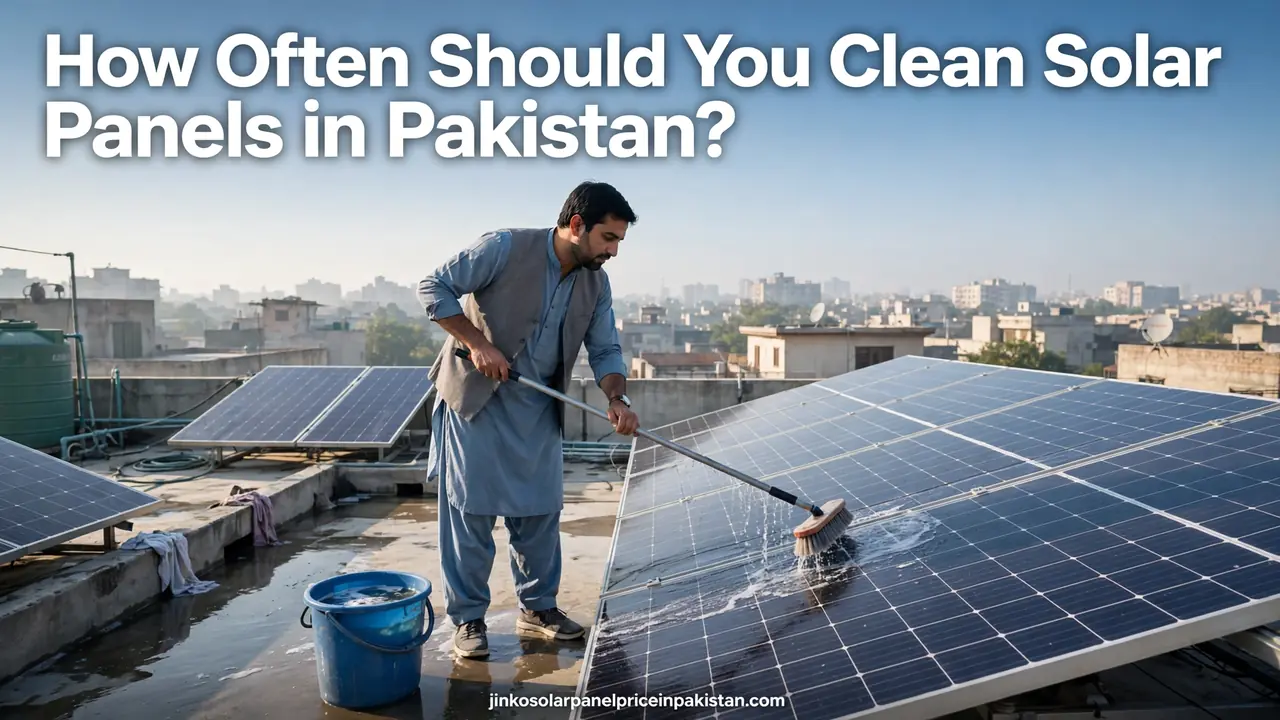
How often should you clean solar panels in Pakistan? In most Pakistani cities, clean them at least once a month, and every two to three weeks if your roof is in a dusty area, near a busy road or a construction site, or during the winter smog season in Punjab. Heavy monsoon rain washes off loose dust, but it does not replace a proper clean: bird droppings, baked-on grime and the film left behind when puddles dry all stay on the glass. Clean on a schedule, not when output has already dropped, because dust builds up gradually and the loss creeps up so quietly that most homeowners only notice it when the monthly bill arrives.
Why Cleaning Frequency Matters More in Pakistan
In countries with regular rain and little dust, guides often suggest cleaning solar panels once or twice a year and letting the rain do the rest. Pakistan is different: long dry spells, dust storms, winter smog and construction dust all land on the same glass that needs clear sunlight. A thin film of dust blocks part of the light, and because it builds up a little every day, output falls a little every day — too slowly to notice on any single morning, but clearly visible when you compare this month with the same month last year.
That slow, silent loss is why frequency matters more than any single cleaning. One thorough wash restores the panels, but if the next wash is months away, the film is back within weeks. A regular routine — monthly as a baseline, more often where conditions demand it — keeps the panels near their best all year; our guide on do you need to clean your solar panels explains why cleaning is necessary at all.
The Recommended Cleaning Schedule for Pakistan
There is no single interval that fits every roof, because soiling depends on where you live and what surrounds your home. Use this schedule as your starting point, then adjust it by watching your own panels and your monitoring app.
| Condition | How often to clean |
|---|---|
| Most cities, normal conditions | At least once a month |
| Dusty areas, near main roads or construction sites | Every two to three weeks |
| Winter smog season in Punjab (roughly November to January) | Every two to three weeks, plus a clean after a long smog spell |
| Monsoon season | Let heavy rain wash off loose dust, then clean once the rains end and check for mud and debris |
| After a dust storm | Clean within a few days, once the air has settled |
| Coastal areas with salt air | Once a month, rinsing off any salt film |
| Roofs near trees or with heavy bird activity | Check every two weeks and spot-clean droppings promptly |
Two notes on this table. First, the monthly baseline matches the routine in our solar system maintenance checklist, which folds panel cleaning into a monthly round of inverter, battery and structure checks — one routine is easier to keep than several. Second, the schedule is a starting point, not a rule: if your panels still look clean after a month, stretch the interval; if they look grey after two weeks, shorten it. The signs below tell you when to clean sooner.
Signs Your Panels Need Cleaning
Do not wait for the calendar if your panels are showing any of these signs — clean them as soon as you safely can.
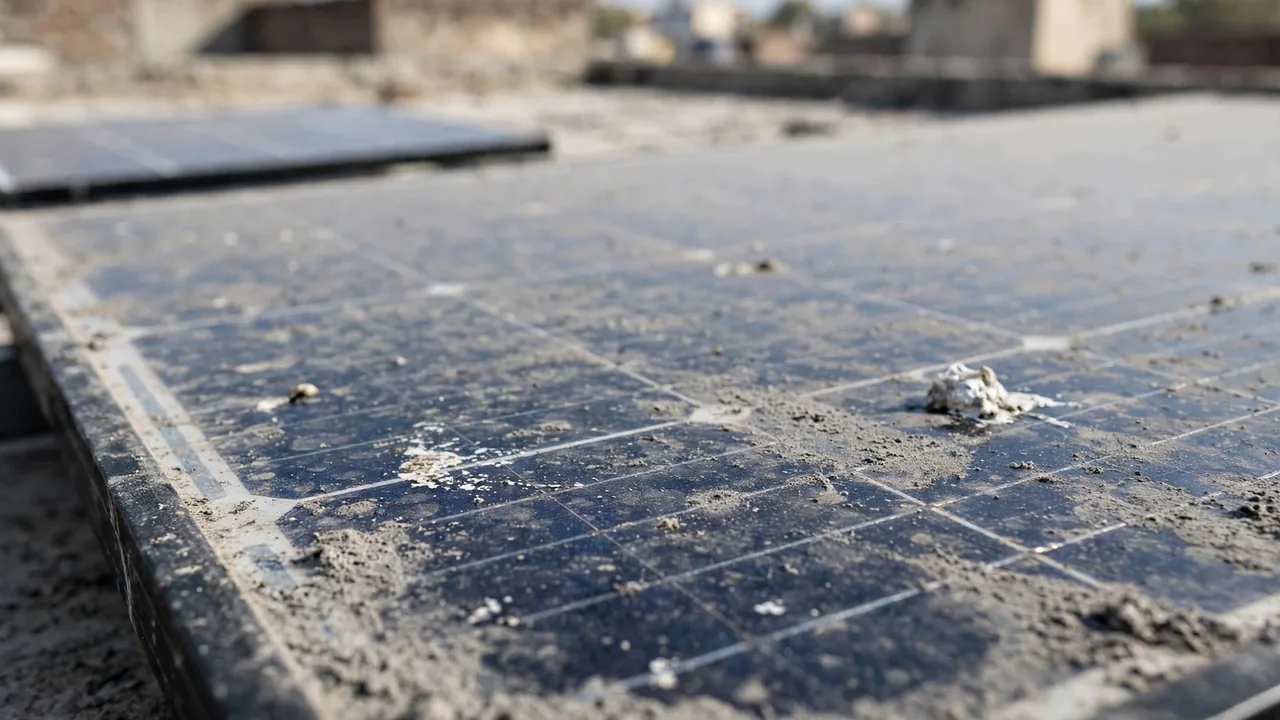
A grey film you can see from the ground. Walk to a spot where you can see the array and look across the glass. Clean panels look dark blue or black with a slight shine; dirty panels look dull and grey, sometimes with visible dust streaks after rain.
Bird droppings on the glass. Droppings are worse than general dust. One dropping can shade one or two cells almost completely, and in a series-wired string the weakest cell holds back the rest — so a single dropping can cost far more output than its size suggests. Soak the spot with water first and lift it gently; never scrape it dry.
Output has dropped on clear days. Compare the daily kilowatt-hour total in your monitoring app with the same month last year, not with a summer month. If clear days this month are producing noticeably less than clear days last year and nothing else has changed — no new shade, no error code on the inverter — dirt is the most likely cause. Our guide on why your solar system is producing less walks through the full elimination process, and cleaning is the simplest check in it.
Production jumps after rain. If a heavy rain washes the panels and production jumps back up the next day, dirt was costing you output. Treat that as a signal: your cleaning interval is too long for your roof, and you should clean more often.
What Makes Panels Dirty Faster
Five factors decide how quickly your panels soil. Knowing them helps you set the right interval for your own roof instead of copying a neighbour’s schedule. The biggest is dust itself: in the hot months before the monsoon, dust settles daily with no rain to wash it off, and homes on unpaved streets, near open plots or farmland, and in the drier districts soil fastest.
Winter smog in Punjab
From roughly November to January, smog settles over Lahore and other Punjab cities and deposits a fine soot film on everything outdoors, including solar panels. Smog is stickier than dust, it does not blow off, and a bright-looking smoggy day can still deliver far less sunlight to the panels. During smog season, clean every two to three weeks and add a clean after any long smog spell, even if the panels do not look dirty — the film is often visible only when you look across the glass at an angle.
Monsoon rain: help, with limits
Heavy monsoon rain does wash off loose dust, and many homeowners notice production recover after a good downpour. But rain is not a cleaner. Light rain leaves dirty residue behind when puddles evaporate, and rain does nothing for bird droppings, sap or baked-on grime. After the monsoon ends, always do a proper clean and check for mud, leaves and debris collected behind the array.
Tilt, roof position and surroundings
Panels installed at a good tilt shed dust and rainwater more easily than panels lying almost flat, where water pools and dirt settles — so a nearly flat array needs cleaning more often. Panels near a parapet wall or under a tree also soil faster, because leaves and bird droppings land on them and dust collects in sheltered corners. A construction site next door, a busy road or an overhanging tree can double how fast panels get dirty: construction dust is fine and persistent, road dust is constant, and trees bring leaves, sap and birds.
How to Clean Solar Panels Safely
Cleaning is simple, but it is roof work on electrical equipment, so follow these steps in order.
- Pick the right time. Clean early in the morning or late in the evening, when the panels are cool. Never pour cold water on hot panels at midday — the sudden temperature change can stress the glass. Bob Vila’s guide to how to clean solar panels makes the same point: cool, cloudy and mild conditions are best, and water evaporates too fast on hot glass, leaving streaks.
- Switch the system off first. Solar panels are electrical equipment. Follow the manufacturer’s instructions to shut the system down before cleaning, and never touch the underside of the panels or any wiring.
- Brush off loose debris dry. Use a soft-bristled brush on a long handle to dislodge dust, leaves and droppings before adding water. Work from the top edge down so dirty water runs off the panel.
- Rinse with plain water. A garden hose with no high-pressure attachment is enough for most dirt. Plain water is the best cleaner for dust; for stubborn spots, a little mild dish soap is acceptable if you rinse it off thoroughly, because soap residue attracts dirt afterwards.
- Scrub gently where needed. Use a soft sponge or cloth on spots that stay dirty, with patience and light pressure. Aggressive scrubbing scratches the glass, and scratches are permanent.
- Dry the panels. Wipe or squeegee the glass dry from the top down to avoid hard-water marks and streaks. A microfibre cloth is best.
- Restart and check. Switch the system back on and check the monitoring app the next clear day.
The right kit makes all of this easier and safer. Our solar panel cleaning tools guide lists the brushes, poles, hoses and cloths that are safe to use on panel glass — and the ones that are not.
Mistakes That Damage Panels
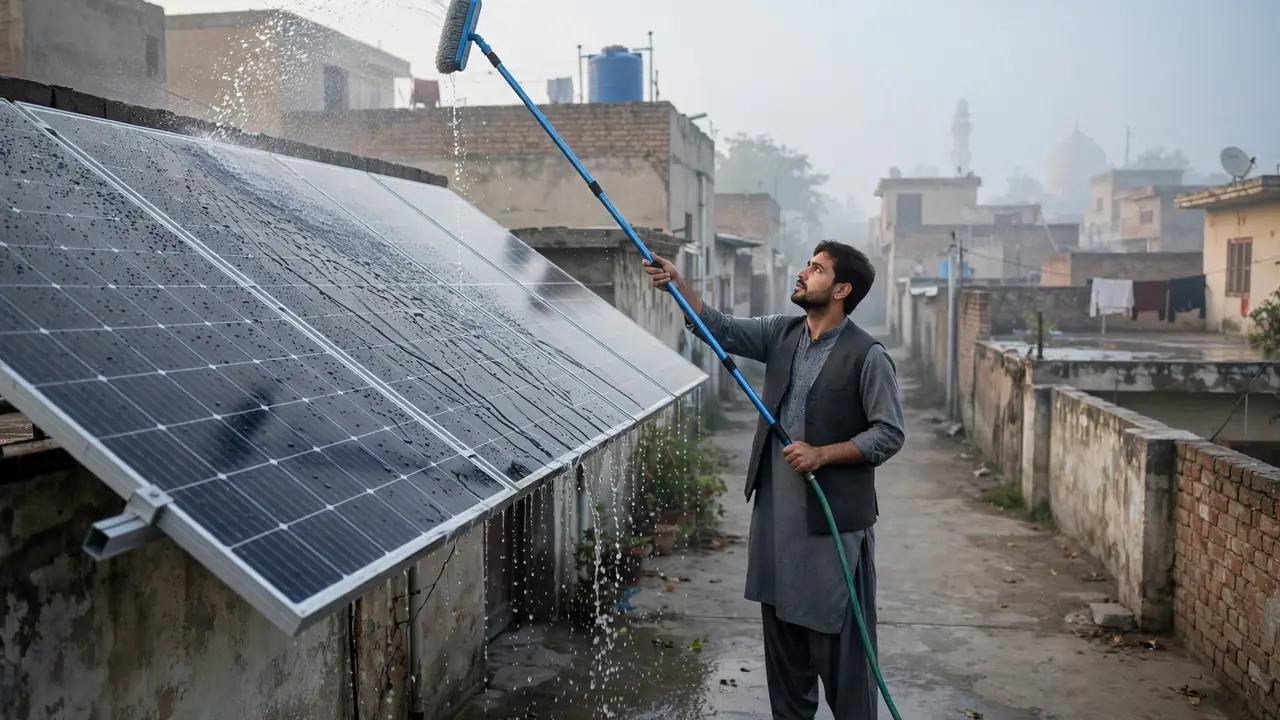
Most cleaning damage comes from the wrong tools, not from cleaning itself. Never use a pressure washer: the force can crack the glass, damage the frame seals and void your warranty. Never use a wire brush, scouring pad, abrasive cleaner or strong solvent, and never clean with cold water while the panels are hot in midday sun.
Two more mistakes are about safety, not the glass. Never stand on the panels — they are not built to carry your weight, and cracked glass with water on it is a shock risk. And never lean a ladder against the array or climb onto a steep, wet or slippery roof. If the panels are not safely reachable from the ground with an extension pole, that is a job for a professional, not a reason to take a risk.
When to Hire a Professional
Call a professional cleaning service if your panels are on a steep roof, two or more storeys up, or in a spot you cannot reach safely from the ground. Also call one if the array is heavily soiled after months without cleaning, or if stubborn grime will not shift with plain water and a soft brush. Your installer may offer cleaning as a service, and a yearly professional clean is a sensible complement to your own monthly routine, not a replacement for it. Do not confuse cleaning with repair: cracked glass, a shifted panel, a dark patch that does not wash off or a panel that feels hot in one spot are faults, not dirt — leave them alone and call your installer the same day.
Cleaning, Maintenance and Your Warranty
Panel and inverter warranties assume the system is kept in reasonable condition, and a dated log of cleaning and inspections supports a warranty claim far better than memory. Keep a simple record of the date of every clean, the inverter reading, and anything unusual you noticed. Neglect, such as never cleaning the panels or ignoring a fault, can weaken a claim, while a visible routine of care strengthens it.
Cleaning is only one part of looking after a system. The monthly routine in our solar system maintenance checklist — visual checks, inverter readings, battery terminals and structure bolts — takes less than an hour a month and catches small problems before they become expensive ones. A professional inspection once a year covers what monthly observation cannot: bolt torque, earthing resistance, cable insulation and battery health.
Frequently Asked Questions (FAQs)
How often should I clean my solar panels in Pakistan?
At least once a month in most cities, and every two to three weeks in dusty areas, near busy roads or construction sites, or during the winter smog season in Punjab. Clean within a few days after a dust storm, and always do a proper clean once the monsoon ends.
Does rain clean solar panels?
Heavy rain washes off loose dust, but it is not a full clean. Light rain leaves dirty residue behind when puddles evaporate, and rain does nothing for bird droppings, sap or baked-on grime, which need a manual wash with plain water and a soft brush.
What is the best time of day to clean solar panels?
Early in the morning or late in the evening, when the panels are cool. Never pour cold water on hot panels at midday, because the sudden temperature change can stress the glass, and water evaporates too fast on hot glass, leaving streaks.
Can I clean my solar panels myself?
Yes, if they are safely reachable from the ground with a long-handled soft brush and a garden hose. Switch the system off first, following the manufacturer’s instructions, and never climb a steep or wet roof, stand on the panels, or touch any wiring.
What should I never use to clean solar panels?
Never use a pressure washer, wire brush, scouring pad, abrasive cleaner or strong solvent. All of them can scratch the glass, damage the frame seals, or void the warranty. Plain water and a soft brush or sponge are enough for most dirt.
How do I know my solar panels need cleaning?
Look for a grey film on the glass that you can see from the ground, bird droppings, or a drop in the daily kilowatt-hour total on clear days compared with the same month last year. If production jumps after heavy rain, dirt was costing you output.
Should I clean my solar panels during smog season?
Yes. Winter smog in Punjab leaves a sticky soot film on the glass that does not blow off. Clean every two to three weeks from roughly November to January, and add a clean after any long smog spell.
Does cleaning affect my solar panel warranty?
Warranties assume the system is kept in reasonable condition, so a dated log of cleaning and inspections supports a claim far better than memory. Neglect, such as never cleaning the panels or ignoring a fault, can weaken a claim.