
Solar Panel Insurance in Pakistan: What It Covers and How to Buy It

The short answer: solar panel insurance in pakistan is a policy that pays for the repair or replacement of your solar system when it is damaged by fire, a storm, a flood, theft or an accident. It is not the same as the manufacturer’s warranty, which only covers defects in the panels themselves. If your panels sit on a rooftop in a city that sees monsoon flooding, hailstorms or theft, insurance is the document that stands between one bad night and a bill for a whole new system.
A home solar system is one of the most expensive things most Pakistani families will ever put on their roof. Panels, an inverter, batteries and mounting structure together represent years of savings, and they sit outside, exposed to weather, dust and anyone who can climb onto a roof. This guide explains what solar insurance covers in Pakistan, what it does not cover, how it differs from a warranty, and how to buy it without signing something you have not read.
What Is Solar Panel Insurance?
Solar panel insurance is a general insurance policy that covers the financial loss if your solar energy system is damaged or stolen. The insured system usually includes the solar panel array, the inverter, the mounting structure and, depending on the policy, the batteries and wiring. The insurer agrees to pay for repairs or to reimburse the value of the system if a covered event destroys it, and you pay a premium for that promise.
There are two ways solar cover is usually sold in Pakistan. The first is a dedicated solar policy, written specifically for a solar PV system. TPL Insurance, for example, sells a named Solar PV Insurance product for residential, commercial and industrial systems. The second way is as part of a home or property policy: your panels are declared as part of the house, and the home policy covers them against the same risks it covers the building against. Which route fits you depends on your system, your existing home cover and what the insurer is willing to write — ask for the answer in writing, not over the phone.
One thing insurance is not: a maintenance contract. It does not pay for cleaning, routine servicing or a gradual drop in output. It exists for sudden, unexpected events — the night a storm tears panels off a frame, the fire that starts in a faulty connection, or the morning you find panels missing from the roof.
What Does Solar Panel Insurance Usually Cover?
Cover varies from policy to policy, and the wording on your own policy is the only version that matters. That said, most solar policies in Pakistan are built around the same set of risks:
- Fire and lightning: damage from fire, lightning strikes and explosions affecting the panels, inverter or wiring.
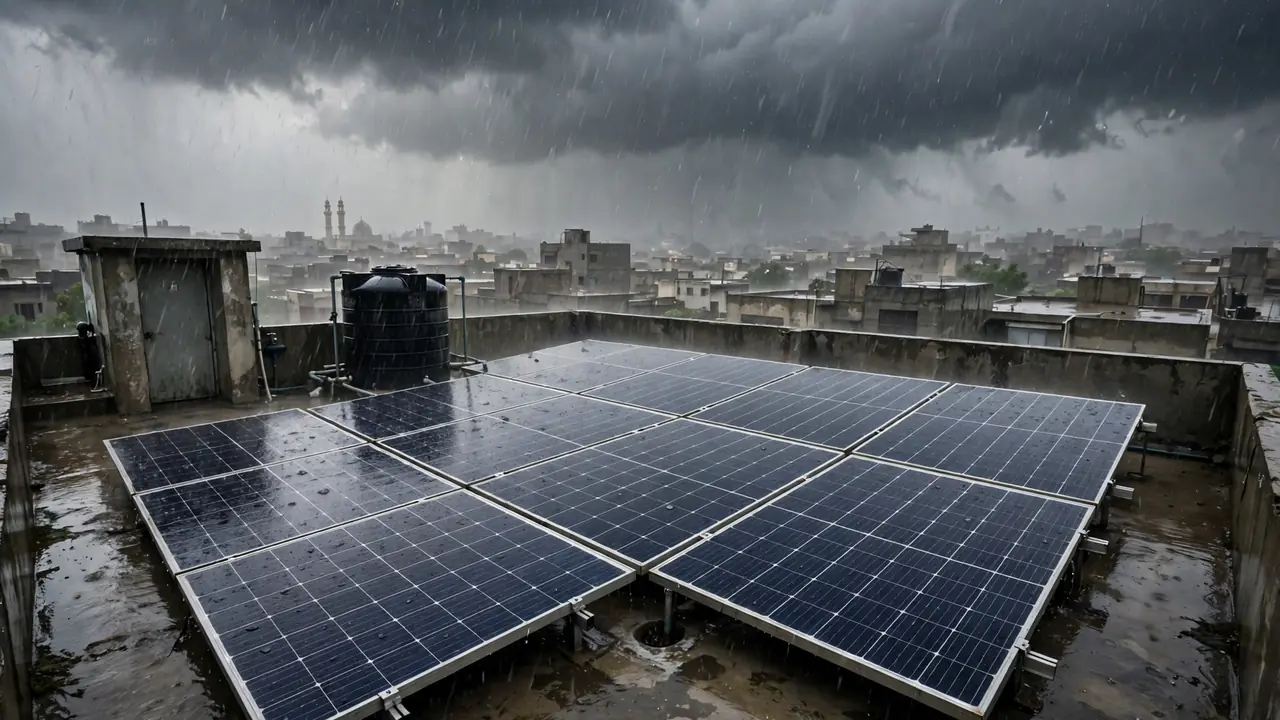
- Natural disasters: earthquakes, floods, hailstorms, cyclones and severe windstorms — the events that cause the most rooftop damage during monsoon season.
- Theft and burglary: panels or inverters stolen from the property. Note that most policies only cover theft involving forcible and violent entry or exit, so a theft by someone who had lawful access to the premises is commonly excluded.
- Accidental damage: a panel cracked by a falling object, impact damage from a vehicle, or damage during a storm.
- Electrical faults: damage from short circuits, power surges and electrical faults, usually under a specific electrical clause with its own limits. TPL’s solar policy, for example, covers partial electrical damage under its Electrical Clause ‘B’ only when the damage was caused by fire or lightning, and only up to a stated share of the system value — the exact share is set out in the policy wording.
- Third-party liability and business interruption: mainly relevant to commercial and industrial systems, where a damaged system also means lost generation and lost income.
Before you buy, check whether the inverter, batteries and mounting structure are included or whether the policy covers panels only. An inverter is usually the most expensive single component after the panels themselves, and the solar inverter price in pakistan is a large part of the value you are protecting. If the inverter is not listed in the policy schedule, it is not covered, however expensive it was.
What Is Usually Not Covered?
Exclusions matter more than the list of covered risks, because a claim is refused on an exclusion. The exclusions below appear in most solar and property policies, but read your own wording — it is the final authority:
- Gradual wear and tear: slow degradation of panels over time, dust build-up, corrosion from neglect and normal ageing are not insurable events.
- Manufacturer defects: a faulty cell, a delaminating backsheet or a panel that underperforms from the factory is a warranty matter, not an insurance claim.
- Poor installation: damage caused by incorrect mounting, undersized cables, missing earthing or unapproved modifications is commonly excluded, and the insurer may ask who installed the system.
- Negligence and poor maintenance: damage that happened because the system was not maintained, or because a known fault was ignored, is generally not covered.
- War, nuclear events and deliberate damage: standard exclusions in almost every property policy.
This is why the paperwork from your installation matters. Keep the purchase invoice, the installer’s completion note, the panel serial numbers and photographs of the finished installation. Our solar panel verification guide explains how to check serial numbers and datasheets — the same documents an insurer will ask for when you declare the system and again if you ever claim.
Solar Insurance vs Warranty: The Difference
Homeowners often confuse the two, and the confusion only becomes expensive after something goes wrong. The difference is simple:
- Warranty is a promise from the manufacturer. It covers manufacturing defects and, in the case of a performance warranty, the panel’s output over time. It does not cover a panel smashed by hail, stolen from a roof or damaged by fire.
- Insurance is a promise from an insurer. It covers sudden external damage — fire, flood, storm, theft, accidents — and does not cover manufacturing defects or gradual loss of performance.
You need both, and neither replaces the other. A panel with a long warranty and no insurance is unprotected against a storm; a panel with insurance and no verifiable warranty is hard to replace like-for-like, because the insurer settles on the value of what was actually installed. Read our Jinko solar panel warranty guide to understand product warranty versus performance warranty, and our solar inverter warranty guide for the inverter, which usually has its own, shorter warranty terms.
Who Should Consider Solar Insurance?
Insurance is not legally mandatory for a home solar system in Pakistan, so the decision is a judgement about risk. It is worth serious consideration if any of the following apply:
- Your system is financed: some banks ask for insurance as a condition of a solar loan, and a policy with a bank mortgage clause can satisfy that requirement. Check with your bank before you sign the loan, not after.
- You live in a flood or storm-prone area: rooftops in areas that see monsoon flooding, hailstorms or severe wind are exposed every season.
- Theft is a real risk in your area: panels are valuable, portable and visible. If thefts have happened nearby, cover matters — and so do physical precautions. Our solar panel theft protection guide covers anti-theft bolts, alarms and other measures that also make an insurer more willing to cover you.
- Your system is large or commercial: a bigger system means a bigger loss, and for a business it also means lost generation while the system is down.
- You could not afford to replace the system: this is the honest test. If paying for a new system out of pocket would be a serious financial blow, the risk is worth transferring to an insurer.
If your system is small, in a low-risk area, and you could replace a damaged panel without hardship, you may reasonably decide to self-insure — but make that a conscious decision, not an oversight. Many homeowners only discover their home policy does not mention solar equipment after a loss, when it is too late to add it.
How to Buy Solar Panel Insurance in Pakistan
1. Decide what needs covering
List every component: panels, inverter, batteries, mounting structure, cables and protection devices. The declared value — the sum insured — should reflect what it would cost to replace the system, which follows the current solar panel price in pakistan and the cost of the other components. Under-declaring saves on premium and costs you at claim time, because the insurer settles in proportion to the declared value. If your system includes a battery bank, ask specifically whether batteries are covered as part of the system or listed separately — the lithium battery price in pakistan is often a large share of the whole system value, and a policy that covers panels but not batteries leaves a big gap.
2. Choose between a dedicated solar policy and a home-policy addition
Ask your existing home insurer whether your panels can be added to your home policy and what that changes — some treat rooftop panels as part of the building, others want them listed separately, and ground-mounted systems or panels on a detached structure almost always need separate treatment. If your home insurer will not cover them properly, ask a general insurer for a dedicated solar policy. TPL Insurance publishes a dedicated Solar PV Insurance product for homes, businesses and industry; large general insurers such as Jubilee General, EFU General and Adamjee Insurance are all registered with the SECP and sell home and fire cover under which solar equipment may be added — ask each one, in writing, whether your panels are covered and on what terms, rather than assuming they are.
3. Check the insurer is licensed
Only buy from an insurer registered with the Securities and Exchange Commission of Pakistan (SECP)), the federal regulator for insurance. The SECP publishes a list of active insurers, and you can confirm a company is on it before you pay anything. Do not buy cover from an unregistered seller or from a dealer who offers “insurance” as a verbal promise with the panels.
4. Gather your documents before you apply
An insurer will usually ask for the purchase invoice, the panel and inverter model and serial numbers, photographs of the installed system, and the installer’s details. Systems bought from a verified seller with proper invoices are far easier to insure than systems bought informally with no paperwork. Our where to buy solar panels guide explains how to choose a seller who gives you the documentation an insurer wants to see.
5. Read the exclusions and the claim conditions
Before signing, read the exclusions, the excess (the part of any loss you pay yourself), the claim time limit and the cancellation terms. TPL’s solar policy, for example, requires a written claim within a short window after the incident and asks for photographs, invoices, proof of ownership and a police report where applicable. If those conditions look unworkable for you, that policy is the wrong one, however attractive the headline cover sounds.
How to Make a Claim
If your system is damaged or stolen, the order of events matters. Based on the published claim guidance of insurers that sell solar cover in Pakistan, the usual process is:
- Notify the insurer immediately — do not wait for repairs to start, and do not dispose of damaged equipment before the insurer has seen it.
- File a written claim within the time limit in your policy. TPL’s solar policy sets this at fifteen days from the incident unless an extension is granted in writing. Other insurers set their own limits, so check yours.
- Collect the evidence: photographs of the damage, the purchase invoices, proof of ownership, the panel serial numbers, and a police report (FIR) if theft or burglary is involved.
- Wait for the surveyor: the insurer will usually send a surveyor to inspect the damage before approving repair or replacement.
- Keep every receipt for emergency repairs you had to make to prevent further damage, and tell the insurer about them.
Two habits make claims go smoothly: photograph the whole installation on the day it is commissioned, and keep a folder — physical or digital — with the invoice, warranty cards, serial numbers and the policy itself. A claim with complete documents is settled faster than one where the insurer has to chase the basics.
Do You Need Solar Panel Insurance?
There is no universal answer, and anyone who gives you one is selling something. The honest way to decide is to weigh three things: the value of your system, the risks on your particular roof, and whether you could absorb the loss. Start from the solar system price in pakistan for a system like yours, add the cost of installation, and compare that total with what you could pay out of pocket tomorrow if the whole array had to be replaced. A system that represents a large share of your savings, on a roof exposed to storms or theft, in a home without other cover, is a strong case for insurance. A small system in a low-risk area, owned by someone who could replace it, is a weaker one.
What is not a good reason to skip it is assuming you are already covered. Check your home policy today — if the words “solar panels” do not appear in it, ask your insurer in writing whether they are covered. And if you are still deciding whether solar is worth it at all, our guide on whether solar panels are worth it walks through the full investment decision. Insurance does not make a bad system good, but it does make a good system safer to own — and for most Pakistani homeowners, that is the whole point of buying it.
Is solar panel insurance mandatory in Pakistan?
No. Solar panel insurance is not legally mandatory for a home system in Pakistan. However, some banks ask for insurance as a condition of a solar loan, and a policy with a bank mortgage clause can satisfy that requirement — check with your bank before you sign the loan.
Does home insurance cover solar panels in Pakistan?
Sometimes. Rooftop panels are often treated as part of the building under a home policy, but not always, and ground-mounted systems or panels on a detached structure usually need separate treatment. Ask your insurer in writing whether your panels are covered and on what terms — do not assume they are.
Does solar panel insurance cover theft?
Usually yes, but with a condition: most policies only cover theft or burglary involving forcible and violent entry or exit. Theft by someone who had lawful access to the premises is commonly excluded. Physical precautions such as anti-theft bolts and alarms also help.
Does solar panel insurance cover flood and storm damage?
Most dedicated solar policies include earthquakes, floods, cyclones, hailstorms and severe windstorms. The exact list of covered events is in the policy wording, so read it — a policy that covers fire but not flood is a different product from one that covers both.
What is the difference between solar panel insurance and a warranty?
A warranty is a promise from the manufacturer covering manufacturing defects and, for a performance warranty, the panel’s output over time. Insurance is a promise from an insurer covering sudden external damage such as fire, flood, storm, theft or accidents. You need both — neither replaces the other.
What documents do I need to make a solar insurance claim?
Typically a written claim filed within the time limit in your policy, photographs of the damage, the purchase invoices, proof of ownership, the panel serial numbers, and a police report (FIR) if theft or burglary is involved. Keep the invoice, warranty cards and serial numbers in one folder from the day of installation.