
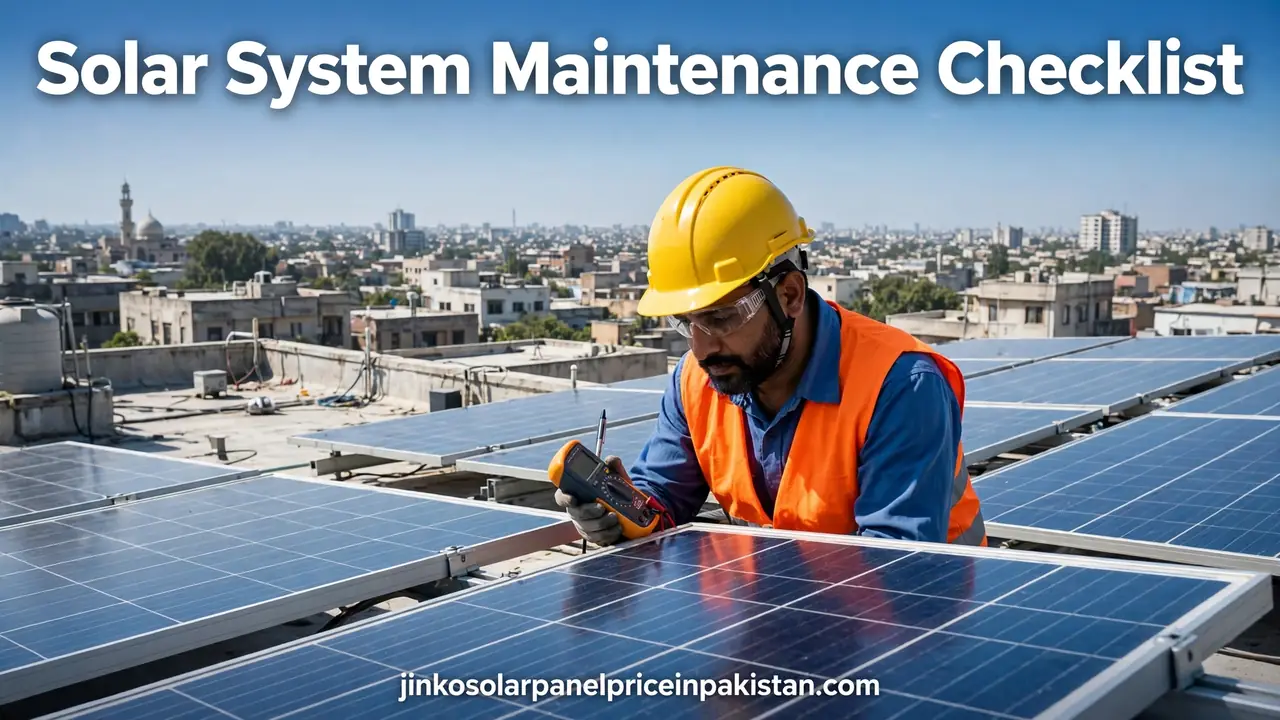
Solar System Maintenance Checklist: Monthly and Yearly Tasks

What is a solar system maintenance checklist? It is a simple, repeating routine — monthly checks you do yourself, plus a thorough yearly inspection by a professional — that keeps your panels, inverter, batteries and structure working safely and producing power for their full life. This guide gives you that routine for a home solar system in Pakistan: what to check every month, what to do each season, and what to leave to a technician.
A solar system has no moving parts, so it is easy to forget about it once it is installed. That is exactly the problem: dust settles on the panels, a cable works loose, a battery terminal corrodes, a bolt rusts — and each small problem quietly cuts output or becomes a safety risk. A checklist turns maintenance into a habit of less than an hour a month.
Why Maintenance Matters
Maintenance protects three things: output, safety and warranty. Output falls gradually when panels are dirty or a connection is loose, so you may not notice the loss until the monthly bill tells you. Safety is the bigger reason: a solar system carries high-voltage direct current on the roof, and loose connections, damaged cables and poor earthing are the faults that cause fires. And most panel and inverter warranties assume the system is kept in reasonable condition — a claim is much easier when you can show the system was inspected and cleaned regularly. Our earthing and grounding guide explains the first line of defence, and our lightning protection guide covers the protection alongside it.
Most of the routine is simple observation — looking, listening and reading the inverter display — and you should never open the inverter or work on live wiring yourself.
Monthly Tasks: A Quick Visual Check
Once a month, spend ten minutes looking at the whole system, starting where the array is visible — from the roof, a window or a balcony. Look for panels that are cracked, discoloured or tilted differently from their neighbours, and for any new shade: a tree that has grown, a neighbour’s new water tank, or a dish antenna moved into the sun’s path. Shading on even one panel can drag down a whole string. Our shading analysis guide explains how shade moves across a roof through the year.
Then look at the structure. The frame should sit square and level, with no visible rust streaks, no bent members and no bolts lying loose on the roof. After a storm, this check matters most: high wind is the hardest load a rooftop structure faces, and our solar structure wind load design guide explains where wind attacks a frame first. If anything has moved or looks bent, call a technician promptly.
Finish at ground level: the cables from the roof should run neatly in conduit or trunking, with no cable hanging loose, no insulation cracked, and no junction box left open. Check the inverter and distribution board for scorch marks, a burning smell, or any buzzing sound. Any of those means switching the system off at the AC breaker and calling a technician the same day.
Monthly Tasks: Cleaning the Panels
In most Pakistani cities, panels need cleaning at least once a month, and more often in dusty areas or near construction sites. Dust, bird droppings and soot form a film that blocks sunlight, and the loss builds up silently week by week.
Clean early in the morning, when the panels are cool — never pour cold water on a hot panel at midday, as the sudden change can stress the glass. Use clean water and a soft brush or sponge with a long handle, working from the top edge down so dirty water runs off. Plain water is enough for dust; for bird droppings, soak the spot first and lift it gently rather than scraping. Never use a pressure washer, a wire brush, a scouring pad or any detergent — all of them can scratch the glass or damage the frame seals. Our guide to cleaning solar panels covers when cleaning is needed, and our solar panel cleaning tools guide lists the kit that is safe to use.
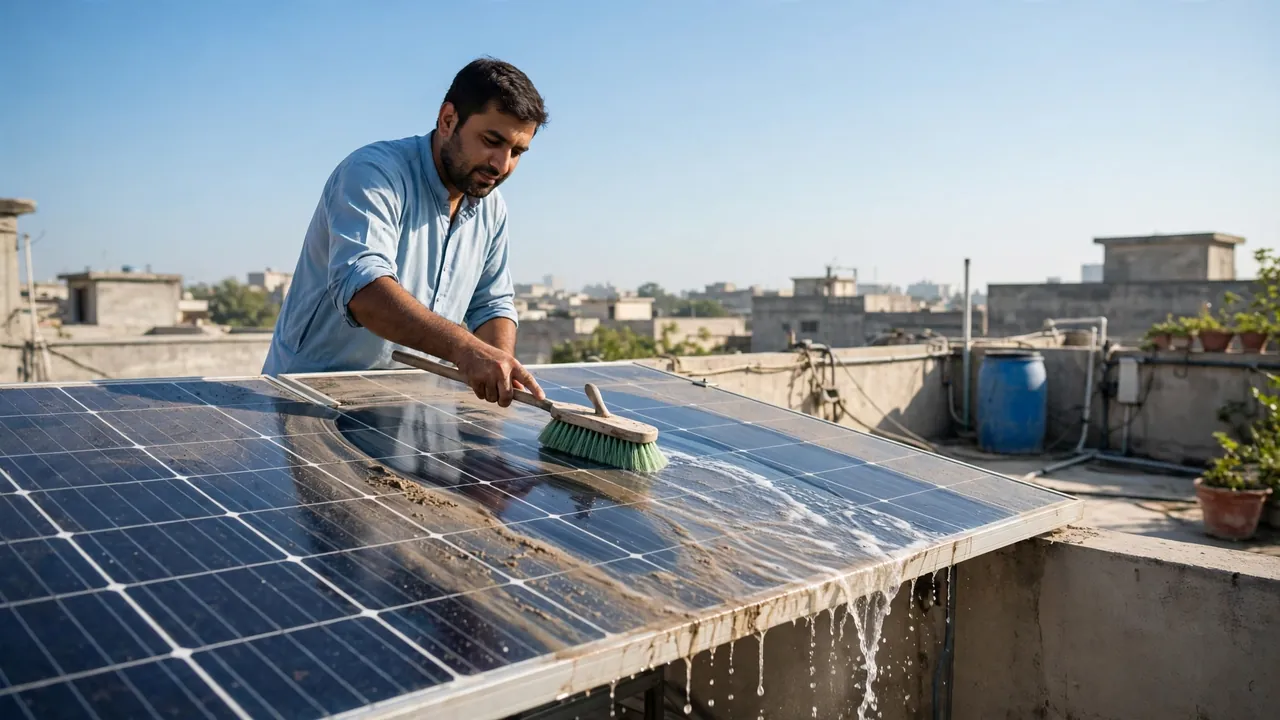
Safety comes first with cleaning. If the roof is steep, wet or hard to reach, do not climb up — hire someone with the right equipment. Never stand on the panels, never lean a ladder against the array, and never clean while standing in water. If a panel is cracked, leave it alone and call a technician: a cracked panel with water on it is a shock risk.
Monthly Tasks: Checking the Inverter
The inverter is the part of the system that talks to you, so check what it is saying monthly. Look at the display or the monitoring app and note the day’s energy production, and compare it with what the system produced on a similar sunny day the previous month. You are not looking for an exact number — you are looking for a pattern. A system that produced well on clear days and now produces noticeably less on equally clear days has a problem worth investigating, whether it is dirt, shade or a failing connection.
Also check the inverter’s status light and any error code. A green light and no code is normal. A red or flashing light, an error code, or a repeated restart means the inverter is protecting itself from a fault — note the code as shown and pass it to your installer or technician. Do not keep resetting the inverter to clear a fault; the fault is the message, and clearing it without fixing the cause only hides it. Our solar inverter buying guide explains the different inverter types and what their displays and protections mean.
While you are at the inverter, listen: a quiet hum is normal; a loud buzzing, clicking or rattling is not. Check that the area around the inverter is clear — inverters need airflow to stay cool, so nothing should be stacked against them or blocking their vents. In summer, an inverter in a hot, airless room will produce less. Keep the inverter dry and out of direct rain, and never spray water near it while cleaning panels.
Monthly Tasks: Batteries and Wiring
If your system has batteries, they need a monthly look too. Check the terminals for white or green crust, which is corrosion, and for any cable that feels loose or warm — a warm terminal means resistance, and resistance means heat. Check the casing for swelling, cracks or leaks, and confirm the battery area is ventilated and dry. Never bring a flame near a battery bank, and never service a battery you have not been trained to handle.
For tall tubular batteries, check the water level once a month and top up only with distilled water, only to the marked level, and only when the battery is charged — never with tap water and never overfilled. Our tubular battery water maintenance guide walks through the exact steps, and our solar battery maintenance guide covers the full monthly battery routine for every battery type. Lithium batteries need no water, but they still need the same terminal and casing checks.
Finish by checking the changeover switch, breakers and distribution board: every breaker should sit firmly in position, labels readable, and nothing hot to the touch. A breaker that trips repeatedly needs investigation, not repeated resetting.
Seasonal Tasks: Before and After the Monsoon
Pakistan’s monsoon is the hardest season for a solar system. Before the rains arrive, confirm that every cable entry is sealed, every junction box lid is closed and clipped, and water can drain off the roof instead of pooling around the structure feet. Check that the panels’ low edges are clear so rainwater runs off freely, and that no leaves or debris have collected behind the array.
After the monsoon, do the same round again, and add two checks. First, look for rust at every bolt, clamp and cut end — rust caught early is a wire-brush and paint job, while rust left for a year is a replacement. Second, check the structure for movement: heavy rain softens roof surfaces and strong wind pushes hard on the array, so confirm the frame is still square and every anchor is tight.
Yearly Tasks: The Professional Inspection
Once a year, a qualified technician should go over the whole system properly. This is the inspection that catches what monthly observation cannot: bolt torque, earthing resistance, DC cable insulation, the tightness of every connection inside the inverter and distribution board, and the health of each battery cell. Book it for the same month every year, and keep the written report with your other system documents.
Ask the technician to check four things: the structure (every bolt torqued, every clamp seated, anchors sound, earthing bond intact); the electrical side (connections tight, cable insulation sound, surge protection healthy, earthing resistance within limits); the panels (each one checked for cracks, hot spots and delamination, output compared with expectations); and the batteries (capacity tested, terminals cleaned, weak cells identified before they drag the bank down).

If your installer offered a maintenance contract, the yearly inspection is usually part of it — but whether it is contracted or booked separately, do not skip the year.
What to Record: A Simple Maintenance Log
A checklist only works if you can see what you did. Keep a simple log — a notebook by the inverter or a note on your phone — and record the date of every clean and check, the inverter reading, and anything unusual you noticed. Add the yearly inspection report and the serial numbers of your panels, inverter and batteries. Our solar panel theft protection guide explains why keeping serial numbers recorded matters: it is the record you need if a panel is ever stolen or a warranty claim is ever made.
The log shows trends — output drifting down on equally sunny days tells the technician where to start — and it proves maintenance happened, which supports any warranty claim far better than memory.
Warning Signs That Need a Technician
Some problems are not maintenance tasks at all — they are repair calls. Switch the system off at the AC breaker and call a technician the same day if you notice any of these: a burning smell or scorch marks; a breaker that trips repeatedly; an inverter showing the same error code again after a reset; a panel that is cracked, has a dark patch that does not wash off, or feels hot in one spot; a battery that is swollen, leaking or very hot; or any cable with exposed copper. Do not wait for the next monthly check and do not try to fix any of these yourself.
Call promptly, too, if production drops suddenly on clear days, if the inverter goes silent during sunshine, or if the structure has visibly moved after a storm. Your maintenance log — dates, readings, what changed and when — is the first thing the technician will ask for. EnergySage’s guide to solar panel maintenance makes the same point: monitoring production and keeping panels clear of debris are the best things you can do to maintain performance, and periodic checks help you catch issues as they arise. See the guide here: Solar Panel Maintenance: Minimal Work, Maximum Savings (EnergySage).
Frequently Asked Questions (FAQs)
What is a solar system maintenance checklist?
A solar system maintenance checklist is a repeating routine of monthly checks you do yourself — visual inspection, panel cleaning, inverter readings and battery checks — plus a thorough yearly inspection by a professional. It keeps panels, inverter, batteries and structure working safely and producing power for their full life.
How often should I clean my solar panels in Pakistan?
In most Pakistani cities, clean your panels at least once a month, and more often in dusty areas or near construction sites. Clean early in the morning with plain water and a soft brush, and never use a pressure washer, wire brush or detergent, which can damage the glass and frame seals.
What should I check on my inverter every month?
Check the day’s energy production against a similar sunny day last month and look for a pattern, not an exact number. Also check the status light and any error code on the display, listen for unusual buzzing or rattling, and make sure nothing blocks the inverter’s vents or airflow.
How often should a professional inspect my solar system?
Once a year. A qualified technician should check bolt torque, earthing resistance, DC cable insulation, connection tightness inside the inverter and distribution board, panel condition and battery health. Book it for the same month every year and keep the written report.
Does maintenance affect my solar panel warranty?
It can. Most panel and inverter warranties assume the system is kept in reasonable condition, and a dated log of cleaning and inspections supports a warranty claim far better than memory. Neglect — such as never cleaning the panels or ignoring a fault — can weaken a claim.
What are the warning signs that my solar system needs repair?
Switch the system off at the AC breaker and call a technician the same day if you notice a burning smell or scorch marks, a breaker that trips repeatedly, an inverter showing the same error code after a reset, a cracked or hot panel, a swollen or leaking battery, or any cable with exposed copper.
Can I do solar system maintenance myself?
Yes — the monthly routine is designed for homeowners: visual checks, cleaning with plain water and a soft brush, reading the inverter display and checking battery terminals. Never open the inverter, work on live wiring, or climb a steep or wet roof; those jobs belong to a qualified technician.