
How Net Metering Billing Works in Pakistan

How does net metering billing work in Pakistan? Your bill is calculated on the difference between the units you take from the grid and the extra solar units you send back to it. A special bi-directional meter records both directions separately: import units are the electricity your home draws from the grid, and export units are the surplus solar electricity your system feeds into the grid. At the end of the month, the distribution company (DISCO) subtracts your exported units from your imported units, and you are billed on the net figure — plus the fixed charges and taxes that apply to every connection. If you export more than you import in a month, the surplus is carried forward as a credit on your account instead of being paid out in cash.
That one idea — import minus export — explains almost everything on a net metering bill. But the bill can still look confusing at first, because it shows import units, export units, net units, carried-forward credit and fixed charges all at once. This guide explains each part in plain language, so you can read your own bill and spot mistakes.

How Net Metering Billing Works: The Basic Idea
Net metering changes the meter, not the idea of a bill. When your solar system is connected under net metering, the DISCO replaces your old meter with a bi-directional meter, sometimes called a net meter. This meter has two separate readings: one for the units flowing into your home from the grid, and one for the units flowing out of your home into the grid.
During the day, your panels generate electricity. Your home uses what it needs first, and any surplus flows out to the grid through the net meter. At night, or on cloudy days, your home draws electricity from the grid as before. The two readings are never mixed together — the meter does not simply run backwards. That separation matters, because the DISCO values imported and exported units differently. The regulator, NEPRA, sets the framework for how exported units are credited — you can read the regulator’s own net metering information on the NEPRA net metering page.
Import Units vs Export Units
Import and export units are the two building blocks of every net metering bill. Understanding the difference is the key to reading your bill correctly.
| Import Units | Export Units | |
|---|---|---|
| What they are | Electricity your home draws from the grid | Surplus solar electricity your system sends to the grid |
| When they happen | At night, and whenever your usage exceeds solar generation | During the day, when your panels generate more than your home uses |
| How they are measured | Recorded by the import register of the net meter | Recorded by the export register of the net meter |
| Effect on the bill | Increase what you owe | Reduce what you owe, as a credit |
| Where they appear | Shown as a separate line on the monthly bill | Shown as a separate line on the monthly bill |
A common misunderstanding is that every exported unit cancels out one imported unit at the same value. The two are counted separately and valued differently: imported units are charged at your normal tariff, while exported units earn a credit at the buyback rate set under the net metering framework. That is why self-consumption — using your own solar electricity directly during the day — is usually worth more than exporting it. A system matched to your daytime usage covers your own consumption first and exports only the genuine surplus; our guide on how to calculate your home’s electricity load for solar explains how to work out that daytime figure.
How Your Monthly Bill Is Calculated
Once the meter is read, your monthly bill is worked out in this sequence:
- The net meter is read. The DISCO records the import and export readings for the month.
- Net units are calculated. Exported units are subtracted from imported units. If you imported more than you exported, the difference is your net consumption. If you exported more, the difference becomes a credit.
- Energy charges are applied. Net units are charged at your applicable tariff. If the month ended in credit, the energy charge is nil.
- Fixed charges are added. Charges such as meter rent and service charges apply regardless of how many units you used — even in a month with zero net units.
- Taxes and surcharges are applied. These are calculated on the billed amount, not on the gross import or export figures.
- Carried-forward credit is adjusted. Any credit from previous months is adjusted against the current month’s charges, so a surplus from a sunny month can reduce a later bill.
Your bill can be very low in months when your system exports a lot, and close to a normal bill when your home imports a lot. It is never simply “zero” just because you have solar panels: fixed charges, taxes and night-time imports all still count.
Reading Your Net Metering Bill
A net metering bill carries extra lines for the export side. Here is what to look for:
1. Import units for the month
The units your home drew from the grid, from the import register. If this figure is much higher than usual, check whether night-time usage went up, or whether the system was off for part of the month.
2. Export units for the month
The surplus solar units your system sent to the grid, from the export register. If this figure is zero or unusually low in a sunny month, the system may not have been exporting — raise it with your installer, not the DISCO.
3. Net units billed
The import figure minus the export figure, and the number your energy charges are based on. If export exceeded import, this line shows a credit instead of a charge.
4. Carried-forward credit, fixed charges and the total
If earlier months ended with surplus export, the credit appears here and is adjusted against the current bill. A credit that never changes, or disappears without explanation, is worth a query at your DISCO office. Fixed charges, taxes and surcharges are listed separately, and the final payable amount is the sum of all of these after the credit adjustment.
If you are still waiting for your net meter, our net metering inspection guide explains what the DISCO checks before it goes in, and the net metering documents checklist lists the paperwork your application needs.
What Happens to Extra Exported Units?
When your system exports more units than your home imports in a month, the surplus does not disappear — and it is not paid to you in cash. It is recorded as a credit on your electricity account and carried forward to the next billing cycle, where it is adjusted against future charges.
That carry-forward is what makes net metering valuable across the seasons: surplus built up in the long, bright months offsets bills in the shorter, cloudier months. The exact treatment of carried-forward credit is set out in your net metering agreement with the DISCO, so keep a copy and check what it says about credit settlement. Two things are worth remembering. First, the credit is measured in units, not in money: it reduces future unit charges rather than arriving as a payment. Second, because exported units are credited at the buyback rate rather than at the full retail tariff, a unit you use yourself during the day is generally worth more than a unit you export. Running heavy appliances — washing machine, water pump, iron — during sunshine hours makes better use of your own generation than exporting the same units and buying them back at night.
Why Your Net Metering Bill Can Still Be High
Many homeowners are surprised by their first few net metering bills. The system is working, the panels are generating, yet the bill is not as low as they expected. There are a few honest reasons:
- Night-time usage is high. Air conditioners, fans and lights run after sunset, when the panels generate nothing. Every night-time unit is imported at the full tariff.
- Your sanctioned load limits the system. Your solar system cannot be larger than the sanctioned load on your connection, so a small load means a small system that can only offset part of your usage. Our guide on what sanctioned load means in net metering explains the limit and how to increase it.
- Fixed charges and taxes still apply. Even in a month with zero net units, fixed charges, taxes and surcharges appear on the bill. Solar panels reduce the energy part of the bill, not the fixed part.
Common Net Metering Billing Problems
- Export units shown as zero. If your system is running but the bill shows no export, the net meter may not be configured correctly, or the system may not actually be exporting. Check the inverter display first, then report it.
- Import units far higher than before solar. A sudden jump in import with no change in usage can mean the meter reading was estimated. Compare the reading dates on consecutive bills.
- Credit not carried forward. If a surplus month was followed by a bill with no credit line, ask the DISCO office to check the account, and keep your previous bills as proof of the credit.
- Old meter still in place. Until the bi-directional meter is installed, exported units are not recorded at all. If your panels are running but the old meter is still on the wall, the export is simply not being counted — chase the meter installation, not the bill.
How to Check and Dispute Your Bill
If something on your bill looks wrong, work through it in this order:
- Check the arithmetic and the readings. Import minus export should equal the net units shown. Compare the readings printed on the bill with the readings on your net meter — both registers should be moving.
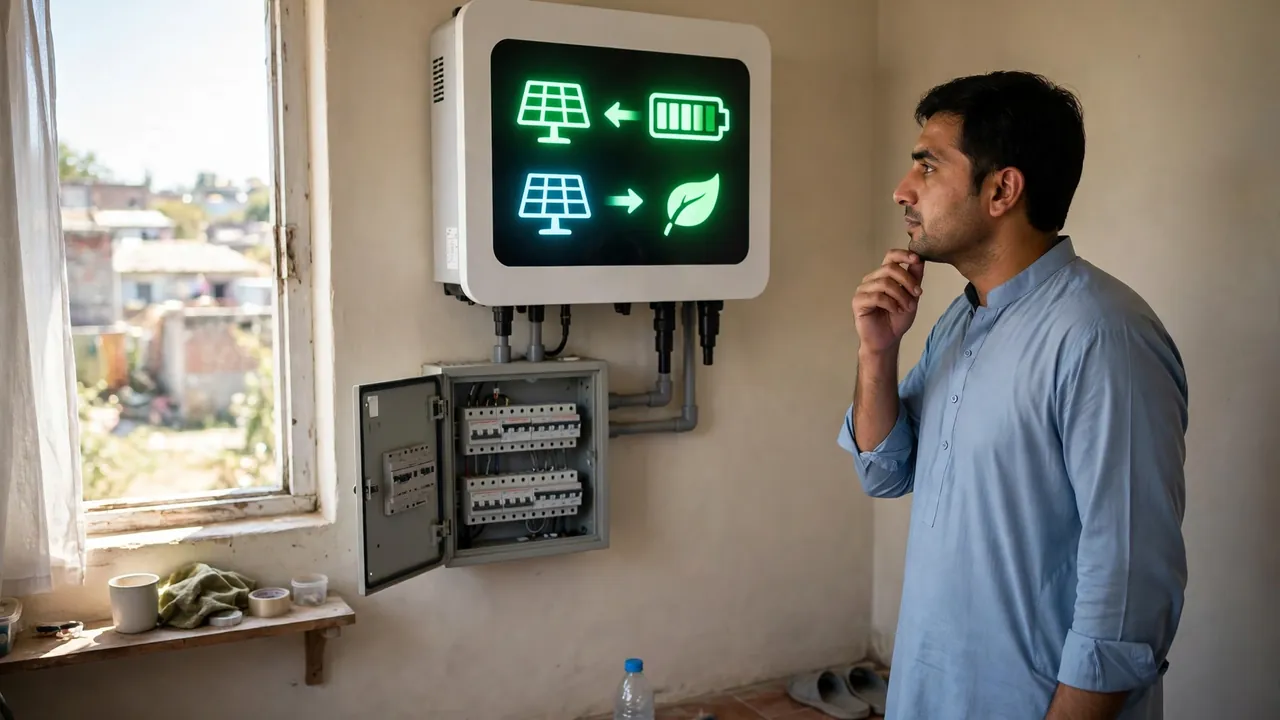
- Check the inverter. The inverter shows how much your system generated. If generation looks normal but export is zero, the problem is on the meter or connection side.
- Visit the DISCO office with your bills. Take the last two or three bills, your reference number and a copy of the net metering agreement. Ask for the billing record to be checked against the meter readings, and keep a written record of the visit — the date, the officer you spoke to, and any complaint number given. If the correction does not appear on the next bill, follow up with the same reference.
Most billing errors are corrected once the readings are checked, because the meter itself holds the evidence. Spot problems early — a wrong reading left for months is harder to untangle than one caught in the first month.
For the rules behind the whole process, see our latest net metering policy guide. If your bill itself has jumped for reasons unrelated to solar, our guide on the latest electricity unit price in Pakistan explains how unit rates are set and why they change.
Tips to Get More Value From Net Metering Billing
- Use heavy appliances during the day. Every unit you consume directly from your panels is a unit you do not have to buy back at night. Run the washing machine, water pump and iron in sunshine hours where you can.
- Keep panels clean. Dust and bird droppings cut generation, which cuts both self-consumption and export.
- Read the bill every month. A monthly check takes five minutes and catches reading errors, missing credits and sudden import jumps while they are still easy to fix.
- Do not oversize for export alone. Exported units are credited at the buyback rate rather than the full tariff, so a much bigger system earns credit more slowly than most people expect. Size the system to your daytime usage first, and treat export as a bonus. The solar inverter buying guide for Pakistan covers the sizing decisions that go with the panels.
Check Current Prices
Once you understand how net metering billing works, the next question is usually what a system costs. Panel, inverter and system prices change regularly, so see the latest daily-updated tables on our homepage — including the current solar plate price in pakistan, solar panel price in pakistan and solar inverter price in pakistan — before you ask an installer for a final quote.
Frequently Asked Questions (FAQs)
How does net metering billing work in Pakistan?
Your bill is calculated on the difference between the units you take from the grid and the extra solar units you send back to it. A bi-directional meter records import units and export units separately. The DISCO subtracts exported units from imported units, bills you on the net figure, and adds fixed charges and taxes. If you export more than you import, the surplus is carried forward as a credit.
What are import and export units on a net metering bill?
Import units are the electricity your home draws from the grid, at night or whenever your usage exceeds solar generation. Export units are the surplus solar electricity your system sends to the grid during the day. The net meter records both separately, and your bill is based on import minus export.
What happens if I export more units than I import?
The surplus is recorded as a credit on your electricity account and carried forward to the next billing cycle, where it is adjusted against future charges. The credit is measured in units, not in money, and it is not paid out in cash. The exact treatment of carried-forward credit is set out in your net metering agreement with the DISCO.
Why is my net metering bill still high?
Usually night-time usage, which is imported at the full tariff after the panels stop generating. Fixed charges and taxes also still apply, even in a month with zero net units. A small sanctioned load limits the system size, and seasonal change or an underperforming system can also raise the bill.
What are the fixed charges on a net metering bill?
Fixed charges such as meter rent and service charges apply to the connection regardless of how many units you used. Even in a month with zero net units, these fixed charges still appear on the bill, along with taxes and surcharges calculated on the billed amount.
How can I check if my net metering bill is correct?
Check that import minus export equals the net units shown, compare the readings printed on the bill with the readings on your net meter, and check the inverter display to confirm the system generated normally. If something still looks wrong, visit the DISCO office with your last two or three bills, your reference number and your net metering agreement.
How can I reduce my net metering bill?
Use heavy appliances such as the washing machine, water pump and iron during sunshine hours, so you consume your own solar electricity directly instead of exporting it and buying it back at night. Keep the panels clean, read the bill every month, and size the system to your daytime usage rather than oversizing for export alone.