
Winter Solar Maintenance Tips for Pakistan

How do you keep a solar system healthy through a Pakistani winter? Clean the fog and smog film off the panels regularly, check the mounts, cables and inverter before December, look after the batteries, and accept that shorter days mean lower output — the cold itself does not harm the panels. Winter solar maintenance in Pakistan is mostly about fog, dust and preparation: the panels work well in cold, clear weather, but dense fog in Punjab, smog over the cities and fewer daylight hours cut the sunlight reaching them.
Winter in most of Pakistan runs from December to February. Lahore, Faisalabad, Multan and the rest of Punjab get weeks of dense fog, often combined with smog, while Karachi stays milder and the northern areas get cold nights and occasional frost. Your routine should match where you live — a system in Lahore needs fog-season cleaning far more often than one in Karachi.

How Winter Weather Affects Solar Panels in Pakistan
Winter changes a solar system in three ways: less sunlight, dirtier glass and colder nights. The sun sits lower and the days are shorter, so the panels receive fewer hours of useful light — the biggest reason winter output is lower. It is normal, and it recovers as the days lengthen in February and March. Judge the system across the whole season, not by a single foggy week.
The cold itself is not the enemy. Solar panels convert light into electricity, not heat, and a panel converts light slightly more efficiently when its cells are cool. A cold, clear January morning can be a good production day — the problem is that clear mornings are rare in fog season. The U.S. Department of Energy notes that solar panels keep producing useful power through all four seasons. Read its explainer on how solar panels can thrive in winter weather — cold weather helps panel efficiency, while heavy cover on the glass is what cuts output.
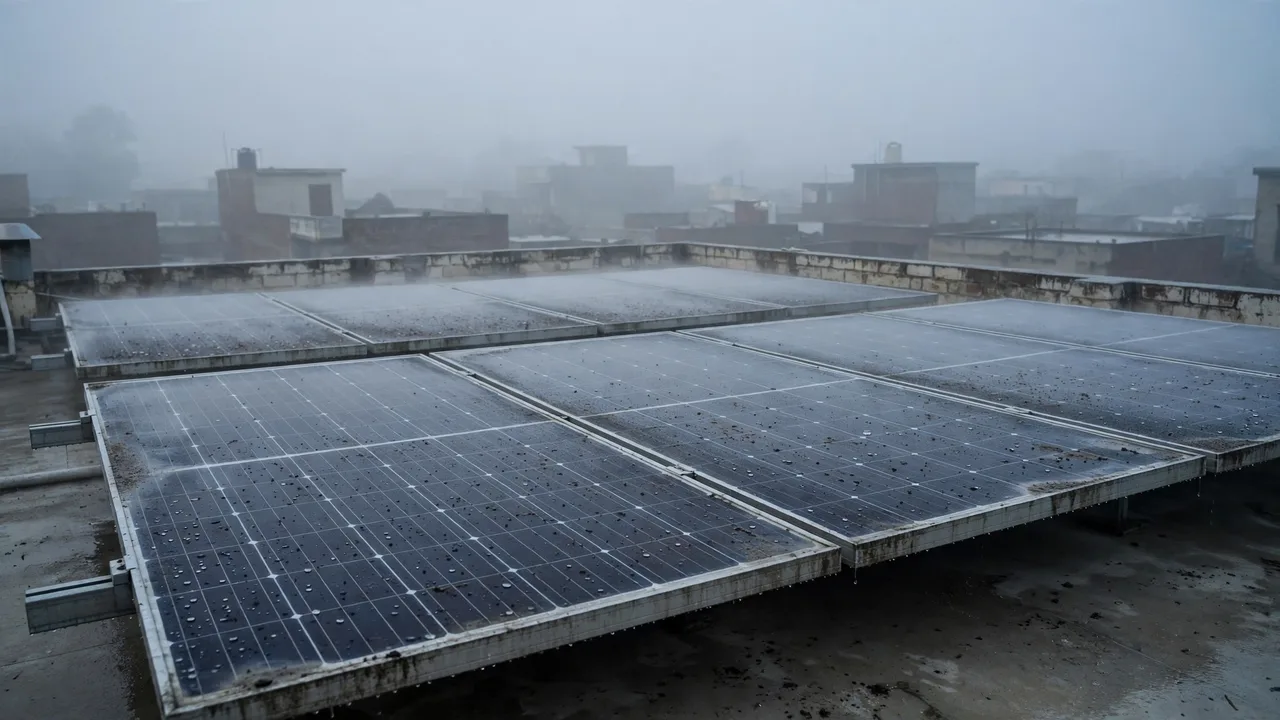
Cold nights bring a different risk: water left in a cable tray or a low spot can freeze overnight in the north, and a frozen connector is more likely to crack. Dew forms heavily on panels in Punjab winters, mixing with dust and smog to leave a sticky film on the glass — the main winter maintenance problem for most Pakistani homeowners.
Fog and Smog: The Biggest Winter Problem
For most of Punjab, fog is the defining winter problem. Dense fog can last from late evening until mid-morning, and during a fog spell the sun may not properly reach the panels until noon. Add smog — the grey-brown haze over Lahore and other cities from November to February — and the panels can spend weeks under a dirty sky. Our guide to how dust and smog affect solar panels in Punjab explains how fine particles settle on the glass and scatter light before it reaches the cells.
On a clear winter day your inverter will show a normal morning ramp-up; on a foggy day the ramp starts late and stays low until the fog lifts. What you can control is the glass: a panel that is already dirty loses far more in fog than a clean one. The useful response is cleaning on clear days, between fog spells, so that when the sun does come out the panels are ready for it. Our seasonal explainer on winter vs summer solar output in Pakistan shows what to expect from each season so you can tell normal winter dips from real faults.
How to Clean Solar Panels in Winter
Winter cleaning follows the same rules as any other season, with two extra cautions. Clean only in the early morning or late evening, when the panels are cool. Never pour cold water on a panel that has been sitting in direct sun, and never pour hot water on a cold panel — sudden temperature changes can stress the glass.
Use clean water and a soft brush, sponge or cloth on a long handle, working from the ground wherever possible — most residential arrays can be reached without climbing onto the roof. Rinse the dust off first, then wipe gently; scrubbing dry dust across the glass causes fine scratches. If the film is sticky from smog, a second rinse usually lifts it. Do not use detergents, chemicals or abrasive pads — they leave residues that attract more dust and can damage the anti-reflective coating.
How often should you clean in winter? In Lahore and the fog belt, check the glass every two weeks and clean when you can see a dull film or when output on a clear day is noticeably below a comparable clear day earlier in the season. In Karachi and the south, once a month is usually enough. Our guide on how often you should clean solar panels in Pakistan gives a full schedule by season and city.
Pre-Winter Checklist: Do This in November
The best time for winter maintenance is before winter arrives. Do this check in November, while the weather is still dry and mild. Anything that needs roof access belongs to a technician.
1. Check the Mounts and Bolts
Ask a technician to check that every clamp and bolt on the structure is tight. Winter brings cold nights that make metal contract, and a bolt that was only just tight in summer can work loose over the season. Pay attention to panels at the edges of the array, which take the most wind. If a panel shows new cracks, chips or discolouration, have it inspected before winter — our guide to solar panel delamination signs explains what to look for.
2. Check the Cables and Connectors
Cables should be clipped up off the roof surface, not lying where dew or rainwater can pool around them. Connectors should be fully closed, with no exposed metal and no cable hanging loose where winter wind can flap it against the frame.
3. Clear Leaves and Debris
Autumn leaves, dust and bird droppings collect around the lower edge of the panels. Clear them before winter so they do not trap moisture against the frame and glass for months, and check the roof drains — a blocked drain leaves standing water around the mounting feet, which rusts steel bolts. Also trim tree branches that have grown over the array; in winter the sun is lower, so a branch that shaded the panels a little in summer can shade them for hours in December.
4. Check the Inverter and Its Shelter
Make sure the inverter is sheltered from direct rain and winter wind, and that its vents are clear of dust and cobwebs. Cold nights can cause condensation inside an exposed inverter, so a canopy or shaded wall position matters more in winter. Note the inverter’s normal readings now, while the weather is good — that baseline makes it easy to spot a real problem later. Our solar inverter maintenance guide covers the weekly checks that help you spot trouble early.
5. Look at the Batteries
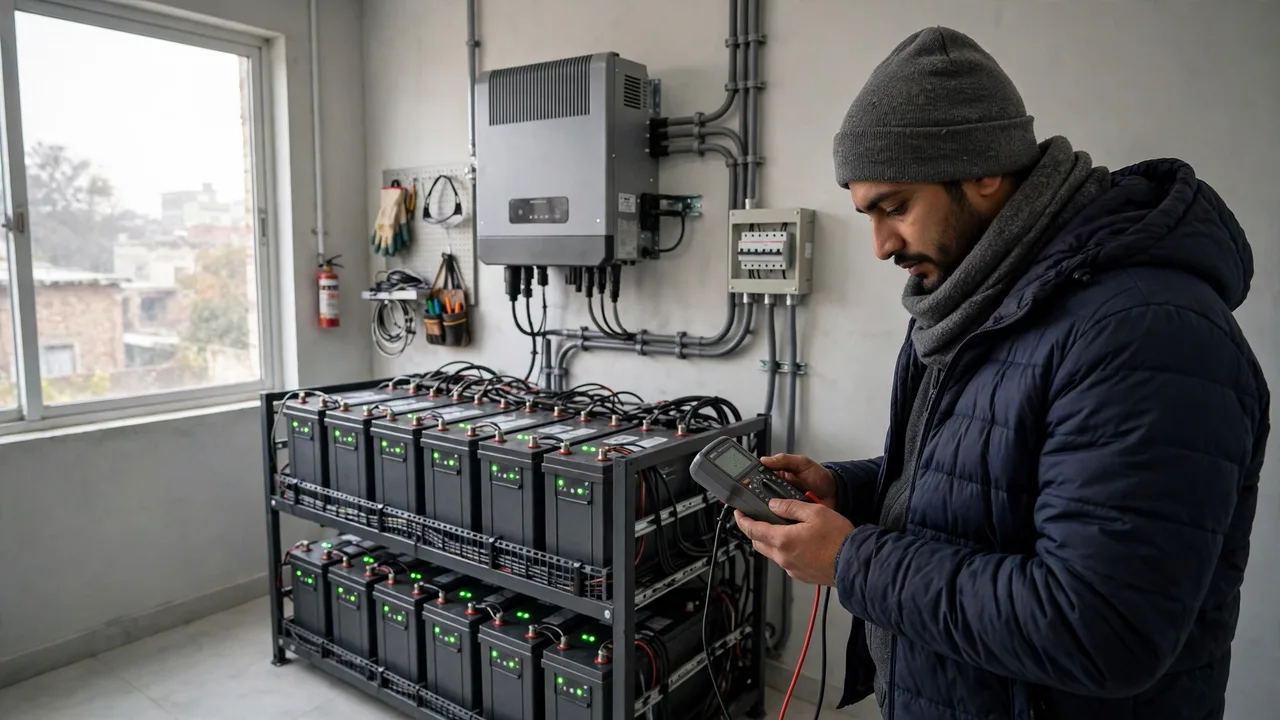
If your system has batteries, check them before the cold arrives. Make sure the battery area is dry, ventilated and protected from rain, and that no water can run along a cable and drip onto the terminals. Top up tubular battery water if the level is low, and check the terminals for the white or green corrosion that builds up over the year.
Battery Care in Cold Weather
Batteries deserve their own attention in winter because cold changes how they behave. A lead-acid battery — tubular or dry — delivers less usable energy when cold, and charges more slowly. That does not mean the battery is damaged; it means the same battery gives you less on a cold night than on a warm one. Avoid deep discharges in winter, recharge fully on clear days, and run heavy appliances during the day while the panels are producing, keeping night-time use to lights, fans and essentials.
Keep the battery room dry and as warm as practical. Never let rainwater or condensation drip onto the terminals, and keep the area ventilated, since batteries release gas while charging. Check the water level in tubular batteries monthly through winter. Lithium batteries handle the cold better than lead-acid, but they still charge more slowly in very cold weather.
Inverter and Monitoring Checks for Winter
Your inverter is your best early-warning system in winter. Most modern inverters show daily production on a display or a phone app. Compare like with like: today’s clear day against last week’s clear day, not against a summer day. A sudden drop on a clear day is worth investigating; a gradual seasonal decline is normal. Our guide on how to test if your solar panels are working properly shows simple at-home checks that need no special tools.
Watch for error codes after cold nights and foggy mornings. Damp connectors, condensation in an exposed inverter, or a struggling battery can all throw a fault code. Note the code exactly as it appears and call your installer — do not open the inverter or reset it repeatedly, since repeated resets can hide the real problem.
Should You Change the Tilt Angle in Winter?
Yes, if your structure allows it — and only if it does. In winter the sun sits lower in the sky, so a steeper tilt catches more direct light, and rain and dew run off faster from a steeper panel. Our solar panel tilt angle chart for Pakistani cities gives the recommended angle for each city by season. Only adjust the tilt if your mounting structure was designed for it — fixed structures should never be forced or propped up — and never climb onto a roof in winter conditions to do it. A tilt adjustment is a technician’s job, done on a dry, clear day in November.
Winter Safety: What Never to Do
Winter adds risks that summer does not. Never climb onto a wet, foggy or frosty roof — the surface is slippery and visibility is poor. Never walk on the panels themselves; they are not designed to carry a person’s weight, and a cracked panel lets water inside. Never touch panels, cables or the inverter during rain or a thunderstorm, and never use hot water on a cold panel or a metal scraper on frost or ice.
If you live in the northern areas and wake up to frost or a thin layer of ice on the panels, leave it alone. Frost melts off once the sun hits the glass, and scraping it risks scratching the surface. When in doubt about anything electrical, call your installer.
Check Current Prices
Winter is also a good time to plan an upgrade — many homeowners add panels or a battery before the summer heat returns. If you are comparing options, check the solar plate price in pakistan and the solar panel price in pakistan on our homepage, where the tables are updated daily, along with the solar inverter price in pakistan if you are thinking about a larger inverter.
The Bottom Line
Winter solar maintenance in Pakistan comes down to three habits: clean the glass on clear days between fog spells, do the full mounts-cables-inverter-battery check in November, and judge output against other winter days rather than summer ones. The cold itself is on your side — panels run more efficiently when cool — so the work is really about fog film, damp connections and preparation. For the full year-round routine, see our solar system maintenance checklist, and for the other end of the year, our monsoon solar panel care guide covers the summer storms.
Frequently Asked Questions (FAQs)
Do solar panels work in winter in Pakistan?
Yes. Solar panels keep producing electricity all winter in Pakistan. Output is lower than in summer because the days are shorter and the sun sits lower, and fog or smog can cut it further — but the cold itself does not stop panels from working. In fact, panels convert light slightly more efficiently when their cells are cool.
Does fog reduce solar panel output?
Yes. Fog blocks and scatters sunlight before it reaches the panels, so output drops on foggy days and recovers when the fog lifts. A dirty panel loses even more in fog, because the fog film and the dust film stack together — so cleaning on clear days between fog spells matters most in Punjab’s fog season.
Should I clean my solar panels in winter?
Yes, and more often than in summer if you live in Lahore or the fog belt. Check the glass every two weeks and clean when you can see a dull film. Clean only on clear, dry days in the early morning or late evening, with clean water and a soft brush — never during fog, rain or frost, and never with hot water on a cold panel.
Does cold weather damage solar panels?
No. Cold weather does not damage solar panels — they are built to work through all four seasons and actually run more efficiently when cool. The real winter risks are elsewhere: frozen water in a low spot cracking a connector, condensation in an exposed inverter, and a weak battery struggling in the cold.
How do I take care of solar batteries in winter?
Keep the battery room dry and ventilated, never let water drip onto the terminals, and check tubular battery water levels monthly. A lead-acid battery gives less usable energy when cold, so avoid deep discharges in winter and recharge fully on clear days. Run heavy appliances during the day and keep night-time use to essentials.
Should I change the tilt angle of my solar panels in winter?
A steeper tilt catches more direct light in winter because the sun sits lower, and it helps rain and dew run off faster. Only adjust the tilt if your mounting structure was designed for it, and have a technician do it on a dry, clear day in November. Never force a fixed structure or climb onto a roof in winter conditions to adjust panels.
Is it safe to clean solar panels on a foggy day?
No. Never clean panels during fog, rain or frost. Wet, foggy roofs are slippery and visibility is poor, and you should never walk on the panels or stand on a wet roof to reach them. Wait for a clear, dry day, and clean from the ground with a long-handled brush wherever possible.