
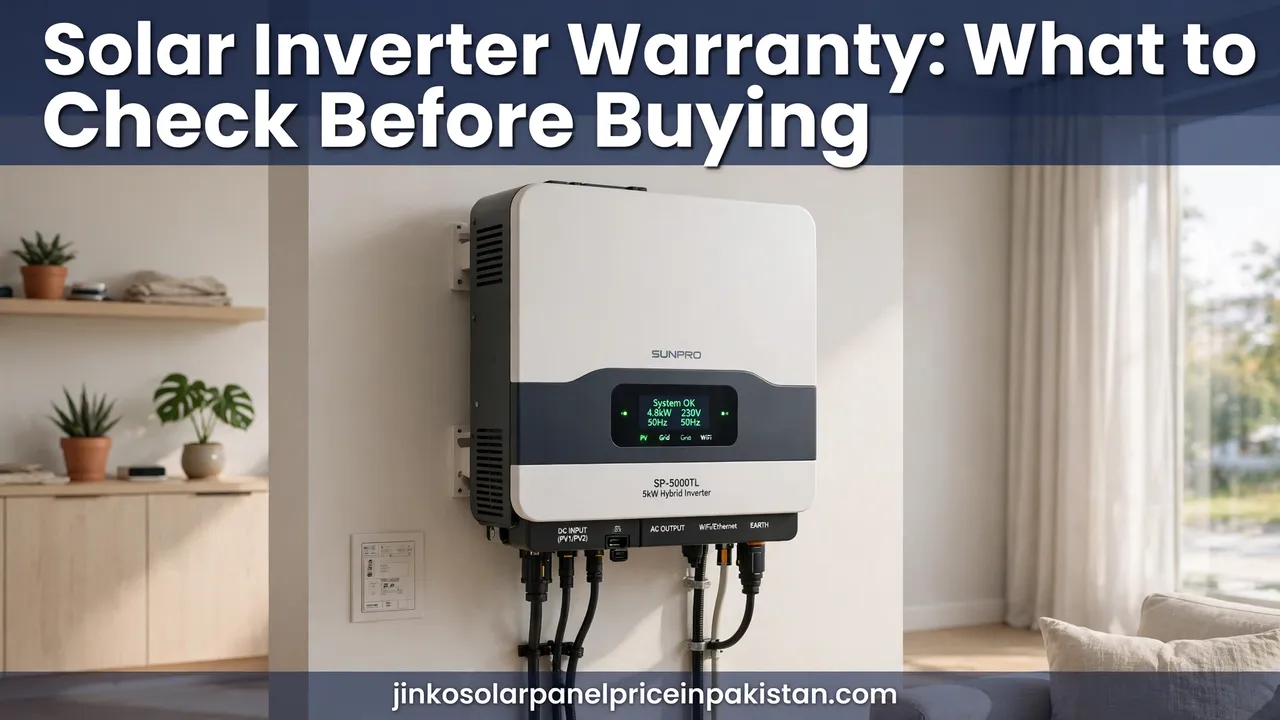
Solar Inverter Warranty: What to Check Before Buying

A solar inverter warranty is only as good as the details behind it. Before you buy, check what the warranty covers, how long each part of it lasts, who pays for labour and transport, what can void it, and how a claim is handled. Most disputes come from terms that were never read before installation, not from the headline warranty length.
This guide explains solar inverter warranties in plain language: the types of cover, the common exclusions, the checks before buying, and the steps if your inverter stops working.
What a Solar Inverter Warranty Really Is
An inverter warranty is a written promise about what happens if the unit fails because of a fault in its materials or workmanship. It is not a promise that the inverter will never fail, and it is not a guarantee about how much electricity your system will produce. Those are different things, and confusing them is a common source of disappointment after purchase.
Read the warranty document for the exact model you are buying, not for the brand in general. Terms can differ between models from the same manufacturer, between string inverters and microinverters, and between standard and extended cover. Our solar inverter buying guide explains how to compare inverter types before you reach the warranty stage.
The Three Layers of Inverter Cover
Most solar systems have more than one layer of protection. Knowing which layer applies to a fault saves time, because the wrong first call can delay a repair by weeks.
1. Manufacturer product warranty
This comes from the company that made the inverter. It usually covers defects in materials and workmanship: a unit that fails because a component was faulty or the unit was not built to its own specification. The usual remedy is repair or replacement of the unit itself. Labour, removal, reinstallation, and transport are often treated separately, so check whether they are included or excluded.
2. Installer workmanship warranty
This comes from the company that installed the system. It covers the quality of the installation work: wiring, connections, mounting, earthing, and protection settings. If an inverter fails because it was installed incorrectly, ventilated badly, or wired outside its specification, that is normally an installer issue first. Ask how long this warranty lasts and whether it is provided in writing.
3. Seller and consumer protection
Depending on where you buy, consumer protection rules may also apply to a product that is not of acceptable quality or not fit for its purpose. These rules do not replace the written warranty, but they are worth understanding before you accept a claim refusal at face value.
What an Inverter Warranty Usually Covers
Cover varies by brand and model, but a typical manufacturer warranty is built around the inverter unit itself. Items commonly covered include:
- Failure caused by a defect in materials or workmanship inside the inverter
- Repair or replacement of the faulty unit, or of a faulty internal part, under the stated terms
- Faults that appear during normal use within the stated warranty period
- Replacement with a new unit or, in some cases, a refurbished unit of the same or equivalent model — check which one your document promises
What an Inverter Warranty Usually Does Not Cover
Exclusions are where most claim disputes begin. The exclusions below appear most often in inverter warranty documents. Your own document governs, so use this as a checklist rather than as a substitute for it.
- Damage from lightning, flooding, fire, or a major grid surge — often an insurance matter rather than a warranty claim
- Damage caused by incorrect installation, poor ventilation, or operation outside the stated voltage, temperature, or environmental limits
- Damage from pests, dust ingress beyond the rated protection, or physical impact
- Unauthorised opening, repair, or modification of the inverter, including firmware changes made outside the manufacturer’s process
- Use with incompatible panels, batteries, or accessories that were not approved for that model
- Normal wear on short-life parts, such as fans or communication accessories, which may carry a shorter warranty than the inverter itself
- Loss of generation while the system is down — warranties generally replace the unit, not the electricity that was not produced
Standard Warranty, Extended Warranty, and Registration
Many inverters are sold with a standard warranty period and an optional extension. The extension may be free on registration, free on connection to the manufacturer’s monitoring platform, or available as a paid option. The key point is that it is not always automatic.
Check four things about any extension: does it need activation, and by when? Who activates it? Does it extend the whole warranty or only part of it? And does it change what is covered, for example by adding labour cover for a limited period?
Registration is the step most often missed. Some manufacturers require registration within a short window after installation, and some require the inverter to stay connected to its monitoring platform to keep the extended term. Keep proof of registration with your warranty file, and update the inverter connection if you change your home Wi-Fi password.
How Long Do Inverter Warranties Last?
There is no single standard length, and comparing a headline number without reading the terms can mislead. As a general pattern, string inverters commonly carry a manufacturer warranty measured in years in the single digits to low teens, with extensions available on some models. Microinverters and power optimisers often carry longer terms, because they are designed to stay with individual panels for much of the system life. Hybrid inverters sit in the same broad pattern as string inverters on many models, but again the model document governs.
Do not compare a string inverter warranty with a microinverter warranty as if they were the same product: a string inverter failure can stop a whole string or system, while a single microinverter failure usually affects only one panel. Also check whether accessories carry the same term as the main unit, as communication dongles often have shorter cover.
What to Check Before Buying: The Checklist

1. Exact model and warranty document
Confirm the exact model and the warranty document that applies to it. Check the start date: does cover start on the installation date, the commissioning date, or the purchase date? Those dates can differ, and the difference matters if installation is delayed.
2. What is covered, and what is not
Read the cover and exclusion sections in full. Pay special attention to labour, transport, removal, and reinstallation. Ask directly: if the unit fails, who pays for the technician visit, for taking the old unit down, and for commissioning the new one?
3. Replacement terms
Ask whether a failed unit is replaced with a new unit or a refurbished unit, and what happens if your exact model is no longer made. A promise of an equivalent model is only useful if equivalent is defined — same capacity, same features, and compatibility with your existing panels and monitoring.
4. Service route and turnaround
Ask who handles a claim: the seller, a local service partner, or the manufacturer directly. Ask how diagnosis works — remote diagnosis through monitoring, a site visit, or return of the unit — and what the expected steps are. A clear service route is worth more than a vague promise of fast service.
5. Installer workmanship warranty
Get the installer warranty in writing, with its length and scope. If the installer and the seller are different companies, be clear about which one you call first for each type of fault.
6. Registration, monitoring, and transfer
Confirm whether registration or monitoring connection is required, the deadline for it, and who completes it. Also ask whether the warranty transfers to a new owner if you sell your home, and whether transfer needs a process or form. Transferability does not affect day-to-day use, but it affects resale value.
How to File an Inverter Warranty Claim
A well-prepared claim is resolved faster than a vague one. Follow these steps if your inverter stops working or shows a persistent fault.
- Record the fault. Note the date and time, the fault code or message on the display or app, and any unusual behaviour. Take clear photos of the display and the inverter nameplate showing model and serial number.
- Check the simple causes first. Look for a tripped breaker or a monitoring outage. Do not open the inverter casing or attempt an internal repair — unauthorised opening is a common reason for a claim to be refused.
- Contact the right party first. Start with the seller or installer who sold and installed the system, unless your warranty document directs you elsewhere. Give them the model, serial number, fault code, installation date, and warranty reference.
- Cooperate with remote diagnosis. Many faults are diagnosed through the monitoring platform. Keep the inverter connected and powered where it is safe to do so, and follow the technician’s diagnostic steps.
- Confirm costs before work starts. Before a technician is sent or a unit is removed, confirm in writing what is covered and what, if anything, you will be charged for.
- Keep a claim file. Save every message, reference number, photo, and report in one place. If the claim is escalated, that file is your record of what was reported, when, and to whom.
Common Ways a Warranty Can Be Voided
Most voided claims fall into a small number of patterns, and most are avoidable. Unauthorised repair or modification is the clearest one. Operating the inverter outside its rated limits, in a sealed space without ventilation, or with unapproved accessories is another. So is failing to follow the installation and maintenance instructions in the manual, such as keeping vents clear and the unit accessible for service.
Regular visual checks, keeping the area around the unit clear, and reporting repeated fault codes early all help, and they create a record that the system was looked after. For a manufacturer explanation of how the line is drawn between covered defects and excluded damage, see the SolaX guide to what a solar inverter warranty covers.
Questions to Ask Your Seller Before You Pay
- Can I see the warranty document for this exact model before I pay?
- Does the warranty cover labour, transport, removal, and reinstallation, or parts only?
- Is the warranty extended by registration or monitoring connection, and who completes that step?
- Who do I call first for a fault — you, the installer, or the manufacturer?
- What is the installer workmanship warranty, and is it in writing?
- Is the warranty transferable if I sell my home?
- Will a failed unit be replaced with a new unit or a refurbished unit?
- What does the warranty exclude that I should know about before buying?
If a seller answers these questions clearly and in writing, that is a good sign. If the answers are vague, or the warranty document is only produced after payment, pause and reconsider.
Keeping Your Warranty Safe After Installation
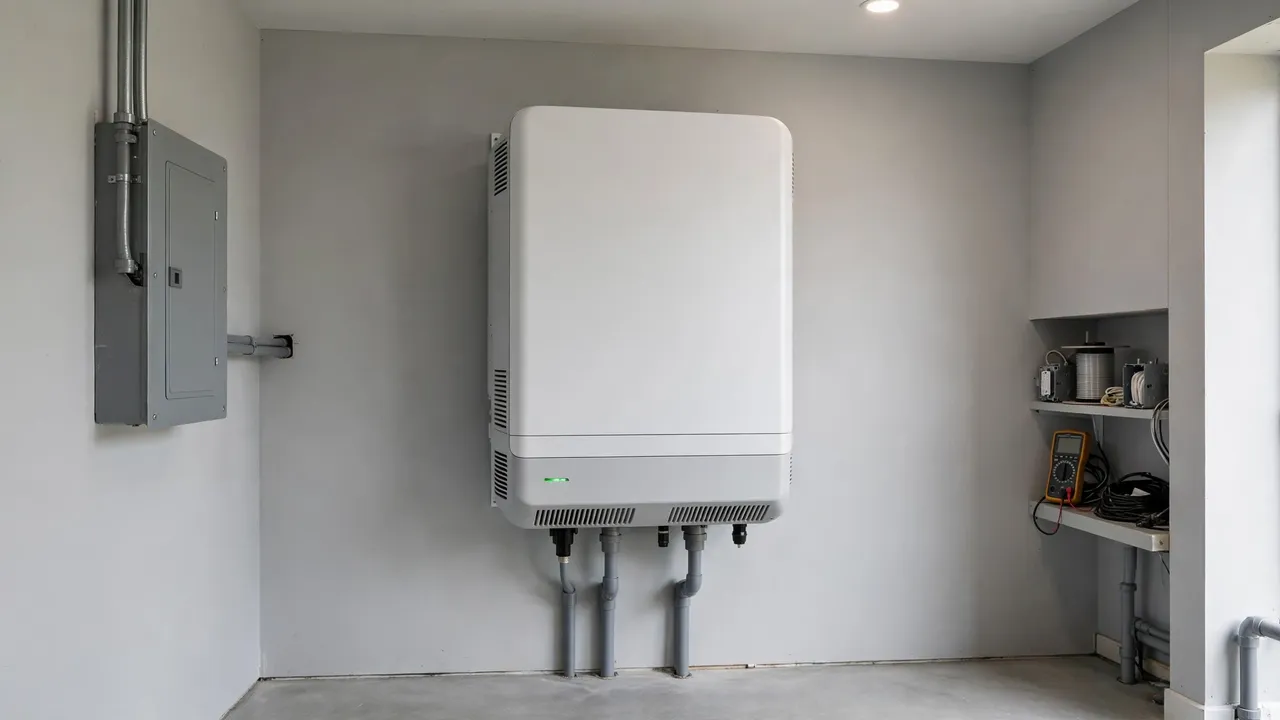
After installation, build a single warranty file: invoice, installation certificate, warranty document, registration confirmation, serial number, and monitoring account details. Check the registration and monitoring connection in the first weeks after installation, while any registration window is still open.
Check the inverter display or monitoring app from time to time, and report repeated faults promptly rather than waiting for a complete failure. For related guidance, see our solar inverter installation guide and our inverter error codes guide.
Check Current Prices
Warranty terms help you choose the right inverter, so compare models on warranty first, then check costs today. For today’s updated solar panel prices and brand tables, visit the homepage of jinkosolarpanelpriceinpakistan.com, where prices are updated daily.
Conclusion
A good solar inverter warranty is clear, written, and backed by a local service route. Before you buy, read the exact model document, separate product cover from installer cover, confirm what labour and transport cost at claim time, and complete any registration on time. The longest warranty is not always the best — the best is the one whose terms you understand and whose claim route you can actually use.
Frequently Asked Questions (FAQs)
What does a solar inverter warranty usually cover?
A typical manufacturer warranty covers defects in materials and workmanship in the inverter unit itself, usually through repair or replacement of the unit or a faulty part. Labour, transport, removal, and reinstallation are often treated separately, so check whether they are included in your exact model document.
What is the difference between a manufacturer warranty and an installer warranty?
The manufacturer warranty covers faults in the inverter itself, while the installer workmanship warranty covers the quality of the installation work, such as wiring, connections, mounting, and protection settings. If a fault was caused by installation, the installer is normally the first party to contact.
What does a solar inverter warranty usually not cover?
Common exclusions include damage from lightning, flooding, or major grid surges, incorrect installation or poor ventilation, operation outside rated limits, unauthorised repair or modification, and use with unapproved accessories. Loss of generation while the system is down is also generally not covered.
Do I need to register my solar inverter to keep the warranty?
Sometimes, yes. Some manufacturers require registration within a short window after installation, and some require the inverter to stay connected to its monitoring platform to keep an extended term. Check the deadline, who is responsible for registering, and keep proof of registration with your warranty file.
How long does a solar inverter warranty last?
There is no single standard length. String inverters commonly carry terms in the single digits to low teens of years, with extensions on some models, while microinverters and power optimisers often carry longer terms. The exact model document governs, so compare terms on the same basis rather than on headline years alone.
Does an inverter warranty cover labour and transport costs?
Not always. Many product warranties cover the replacement unit only, not the labour to remove and reinstall it or the cost of transport. Some warranties or service plans include on-site service for a defined period. Confirm this in writing before a technician visit, not after.
How do I file a solar inverter warranty claim?
Record the fault code, date, model, and serial number, take photos of the display and nameplate, and contact the seller or installer first unless your document directs you elsewhere. Cooperate with remote diagnosis, confirm any costs before work starts, and keep every message and reference number in one claim file.
What can void a solar inverter warranty?
Common causes include unauthorised opening or repair, modification outside the manufacturer’s process, operation outside rated voltage or temperature limits, poor ventilation, and use with unapproved accessories. Missing a required registration step can also shorten or end an extended term.
