
Jinko Solar Panel Warranty in Pakistan: Terms, Claim Process and Tips

Short answer: The Jinko solar panel warranty in Pakistan has two parts: a product warranty that covers manufacturing defects, and a performance warranty that guarantees the panel’s power output stays above a set level for decades. The warranty period is normally counted from your date of purchase, so your invoice is your most important document. To keep the warranty valid, buy genuine panels from an authorized seller, verify the serial numbers before paying, and have the system installed professionally. If a panel develops a fault, you usually claim through the seller or installer who sold it to you, with your purchase documents and clear photos of the problem.
Solar panels are a 20-plus-year investment, and the warranty is the only formal protection you have if the hardware fails. Many buyers in Pakistan focus on wattage and price and never ask about the warranty until a problem appears — by which time a missing invoice or a removed serial label can make a valid claim impossible.
The Two Parts of a Solar Panel Warranty
Almost every Tier-1 panel brand, Jinko included, splits its warranty into two separate promises. They cover different things, run for different lengths of time, and are often confused with each other. Knowing the difference matters, because a seller saying “30-year warranty” may be talking about only one of the two.
Product (Materials and Workmanship) Warranty
The product warranty covers the panel itself as a manufactured product: the cells, the glass, the frame, the backsheet, the junction box, and the factory-fitted cables and connectors. If the panel fails or becomes inoperative because of a defect in materials or workmanship under normal use — for example delamination, a faulty junction box, or cracked cells that were not caused by external impact — the manufacturer remedies it, typically by repairing or replacing the panel. This warranty does not promise a specific power output; that is the job of the second warranty below.
Performance (Power Output) Warranty
The performance warranty guarantees how much electricity the panel will still produce after many years. All panels lose a small amount of output each year (degradation), and the performance warranty sets the maximum allowed loss: a “linear” warranty defines how much output the panel must still deliver at any given year. If output falls below that guaranteed curve due to a manufacturing issue, that is a warranty matter — normal degradation within the curve is not.
What the Jinko Solar Panel Warranty Covers
In simple terms, the Jinko solar panel warranty covers two things: (1) panels that fail because of manufacturing defects during the product warranty period, and (2) panels whose power output drops faster than the guaranteed degradation curve during the performance warranty period. The exact length of each period depends on the panel series and when it was sold — newer N-type series generally carry longer terms than older P-type models — so the only authoritative source for your panels is the datasheet and warranty document for your exact model number.
For a concrete example, our guide to the Jinko 585W solar panel notes the warranty terms listed for the Tiger Neo 585W N-type monofacial model. Terms differ between models and batches, which is why you should read the warranty card that comes with your own panels rather than relying on a figure a seller quotes from memory. A collection of official Jinko Solar warranty documents is available online if you want to read the formal terms, including claim procedures and remedies.
One practical point for Pakistan: warranty coverage follows the genuine product, not the shop. A panel bought from an authorized channel with proper documentation is claimable; a panel bought without an invoice from an unknown seller may be genuine but effectively unclaimable, because you cannot prove the purchase.
What Is Usually Not Covered
Manufacturer warranties have standard exclusions. While you must verify the exact wording in your own warranty document, the following are typically excluded:
- Improper installation. Panels mounted or wired in ways that violate the installation manual — wrong clamping zones, over-tightened bolts, incompatible mounting — can void coverage for the affected panels.
- Physical damage after delivery. Breakage from mishandling, falling objects, vandalism, or accidents is not a manufacturing defect.
- Unauthorized modifications or repairs. Opening the junction box, replacing connectors with non-approved parts, or drilling the frame generally voids the warranty.
- Removed or altered labels. The serial number label is how the manufacturer identifies your panel. If it is removed, defaced, or unreadable, a claim becomes very difficult.
- Damage beyond rated limits. Events exceeding the panel’s certified mechanical load or environmental ratings (extreme hail, floods, storms beyond design limits) are force majeure, not defects.
- Normal wear and cosmetic issues. Expected annual degradation within the warranted curve, and minor cosmetic blemishes that do not affect performance, are not covered.
- System-level problems. The panel warranty covers the panels — not your inverter, batteries, wiring, or installation workmanship. Those have their own separate warranties from their own suppliers.
The pattern is clear: the warranty protects you against the manufacturer’s mistakes, not against installation mistakes, accidents, or missing paperwork. Most warranty disputes in Pakistan are not about the panel at all — they are about documentation.
How to Claim a Jinko Solar Panel Warranty in Pakistan
There is no walk-in Jinko service center on every street in Pakistan. In practice, warranty claims flow through the commercial chain: you → your seller/installer → the distributor → the manufacturer’s channel. Follow these steps in order:
- Confirm it is actually a panel defect. Low output is more often caused by dust, shading, a tripped breaker, or an inverter issue than by a faulty panel. Check for visible damage (cracks, burn marks, hotspots, delamination) and compare the suspect panel with its neighbors before raising a claim.
- Document everything with photos. Photograph the defect, the panel’s serial number label, the overall installation, and any visible damage. Clear, dated photos are the single most useful thing you can bring to a claim.
- Gather your purchase documents. You will need the original invoice showing the seller’s name, date, panel model, and quantity; the warranty card if one was provided; and the serial numbers of the affected panels. No invoice usually means no claim.
- Contact your seller or installer first. In Pakistan, the seller is your first point of contact. Explain the problem precisely: model number, serial number, installation date, and what you observed. Reputable sellers inspect the issue themselves or escalate it to their distributor.
- Provide the serial number and model details. The serial number identifies the exact production batch and confirms the panel is genuine and within the warranty period. This is also the step where counterfeit panels get caught — a serial number that does not verify is a red flag, not a warranty case.
- Allow inspection or testing. The distributor or manufacturer channel may ask for an on-site inspection, or for the panel to be tested under standard conditions. Cooperate promptly and keep copies of all correspondence, inspection notes, and test reports.
- Receive the remedy. Depending on the warranty terms and the confirmed fault, the remedy is typically repair, replacement with an equivalent panel, or another remedy stated in the warranty document.
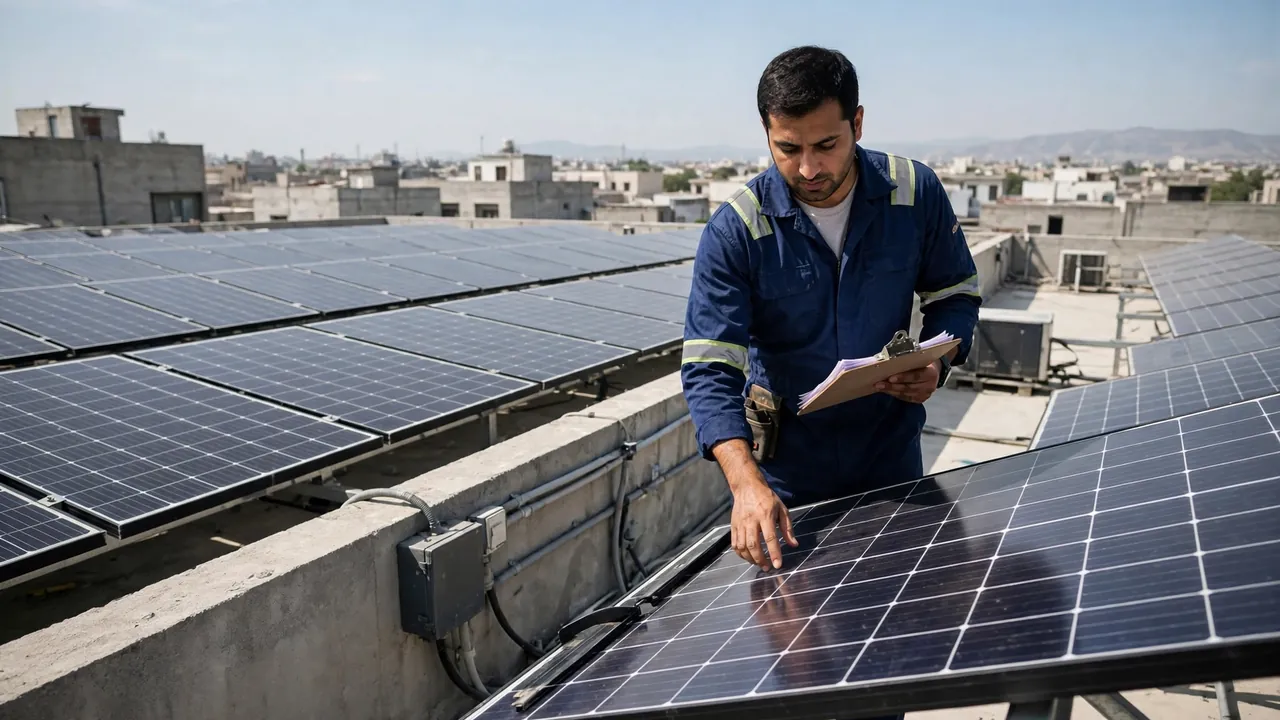
Be realistic about timelines: a warranty claim is a process, not a same-day exchange. Panels may need to be inspected, and replacements ship through the same import channels as new stock. Starting the process early — as soon as you notice a genuine defect — is always better than waiting.
Documents You Should Keep Safe from Day One
Store the originals safely and keep phone photos as backup:
- The original purchase invoice with the seller’s name and stamp, date, exact model number, and quantity.
- The warranty card or warranty terms sheet provided with the panels, if any.
- A list of every panel’s serial number (photograph each label before installation, while the labels are easy to reach).
- Photos of the installation on day one, including the overall layout and close-ups of a few panels.
- Any maintenance or inspection records over the years.
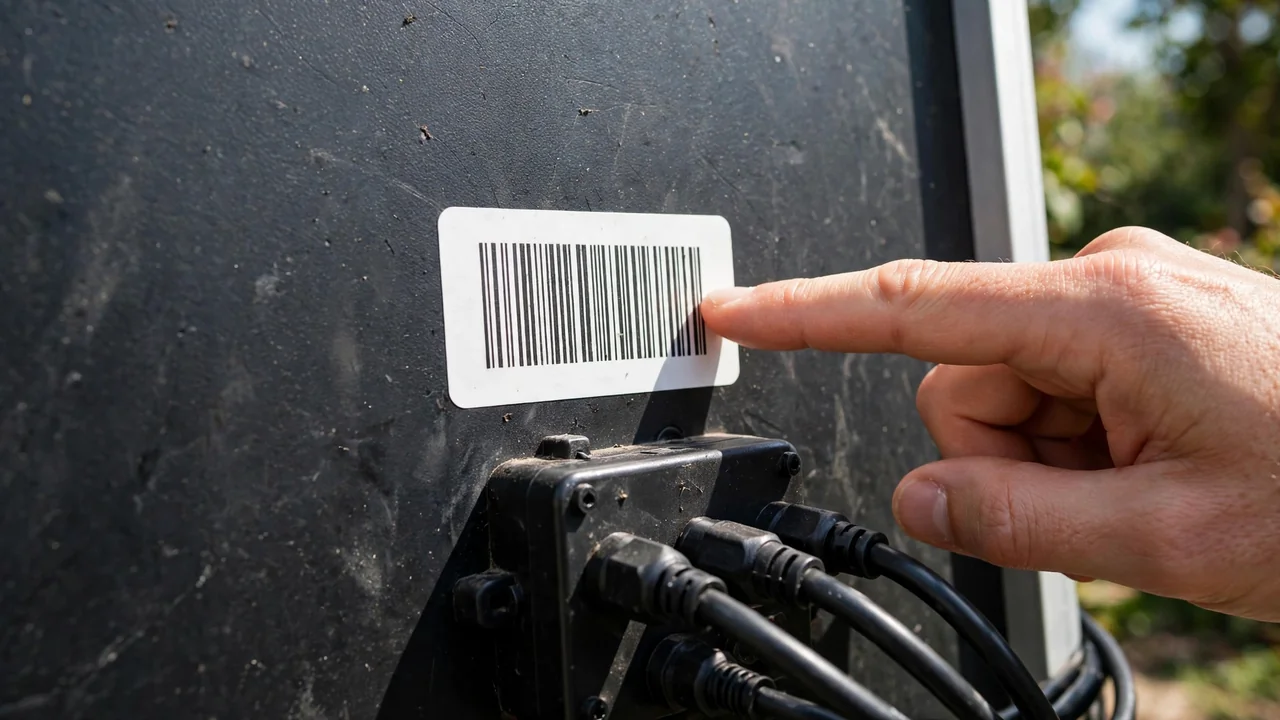
The serial number is the linchpin of the whole system: it proves the panel is genuine, identifies its production batch, and determines whether it is still within the warranty period. Our Jinko solar panel serial number check guide walks through how to find and verify it — do this before you pay, not after a problem appears.
7 Tips to Keep Your Jinko Warranty Valid in Pakistan
- Buy from an authorized distributor or reputable dealer. Grey-market panels may be genuine, but without a proper invoice and a traceable supply chain your claim has no starting point. Our authorized distributor guide explains why the seller matters as much as the panel.
- Verify originality before paying. Check the serial numbers, compare the label details with the packaging, and inspect the panel physically. Counterfeit panels carry no manufacturer warranty at all.
- Get the warranty terms in writing at purchase. Ask the seller to state the product and performance warranty terms on the invoice. Verbal promises are worthless in a dispute.
- Use a professional installer who follows the manual. Mounting, grounding, and wiring must follow Jinko’s installation manual. Improper installation is the most common reason genuine warranty claims get rejected.
- Never remove or damage the serial labels. They are small, easy to overlook, and irreplaceable. Make sure your installer knows not to paint over them or mount clamps across them.
- Maintain the system per the manual. Periodic inspection, keeping panels clean, and checking wiring and mounting hardware are your responsibilities. Neglect that leads to damage is not covered.
- Do not modify the panels. No drilling, no junction-box surgery, no third-party “repairs.” If something looks wrong, report it through the claim process instead of fixing it yourself.
Check Current Prices
Panel prices in Pakistan move with the dollar rate, import duties, and market demand, so any fixed price printed in a warranty guide would go stale quickly — and this guide deliberately carries no prices. Our homepage tracks the latest solar panel prices in Pakistan with tables updated daily from the live market, covering Jinko, Longi, Canadian Solar, Trina, and more.
Check today’s updated solar panel prices →
Frequently Asked Questions (FAQs)
What does the Jinko solar panel warranty cover in Pakistan?
It covers manufacturing defects in the panel (product warranty) and guarantees that power output stays above a defined degradation curve over time (performance warranty). The exact periods depend on the panel series and purchase date – check the datasheet and warranty card for your specific model, since terms vary between series.
How do I claim a Jinko solar panel warranty in Pakistan?
Confirm the issue is a genuine panel defect, photograph the problem and the serial number label, gather your invoice and warranty documents, and contact the seller or installer you bought from. They inspect the issue and escalate it through the distributor to the manufacturer’s channel if it qualifies.
What documents do I need for a warranty claim?
The original purchase invoice (seller name, date, model, quantity), the warranty card if provided, the serial numbers of the affected panels, and clear photos of the defect. Without the invoice and a readable serial number, most claims cannot proceed.
Does the warranty cover physical damage or bad installation?
Usually not. Manufacturer warranties cover defects in materials and workmanship – not breakage from accidents, vandalism, improper installation, unauthorized modifications, or damage beyond the panel’s rated limits. Always verify the exclusions in your own warranty document.
How can I check if my Jinko panel is original?
Check the serial number on the panel’s back label and verify it through Jinko’s official verification channels, and compare the label and packaging details. Only genuine panels carry the manufacturer warranty.
Where can I see today’s solar panel prices in Pakistan?
Our homepage maintains daily updated price tables for all major brands – Jinko, Longi, Canadian Solar, Trina, and more. Check the current solar panel prices page for today’s rates.
