
What to Check Before Buying Solar Panels: Complete Checklist

Buying solar panels is a big decision, and a small mistake at the shop can cost you for years. So what to check before buying solar panels? In short: look at the panel with your own eyes, match the papers to the panel, confirm it is original, read the warranty, and check the dealer. If those five things are right, you are buying with confidence. This guide walks you through each check in plain words — so you can walk into any shop in Pakistan and know exactly what to look for.
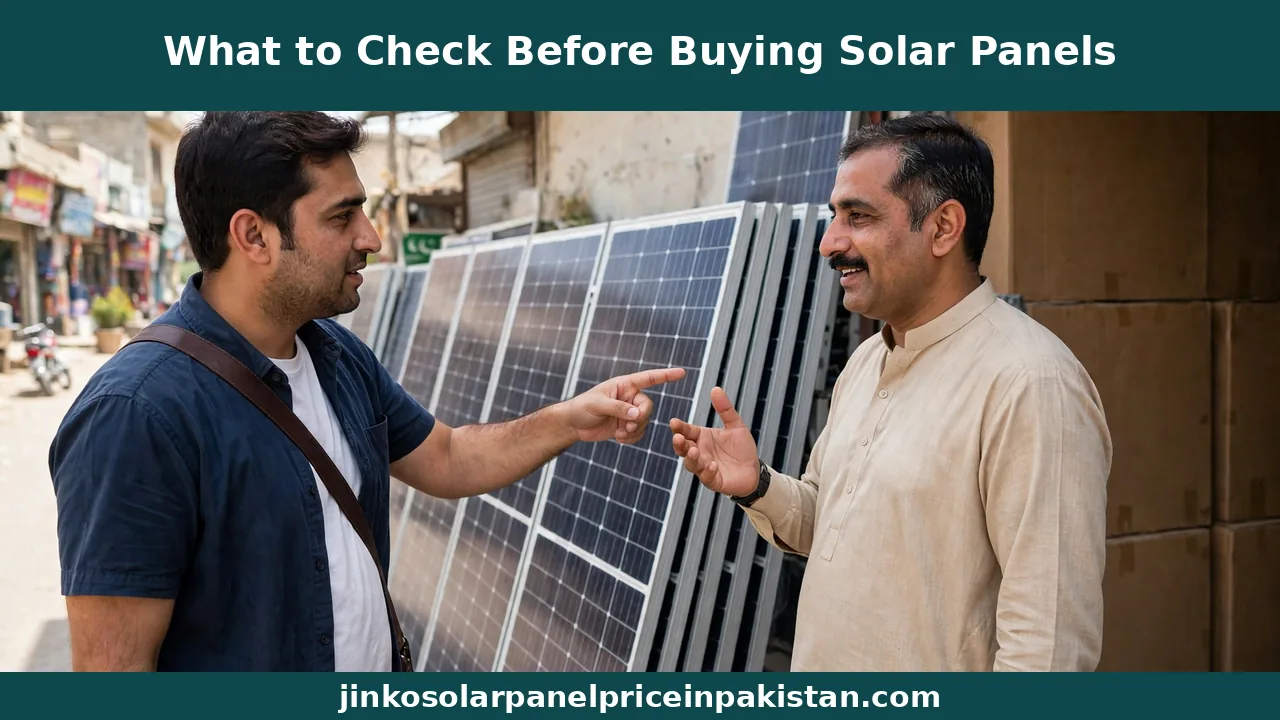
Look at the Panel With Your Own Eyes
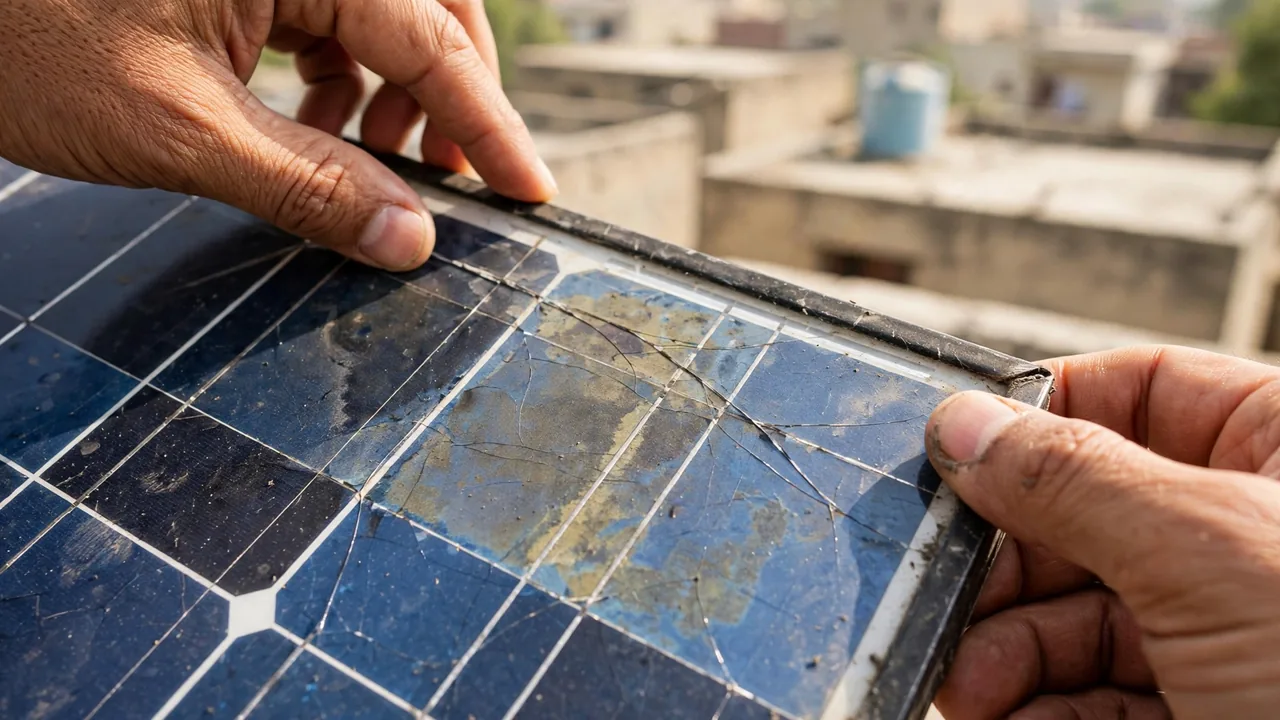
Never buy a panel you have not seen — photos on a phone screen hide a lot. Ask the dealer to bring the actual panel out into daylight. A good panel looks neat and even, with cells all the same colour and no cracks, dark spots, or patchy areas.
Run your eyes across the glass as well. It should be clean and smooth, with no chips along the edges and no scratches. A chipped corner or a scratched surface is a warning sign — damage like that can grow worse over time, especially in the heat and dust of a Pakistani summer.
Check the Cells and the Glass
Hold the panel at a slight angle so the light falls across it. Small hairline cracks show up best this way. Look for lines that do not belong, bubbles under the glass, or cells that look darker than their neighbours. If you see any of these, ask for a different panel from the same batch. Also check that all the cells line up neatly — crooked or unevenly spaced cells point to poor factory work.
Check the Frame and the Back
Turn the panel over and look at the back. The frame should be straight, with no bends and no dents. The backsheet, the white or transparent layer on the back, should be smooth and flat, with no bubbles or peeling edges. Our guide on A-grade vs B-grade solar panels explains what counts as a defect and what is normal.
Look at the junction box too. It is the small black box on the back where the cables come out. It should sit firmly on the panel, with no gaps and no loose wires. The cables themselves should feel thick and sturdy, not thin and flimsy.
Match the Papers to the Panel
A solar panel comes with papers, and those papers must match the panel in your hands. This is the step most buyers skip — and the one that catches the most problems.
First, ask for the datasheet. This is the paper that lists the panel’s model number, wattage, size, and electrical details. Check that the model number on the datasheet is the exact same model number printed on the back label of the panel. Even one letter different means it is a different panel, and the datasheet in front of you does not belong to it.
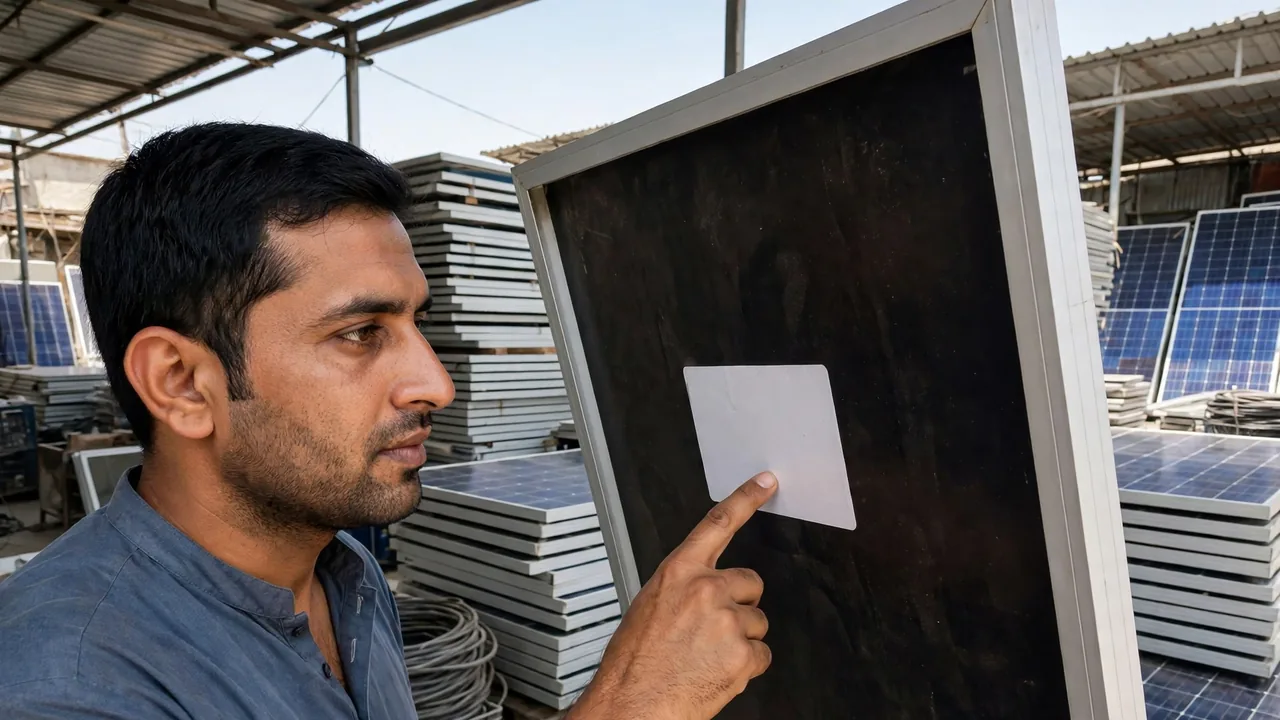
Next, check the serial numbers. A panel has its serial number in three places: under the glass near the edge, on the back label, and on the frame. All three should agree. If they do not match, stop and ask the dealer to explain. Our guide on how to read a solar panel datasheet shows you which numbers matter and what they mean, in simple words.
Ask for the flash test report as well — it shows the real power the panel produced at the factory, and it should carry the same model and serial number as your panel.
Make Sure the Panel Is Original
Fake and copied panels are a real problem in the Pakistani market. A copied panel can look almost the same as the real one from the front. The difference shows up in the serial number, the label, and the paperwork.
The simplest check is the brand’s own verification portal — most big brands let you type the serial number on their official website to confirm the panel is genuine. For example, Jinko runs an official serial number check on its own service website — see Jinko’s official serial number check. If the portal says the serial number is not found, do not buy that panel.
Also look at the label itself. A real label is printed cleanly, with sharp text and a straight barcode. A copied label often has blurry text, a smudged barcode, or spelling mistakes in the brand name.
Our solar panel verification guide for Pakistan walks through the full process, and our fake vs original solar panel guide shows the warning signs. For brand-specific checks, see our guides on how to verify an original Longi panel and how to verify an original Canadian panel.
Read the Warranty Before You Pay
A warranty is only useful if it is written down and someone will actually honour it. Before you pay, ask the dealer to show you the warranty card from the brand — not just a spoken promise.
There are two kinds of warranty on a solar panel. The product warranty covers the panel itself — if it stops working because of a factory fault, the brand repairs or replaces it. The performance warranty covers the output — it promises the panel will keep producing a good share of its rated power for many years. Both should be written on the warranty card.
Ask three questions about the warranty. First, how many years does the product warranty last? Second, who honours the warranty if something goes wrong — the brand, the importer, or the dealer? Third, what do you need to keep to claim it — usually the warranty card and the invoice with the serial number written on it. If the dealer cannot answer these questions clearly, that is a warning sign.
Never accept a warranty that exists only as a spoken promise. Get the warranty card, check that the serial number on it matches your panel, and keep it safe with your invoice.
Check the Dealer, Not Just the Panel
A good panel from a careless dealer can still turn into a bad purchase. The dealer is the person you will go back to if anything goes wrong, so check them as carefully as you check the panel.
Buy from an authorized solar panel distributor in Pakistan when you can. Authorized dealers buy directly from the brand or its official importer, so the chain from factory to shop is short and clear. A dealer who cannot tell you where the panel came from is a risk. Ask people in your area who already have solar panels where they bought theirs and whether they were happy.
Be careful with deals that look too good. If one shop offers a panel for far less than every other shop, ask why — it can mean a B-grade panel sold as A-grade, a copied panel, or an old batch with a short warranty left.
Finally, get a proper invoice. It should show the shop’s name, the date, the panel brand and model, the quantity, and the serial number of every panel you bought. An invoice with the serial numbers written on it is your proof of purchase — you will need it for the warranty and for net metering. Never pay in full without an invoice.
Make Sure the Panel Fits Your Home and System
Even a genuine panel is a bad buy if it does not fit your system — check that it matches your home and your inverter before you pay.
First, check the size. Measure the space on your roof and compare it with the panel’s size on the datasheet — a panel too big for your roof forces a poor layout. Also check the weight: an old or weak roof may need a lighter panel or a stronger structure.
Second, check the wattage — how much power one panel can produce in standard test conditions. Your installer should have already worked out how many panels of which wattage your home needs.
Third, check that the panel works with your inverter. The inverter has limits on voltage and current, and the panels must stay inside those limits. Ask your installer to confirm the match before you buy. Our solar inverter buying guide explains what to look for in an inverter, and our guide on how to choose a solar installer helps you pick someone who will get these details right.
The Quick Checklist to Take to the Shop
Print this list or save it on your phone, and tick each item off at the shop:
- Look at the cells in daylight — even colour, no cracks, no dark spots, no patchy areas.
- Check the glass — no chips, no scratches, no bubbles under the glass.
- Check the frame — straight, no bends, no dents, corners solid.
- Check the back — backsheet smooth and flat, junction box firm, cables thick and sturdy.
- Match the datasheet model number to the model number on the back label.
- Match the serial numbers — under the glass, on the back label, and on the frame must all agree.
- Ask for the flash test report and check it shows your panel’s serial number.
- Verify the serial number on the brand’s official website.
- Read the warranty card — product warranty and performance warranty, both in writing.
- Ask who honours the warranty — the brand, the importer, or the dealer.
- Check the dealer — authorized seller, good name in the area, clear source of stock.
- Get a proper invoice with the serial number of every panel written on it.
- Confirm the panel size, wattage, and inverter match with your installer.
- Do not pay in full until every check above is done.
Mistakes Buyers Make
The first mistake is buying on the lowest quote alone. A copied panel or a B-grade panel sold as A-grade costs far more over the years than the money saved. Compare dealers on the panel, the papers, the warranty, and the service — not just the quote.
The second mistake is skipping the papers. Many buyers look at the panel, nod, and pay. The datasheet, the flash test report, and the warranty card take only a few minutes to check, and they are the only proof you have that the panel is what the dealer says it is.
The third mistake is paying the full amount in advance. Pay a deposit if you must, but keep part of the payment until the panels are delivered and checked.
The fourth mistake is forgetting the invoice. Without an invoice showing the serial numbers, you have no proof of purchase — no warranty claim and no net metering application. Always get the invoice before you leave the shop.
The fifth mistake is buying the panel before talking to the installer. The installer knows your roof, your load, and your inverter. Buying panels first and asking the installer later can leave you with panels that do not fit your system.
Check Current Prices
Once you know what to check, the next step is to see today’s rates before you visit the market. Our homepage is updated daily — check the solar plate price in pakistan, the solar panel price in pakistan, and the jinko solar panel price in pakistan there, so you walk into the shop knowing the market and no one can quote you blind.
A solar panel should serve your home for decades. The few minutes you spend checking the panel, the papers, the warranty, and the dealer are the cheapest insurance you will ever buy. Go to the shop with this checklist, take your time, and buy once — buy right.
Frequently Asked Questions (FAQs)
What should I check first when buying solar panels?
Start with the panel itself, in daylight. Look for even-coloured cells with no cracks, dark spots, or patchy areas, then check the glass, the frame, and the back. After that, match the papers to the panel — the datasheet model number and the serial numbers must agree — and confirm the panel is original on the brand’s official website.
How do I know if a solar panel is original?
Check the serial number on the brand’s official verification website — if the portal says the number is not found, do not buy the panel. Also compare the serial numbers in all three places on the panel (under the glass, on the back label, and on the frame) and look for a clean, sharp label with no spelling mistakes or smudged barcode.
What documents should I get with new solar panels?
Four things: the datasheet for the exact model number, the flash test report showing the measured output and your panel’s serial number, the warranty card from the brand (not just the dealer), and an invoice with the serial number of every panel written on it. If the dealer cannot show you these, do not pay until it is explained.
Should I only buy A-grade solar panels?
For a home rooftop you plan to keep for decades, A-grade is the safer choice — steady output and a proper warranty matter there. B-grade can make sense for a temporary setup or a small off-grid job where the panel is easy to reach and replace, as long as the dealer tells you plainly that it is B-grade and shows you the defects first.
How do I check the warranty on a solar panel?
Ask the dealer to show you the written warranty card from the brand. It should cover both the product (factory faults) and the performance (output over many years). Ask who honours the warranty — the brand, the importer, or the dealer — and what you need to keep to claim it, usually the warranty card and the invoice with the serial number on it.
Is it safe to buy solar panels from any shop?
No. Buy from an authorized distributor when you can — they buy directly from the brand or its official importer, so the chain from factory to shop is short and clear. Ask people in your area where they bought their panels and whether they were happy, and be careful with any shop that offers a panel for far less than every other shop.
Can I check a solar panel at the shop before paying?
Yes — and you should. Ask the dealer to bring the actual panel out into daylight and run through the checks: cells, glass, frame, back, datasheet, serial numbers, and warranty card. Do not pay in full until every check is done, and take the invoice with the serial numbers written on it before you leave the shop.