
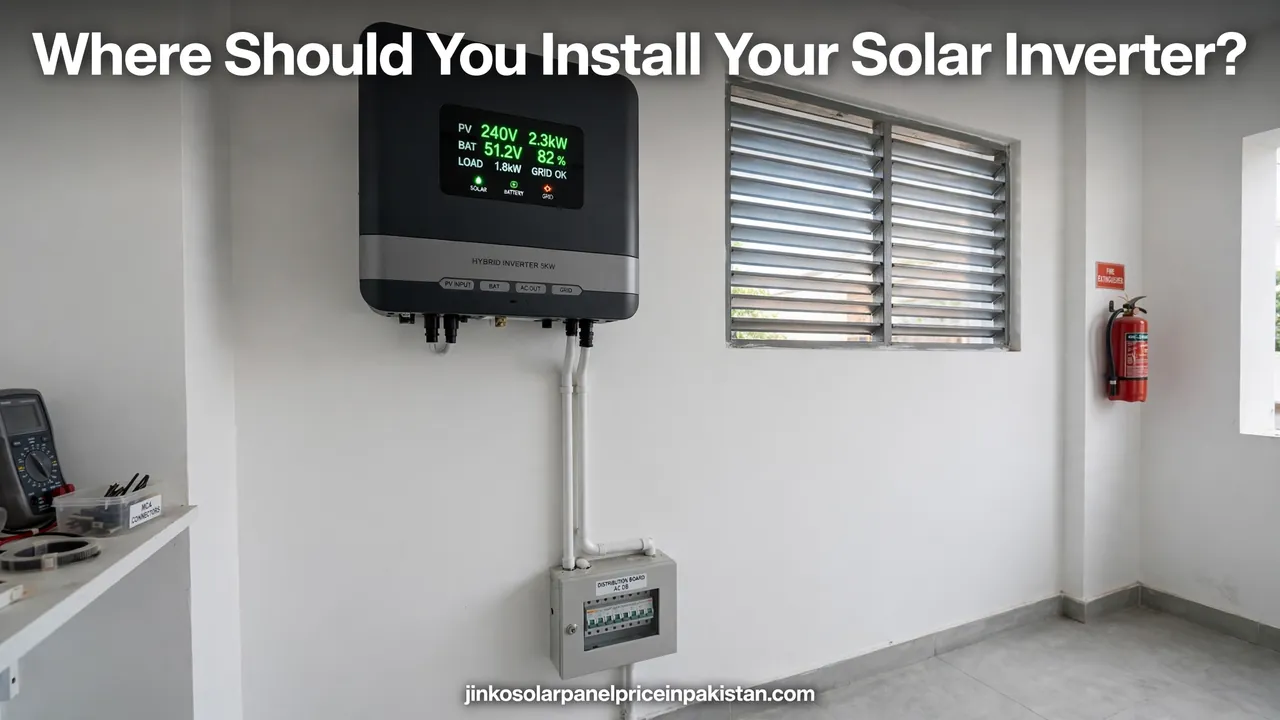
Where Should You Install Your Solar Inverter? Complete Guide for Pakistan

The best place to install your solar inverter is a cool, shaded, well-ventilated spot indoors — such as a garage, utility room, or staircase landing — close to your main distribution board and your batteries. If no indoor space is available, a shaded exterior wall under a canopy works, but only if the inverter is rated for outdoor use. Where you put the inverter affects how efficiently it runs, how long it lasts, and how easy it is to maintain.
Most homeowners in Pakistan focus on the panels and the inverter brand, and treat placement as the installer’s problem. That is a mistake: an inverter on a sun-baked west-facing wall in June will run hotter, work harder, and age faster than the same inverter in a shaded garage. This guide answers where to install solar inverter in a Pakistani home, which spots to prefer, which to avoid, and what to check before your installer drills the first hole.
Why Inverter Location Matters So Much
A solar inverter converts the direct current (DC) from your panels into the alternating current (AC) your home uses, and that conversion produces heat. When an inverter gets too hot, it protects itself by reducing its output — thermal derating — so on the hottest afternoons, when your panels are producing the most, a badly placed inverter can deliver less power than it should. Location also decides how long the inverter survives: electronics age faster in heat, dust, and moisture, and Pakistan’s summers, monsoon rains, and dusty winds supply plenty of all three. Placement also affects safety and service — the inverter carries high DC voltage from the roof, so it needs to be dry, out of children’s reach, and easy for a technician to access.
Indoor vs Outdoor: Which Is Better in Pakistan?
For most Pakistani homes, indoor installation is the better choice. But outdoor installation is not wrong when it is done properly.
Indoor Installation (Preferred)
Indoor placement protects the inverter from the three things that shorten its life: direct sunlight, rain, and dust. A garage, utility room, or covered veranda keeps temperatures more stable, keeps the unit dry during monsoon, and keeps dust off the cooling vents — and a technician can service it without a ladder in the sun. The trade-offs are space and noise: an inverter takes up wall space and hums while it works, which is why living rooms and bedrooms are poor choices. One caution: some inverters are designed only for indoor use. Off-grid and many hybrid inverters carry lower weather-protection ratings and must never be mounted outside, even under a canopy. Our guide to IP65 vs IP21 solar inverters explains what those ratings mean in plain language.
Outdoor Installation (When Indoor Is Not Possible)
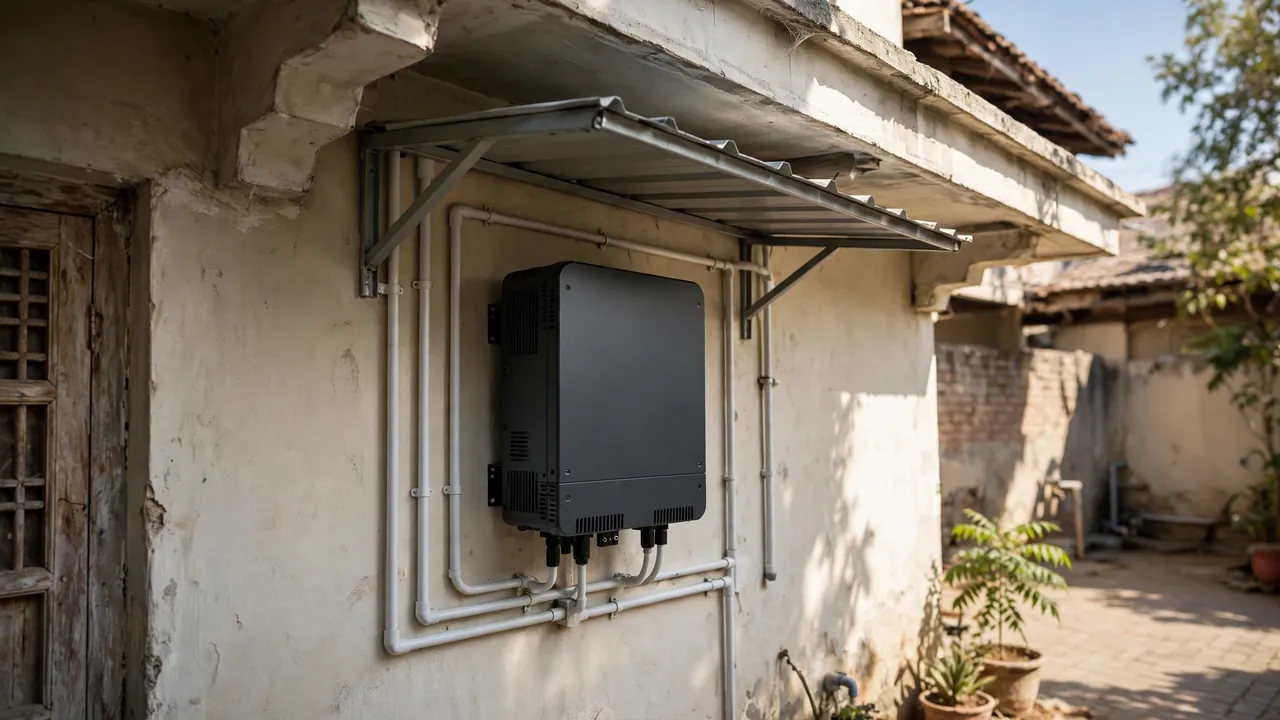
Outdoor installation works when the inverter is genuinely rated for it — typically IP65, meaning protection against dust and water jets — and when the spot is shaded. A north-facing or east-facing exterior wall, a wall under a deep eave, or a spot beneath a purpose-built canopy are the usual options, because even an outdoor-rated inverter ages faster when it bakes in direct sun all afternoon. Outdoor placement also offers better ventilation and keeps the unit out of the family’s way, but the risks are weather, dust, and theft: wind-driven monsoon rain can still reach a wall-mounted unit, dust clogs vents faster outdoors, and an inverter on an accessible outer wall is easier to steal. If you go outdoors, mount it high enough to be out of easy reach, keep it under cover, and run the cables through proper conduit. For a detailed walkthrough of the whole process, see our solar inverter installation guide.
The 7 Rules for Choosing the Right Spot
Whatever room or wall you choose, it should pass all seven of these tests — if a spot fails one, find a better one.
1. Keep it cool and out of direct sun
This is the single most important rule. Inverters lose efficiency as they heat up, so the spot should be shaded all day — not just in the morning. West-facing walls are the worst choice in Pakistan because they catch the harsh afternoon sun; a garage or a north-facing wall is far better. Waaree Energies, one of the world’s largest solar manufacturers, recommends shaded, well-ventilated locations — see their solar inverter placement guide.
2. Give it room to breathe
An inverter cools itself by moving air across its heat sink, so it needs clear space on every side. Never box it into a closed cupboard, stack cartons against it, or hang clothes in front of it. Follow the clearance distances in your inverter’s installation manual — blocked vents are one of the most common causes of overheating, and one of the easiest to avoid.
3. Keep it close to the main distribution board
The shorter the cable run between the inverter and your main distribution board (the DB or meter box), the lower the power loss and the cabling cost. Long AC cable runs also make voltage drop more likely, which can cause the inverter to trip on hot afternoons.
4. Keep it close to the batteries
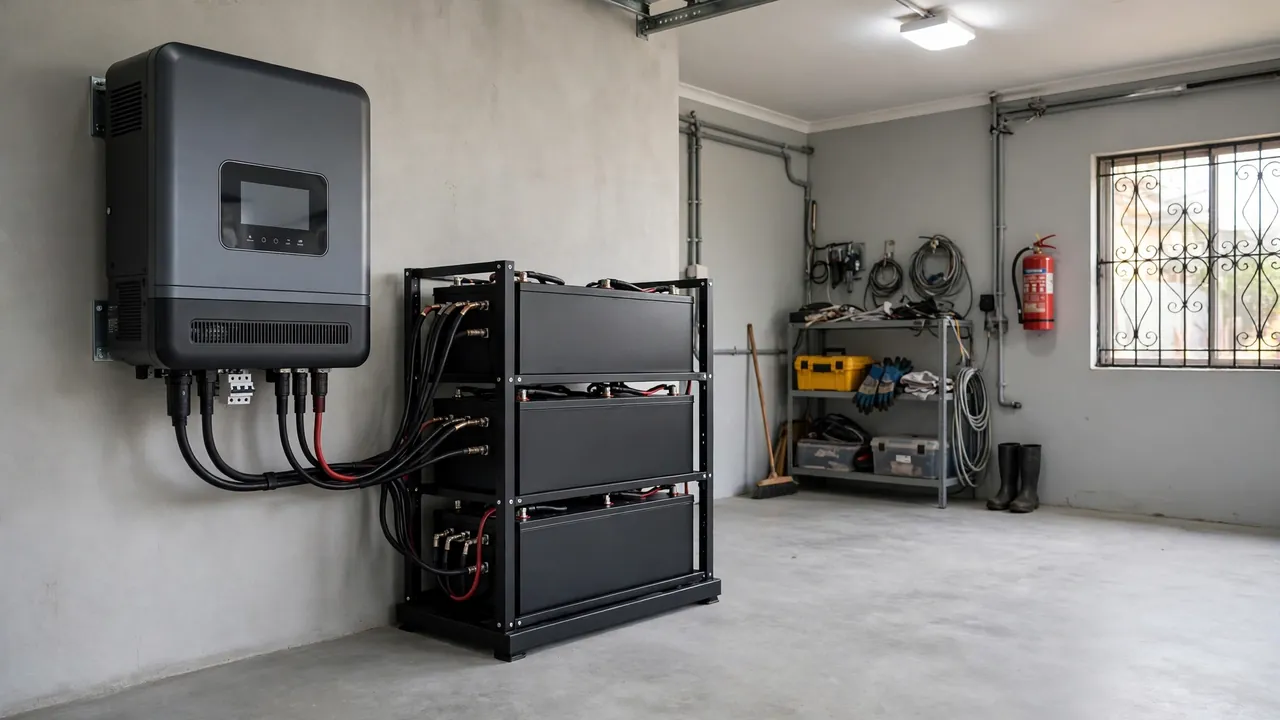
If you have a hybrid system with batteries, the inverter and the batteries should sit near each other — the DC cables between them carry high current, so every extra metre adds losses and cost. Place the inverter on the wall directly beside or above the battery bank, with short, thick cables. Our inverter and battery pairing guide explains how the two components should be matched.
5. Keep it dry
Water and high-voltage electronics do not mix. Never install an inverter where rain can reach it, where a leaking pipe or water tank sits above it, or where monsoon water pools on the floor. Rooms that flood in heavy rain are risky unless the unit is mounted well above the highest water level the room has ever seen.
6. Keep it accessible and visible
You will need to read the inverter’s display, press its buttons, and let a technician open it for servicing. Mount it at a comfortable height — roughly chest to eye level — with clear floor space in front of it. A unit nobody can read will be neglected, and its faults will go unnoticed for months.
7. Keep it away from bedrooms and children
Inverters hum while they work, and the sound carries at night when the house is quiet, so keep the unit away from bedrooms, study rooms, and living areas. Keep it out of children’s reach too: it carries high DC voltage and has hot surfaces when running. A garage wall or a locked utility room solves both problems at once.
Best Places to Install a Solar Inverter in a Pakistani Home
Garage or covered parking area. The most popular choice, and usually the best: indoors but separate from living space, near the meter in most homes, with space for batteries beside the inverter, and the hum bothers nobody.
Utility room or store room. A dedicated utility room is ideal if it has ventilation — a louvre window or a vent near the ceiling is enough. Store rooms work too, provided the inverter wall stays clear of stored items and the room does not get sealed shut in summer.
Staircase landing or mumty. A common choice because it is close to the panels, and it works well if the space is roofed, shaded, and dry — but a mumty that turns into an oven in June or leaks in monsoon is a bad choice. Check it on a hot afternoon before you decide.
Shaded exterior wall. A north-facing or east-facing outer wall under a canopy or deep eave, with an outdoor-rated inverter — the best fallback when no indoor space exists. It keeps the unit ventilated and accessible, but it needs the canopy, proper conduit, and a height that deters theft.
Placement by Inverter Type
On-grid (grid-tied) inverters are usually outdoor-rated and the most flexible about placement. They have no batteries to sit beside, so the main priorities are shade, ventilation, and closeness to the DB. A shaded exterior wall is often perfectly fine for these.
Hybrid inverters need to sit close to the battery bank, so their location is really decided by where the batteries can live — a dry, ventilated, indoor spot. Because they also run at night on battery power, keeping them out of bedrooms matters even more. Our hybrid solar inverter guide covers how these units work and what they need.
Off-grid inverters are almost always indoor-only, with lower weather-protection ratings — never let an installer put one outside. Microinverters are the exception: small units fitted under each panel on the roof, designed for outdoor use, with no central location to choose at all. Our comparison of microinverters vs string inverters explains the difference.
Monsoon, Dust, and Summer Heat: Pakistan-Specific Placement Tips
Pakistan’s climate adds three placement problems that guides written for cooler countries rarely mention. First, summer heat: in May and June, a sun-exposed wall in Lahore, Multan, or Jacobabad can be far hotter than the air temperature, and an inverter mounted there will derate exactly when you need it most. Shade is not optional here — it is the difference between full output and a throttled inverter.
Second, monsoon: wind-driven rain reaches places that look sheltered on a calm day, so if rain can blow onto the unit, add a canopy or move it indoors, and check that the floor below drains so the unit never stands in pooled water. Third, dust: Pakistan’s dry, dusty winds clog inverter vents faster than in most countries, so a dusty outdoor spot needs its vents checked and cleaned far more often. When you choose the spot, ask yourself how easy it will be to reach the vents with a soft brush every few weeks.
If you are still choosing the inverter itself, our solar inverter buying guide and the top 5 hybrid inverters in Pakistan list will help you compare the options before placement even comes up.
Placement Checklist Before Your Installer Arrives
Walk through this list with your installer before the inverter is mounted:
- The spot is shaded all day, not just in the morning.
- There is clear space on all sides, as the manual requires, and nothing will be stored against the unit.
- The spot is close to the main distribution board and, for hybrid systems, close to the batteries.
- The spot stays dry in monsoon rain and never floods.
- The inverter will be mounted at a readable height, with clear floor space in front of it.
- The spot is away from bedrooms and out of children’s reach.
- The inverter’s weather-protection rating matches the spot — indoor-only units stay indoors.
- The display and fault lights are visible, not hidden behind a door or a curtain.
If your installer suggests a spot that fails any of these, ask why — and be ready to insist on a better one. Placement is a one-time decision: moving an inverter later means new cabling, new holes in the wall, and a day of downtime.
Conclusion
Where to install solar inverter comes down to one simple idea: a cool, shaded, dry, ventilated spot that is close to your distribution board and your batteries, easy to reach, and away from bedrooms and children. In most Pakistani homes that means a garage or utility room; when indoor space is not available, a shaded exterior wall with an outdoor-rated inverter and a canopy is the next best thing.
Frequently Asked Questions (FAQs)
Can a solar inverter be installed outdoors in Pakistan?
Yes, but only if the inverter is rated for outdoor use — typically IP65 — and the spot is shaded all day. A north-facing or east-facing exterior wall under a canopy or deep eave is the usual setup. Even an outdoor-rated inverter ages faster in direct sun, so shade and a canopy matter as much as the rating.
Is it better to install the inverter indoors or outdoors?
Indoors is better for most Pakistani homes. A garage, utility room, or staircase landing protects the inverter from direct sun, monsoon rain, and dust, and keeps temperatures more stable. Outdoor installation works when no indoor space exists, as long as the inverter is outdoor-rated and the spot is shaded and covered.
How much space should be left around a solar inverter?
An inverter cools itself by moving air across its heat sink, so it needs clear space on every side. Follow the clearance distances printed in your inverter’s installation manual — they exist because the unit genuinely needs that airflow. Never box it into a closed cupboard or stack items against it.
Can the inverter be installed in a bedroom?
No. Inverters hum while they work, and the sound carries at night when the house is quiet. They also give off a small amount of heat and have blinking displays. A garage, utility room, or staircase landing is a far better spot than any room where people sleep.
How close should the inverter be to the batteries?
As close as practical. The DC cables between the inverter and the batteries carry high current, so every extra metre adds losses and cost. Place the inverter on the wall directly beside or above the battery bank, with short, thick cables and a clear path between them.
Can a solar inverter be installed on the roof?
No — not a standard string or hybrid inverter. The roof is the hottest, most exposed place on the house, and the inverter will derate and age faster there. The exception is microinverters, which are small units designed to sit under each panel on the roof.
What happens if the inverter is installed in direct sunlight?
It will run hotter, and when an inverter gets too hot it protects itself by reducing its output — thermal derating — so you get less power exactly when the sun is strongest. Over time, constant heat also shortens the inverter’s life. A shaded spot, ideally indoors, avoids both problems.