
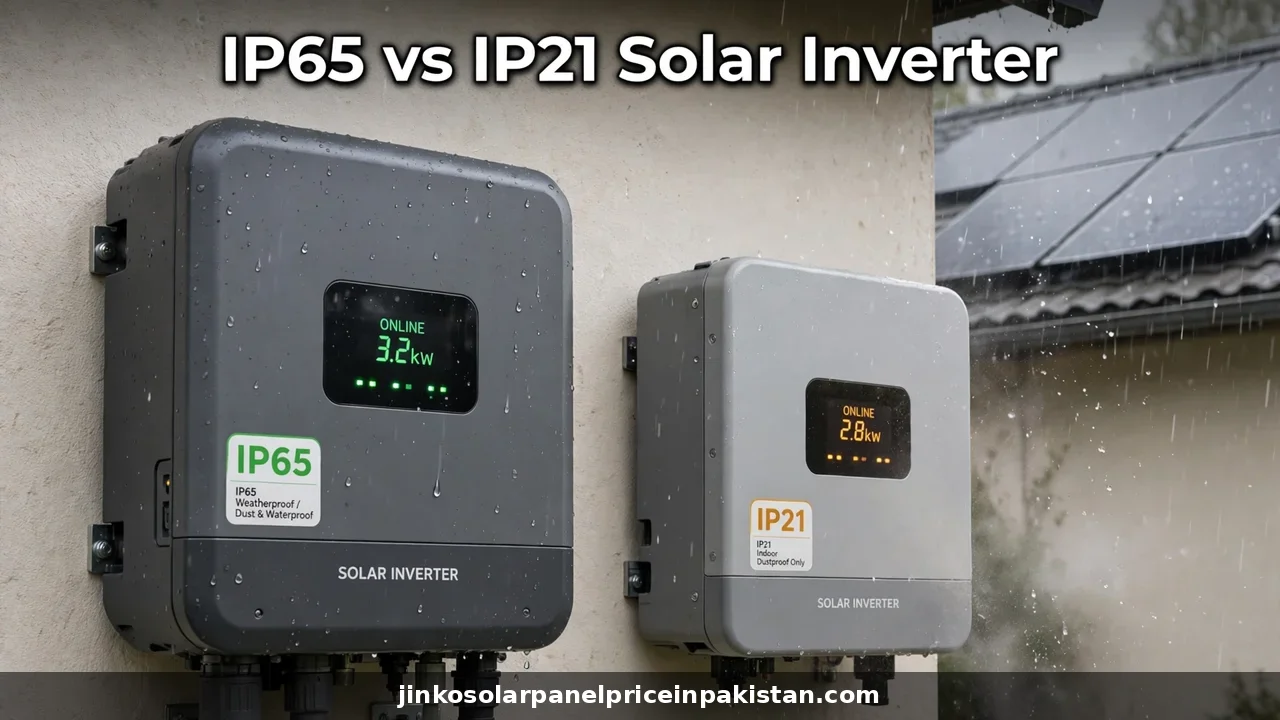
IP65 vs IP21 Solar Inverter: Which One Do You Need?

If you are choosing between an IP65 and an IP21 solar inverter, the short answer is this: choose IP65 when the inverter will sit outdoors or in a dusty, rain-exposed spot, and choose IP21 only when it will live permanently indoors in a dry, sheltered place. The rating is not about power or quality — it is about how well the inverter’s enclosure keeps dust and water out. Picking the wrong one can shorten the inverter’s life, while picking the right one is mostly a question of where the unit will be installed.
What Does an IP Rating Actually Mean?
IP stands for Ingress Protection. The rating system is defined by the international standard IEC 60529, which classifies how well an electrical enclosure resists the entry of solid objects and water. Manufacturers state the rating on their datasheets — for example, SMA lists IP65 in accordance with IEC 60529 for an outdoor-rated inverter. An IP rating always has two digits, and each digit means something different:
- The first digit rates protection against solid objects, including dust. It runs from 0 (no protection) to 6 (dust-tight).
- The second digit rates protection against water. It runs from 0 (no protection) to 9 (protection against powerful, high-temperature water jets), with the familiar middle values covering drips, splashes and jets.
So when you see “IP65”, read it as two separate claims: 6 for dust, 5 for water. When you see “IP21”, read it as 2 for solids and 1 for water. A higher number always means stronger protection on that side, but the two digits are independent — a unit can be strong against dust and weak against water, or the other way round.
This matters because an inverter’s rating is a property of its enclosure, not of its electronics. Two inverters with the same capacity and features can carry very different ratings, and the rating you need depends almost entirely on the environment where the inverter will operate. If you are still comparing inverter types in general, our solar inverter buying guide for Pakistan explains types, sizing and what else to check before you buy.
IP21 Explained: Built for Indoor Use
An IP21 inverter is protected against solid objects larger than 12.5 millimetres — roughly finger-sized objects — and against vertically falling water drops, such as light condensation dripping from above. That is basic, indoor-level protection.
In practice, an IP21 inverter is designed for a controlled indoor environment: a garage, a utility room, a store room or a covered area where it will never face rain, splashing water or heavy dust. Many hybrid inverters sold for indoor installation carry this rating, because the design assumes the building itself provides the weather protection.
What IP21 does not cover is just as important:
- It is not dust-tight. Fine dust can still enter the enclosure over time.
- It is not protected against water splashing from the side, angled rain or water jets.
- It is not suitable for an uncovered rooftop, an open courtyard wall or any spot where monsoon rain can reach it.
An IP21 unit can still be an excellent inverter — it simply needs a home indoors. Installed in a dry, ventilated room and kept clear of dust, it does the same job as any other inverter of its type. Problems only start when an indoor-rated unit is asked to survive outdoor conditions.
IP65 Explained: Built for Outdoor Use
An IP65 inverter is dust-tight — the “6” is the highest rating for protection against solids — and it is protected against low-pressure water jets from any direction. That means rain, splashes and water sprayed at the enclosure from any angle should not get inside.
This is why IP65 is the standard rating for inverters mounted on exterior walls, rooftops and other outdoor locations. The sealed enclosure is built to handle the weather the inverter will actually face: dust storms, monsoon rain, humidity and the day-to-day grime of an outdoor installation.
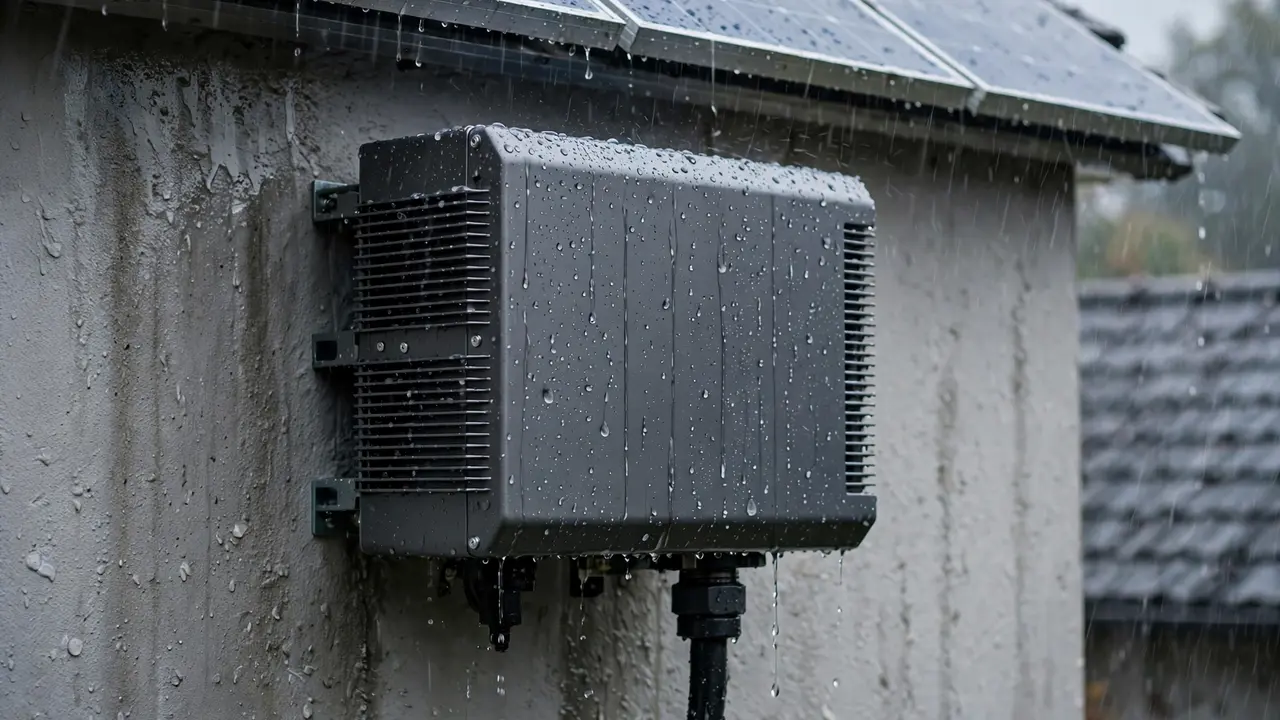
Two common misunderstandings are worth clearing up. First, IP65 does not mean the inverter can be submerged in water — that requires a higher second digit, such as 7 or 8. An IP65 unit should never be installed where water pools around it or where it could flood. Second, IP65 does not mean maintenance-free. Dust still settles on vents and heat sinks, and the unit still needs airflow to stay cool, so the installation spot and occasional cleaning still matter.
IP65 vs IP21 at a Glance
| Feature | IP21 | IP65 |
|---|---|---|
| Dust protection (first digit) | 2 — objects larger than 12.5 mm kept out | 6 — dust-tight |
| Water protection (second digit) | 1 — vertically falling drops only | 5 — water jets from any direction |
| Suitable location | Indoors, dry and sheltered | Indoors or outdoors |
| Rain exposure | No | Yes, including driving rain |
| Dusty environments | Not recommended | Designed for them |
| Typical installation | Garage, utility room, store room | Exterior wall, rooftop, covered outdoor area |
The table makes the trade-off plain: IP65 covers everything IP21 covers, plus outdoor exposure. The reason anyone still buys IP21 is not that it performs better — it is that an indoor installation does not need outdoor protection, and indoor-rated units are often designed with ventilation and access suited to a room rather than a wall in the weather.
Which One Do You Need in Pakistan?
Pakistan’s climate makes this decision more important than it is in milder countries. Dust is a year-round reality in most cities, summer heat is intense, and the monsoon brings heavy, wind-driven rain. An inverter that lives outdoors here needs real protection on both digits of its rating.
Choose IP65 if any of these apply:
- The inverter will be mounted on an outside wall, a rooftop or a boundary wall.
- The spot gets rain, even under a partial shade or canopy — wind can drive rain sideways under a roof edge.
- The area is dusty, near a road, a construction site or open ground.
- You have no guaranteed indoor space with ventilation for the unit.
IP21 is a reasonable choice only if all of these apply:
- The inverter will stay indoors for its entire working life.
- The room is dry, dust-controlled and ventilated.
- There is no risk of water reaching it — no leaks above it, no washing nearby, no flooding risk.
- You have a plan for keeping the room’s dust down, since IP21 is not dust-tight.
For most homes, the deciding factor is simply the installation spot. If you are still deciding where the inverter will go, read our guide on solar inverter installation and the placement checklist in our hybrid solar inverter guide. The rating should follow the location, not the other way round.
Installing an IP21 Inverter Indoors: Getting It Right
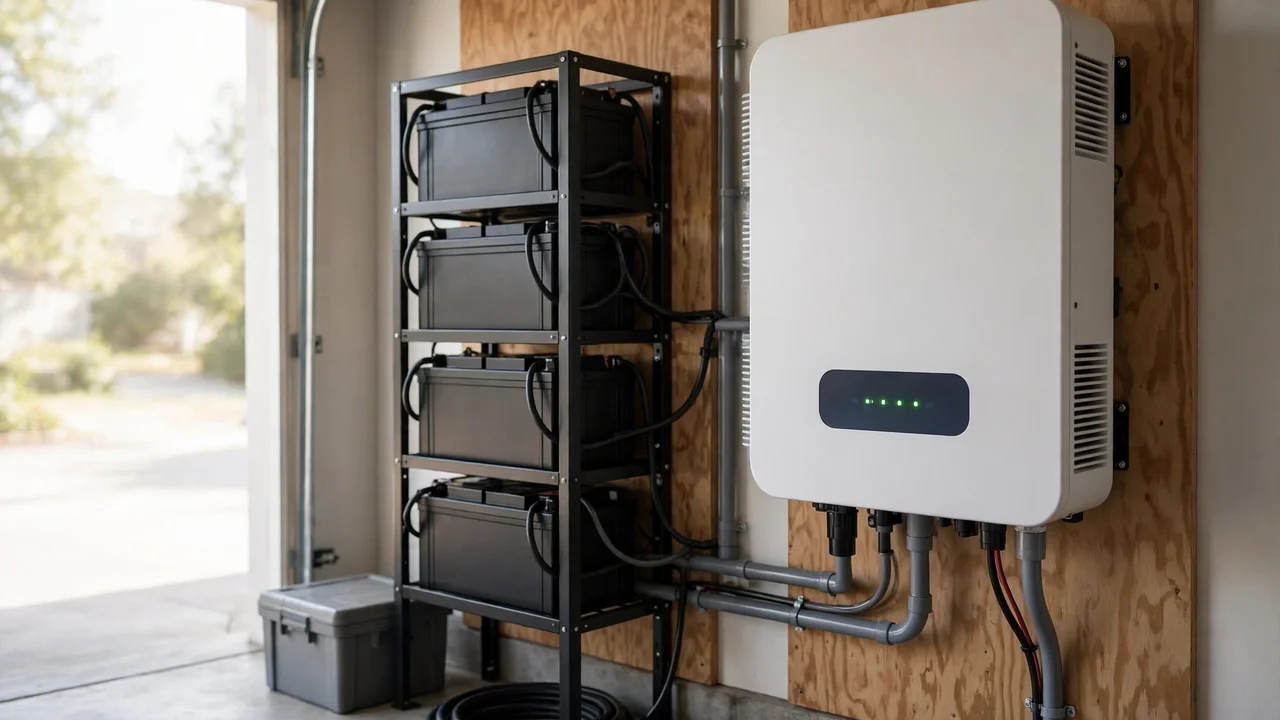
An indoor installation is not just about putting the inverter under a roof. For an IP21 unit to last, the room itself has to do the protecting that the enclosure does not:
- Ventilation: Inverters produce heat. A closed, airless room traps that heat, so the room needs airflow — a vent, a fan or an openable window — without letting in rain.
- Clearance: Leave space around the unit as the manufacturer’s manual specifies, so air can circulate and a technician can reach it.
- Dust control: Because IP21 is not dust-tight, a room that collects dust will eventually pass that dust into the inverter. Keep the room clean and avoid placing the unit near a dusty workshop area.
- Water safety: Never mount an IP21 inverter under a water tank, a leaking pipe or a roof section that drips. Even small, repeated drips fall outside what the “1” rating is meant to handle if they arrive at an angle or with force.
- Access: The display, switches and cable connections need to stay reachable for monitoring and servicing.
The same placement logic applies to other inverter types. Our on-grid inverter guide and off-grid inverter guide cover how each type is installed and where it usually sits.
Common Mistakes to Avoid
- Mounting an IP21 inverter outdoors under a “small shade”. A shade stops vertical rain, but wind-driven rain arrives at an angle, and IP21 only protects against vertical drops. Dust also reaches it freely.
- Assuming IP65 means waterproof. IP65 resists water jets; it does not survive immersion. Never install any inverter where water can pool or flood around it.
- Ignoring heat. An IP rating says nothing about cooling. A sealed IP65 unit in direct sun on a hot wall still needs shade and airflow where possible, and an IP21 unit in a stuffy room will run hotter than one in a ventilated room.
- Covering the inverter with plastic sheeting. Wrapping an inverter to “protect” it traps heat and moisture and can void the warranty. If the location is wrong, fix the location or choose the right rating instead.
- Judging by the rating alone. The IP rating is one specification among many. Sizing, inverter type, warranty terms and after-sales support matter just as much — see our solar inverter warranty guide for what to check before buying.
What an IP Rating Does Not Tell You
It is easy to over-read a rating. The IP code tells you about the enclosure only. It does not tell you how efficient the inverter is, how long it will last, how good its warranty is, how it handles faults or whether it suits your system size. A well-made IP21 inverter installed indoors can outlast a poorly installed IP65 unit, and an IP65 rating does not compensate for wrong sizing or bad wiring.
Use the rating for exactly what it is: a filter for the installation environment. First decide where the inverter will live, then check that its rating suits that spot, then judge the unit on its other specifications. If you run into fault codes or strange behaviour later, our solar inverter error codes troubleshooting guide explains the common warnings and what to do about them.
How to Check the Rating Before You Buy
- Find the rating on the inverter’s datasheet or nameplate — it is usually printed as “IP65” or “IP21” in the specifications section.
- Confirm it in the manufacturer’s official documentation rather than a seller’s listing alone, since listings sometimes copy the wrong specification.
- Match the rating to your installation spot using the checklist above, before the installer arrives — moving an inverter after wiring is far more work than choosing correctly first.
- If the spot is borderline — a semi-covered veranda, a rooftop room with open vents — treat it as outdoor and go with IP65.
When in doubt, the safe rule is simple: if there is any chance the inverter will face rain or heavy dust during its life, IP65 is the right call. The extra protection costs little compared with replacing a water-damaged unit.
Check Current Prices
Inverter models and their prices change regularly, so this guide deliberately carries no price figures. For today’s updated solar panel and system prices in Pakistan, visit the homepage, where the price tables are updated daily.
Frequently Asked Questions (FAQs)
What is the difference between IP65 and IP21 solar inverters?
IP65 means the enclosure is dust-tight and protected against low-pressure water jets from any direction, so it suits outdoor installation. IP21 means protection against finger-sized solid objects and vertically falling water drops only, so it suits dry indoor installation.
Can an IP21 inverter be installed outdoors?
No — an IP21 inverter should not be installed outdoors. IP21 only protects against vertically falling drops, so wind-driven rain, splashes and dust can still reach it. An IP65 inverter is the right rating for an exterior wall, rooftop or any rain-exposed spot.
Does IP65 mean the inverter is waterproof and can be submerged?
No. IP65 protects against water jets, not immersion. Never install an inverter where water can pool or flood around it, and check the manufacturer’s manual for the exact installation limits of your model.
Which is better, IP65 or IP21?
It depends on the installation spot, not on which rating is ‘better’ in general. IP65 covers outdoor and dusty conditions; IP21 is enough for a dry, ventilated indoor room. If the spot could ever face rain or heavy dust, choose IP65.
What do the two digits in an IP rating mean?
The first digit rates protection against solids and dust, from 0 to 6, where 6 means dust-tight. The second digit rates protection against water, where 1 means vertically falling drops and 5 means water jets from any direction.
What does an IP21 inverter need from its indoor room?
An IP21 inverter needs a dry, ventilated, dust-controlled room with clearance for airflow and access, and it must never sit under a leaking pipe or tank. The room provides the weather protection that the enclosure does not.
How do I check an inverter’s IP rating before buying?
Check the rating on the manufacturer’s datasheet or the inverter’s nameplate, and confirm it in official documentation rather than a seller’s listing alone. Then match the rating to the installation spot before the installer arrives.
Does a higher IP rating mean a better inverter overall?
No. The IP code only describes the enclosure’s protection against dust and water. It says nothing about efficiency, sizing, warranty terms or fault handling, so judge those specifications separately.
