
TOPCon vs PERC vs HJT Solar Cells: Complete Comparison

Short answer: PERC is the older p-type cell technology that powered the solar boom of the 2010s; TOPCon is the n-type technology that has since taken over as the mainstream choice, with higher efficiency and slower degradation; and HJT is the premium option with the best heat performance and bifacial output. For most homes and businesses in Pakistan, a TOPCon panel is the sensible pick today — but the right choice depends on your roof space, your climate, and how much you value long-term output. This guide compares TOPCon vs PERC vs HJT solar cells side by side, so you can read any panel datasheet with confidence.
What Is PERC Solar Cell Technology?
PERC stands for Passivated Emitter and Rear Cell (sometimes called Passivated Emitter and Rear Contact). It is built on a p-type monocrystalline silicon wafer. The key innovation is a dielectric passivation layer added to the rear of the cell, which reflects unabsorbed light back into the silicon and reduces electron recombination at the back surface. That one change lifted cell efficiency well above the older aluminium back-surface-field (Al-BSF) design it replaced.
PERC cells were commercialised in the early 2010s and dominated global panel production through the early 2020s — so if your existing system is a few years old, its panels are very likely PERC. Typical commercial PERC modules sit in the roughly 21–23% efficiency range. Their known weaknesses: p-type wafers suffer light-induced degradation (LID) from boron-oxygen defects in the first hours of sun exposure, and their temperature coefficient is usually around −0.34%/°C, meaning output drops about a third of a percent for every degree the cell runs above 25°C. (Exact figures vary by manufacturer — always check the datasheet.)
What Is TOPCon Solar Cell Technology?
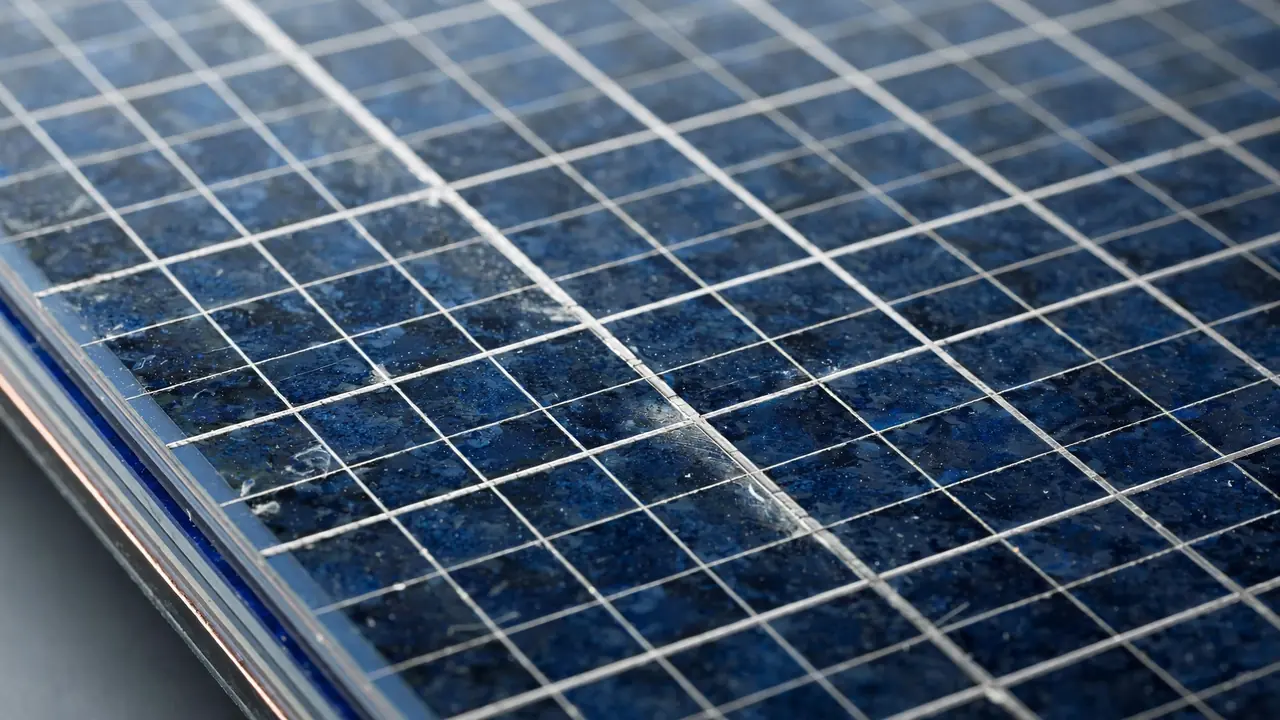
TOPCon stands for Tunnel Oxide Passivated Contact. It switches to an n-type wafer and adds an ultra-thin tunnel oxide layer plus a doped polysilicon layer on the rear of the cell. This structure passivates the rear surface far more effectively than PERC’s dielectric layer, cutting recombination losses and pushing efficiency higher.
TOPCon entered mass production around 2022 and has since become the industry’s default: the Fraunhofer ISE Photovoltaics Report (July 2026 edition) notes that the global PV market is now “dominated by crystalline silicon and n-type TOPCon”. Typical commercial TOPCon modules reach roughly 23–25% efficiency. Because the wafer is n-type, TOPCon cells are essentially free of boron-oxygen LID, and their temperature coefficient is commonly around −0.30%/°C — a meaningful advantage in hot climates. Most manufacturers also quote lower first-year and annual degradation for TOPCon than for PERC-era panels.
What Is HJT Solar Cell Technology?
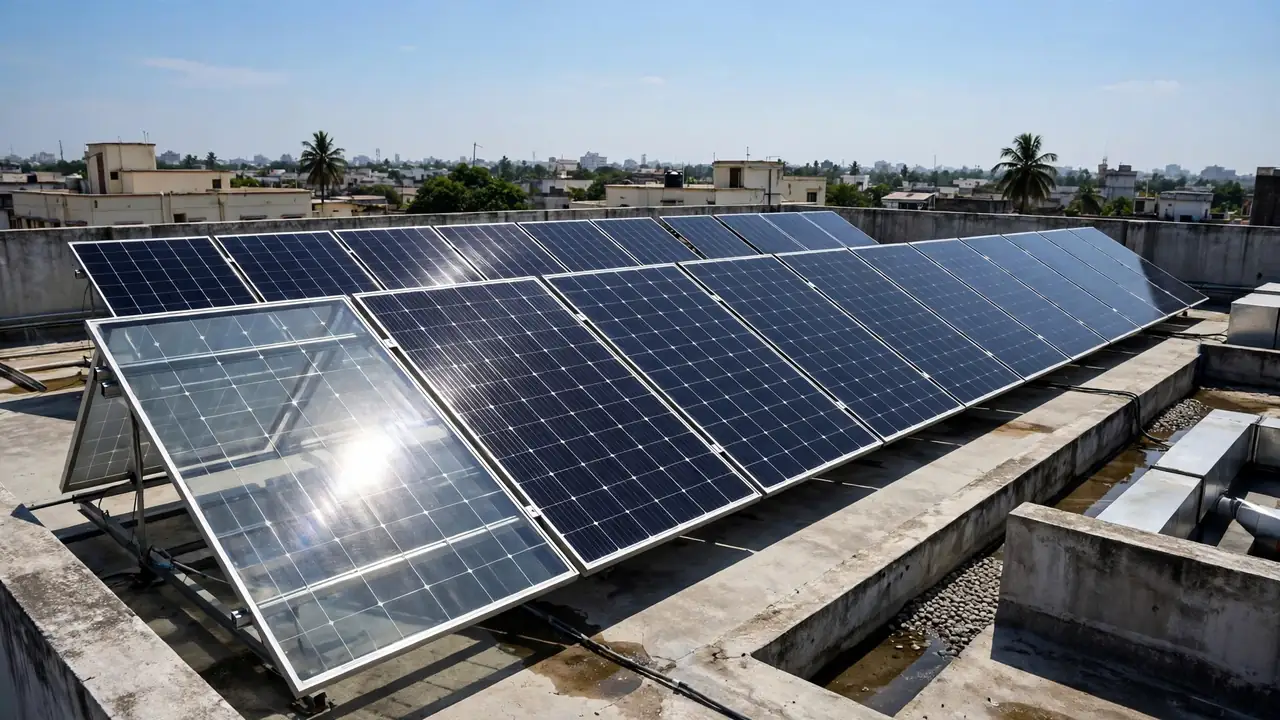
HJT stands for Heterojunction Technology. It takes an n-type crystalline silicon wafer and sandwiches it between thin layers of amorphous (non-crystalline) silicon — both intrinsic and doped. The name comes from the “heterojunction” formed where the two different silicon structures meet. The technology was pioneered by Panasonic (marketed as HIT) and is now produced by a smaller group of specialist manufacturers.
HJT’s headline strengths are its temperature coefficient — often around −0.24 to −0.26%/°C, the best of the three — and its naturally bifacial character, with bifaciality factors commonly around 90% or more. Typical commercial HJT modules reach roughly 24–26% efficiency. The trade-offs: more complex manufacturing, fewer suppliers, and thinner wafers that demand careful handling during production. It remains the premium, lower-volume option of the three.
TOPCon vs PERC vs HJT: Head-to-Head Comparison
Here is how the three cell technologies compare on the factors that actually affect your system’s output:
| Factor | PERC | TOPCon | HJT |
|---|---|---|---|
| Wafer type | P-type | N-type | N-type |
| Typical module efficiency | ~21–23% | ~23–25% | ~24–26% |
| Typical temperature coefficient | ~−0.34%/°C | ~−0.30%/°C | ~−0.24 to −0.26%/°C |
| Light-induced degradation | Yes (boron-oxygen LID) | Minimal (n-type) | Minimal (n-type) |
| Typical bifaciality | ~65–75% | ~80–85% | ~90%+ |
| Manufacturing maturity | Most mature, simplest | Mainstream since ~2022 | Premium, lower volume |
All figures are typical ranges — individual panel datasheets vary, so treat the table as a guide, not a specification.
Efficiency: more watts from the same roof
The efficiency gap between PERC and the n-type technologies is the single biggest practical difference. Moving from ~22% to ~24.5% efficiency means roughly 11% more power from the same roof area — often the difference between fitting your load on the available space or falling short. The Fraunhofer ISE Photovoltaics Report records that commercial silicon module efficiency has climbed “from about 17% to just under 25% over the past ten years”, and that climb was driven first by PERC and now by TOPCon. If your roof space is limited, the newer cell technologies earn their place on efficiency alone.
Heat performance: why temperature coefficient matters in Pakistan
A panel’s rated wattage is measured at a cell temperature of 25°C, but on a Pakistani rooftop in June the cells routinely run at 60–70°C. At a 40°C rise above the rating point, a −0.34%/°C PERC panel loses roughly 13.6% of its rated output to heat, while a −0.25%/°C HJT panel loses roughly 10% — a gap of several percent in real afternoon output, every hot day, for 25 years. TOPCon sits between the two. This is why buyers in Multan, interior Sindh, and the Punjab plains should weigh the temperature coefficient almost as heavily as the headline wattage. If you want the full picture on how heat eats into output, read our guide to N-type vs P-type solar panels, which explains the wafer-level reasons behind the difference.
Degradation and lifespan
All panels lose a little output each year, but n-type cells start with an advantage: no boron-oxygen LID, so they skip the initial drop PERC panels take in their first days of sunlight. Manufacturers’ linear performance warranties have crept upward with the technology — many TOPCon and HJT panels now carry 30-year performance warranties versus the 25-year terms common in the PERC era. Over a system’s lifetime, the combination of higher starting efficiency and slower annual degradation compounds into meaningfully more total energy.
Bifacial output and real-world yield
Where panels are mounted on elevated structures with a reflective surface beneath — light-coloured rooftops, white-painted floors — the rear side contributes extra energy. HJT’s ~90%+ bifaciality makes it the natural choice for such installs, and TOPCon’s ~80–85% is a solid middle ground. PERC bifacial panels exist but harvest noticeably less from the rear. For standard flush roof mounts, bifaciality barely matters; for elevated structures it can be decisive. See our bifacial solar panel guide for when the rear side actually pays off.
Which Solar Cell Technology Is Best for Pakistan?
- Most buyers, most rooftops: TOPCon. It is the current mainstream — widely available, higher efficiency and lower degradation than PERC, with a better temperature coefficient. The Fraunhofer ISE report confirms n-type TOPCon now dominates the global market, which also means the widest choice of brands and models.
- Small roof, big load: TOPCon or HJT. When every square foot counts, the extra efficiency points of the newer technologies translate directly into more watts fitted.
- Hottest regions or elevated bifacial structures: HJT. Its superior temperature coefficient and ~90%+ bifaciality shine where heat is extreme or the rear side sees the sky.
- Tightest budget, existing PERC stock: PERC. The technology is mature and proven; it simply gives up some efficiency, heat performance, and long-term degradation margin to its successors.
Whichever technology you shortlist, verify the exact panel before buying: match the model number on the datasheet to the label on the panel, and confirm the wafer type and efficiency printed there. Cell technology is only one part of panel quality — build quality, warranty terms, and buying from an authorised channel matter just as much.
How to Tell Which Technology Your Panel Uses
Check the datasheet or product brochure for these keywords: “N-type TOPCon” or “TOPCon” for tunnel-oxide cells, “P-type PERC” or “monocrystalline PERC” for the older technology, and “HJT”, “SHJ” (silicon heterojunction), or “HIT” for heterojunction cells. Many model names also hint at the technology — “N-type” in the series name almost always means TOPCon or HJT, since PERC is p-type. If the datasheet lists a temperature coefficient around −0.25%/°C with bifaciality near 90%, you are almost certainly looking at HJT; around −0.30%/°C with n-type points to TOPCon.
Check Today’s Solar Panel Prices in Pakistan
Cell technology sets the performance ceiling, but the market decides what you pay — and most new panels on Pakistani shelves today are TOPCon-based. We update our price tables every morning, so check today’s solar panel prices in Pakistan before you buy, and compare the datasheet figures above against the models actually in stock.
Once you’ve picked a cell technology, compare the solar panel price in pakistan for TOPCon, PERC and HJT models — and the solar plate price in pakistan per watt — on our daily-updated homepage tables.
Frequently Asked Questions (FAQs)
Which is better: TOPCon or HJT?
Neither is universally better — they serve different buyers. HJT leads on temperature coefficient (often around −0.25%/°C) and bifaciality (~90%+), so it wins in extreme heat and on elevated bifacial structures. TOPCon is the mainstream choice: higher efficiency than PERC, lower degradation, wider availability, and a better temperature coefficient than PERC at a more accessible position in the market.
Are PERC solar panels outdated in 2026?
No. PERC panels remain a proven, mature technology with the longest track record in the industry. New production has largely moved to n-type TOPCon, which offers higher efficiency, no boron-oxygen LID, and slower degradation, but a PERC panel from a reputable brand still works reliably — it just gives up some efficiency and heat performance to newer designs.
What does TOPCon stand for?
TOPCon stands for Tunnel Oxide Passivated Contact. It is an n-type cell design that adds an ultra-thin tunnel oxide layer and a doped polysilicon layer to the rear of the cell, dramatically reducing recombination losses and lifting efficiency above PERC levels.
Do TOPCon panels perform better in hot weather than PERC?
Yes. TOPCon’s typical temperature coefficient is around −0.30%/°C versus roughly −0.34%/°C for PERC, and n-type cells avoid the boron-oxygen light-induced degradation that p-type PERC cells suffer. In hot regions like Multan or interior Sindh, that gap shows up as measurably higher afternoon output over the system’s lifetime.
Is HJT worth it for a home rooftop in Pakistan?
It depends on your roof and priorities. HJT’s best-in-class temperature coefficient and ~90%+ bifaciality pay off most on small roofs in very hot areas or on elevated structures where the rear side harvests reflected light. For a standard flush rooftop install, TOPCon usually delivers nearly as much energy with wider model availability. Compare datasheets rather than brand claims.
How can I tell whether my panel is PERC, TOPCon or HJT?
Check the datasheet or brochure: look for ‘N-type TOPCon’ or ‘TOPCon’, ‘P-type PERC’ or ‘monocrystalline PERC’, and ‘HJT’, ‘SHJ’ (silicon heterojunction) or ‘HIT’ for heterojunction cells. ‘N-type’ in the series name almost always means TOPCon or HJT, since PERC is p-type. A temperature coefficient near −0.25%/°C with bifaciality around 90% points to HJT.
Do HJT panels last longer than PERC panels?
Generally yes. HJT’s n-type wafers avoid boron-oxygen LID entirely, and manufacturers typically quote lower annual degradation and longer performance warranties (often 30 years) for HJT and TOPCon than the 25-year terms common in the PERC era. Always confirm the exact warranty figures on the specific panel’s datasheet.