Why Are Solar Panels Blue or Black? Cell Color Explained

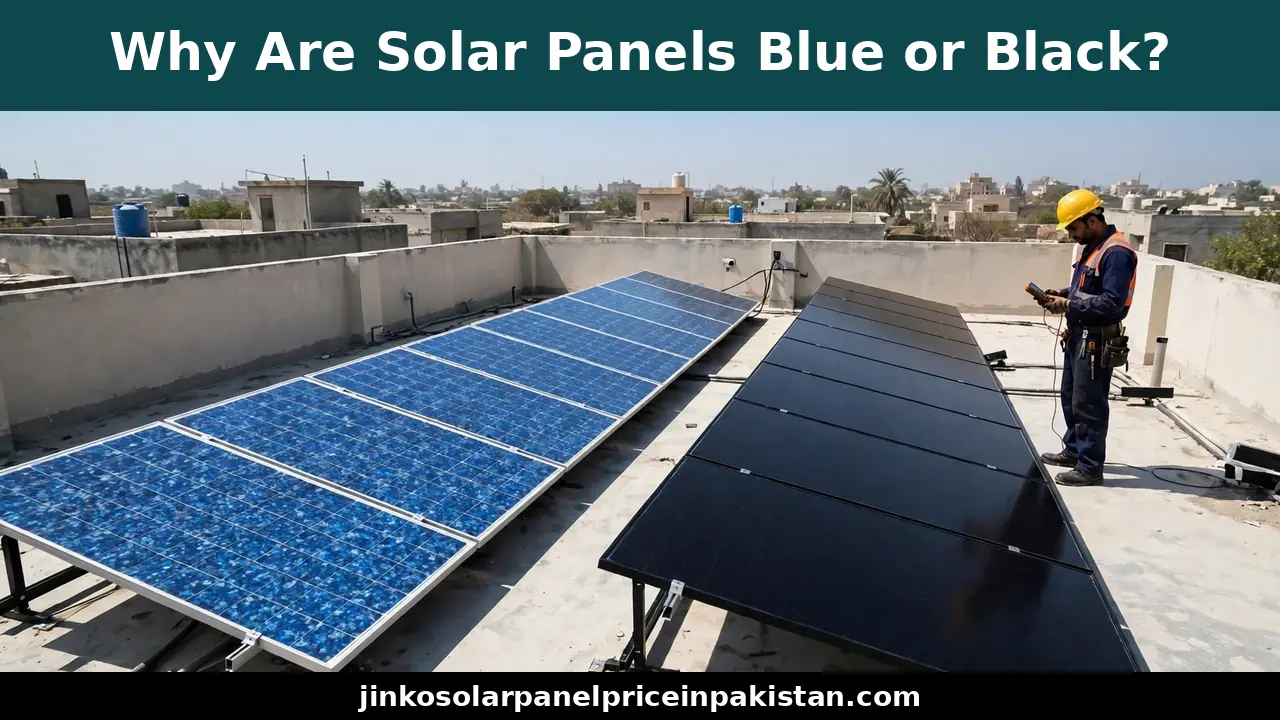
Direct answer: Solar panels are blue or black because of the silicon cells inside them. Blue panels are made from polycrystalline silicon — many small crystals melted together — and the blue colour comes from those crystals plus a thin anti-reflective coating on top. Black panels are made from monocrystalline silicon — one single crystal — which soaks up more light and looks dark. So the colour is not paint — it is a clue about what kind of cell is inside the panel.
If you have ever looked at panels on a roof, you have probably noticed it: some shine bright blue with a speckled pattern, while others look almost black. Both make electricity the same way, and both are normal. This guide answers the question why are solar panels blue or black, what the colour tells you, and what it does not tell you — so you can choose with confidence instead of guessing from the colour alone.
Why are solar panels blue or black, in plain words?
In plain words, the colour comes from the silicon inside the cell and the thin coating on top of it. Blue means many small crystals; black means one single crystal. The coating decides the final shade. Nothing about the colour is paint or decoration — it is physics showing on the surface.
Why Are Solar Panels Blue or Black?
So why are solar panels blue or black? Start with the cell: a solar panel is not one big sheet of material. It is made of many small squares called cells, and each cell is a thin slice of silicon — the same material used in computer chips. How that silicon is made decides the colour you see.
There are two main ways to make a silicon cell. The first melts many small pieces of silicon together and lets them cool into a block, which is cut into square cells. This is polycrystalline silicon — “poly” means many. The second grows one single, perfect crystal of silicon and slices it into wafers. This is monocrystalline silicon — “mono” means one. Our monocrystalline vs polycrystalline solar panels guide explains both types in detail.
That single difference — many crystals or one crystal — is the main reason. The rest of this guide walks through each colour.
Why Are Most Solar Panels Blue?
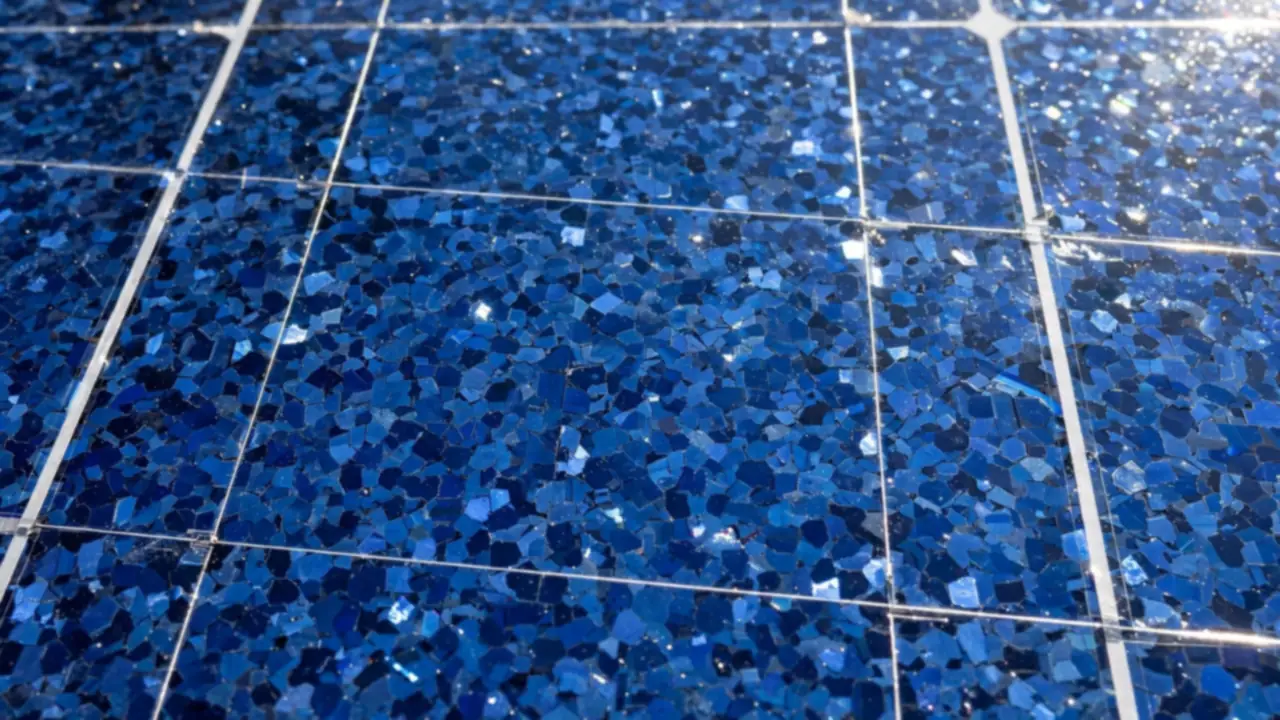
Most older panels, and many sold today, are blue — that blue comes from polycrystalline silicon. When many small crystals cool together, they freeze pointing in different directions, like a frozen lake full of cracks. Sunlight hits those crystal edges and scatters, and our eyes read that scattered light as blue with a speckled, mosaic pattern.
The speckled blue pattern
Look closely at a blue panel and you will see it is not one flat colour — it is a patchwork of shiny blue flakes, each a small crystal catching the light a little differently. No two blue panels look exactly the same, and that speckled look is the easiest way to spot a polycrystalline panel from the ground.
The anti-reflective coating
The crystals are only half the story. Bare silicon is shiny — it reflects a lot of sunlight back into the sky, and reflected light never becomes electricity. So makers put a very thin anti-reflective coating on each cell, usually made from silicon nitride, to let more light in instead of bouncing it away. It adds to the blue colour.
Think of the coating on a pair of glasses. Some lenses show a faint blue shine — a thin film that cuts reflection so more light passes through. A solar panel works the same way: the blue you see is partly the leftover light the coating and the crystals do not absorb.
Blue panels were the common choice for many years because polycrystalline silicon is simpler to make, with very little waste. That is why rooftops from a few years ago are mostly blue.
Why Are Some Solar Panels Black?
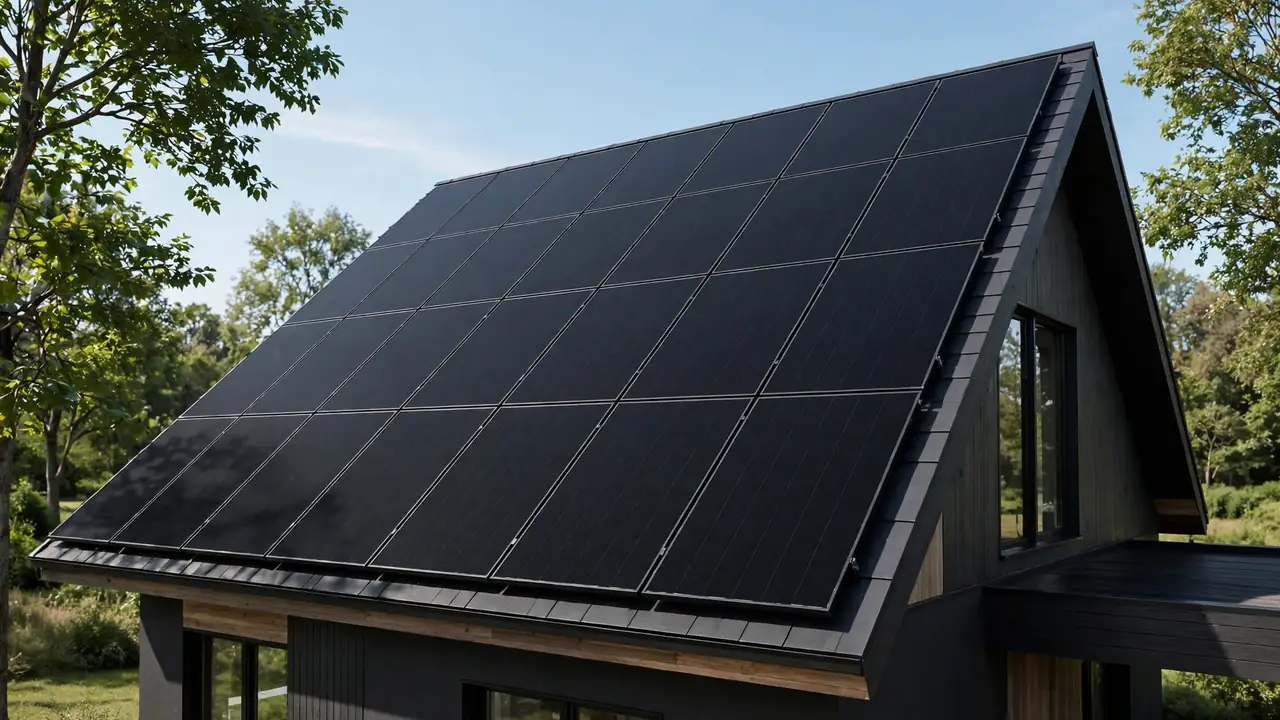
Black panels use monocrystalline silicon. Instead of melting many pieces together, makers grow one single crystal — a long cylinder of pure silicon pulled slowly out of molten silicon — and slice it into thin wafers, each becoming a cell. Because the crystal is one uniform piece, light hits it the same way everywhere, and the cell soaks up more light instead of scattering it. That is why it looks deep black.
One crystal, one colour
If polycrystalline silicon is like cracked ice, monocrystalline silicon is like a piece of black glass — smooth, even, and dark all the way through. There are no crystal edges to scatter light, and the coating on a mono cell cuts reflection even further, so the black looks even deeper.
Today, monocrystalline panels are the most common type in the world — by 2022 they already made up about 96 percent of global solar panel shipments, according to US Department of Energy data quoted in the Ooitech guide on why solar panels are blue or black. Most new panels on rooftops now are black, or very dark blue.
What makes a panel “all-black”?
Some panels go a step further and are called all-black. A normal black panel still has a white backsheet behind the cells and a silver aluminium frame, so you can see white gaps and a silver border. An all-black panel paints all of that black too: black cells, black backsheet, and black frame. From a distance, the whole panel looks like one flat sheet of black glass.
All-black panels are popular on modern houses because they blend into dark roofs and look tidy — our all-black solar panels guide covers their pros and cons. But remember: the black backsheet and frame are only about looks. The cell that makes electricity is the same whether the frame is black or silver.
Blue vs Black Solar Panels: Key Differences
Here they are side by side:
| Feature | Blue panels | Black panels |
|---|---|---|
| Cell type | Polycrystalline silicon | Monocrystalline silicon |
| How the silicon is made | Many small crystals melted together | One single crystal grown and sliced |
| Look | Bright blue, speckled mosaic pattern | Deep black or very dark blue, smooth and even |
| Backsheet and frame | Usually white backsheet, silver frame | Often black backsheet and black frame (all-black) |
| Efficiency | Usually a little lower | Usually a little higher |
| Common on | Older rooftops | Most new rooftops |
The table shows the pattern, but do not read it as a rule — a well-made blue panel can beat a poorly made black panel. Brand, cell quality, and the test report matter more.
Does the Colour Affect How Much Power a Panel Makes?
The colour itself does not make power — the cell behind it does. That is the real point of asking why are solar panels blue or black: the colour is a clue to the cell, not a power rating. A black monocrystalline cell is usually a little more efficient than a blue polycrystalline cell, because a single crystal lets electrons move more freely. That is why black panels usually produce a little more power from the same roof space.
But the difference is small. Real output also depends on cell quality, the wiring inside, the temperature on your roof, and how clean the glass is — our solar panel efficiency guide explains what the efficiency percentage really means.
So if a seller tells you a panel is better “because it is black”, ask for the datasheet — it shows the real numbers: wattage, efficiency, and temperature behaviour. Colour is a hint, not a measurement. Our guide on how to read a solar panel datasheet shows which numbers to check.
Do Black Solar Panels Get Hotter Than Blue Ones?
Yes, a little. Black surfaces soak up more heat than blue ones — the same reason a black shirt feels hotter in the sun than a white one. A black panel can run a few degrees warmer than a blue panel.
But the effect on output is small. All solar panels lose a little output as they get hotter, and that loss is measured by the temperature coefficient — a number on the datasheet that tells you how much power the panel loses per degree. Our temperature coefficient guide explains it in plain words.
What matters far more than colour is airflow. Panels mounted with a gap underneath stay cooler, because air moves under them and carries heat away. A black panel with good airflow will beat a blue panel baked flat against a hot roof — so ask about the gap under the panels, not just their colour.
Can Solar Panels Be Other Colours?
Yes, they can — red, green, grey, even gold. These coloured panels are made for buildings where looks matter more than maximum power, like a glass wall or a coloured roof, using special coatings and glass to change the colour.
But there is a trade-off: you see a panel as red because it reflects red light back at you, and that reflected light never becomes electricity. Every colour other than black costs some power — which is why coloured panels are rare on normal homes. They look nice, but they make less power for the same money.
For a home rooftop, blue or black is still the smart choice — the panel is built to catch light, not to reflect it away.
Which Colour Should You Choose for Your Roof?
For most homes, the answer is simple: choose the panel that fits your roof and budget, and let the colour follow. A dark roof suits all-black panels; a light roof suits either colour.
A short checklist to decide:
- Look at your roof. Dark roofs suit black panels. Light roofs suit either colour.
- Check the cell type, not the colour. Monocrystalline, TOPCon, and PERC are cell technologies — our TOPCon vs PERC vs HJT guide and N-type TOPCon solar panels guide explain them.
- Read the datasheet. Wattage, efficiency, and temperature coefficient tell you more than colour ever will.
- Think about heat. If your roof gets very hot, ask about airflow under the panels.
- Do not pay extra for colour alone. A black frame and black backsheet cost more to make, but they add no power. Pay for the cell, not the paint.
Colour Is Not a Quality Test
Here is the most important point in this guide: colour tells you nothing about whether a panel is original or fake. A fake panel can be black, blue, or any colour — the colour is the easiest thing to copy. What cannot be copied easily is the serial number, the test report, and the warranty behind the panel.
Before you pay, check the panel the right way: our guide on how to verify an original solar panel shows how to check the serial number and QR code on the brand’s official website. If the panel fails that check, the colour does not matter — walk away. Our fake vs original solar panel guide lists the warning signs to watch for.
Also ask for the flash test report — the sheet that shows what your exact panel produced in the factory test. Our solar panel flash test report guide explains why it matters. A seller who shows the report, the serial number, and a clear warranty is selling a real product. One who only talks about the colour is selling a look.
Panels also age — the backsheet, glass, and cells change slowly over years in the sun, as our solar panel degradation rate guide and solar panel backsheet guide explain.
Check Current Prices
Colour does not set the price of a panel — the brand, the cell type, and the wattage do. So when you budget, check the solar panel price in pakistan on our daily-updated homepage tables, and compare the solar plate price in pakistan and the solar system price in pakistan there too. Pick the panel by its datasheet and test report first, then check the price for that exact model.
Frequently Asked Questions (FAQs)
Why are solar panels blue or black?
Solar panels are blue or black because of the silicon cells inside them. Blue panels use polycrystalline silicon, made of many small crystals, and the blue comes from those crystals plus a thin anti-reflective coating. Black panels use monocrystalline silicon, a single crystal that soaks up more light. The colour is not paint — it shows which type of cell is inside.
Why are solar panels blue?
Blue panels use polycrystalline silicon. The silicon is made by melting many small pieces together, and the crystals freeze pointing in different directions, which scatters sunlight as a speckled blue. A thin anti-reflective coating on the cell adds to the blue colour.
Why are some solar panels black?
Black panels use monocrystalline silicon, grown as one single crystal. Because the crystal is uniform, light hits it the same way everywhere and is absorbed instead of scattered, so the cell looks deep black. All-black panels also have a black backsheet and a black frame.
Are black solar panels better than blue ones?
Black monocrystalline panels are usually a little more efficient than blue polycrystalline panels, because a single crystal lets electrons move more freely. But colour alone does not decide quality — a well-made blue panel can beat a poorly made black one. Check the datasheet, the cell type, and the test report instead.
Do black solar panels get hotter than blue ones?
Yes, a little — black surfaces soak up more heat. But the effect on output is small. What matters more is airflow under the panels and the temperature coefficient on the datasheet, which tells you how much power the panel loses as it gets hotter.
Can solar panels be other colours?
Yes — red, green, grey, and even gold panels exist, mostly for buildings where looks matter. But a coloured panel reflects some light away, and reflected light never becomes electricity, so coloured panels make less power than blue or black ones.
How can I tell if a solar panel is original from its colour?
You cannot — colour says nothing about authenticity, and a fake panel can be any colour. Check the serial number and QR code on the brand’s official verification website, ask for the flash test report, and buy from a seller who shows a clear warranty.