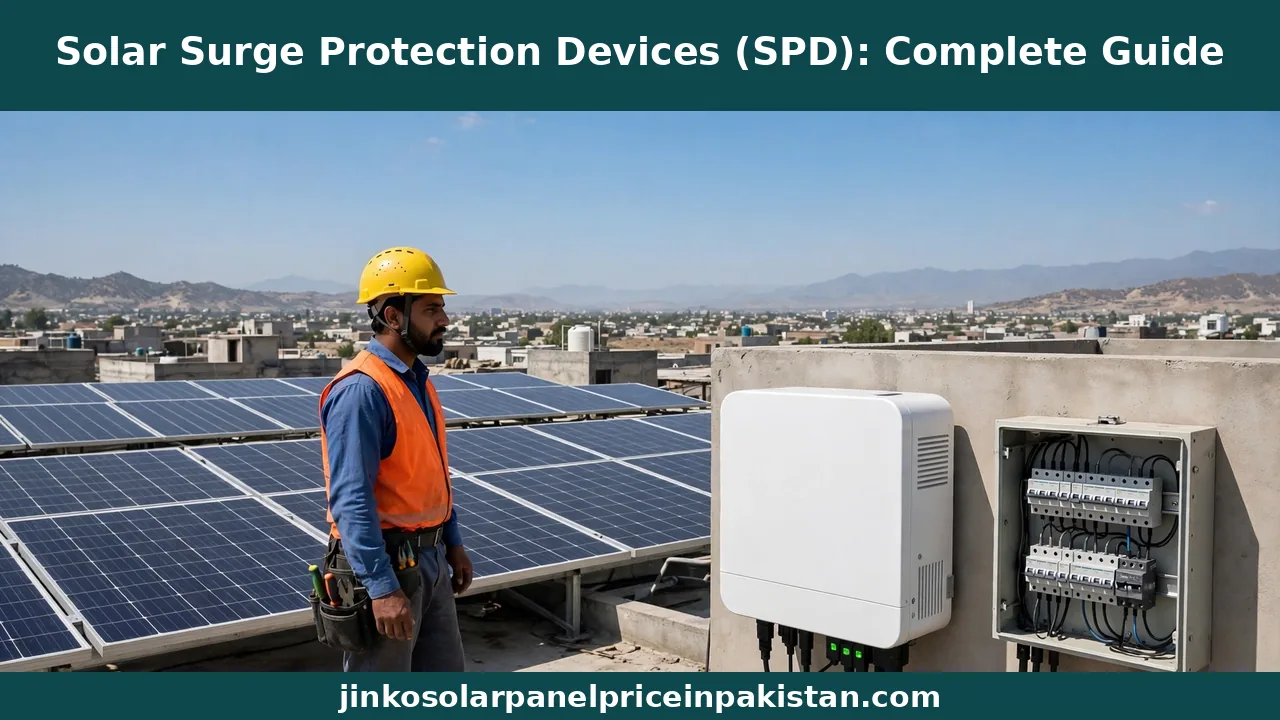
Solar Surge Protection Devices (SPD): Complete Guide

A surge protection device, or SPD, is a small safety device that sits in your solar system’s electrical board and catches sudden voltage spikes before they can reach your inverter, charge controller, or panels. When a spike arrives — from a lightning strike nearby, a switching surge on the grid, or a fault in the network — the SPD sends the extra energy safely into the earth instantly. This solar surge protection device guide explains the types, the ratings on the label, where each device goes, and how to choose the right one for a home system in Pakistan.
What Is a Surge Protection Device (SPD)?
An SPD stays quiet during normal operation and wakes up only when the voltage jumps far above normal. Think of it like a pressure-relief valve: as long as the pressure is normal, nothing happens, but the moment it spikes, the valve opens and lets the excess out. The SPD connects between the live wires and the earth. At normal voltage it draws almost no current. When a surge pushes the voltage past its trigger point, it becomes a low-resistance path and diverts the surge current to earth, clamping the voltage down to a level your equipment can survive.
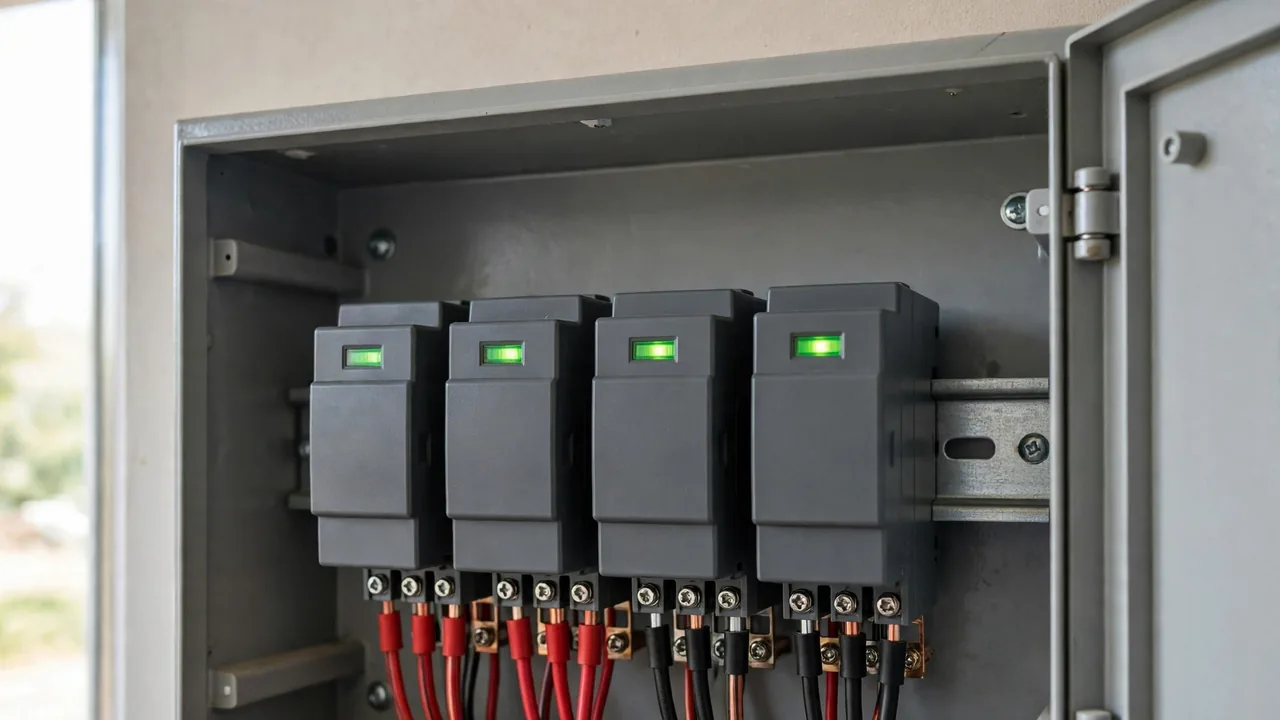
Inside most modern SPDs there is a component called a metal oxide varistor, or MOV — the part that reacts to the surge. Many SPDs also have a small window on the front that shows green when the device is healthy and red when it has worn out and needs replacement. Some models add a remote signal contact, so a monitoring system can warn you when the SPD has failed.
An SPD is not the same as a circuit breaker, a fuse, or a lightning rod, and it does not replace any of them. A breaker stops overcurrent — too much current flowing for too long. A fuse does the same job once, then needs replacing. A lightning rod catches a direct strike and carries it to earth. An SPD handles something different: a very short, very high voltage spike. Each device protects against a different danger, so a safe system has all of them working together. Our DC breaker selection guide explains the breaker side, and our lightning protection guide covers air terminals and earthing.
Why Solar Systems in Pakistan Need Surge Protection
A solar system is more exposed to surges than most home appliances. First, the panels sit on the roof, out in the open, connected by long DC cables to the inverter — a lightning strike on a nearby tree, pole, or building can induce a surge in those cables. Second, Pakistan’s monsoon season brings intense thunderstorms, and the grid itself sends voltage spikes down the line through switching operations, faults, and load shedding. Third, the inverter is the most expensive single electronic part of most home systems, and its internal electronics are sensitive to voltage spikes. One bad surge can damage it badly.
The damage from a surge is often invisible at first: a spike may not destroy the inverter outright, but it can weaken components and cause faults that appear weeks later. If you are planning a new system, read our checklist before buying solar panels and make sure surge protection is on the list.
Types of SPDs: Type 1, Type 2 and Type 1+2
SPDs are classified by the kind of surge they are built to handle, and choosing the wrong type is one of the most common mistakes in solar installations. DEHN’s rooftop PV lightning and surge protection guide shows how the types map to real rooftop systems.
Type 1 SPD — Lightning Current Arrester
A Type 1 SPD is built to carry the huge energy of a direct or partial lightning current, tested with a 10/350 microsecond waveform. You need one where the building has an external lightning protection system and the separation distance between the lightning rod and the solar array cannot be maintained — in that case part of the lightning current can enter the solar wiring, and only a Type 1 device can handle it.
Type 2 SPD — Surge Arrester
A Type 2 SPD handles induced surges and switching surges — the kind that arrive from a lightning strike some distance away or from the grid. It is tested with an 8/20 microsecond waveform and is the type most home solar systems in Pakistan need: the standard choice for the DC side of a rooftop system without external lightning protection, and for the AC side at the main distribution board. Most SPDs in a home solar board are Type 2, like the ones in the photo below.
Type 1+2 SPD — Combined Arrester
A Type 1+2 SPD combines both jobs in one device: it can carry lightning current like a Type 1 and clamp induced surges like a Type 2. Installers use it when the risk is unclear or the separation distance is borderline. It costs more than a plain Type 2, but it removes the guesswork.
DC SPD vs AC SPD: What Is the Difference?
A solar system has two electrical sides, and each needs its own kind of SPD: the DC side, from the panels to the inverter, and the AC side, from the inverter to your home and the grid. The two SPDs look similar, but they are not interchangeable.
A DC SPD is made for the DC side of the system. Its most important rating is Ucpv, the maximum PV voltage it can handle continuously, which must be above the highest voltage your panel strings can reach on a cold morning. DC SPDs are built to break a DC arc safely when they disconnect at the end of their life — DC current has no zero crossing, so a device made for AC cannot do it. You will find DC SPDs in the combiner box or in a board near the inverter. Our solar DC wiring guide explains the DC side in more detail.
An AC SPD is made for the AC side. Its continuous voltage rating is marked Uc, usually 275V or 320V for a 230V home supply. It protects the inverter’s AC output, your home appliances, and the grid connection from surges coming in from the network, and it sits in the main distribution board or in a board near the inverter. A complete home system has at least two SPDs: one DC and one AC.
Key SPD Ratings Explained
The label on an SPD is full of numbers and letters. This solar surge protection device guide covers the four ratings that matter, so you know what to check before you accept any device your installer fits.
Ucpv and Uc — Maximum Continuous Voltage
Ucpv is the highest DC voltage the SPD can sit at continuously without breaking down. It must be above the highest voltage your strings can reach — the open-circuit voltage of all the panels in a string on a cold morning. For most home strings in Pakistan, a 1000V DC SPD is the common choice, and larger strings may need 1500V DC. On the AC side the same idea is marked Uc, usually 275V or 320V for a 230V home supply. If this rating is too low, the SPD will wear out quickly; if it is far too high, it may not clamp a surge low enough.
In and Imax — Discharge Current
In, the nominal discharge current, is the surge current the SPD is tested to handle repeatedly — a common value for home DC SPDs is 20kA. Imax, the maximum discharge current, is the largest surge it can handle once without failing — commonly 40kA for home devices. Think of In as the everyday rating and Imax as the one-off limit.
Up — Voltage Protection Level
Up is the voltage that actually reaches your equipment while the SPD is diverting a surge. Lower is better: a device with Up of 2.5kV lets less voltage through than one with Up of 4kV, and the number must be below what your inverter can withstand. When comparing two SPDs, Up is often what separates a good device from a cheap one.
Iscpv — Short-Circuit Current Rating
Iscpv is the largest short-circuit current from the panel strings that the SPD can safely disconnect. It matters because at the end of its life an SPD must disconnect itself without starting a fire, and on the DC side the panels keep supplying current even during a fault. A datasheet that lists Ucpv, In, Imax and Up clearly is a good sign; one that hides them is a reason to ask questions.
Where to Install SPDs in a Solar System
An SPD only protects what sits behind it, so placement matters as much as the device itself. The rule is simple: install the SPD as close as possible to the equipment it protects, with short, straight earth connections. Long, looping earth wires slow the SPD down exactly when speed matters most.
On the DC side, the SPD goes in the combiner box or in a board at the inverter end of the DC cables. If the cable run between the panels and the inverter is longer than 10 metres, fit an additional DC SPD at the array end as well. On the AC side, the SPD goes in the main distribution board where the grid supply enters, and if the cable between that board and the inverter is longer than 10 metres, an additional Type 2 SPD goes on the AC side of the inverter too.
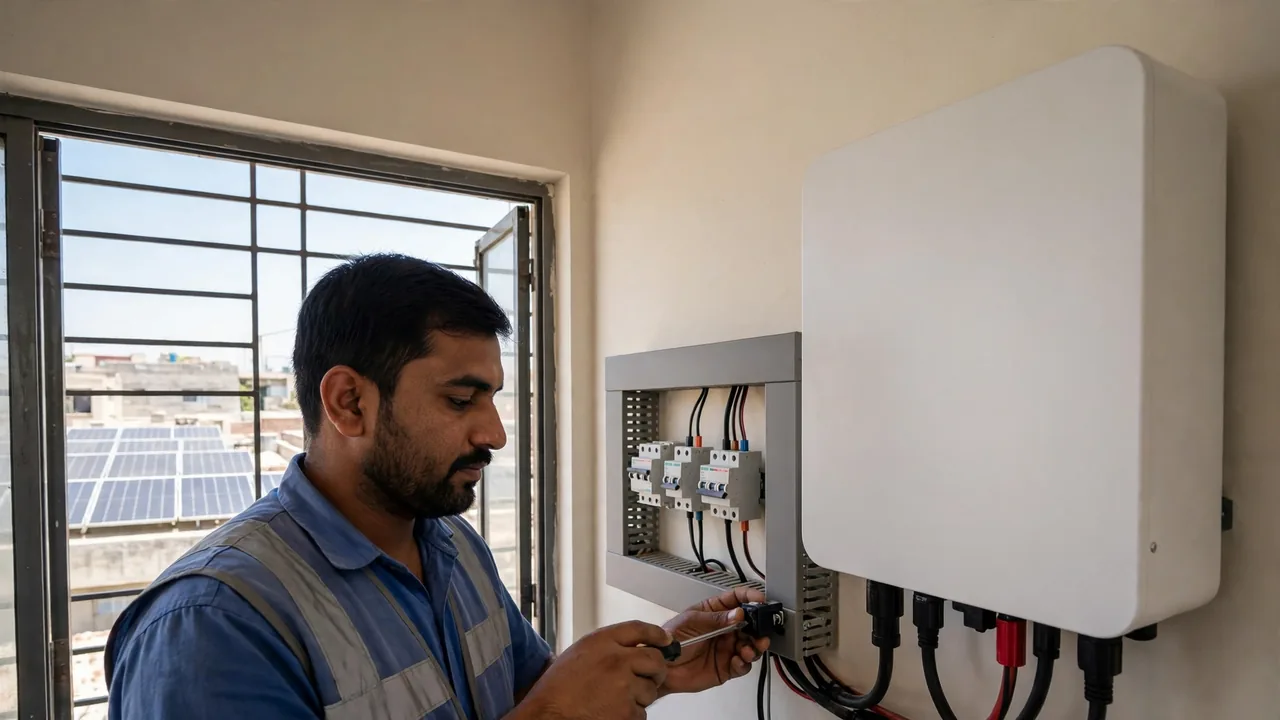
All of this connects to earthing: an SPD is only as good as the earth it dumps the surge into, so read our solar panel earthing and grounding guide alongside this one. If you are still choosing your inverter, our solar inverter buying guide for Pakistan covers the built-in surge protection many modern inverters carry — helpful, but no replacement for external SPDs.
How to Choose the Right SPD for Your System
Work through these points with your installer first.
- Match the type to the risk. No lightning protection system: Type 2 is enough. Lightning protection present and separation distance not maintained: Type 1 or Type 1+2 on the DC side.
- Match Ucpv to your strings. The DC SPD’s Ucpv must be above your strings’ highest cold-morning open-circuit voltage — ask the installer to show the calculation.
- Check Up. The voltage protection level must be below what your inverter can withstand — lower Up means better protection.
- Check the standards. A proper PV SPD follows IEC 61643-31 — ask for the datasheet.
- Insist on a status window — and check it. Every SPD should have a visible green/red indicator. Green means healthy; red, or a window gone dark, means the device has reached the end of its life and must be replaced. Check it every few months and after every heavy storm.
- Buy both sides. Budget for a DC SPD and an AC SPD, not just one.
- Buy from a known maker. SPDs from established protection manufacturers come with real test data. An unbranded device with no datasheet is a gamble.
If your installer says SPDs are unnecessary, ask how the inverter is protected from a surge instead — a good installer will welcome the question. Our solar inverter installation guide covers the wider checks worth doing on the same visit.
Check Current Prices
A surge protection device is a small part of a solar system’s overall cost — the panels, inverter, and batteries are where the real money goes. Before you buy, check the latest solar plate price in pakistan and the latest solar panel price in pakistan on our homepage, where the daily updated tables list panels, inverters, and batteries. If you are comparing inverters, the same page carries the current solar inverter price in pakistan as well.
Frequently Asked Questions (FAQs)
What is an SPD in a solar system?
An SPD is a safety device that sits in your solar system’s electrical board and diverts sudden voltage spikes safely into the earth before they can reach your inverter, charge controller, or panels. It stays quiet at normal voltage and reacts in a fraction of a second when a surge arrives.
Do I need an SPD for my solar panels?
Yes, for most home systems. Panels sit on the roof connected by long cables, monsoon thunderstorms are common, and the grid itself sends surges through switching and faults. An SPD is a small cost next to the inverter it protects, and many installers now fit them as standard.
What is the difference between a Type 1 and a Type 2 SPD?
A Type 1 SPD carries the huge energy of a direct or partial lightning current and is needed where a building has external lightning protection and the separation distance cannot be maintained. A Type 2 SPD handles induced surges and switching surges — the kind most home systems face — and is the standard choice for rooftop systems without external lightning protection.
Where should a DC SPD be installed?
A DC SPD goes in the combiner box or in a board at the inverter end of the DC cables, as close as possible to the inverter. If the cable run between the panels and the inverter is longer than 10 metres, fit an additional DC SPD at the array end as well.
What size SPD do I need for solar?
Match the type to your lightning risk, then check the ratings: Ucpv must be above your strings’ highest cold-morning open-circuit voltage (1000V DC is common for home strings), Up must be below what your inverter can withstand, and a Type 2 device rated 20/40kA is a normal choice for a home rooftop system. Always ask the installer for the datasheet.
Can an SPD stop a direct lightning strike?
No. An SPD handles surges, not a direct strike. A direct strike is the job of the lightning protection system — air terminals, down conductors, and earthing. Where a strike can send lightning current into the solar wiring, a Type 1 SPD is needed as well.
How do I know if my SPD has failed?
Check the small status window on the front of the device: green means healthy, red — or a window gone dark — means it has reached the end of its life and must be replaced. Check it every few months and after every heavy storm. A burning smell, scorch marks, or inverter fault codes after a storm are other warning signs.
Does an SPD replace a DC breaker or earthing?
No. Each protects against a different danger: the breaker stops overcurrent, the lightning rod catches a direct strike, the earthing gives surges a safe path to ground, and the SPD clamps voltage spikes. A safe installation has all of them working together.