
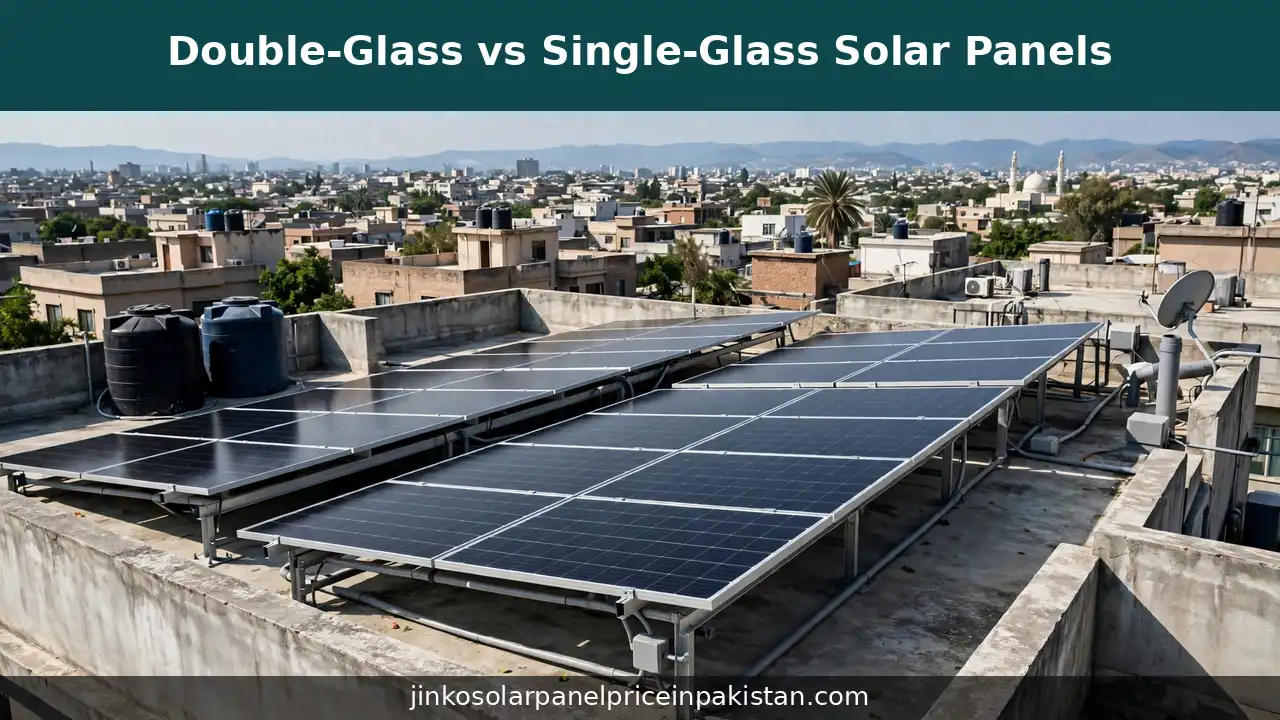
Double-Glass vs Single-Glass Solar Panels: Complete Comparison

Direct answer: A single-glass solar panel has one sheet of glass on the front and a plastic sheet, called a backsheet, on the back. A double-glass panel has glass on both sides — front and back — and no plastic backsheet at all. That one change in build affects how long the panel lasts, how it handles heat and moisture, and how heavy it is. For most homes in Pakistan, both types work fine. Double glass is the stronger pick for roofs that face harsh sun, heavy rain, or humid air, while single glass is the lighter and simpler choice for a normal rooftop.
If a seller keeps saying “double glass” or “single glass”, this guide answers the double glass vs single glass solar panel question in plain words — how each type is built, where each one does better, and which one fits your roof.
What Is a Single-Glass Solar Panel?
A single-glass solar panel is the type most homes in Pakistan have used for years. It has one sheet of toughened glass on the front, the side that faces the sun. Behind the solar cells there is a plastic backsheet, usually white, that seals the back of the panel and protects the cells from dust and moisture.
The front glass is normally about 3.2 mm thick. The backsheet is light and flexible, which keeps the whole panel lighter and easier to carry up to a roof. Because this design has been made in huge numbers for a long time, it is the standard panel you will find in most shops and on most rooftops.
Most single-glass panels are monofacial: they only catch sunlight from the front, because the backsheet blocks light from the back. On a normal home roof that is not a problem — the front side does all the work.
What Is a Double-Glass Solar Panel?
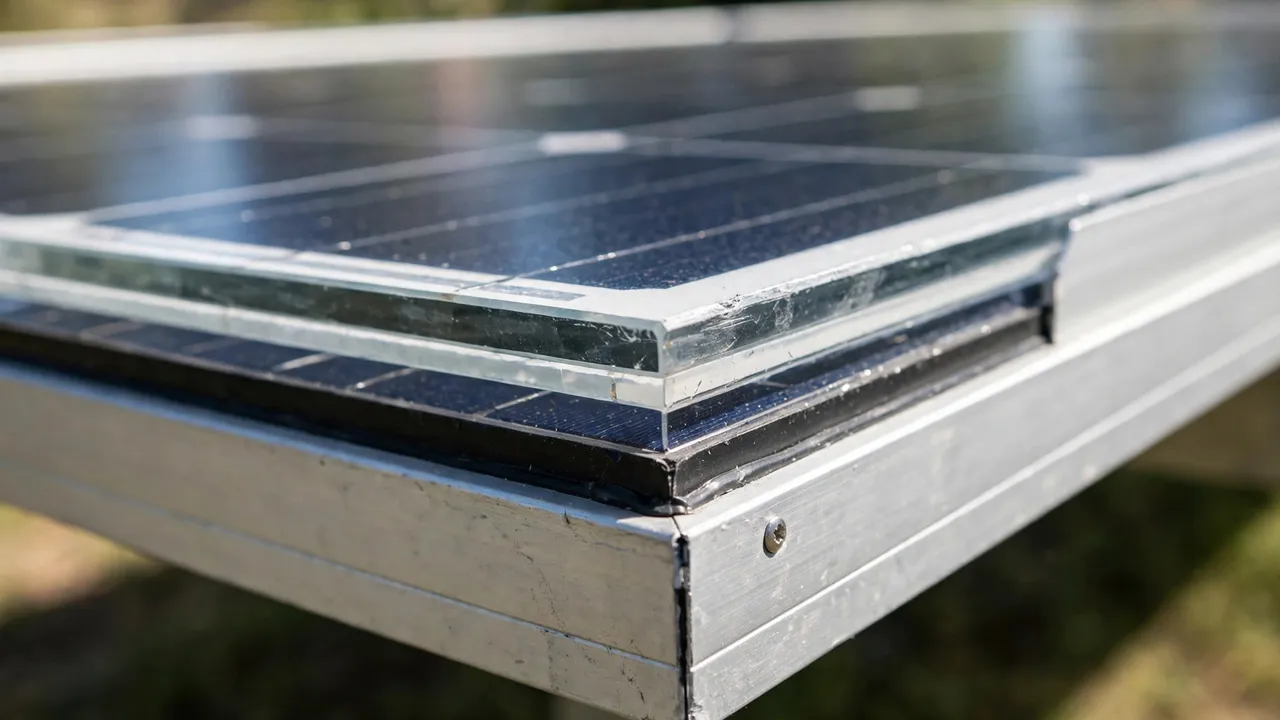
A double-glass solar panel, also called a glass-glass panel, replaces the plastic backsheet with a second sheet of glass. So the panel has glass on the front and glass on the back, with the solar cells sealed between the two sheets. There is no plastic layer anywhere in the panel.
Each glass sheet in a double-glass panel is thinner than the single sheet in a single-glass panel — often around 2.0 mm on each side, or 1.6 mm in some newer models. Even though each sheet is thinner, the two sheets together give the panel a strong, stiff structure. The cells sit inside a glass sandwich, which protects them from both sides.
Many double-glass panels are bifacial: they catch sunlight from the back too, when light bounces off a light-coloured roof or the ground and reaches the rear glass. Not every double-glass panel is bifacial, though — some use the rear glass only for extra protection. Always check the datasheet of the exact model.
If you want a deeper look at how the back of a panel is built, our solar panel backsheet guide explains what the backsheet does and why some panels do away with it.
Double-Glass vs Single-Glass: Side-by-Side Comparison
The table below sums up the main differences at a glance. The sections after it explain each point in simple words.
| Feature | Single-Glass Panel | Double-Glass Panel |
|---|---|---|
| Front | One sheet of toughened glass, about 3.2 mm | Glass sheet, about 2.0 mm |
| Back | Plastic backsheet | Second sheet of glass, about 2.0 mm |
| Weight | Lighter and easier to handle | Heavier in most models, though newer thin-glass models are close in weight |
| Moisture protection | Good, but the backsheet can age and let moisture in over time | Very good — glass blocks moisture far better than plastic |
| Heat tolerance | Good | Better — glass handles heat and UV from both sides |
| Micro-cracks | More likely if the panel bends or is handled roughly | Less likely — the stiff glass sandwich supports the cells |
| Bifacial option | No — the backsheet blocks rear light | Often yes — the rear glass lets reflected light reach the cells |
| Typical performance warranty | 25 years on most models | 30 years on many models |
| Best for | Normal home rooftops, standard installs | Harsh sun, heavy rain, humid or coastal areas, ground mounts |
Durability and Lifespan: Which Panel Lasts Longer?
Durability is where double glass earns its name. A plastic backsheet does a fair job, but plastic ages: years of sun, heat, and rain can crack or peel it at the edges, and once the seal weakens, moisture reaches the cells — one of the main reasons panels lose output over time. Our solar panel degradation rate guide explains that slow loss in detail.
Glass does not age the way plastic does: it does not crack from UV light, and it blocks moisture far better. That is why many double-glass models carry a 30-year performance warranty while most single-glass models carry 25 years.
The stiff glass sandwich also protects the cells from bending. Solar cells are thin and brittle, and tiny cracks — called micro-cracks — can form if a panel flexes during transport, handling, or installation. The two glass sheets spread the load and keep the panel rigid, so micro-cracks are less likely. That matters in Pakistan, where panels are often carried up narrow stairs and fitted on uneven rooftop structures.
What About Hail?
Hail is the one place where double glass is not automatically better. Independent hail testing has shown that a thick sheet of fully tempered glass can resist breakage better than some thinner heat-strengthened glass-glass panels. If your area gets large hail, ask the seller for the hail rating of the exact model — the datasheet lists the hailstone size and speed it is rated for. Double glass does not mean hail-proof.
Heat Performance in Pakistan’s Summers
Pakistan’s summers are hard on solar panels: rooftop panels in Lahore, Multan, or Karachi get very hot, and hot panels produce less power than cool ones. This is true for both types, but double glass has a small edge — the rear glass lets heat escape from the back, and glass handles high temperatures without ageing the way a plastic backsheet does.
The difference is small, and it should not decide your choice alone. A bigger factor is the panel’s temperature coefficient on the datasheet — how much output it loses as it heats up. See our guide on the temperature coefficient of solar panels for a plain explanation.
What matters more in our climate is the combination of heat and humidity. In coastal areas like Karachi, and in humid months anywhere in Punjab and Sindh, moisture in the air works its way into panels over the years. Here the glass back of a double-glass panel is a real advantage, because glass is a far better moisture barrier than plastic.
Weight and Installation
Double-glass panels are usually heavier than single-glass panels of the same size — two sheets of glass instead of one sheet plus a light plastic layer. The gap is smaller than it used to be: some newer models use 1.6 mm glass on each side and weigh about the same as a standard single-glass panel.
Weight matters for two reasons. First, a heavier panel is harder to lift up to the roof and easier to drop. Second, your roof structure must carry the whole array. On a normal concrete roof that is rarely a problem; on a weak or old roof, the installer should check the load first — see our guide on how to install solar panels on a weak roof.
One more point: the rear glass can scratch if a panel is dragged across a rough surface, and a scratch on a bifacial panel cuts the light reaching the back of the cells. Ask your installer how they protect the panels during fitting.
Bifacial Panels and Double Glass: Not the Same Thing
People often mix up “double glass” and “bifacial”, but they are different things. Bifacial means the panel makes power from both sides. Double glass means it is built with glass on both sides. Most bifacial panels are double glass, because the rear glass lets light reach the back of the cells — but a double-glass panel can also be monofacial.
On a normal home roof the back of the panel sits close to the roof, so very little reflected light reaches it. Bifacial panels do best on raised structures, light-coloured roofs, and ground mounts, where light can bounce up from below. If your panels will sit flat on a dark roof, the bifacial gain is small. Our guide on do bifacial solar panels work on rooftops explains this in detail.
Which One Should You Choose?
So which side of the double glass vs single glass solar panel debate wins for you? It depends on your roof, your area, and your budget. Here is a simple way to decide.
Choose single glass if:
- Your roof is a normal concrete home roof with standard installation.
- You want the lighter panel that is easier to carry and fit.
- Your area has mild weather — no extreme humidity, no coastal salt air.
- You want the simplest, most common option that every installer knows well.
Choose double glass if:
- Your roof gets harsh sun all day, or your area has heavy rain and high humidity.
- You live near the coast, where salt air and moisture are harder on panels.
- Your panels will sit on a raised structure or a ground mount, where the back of the panel gets light and air.
- You plan to keep the system for a very long time and want the longer warranty many double-glass models carry.
- You are buying a bifacial model and want the rear side to catch reflected light.
For most homes in Pakistan, a good-quality single-glass panel from a trusted brand is enough, and it will serve you well for years. Double glass is worth it when the conditions are tough — heat, humidity, rain, or a long ownership plan — because that is where its extra protection pays off.
What to Check Before Buying Either Type
Whichever type you pick, the same checks apply. First, read the datasheet of the exact model — not just the brand name. It lists the glass thickness, warranty years, temperature coefficient, and hail rating. Our guide on how to read a solar panel datasheet walks you through each line in plain words.
Second, check that the panel is original. Fake panels are common in the market, and a fake “double glass” panel is worse than a genuine single-glass one. Our how to verify an original solar panel guide shows the checks you can do yourself, including the serial number check.
Third, buy from a seller you can go back to — a warranty only helps if the seller is still there when you need it. Get the warranty card in writing and keep your receipt and the panels’ serial numbers.
Finally, the glass type is only one part of a good system. The inverter, the structure, the wiring, and the quality of the installation matter just as much — a well-installed single-glass system beats a poorly installed double-glass system every time.
For a real-world example of a double-glass model sold in Pakistan, see our Jinko 585W double-glass guide — it covers the specs and buying tips for one of the most common double-glass panels in the market.
Check Current Prices
Whatever you decide in the double glass vs single glass solar panel comparison, check today’s rates before you buy. See the solar panel price in pakistan and solar plate price in pakistan tables on our homepage, updated daily, and if you are planning a full setup, the solar system price in pakistan table on the same page. For an independent take on the single-glass versus double-glass choice, the SolarQuotes guide to single vs double glass solar panels is a useful second opinion from an installer who runs double-glass panels on his own roof.
Frequently Asked Questions (FAQs)
What is the difference between double-glass and single-glass solar panels?
A single-glass solar panel has one sheet of glass on the front and a plastic backsheet on the back. A double-glass panel has glass on both sides, front and back, and no plastic backsheet at all. The glass back protects the cells better against moisture and heat, while the single-glass design is lighter and simpler.
Are double-glass solar panels better than single-glass panels?
Double-glass panels are stronger against moisture, heat, and ageing, and many carry a longer performance warranty. But single-glass panels are lighter, easier to install, and fine for a normal home roof. The better choice depends on your roof, your area’s weather, and how long you plan to keep the system.
Do double-glass solar panels last longer?
In most cases, yes. Glass does not age the way a plastic backsheet does, so it keeps moisture out for longer and protects the cells from bending and micro-cracks. That is why many double-glass models carry a 30-year performance warranty while most single-glass models carry 25 years. Always check the warranty on the datasheet of the exact model you buy.
Are double-glass solar panels heavier than single-glass panels?
Usually, yes, because they have two sheets of glass instead of one sheet plus a light plastic layer. The gap is smaller than it used to be: newer models with 1.6 mm glass on each side weigh about the same as a standard single-glass panel. On a normal concrete roof the extra weight is rarely a problem, but a weak or old roof should be checked first.
Can double-glass solar panels be used on a home rooftop?
Yes, double-glass panels work fine on a home rooftop, and many homes in Pakistan already use them. They are a good pick when the roof faces harsh sun, heavy rain, or humid air. On a normal roof with mild weather, a single-glass panel is usually enough and easier to handle.
Are all double-glass solar panels bifacial?
No. Bifacial means the panel makes power from both sides, while double glass only means it is built with glass on both sides. Most bifacial panels are double glass, because the rear glass lets light reach the back of the cells. But a double-glass panel can also be monofacial, with cells that only work from the front.
Which solar panel is best for Pakistan’s hot climate?
Both types work in Pakistan’s heat, but double glass has a small edge: the rear glass lets heat escape from the back, and glass handles high temperatures and humidity better than a plastic backsheet. For coastal areas like Karachi, or places with heavy rain and humidity, double glass is the safer long-term pick. For a normal rooftop, a good-quality panel of either type, well installed, will serve you for years.