
A-Grade vs B-Grade Solar Panels: How to Tell the Difference

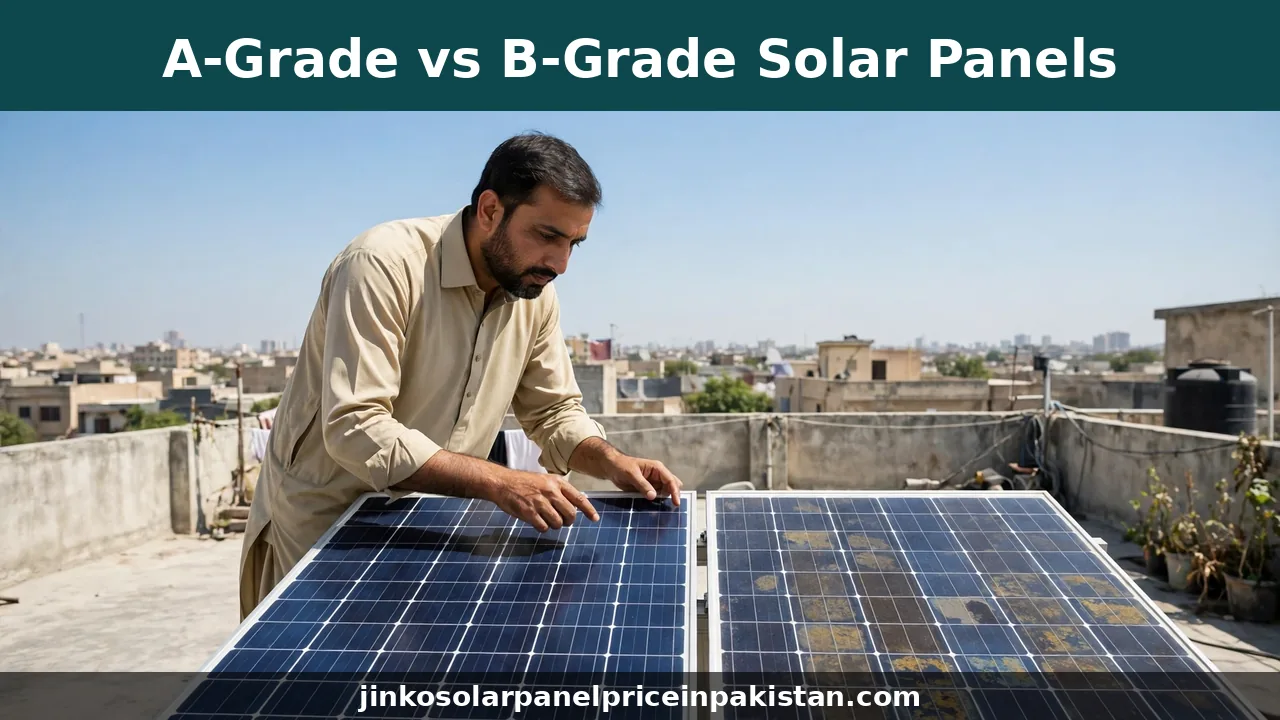
Can you tell an A-grade solar panel from a B-grade one just by looking at it? Sometimes yes — but not always, and that is exactly where buyers in Pakistan get caught. When people compare a grade vs b grade solar panels, the simple answer is this: an A-grade panel is made from clean, defect-free cells and performs exactly as its label says. A B-grade panel has small visible defects, like a hairline crack or a patchy colour, and its output can drift below the label over time. The grade is not an official certificate from any government body — it is a factory quality label — so the only safe way to buy is to check the panel with your own eyes and on paper, not just the word “A-grade” on a shop board.
What Do A-Grade and B-Grade Actually Mean?
Every solar panel is made from many small cells sealed under glass — and not every cell comes out of the factory perfect. Some are flawless; some have a tiny crack, a dark spot, or an uneven colour. The factory sorts them into grades, from A down to D, by how they look and how much power they produce.
Grade A is the top grade: no cracks, no chips, no broken lines, and a smooth, even colour. The cells produce the power written on the datasheet, and cells from the same batch match each other closely, so the panel gives steady output. Most well-known brands use only Grade A cells.
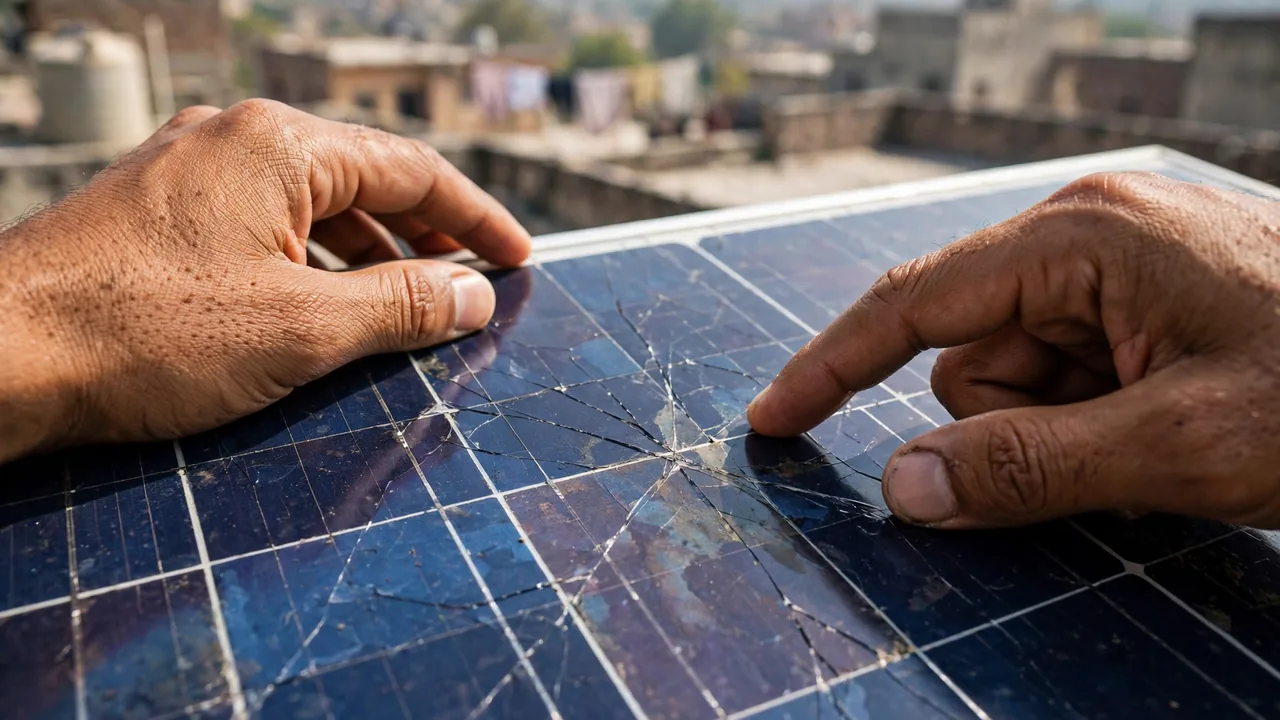
Grade B is one step down: one or two hairline cracks, dark spots, light scratches, or a patchy colour where the coating did not spread evenly. Its readings can be close to Grade A at first, so a B-grade panel may look fine on the day it is installed. The problem shows up later: a small crack can widen as the panel heats up by day and cools down at night, until it drifts below the output printed on its label.
There are two lower grades as well. Grade C cells have clear damage — chipped corners, missing lines that carry current, or output clearly below specification. Grade D cells are broken or unusable and only go for recycling. Neither belongs on a home rooftop.
Cell Grade vs Panel Grade — Not the Same Thing
A solar cell is one small square that makes electricity. A solar panel is the finished product: dozens of cells joined together, sealed under glass, with a frame, a backsheet, and a junction box.
A cell grade tells you how good one cell is; a panel grade tells you how good the whole finished panel is. That depends on the cells inside, but also on the glass quality, the soldering, the lamination, the frame, and the final factory testing. A panel made from Grade A cells but assembled carelessly is still not a good panel.
Grading happens in two stages: loose cells are checked and sorted before the panel is made. Then the finished panel is tested again — flashed with a bright light to measure the real power it produces, and sometimes photographed with an infrared camera in a dark room to find cracks the eye cannot see. That check is called an EL test.
Remember: no official body certifies a panel as Grade A. Grades are factory labels, not regulated standards like the IEC certificates, and one maker’s Grade B may not match another’s. A grade claim only means as much as the company behind it — so the documents matter more than the label.
A-Grade vs B-Grade Solar Panels: Side-by-Side Comparison
Here is the difference at a glance.
| What to check | A-Grade panel | B-Grade panel |
|---|---|---|
| Cell appearance | Clean, even colour, no cracks or chips | One or two hairline cracks, dark spots, or patchy colour |
| Power output | Matches the datasheet and the label | Close at first, can drift below the label over time |
| Long-term output | Steady output over the panel’s life | Faster drop in output as small cracks widen |
| Warranty papers | Full written warranty | Often weak, or only the dealer’s word |
| Best for | A home rooftop, for decades of use | Temporary setups, where looks don’t matter |
The real point: the difference is not just how the panel looks on day one, but how it behaves over the years. A B-grade panel is not fake and not broken. The question is whether its defects matter for your roof, and whether it is being sold honestly for what it is.
How to Tell the Difference Before You Buy
You need daylight, a few minutes, and the habit of asking for papers — before you pay.
Look at the Cells Closely
Stand the panel in good daylight and look across the surface. A-grade cells look uniform — one even colour, straight lines, clean edges. On a B-grade panel you may see a patchy colour, lines that are not quite straight, hairline cracks (thin dark lines across a cell), chipped corners, or dark spots. Check the actual panels you will receive, not just the display piece.
Check the Documents
A genuine A-grade panel comes with papers. Ask for the datasheet of the exact model number and compare it with the label on the back of the panel — model number, wattage, and electrical numbers should all match. If the dealer cannot show you a datasheet at all, treat that as a warning sign. Our guide on how to read a solar panel datasheet explains every number on that sheet in plain words.
Also ask whether the panel carries IEC certificates for design and safety — independent test certificates, and the real quality proof, unlike the grade label, which no outside body checks.
Ask for the Flash Test Report
Every good panel is flash-tested at the factory: a machine flashes it with calibrated light, measures the real power it produces, and writes the result in a flash test report. The measured wattage should match the wattage on the label. If the dealer can show you this report, that is a strong sign you are getting what you paid for. If the report is missing or the numbers do not match, do not pay until it is explained.
Match the Serial Number
Every genuine panel carries a unique serial number in three places: under the front glass, on the back label, and on the frame. All three should match each other and the number on your invoice and warranty card. If they don’t, or the label looks re-stuck, stop and ask questions. Our solar panel verification guide for Pakistan walks through the full check, and the Jinko guide on checking a Jinko serial number shows how the brand’s own portal works.
Read the Warranty Papers
A-grade panels from major brands come with a written warranty from the brand. Read who gives the warranty: the brand, or just the shop? A warranty that only says “dealer warranty” is worth very little. B-grade panels often come with a weak warranty or none at all. Get the warranty card in your hand, check its model and serial number match your panels, and keep it with your invoice.
Grade A vs Tier-1 — Don’t Mix Them Up
“A-grade” and “Tier-1” sound similar and get mixed up all the time — but they mean different things.
A-grade is about one panel: the quality of its cells and how it was made. Tier-1 is about the company that made it — a bankability ranking, based on whether big banks have financed projects using that maker’s own-brand panels. It says nothing directly about the one panel in front of you.
A Tier-1 brand’s panels are usually A-grade, because big makers use Grade A cells — but the words are not interchangeable. A dealer who says “this is Tier-1, so it must be A-grade” is skipping the check. Judge the panel by its cells, its documents, and its warranty — not by a ranking word. Our guide on what Tier-1 solar panel means explains the ranking in full, and SolarSquare’s guide to solar cell grading explains the A–D system step by step.
When B-Grade Panels Make Sense — and When They Don’t
B-grade panels are not always a bad buy — but they are a bad buy when sold as A-grade, or when they go on a roof that must work well for decades.
A B-grade panel can make sense for a temporary setup — a site office, a short-term project, or a small off-grid job like running a water pump or a few lights, where the panel is easy to reach and replace. If the defect is only cosmetic, the panel can still produce close to its label for a good while, and you are paying with your eyes open.
It does not make sense for a home rooftop you plan to keep for decades, for a net-metering system, or anywhere a drop in output means money lost every month. It also does not make sense if there are no papers: no flash test report, no matching serial number, no written warranty. Then you are not buying a cheaper panel — you are buying a gamble.
One rule covers both cases: the grade must be declared honestly. If a dealer tells you plainly that a panel is B-grade and shows you the defects, you can decide for yourself. If a dealer calls everything A-grade and shows no papers, the problem is the seller, not the panel. Buy from an authorized solar panel distributor in Pakistan where you can, and check our fake vs original solar panel guide first.
Red Flags That Mean Walk Away
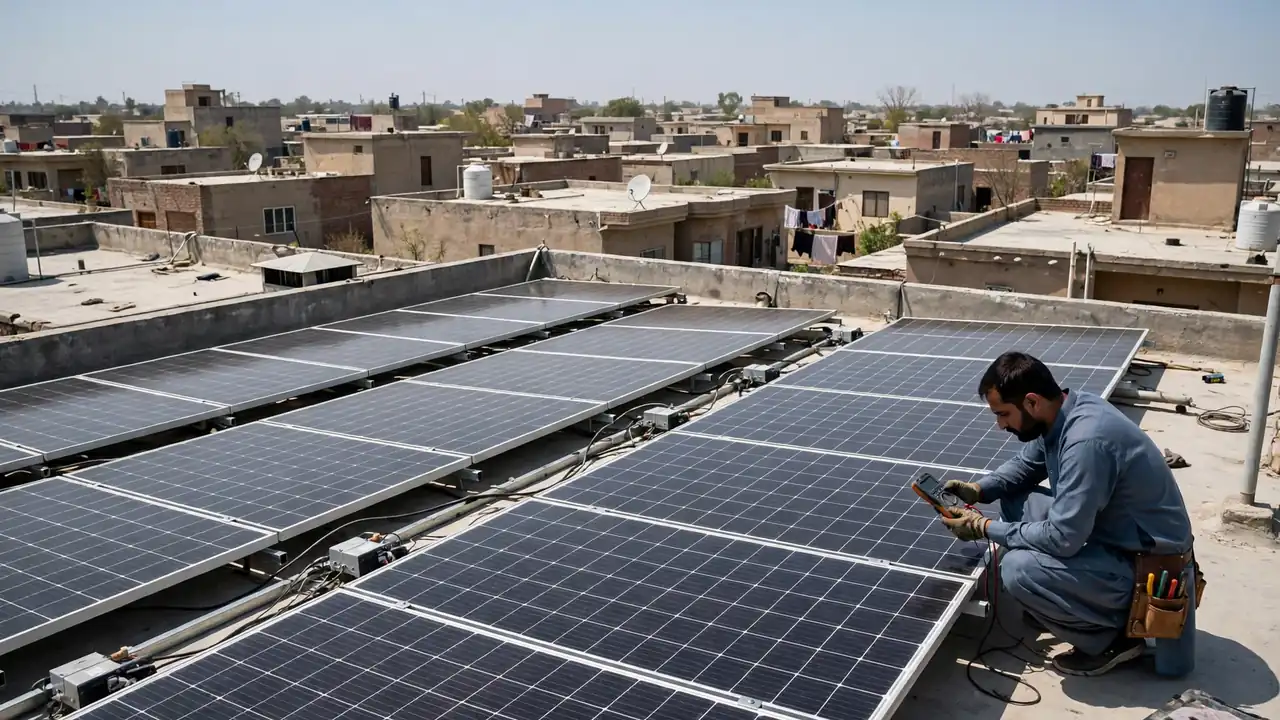
Some signs mean the panel is not just B-grade — it is a panel you should not buy at any grade:
- Visible damage: chipped corners, cracked glass, a bent frame, or a loose junction box. These are Grade C or D signs, not B-grade cosmetic marks.
- No label, or one that looks re-stuck: every real panel has a proper back label with model number, wattage, and serial number. A missing label, or one that peels off easily, is a serious warning.
- Serial numbers that don’t match: the numbers under the glass, on the back label, and on the frame should all agree.
- No datasheet and no certificates: a dealer who cannot produce the datasheet for the exact model is asking you to buy blind.
- Wattage on the label doesn’t match the datasheet: if the two disagree, one of them is wrong — and you are the one who pays for it.
- Pressure to pay fast: “this stock will finish today” or “pay now, papers later” is a sales trick — a genuine dealer lets you check first.
If you see one of these signs, don’t pay and don’t argue — buy from a dealer who shows you everything first. Getting the grade right at the start is far easier than fixing it later. That is the whole point of learning how a grade vs b grade solar panels compare: so the panel on your roof is the panel you actually paid for.
Check Current Prices
Now you know how to tell A-grade from B-grade — the next step is seeing what genuine panels go for today. The grade affects what you should pay, so compare like with like. For today’s tables, see the solar plate price in pakistan, the solar panel price in pakistan and the jinko solar panel price in pakistan listings on our homepage, updated daily for A-grade documented panels.
Frequently Asked Questions (FAQs)
What is the difference between A-grade and B-grade solar panels?
A-grade panels are made from clean, defect-free cells that produce the power written on the datasheet, with a full written warranty from the brand. B-grade panels have small visible defects — a hairline crack, dark spots, or patchy colour — and their output can drift below the label over time, because small cracks widen as the panel heats and cools. Both are real, working panels; the difference is quality, long-term output, and paperwork.
How can I check if a solar panel is A-grade?
Look across the cells in daylight for an even colour with no cracks, chips, or dark spots. Then check the papers: the datasheet must match the exact model number on the back label, the serial numbers under the glass, on the label, and on the frame must all agree, and the dealer should show you a flash test report and a written warranty from the brand.
Are B-grade solar panels fake?
No. A B-grade panel is a genuine panel with small visible defects — it is not fake, and it is not broken. A fake panel is a different problem: a copy that pretends to be a brand it is not, often with a copied label and no real warranty. A B-grade panel sold honestly as B-grade is a real product; a B-grade panel sold as A-grade is a dishonest sale.
Do B-grade solar panels produce less power?
At first, often not by much — their readings can be close to Grade A. The gap grows over time, because hairline cracks widen as the panel heats up by day and cools down at night, and weak cell matching drags the whole panel down. That is why a B-grade panel can look fine on installation day and still fall short of its label over the years.
What is the difference between A-grade and Tier-1?
A-grade describes one panel — the quality of its cells and how it was made. Tier-1 describes the company that made it — a bankability ranking of manufacturers, based on whether big banks have financed projects using that maker’s panels. A Tier-1 brand’s panels are usually A-grade, but the words are not interchangeable, and a dealer who says “Tier-1, so it must be A-grade” is skipping the check.
Can I use B-grade solar panels for my home?
For a rooftop you plan to keep for decades, or a system tied to net metering, A-grade is the safer choice — steady output and a proper warranty matter there. B-grade can make sense for a temporary setup or a small off-grid job where the panel is easy to reach and replace, as long as the dealer tells you plainly that it is B-grade and shows you the defects first.
What documents should I ask for when buying solar panels?
Four things: the datasheet for the exact model number, the flash test report showing the measured wattage, the warranty card from the brand (not just the dealer), and an invoice with the serial number written on it. The serial number on the panel must match the invoice and the warranty card. If the dealer cannot show you these, do not pay until it is explained.
What are C-grade and D-grade solar panels?
Grade C cells have clear, visible damage — chipped corners, missing lines that carry current, or output clearly below specification — and they do not belong on a home rooftop. Grade D cells are broken or unusable and only go for recycling. If a panel shows chipped corners, cracked glass, or a bent frame, it is not a bargain B-grade panel — walk away.