
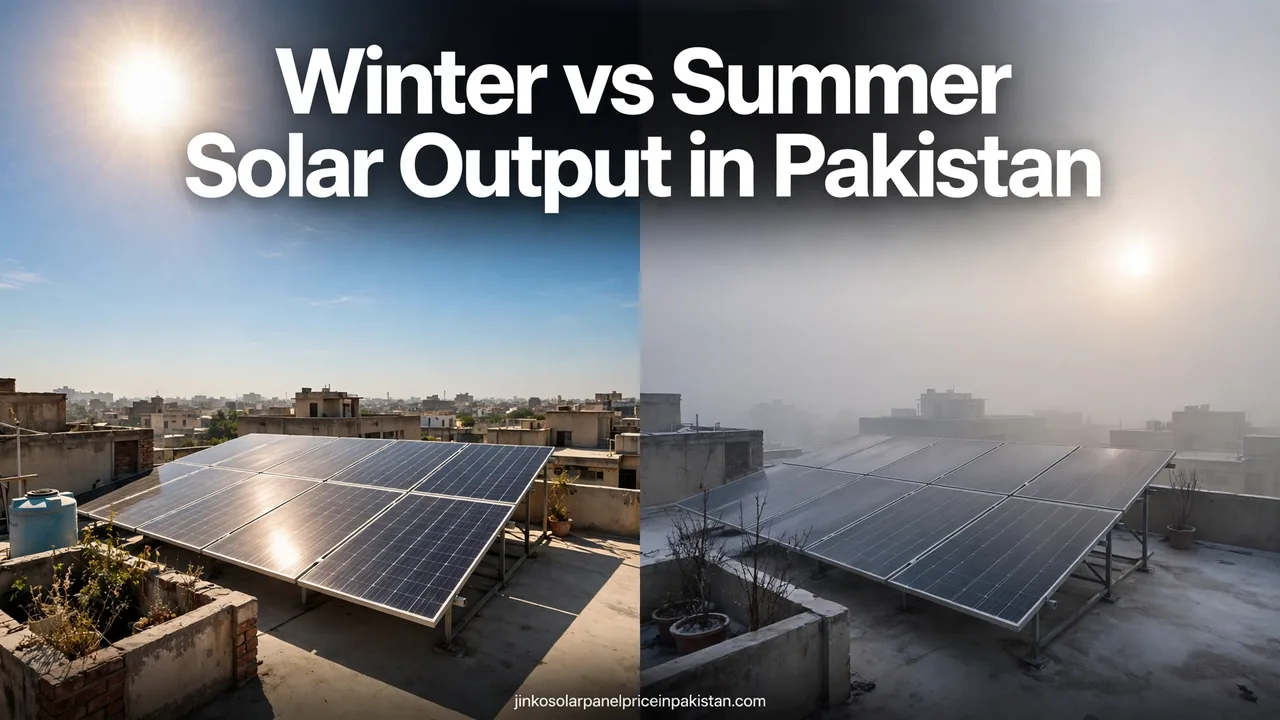
Winter vs Summer Solar Output in Pakistan: What to Expect

A solar system in Pakistan typically produces noticeably more electricity in summer than in winter. The difference comes down to three things: longer days, a higher sun, and clearer skies. On a clear June day a well-installed rooftop system can produce roughly 60 to 80 percent more energy than on a dull, foggy December day. Winter output is not a sign that anything is wrong — it is the normal, predictable result of less usable sunlight, and good system planning treats it as a fact of the seasons rather than a fault.
The one surprise for most owners is temperature: solar panels actually convert sunlight to electricity more efficiently when they are cool. Winter’s lower output happens despite this advantage, not because of it, because the shorter days and weaker sun angle overwhelm the efficiency gain. This guide explains what drives the seasonal swing, what a realistic year looks like across Pakistan’s regions, and how to plan around the weaker months.
What drives the winter-summer output gap
Day length
The single biggest factor is simply how many hours the sun is up. In June, Pakistan gets roughly 13 to 14 hours of daylight; in December, only about 10. More importantly, the hours that matter for solar — the strong midday window when panels produce near their rated output — shrink even more in winter. A summer day has a long, broad production curve; a winter day has a short, narrow one. This alone accounts for a large part of the seasonal difference.
Sun angle
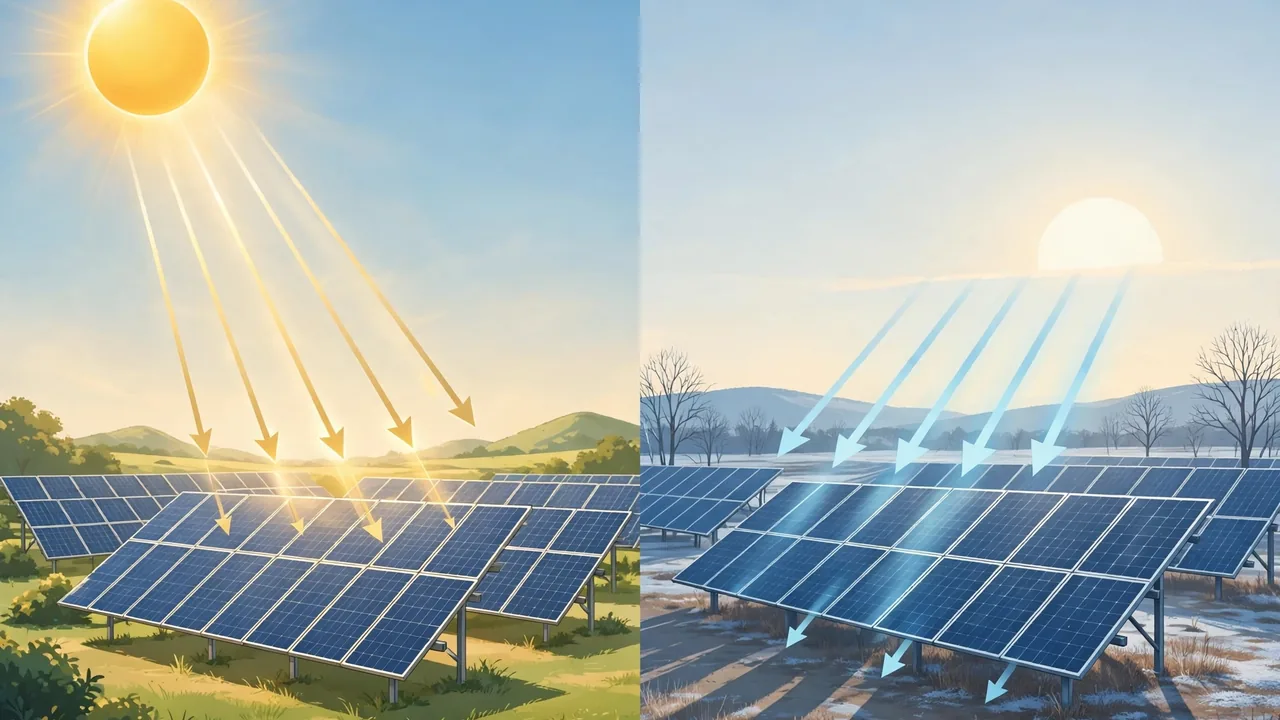
In winter the sun sits much lower in the sky. Sunlight reaches the panels at a shallower angle, spreading the same energy over a larger area, and it also travels through more of the atmosphere, losing more of its strength on the way. Panels mounted at a fixed tilt that is optimal for the year as a whole will underperform in December relative to their summer peak, because they are effectively facing away from the low winter sun. Adjusting tilt seasonally captures more winter sun, but most residential installations keep one fixed angle and accept the winter penalty.
Temperature — the paradox
Here is the counterintuitive part: heat makes solar panels less efficient. Every panel datasheet carries a temperature coefficient, usually around minus 0.3 to 0.4 percent per degree Celsius above 25°C. On a scorching May afternoon when the panel surface is far hotter than the air, output per unit of sunlight is measurably lower than on a cool, crisp winter morning. So in pure efficiency terms, winter sunlight is converted better — there is just far less of it. Never judge your system’s health by comparing a hot summer afternoon’s efficiency with a cool winter morning’s; compare similar weather instead.
Weather: fog, smog, monsoon and dust
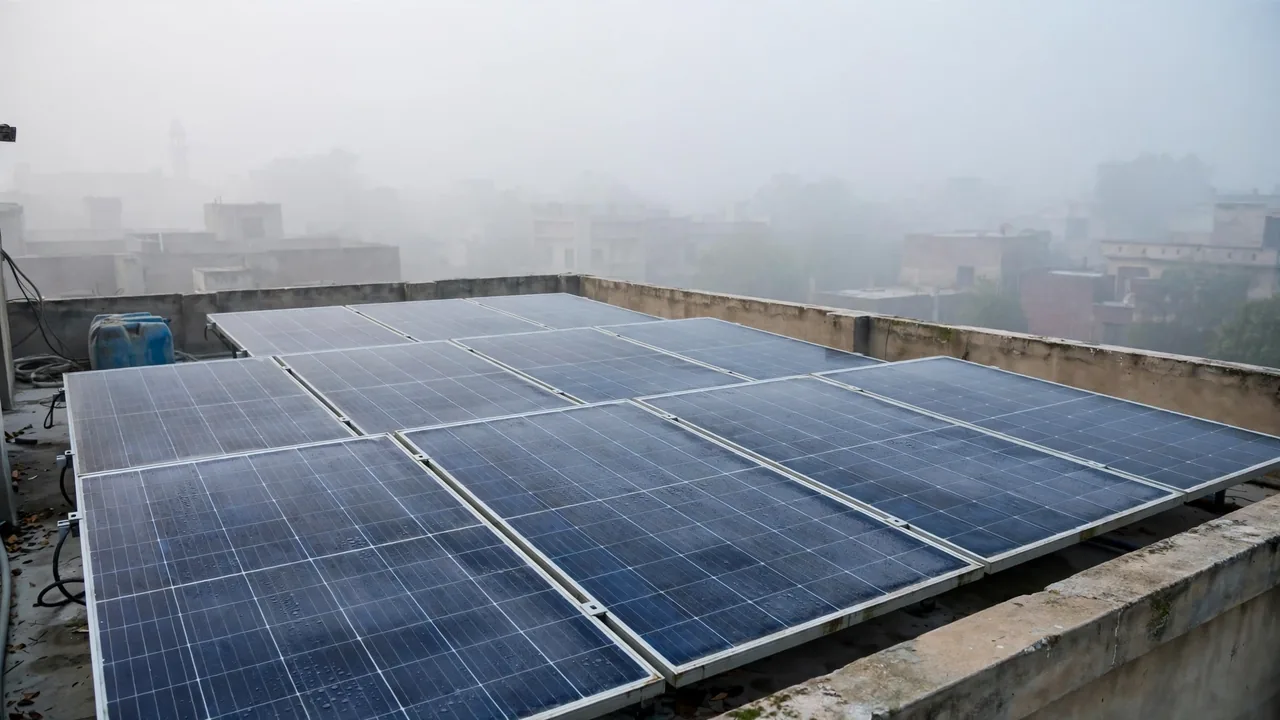
Pakistan’s winters bring their own output thieves. Dense fog in the plains of Punjab and parts of Khyber Pakhtunkhwa can cut production sharply for days or even weeks at a time. Winter smog in and around Lahore, Faisalabad and other industrial cities leaves a residue on panels and dims the sun even when the sky looks merely hazy. In summer, the monsoon brings the opposite problem: heavy cloud cover that can suppress output for several days running — though the rain does wash dust off the panels, which partly offsets the loss once the sky clears. Dust itself is a year-round factor; a thin layer of dust, pollen or smog residue quietly trims output in every season.
What a typical year looks like in Pakistan
Think of the year as three phases rather than two seasons. Summer (April to June) is the production peak: long days, high sun, and the highest monthly totals of the year, with heat-related efficiency losses shaving a little off the very top. Monsoon (July to September) is the wildcard: output dips on cloudy days but the annual total usually recovers, because clear days between the clouds are still strong and washed panels perform better. Winter (November to February) is the trough: short days, low sun, and fog or smog in the northern plains pulling the weakest weeks well below the annual average.
Region matters too. Southern Punjab and interior Sindh enjoy long sunny winters with only brief fog spells, so their seasonal swing is gentler. Central Punjab, including Lahore and Faisalabad, sees the sharpest winter dips because of persistent fog and smog. Karachi and the coast get steadier sun year-round, though humidity and sea haze soften the peaks. Islamabad, Peshawar and the north face the combined effect of short winter days and frequent fog. If you are comparing notes with a solar owner in another city, compare months, not weeks — the regional patterns differ more than most people expect.
How to plan around the seasonal dip
The practical lesson of the seasonal curve is to plan for the weaker months, not the average. A system sized from a national annual average may cover your needs comfortably in May and fall short in December, exactly when shorter days coincide with heavier evening lighting use. Three planning habits help:
- Judge the system on the annual total. Solar is a yearly investment. Summer months over-produce and winter months under-produce relative to the average; the honest measure of your system is twelve months of production, not any single week — especially not a single winter week.
- Size with December in mind. If your electricity needs are non-negotiable in winter, the array and battery sizing should be checked against winter conditions, not June conditions. This is also why accurate load calculation comes before sizing: our guide on how many units a 3kW system produces per day shows how seasonal expectations translate into planning figures.
- Leave headroom. Loads tend to grow — another appliance next year, longer evening use — while winter output stays fixed. Sizing the inverter a step above today’s need and leaving physical roof space for extra panels is far cheaper than rebuilding the system later.
The U.S. Department of Energy’s consumer solar guide makes the same point from the planning side: review your electricity needs across the year, including seasonal changes, before finalizing a system size. You can read their step-by-step walkthrough at energy.gov.
Does adjusting panel tilt help in winter?
Yes, noticeably. Because the winter sun is low, a steeper tilt catches more of it. Some owners with adjustable mounting structures raise the tilt angle in winter and lower it in summer, gaining a meaningful share of extra winter energy. Whether the effort is worth it depends on your setup: for a small residential array on a fixed structure, the gain rarely justifies the hassle and the safety risk of climbing onto the roof twice a year. For larger or ground-mounted systems with adjustable frames, it is a legitimate seasonal optimization. Our solar panel mounting structures guide covers fixed and adjustable tilt options, structure types, and orientation in detail.
When low winter output is a problem — and when it is not
Not every winter dip is normal, and knowing the difference saves unnecessary worry and catches real faults early. A gradual, smooth decline from October into December that mirrors previous years is normal seasonality. A sudden drop on a clear winter day is not. If production falls sharply outside the normal seasonal pattern, check the usual suspects first: a tripped breaker, heavy soiling or smog residue on the panels, new shading from a neighboring construction, or an inverter showing a fault or error code.
Monitoring makes the distinction easy. Most modern inverters show daily, monthly and lifetime production on a display or phone app. Compare a full month against the expected figure for your city and season rather than against last June. One month of readings, compared like-for-like, tells you far more than a single gloomy week. Your electricity meter is a second check: on a grid-connected system, the import-export balance on your bill should move with the seasons in a familiar pattern.
One more winter-specific check: heavy fog can fool people into thinking the system has failed when it is simply starved of light. If the panels are clean, the inverter shows no fault, and neighboring systems are equally quiet, the sky is almost certainly the explanation. Wait for a clear day before calling your installer — and keep the panels clean, because smog residue and dust compound the fog’s effect.
Seasonal output affects your savings calculation — pair this guide with the today solar panel price in pakistan and the solar panel price in pakistan tables on our homepage, updated daily.
Frequently Asked Questions (FAQs)
Do solar panels produce less electricity in winter in Pakistan?
Yes. Winter output is typically much lower than summer output because of shorter days, a lower sun angle, and frequent fog or smog in the northern plains. A dull December day can produce roughly half the energy of a clear June day, which is normal seasonal behavior, not a system fault.
Why do solar panels produce more in summer if heat reduces their efficiency?
Panels are slightly less efficient per unit of sunlight when hot, but summer brings far more sunlight — longer days, a higher sun, and stronger irradiance. The extra hours of strong sun outweigh the temperature-related efficiency loss, so total summer energy production is much higher.
How does monsoon weather affect solar panel output?
Heavy monsoon cloud cover can suppress output for several days at a time, similar to a winter fog spell. The upside is that monsoon rain washes dust and residue off the panels, which partly offsets the loss once the sky clears.
Should I adjust my solar panel tilt angle for winter?
A steeper tilt captures more of the low winter sun and can meaningfully improve winter production. For adjustable or ground-mounted structures it is a worthwhile seasonal optimization; for small fixed rooftop arrays, the gain rarely justifies climbing onto the roof twice a year.
How should I judge whether my system’s winter output is normal?
Compare a full month of production against the expected figure for your city and season, not against last summer. A smooth seasonal decline is normal; a sudden drop on a clear day, or persistently low output versus previous years, points to soiling, shading, a tripped breaker, or an inverter fault worth investigating.
Does fog damage solar panels or just reduce their output?
Fog only reduces output by blocking sunlight — it does not damage the panels. However, fog combined with smog or dust can leave a residue that keeps output low even after the sky clears, so cleaning the panels after a long fog spell is good practice.
Should I size my solar system for summer or winter output?
Size for the weaker months if your electricity needs are non-negotiable in winter. A system designed around average or summer production may fall short in December, so winter conditions should anchor the sizing decision, with room left for future load growth.