Solar Panel Mounting Structures (Stands) in Pakistan: Types, Installation & Buying Guide (2026)

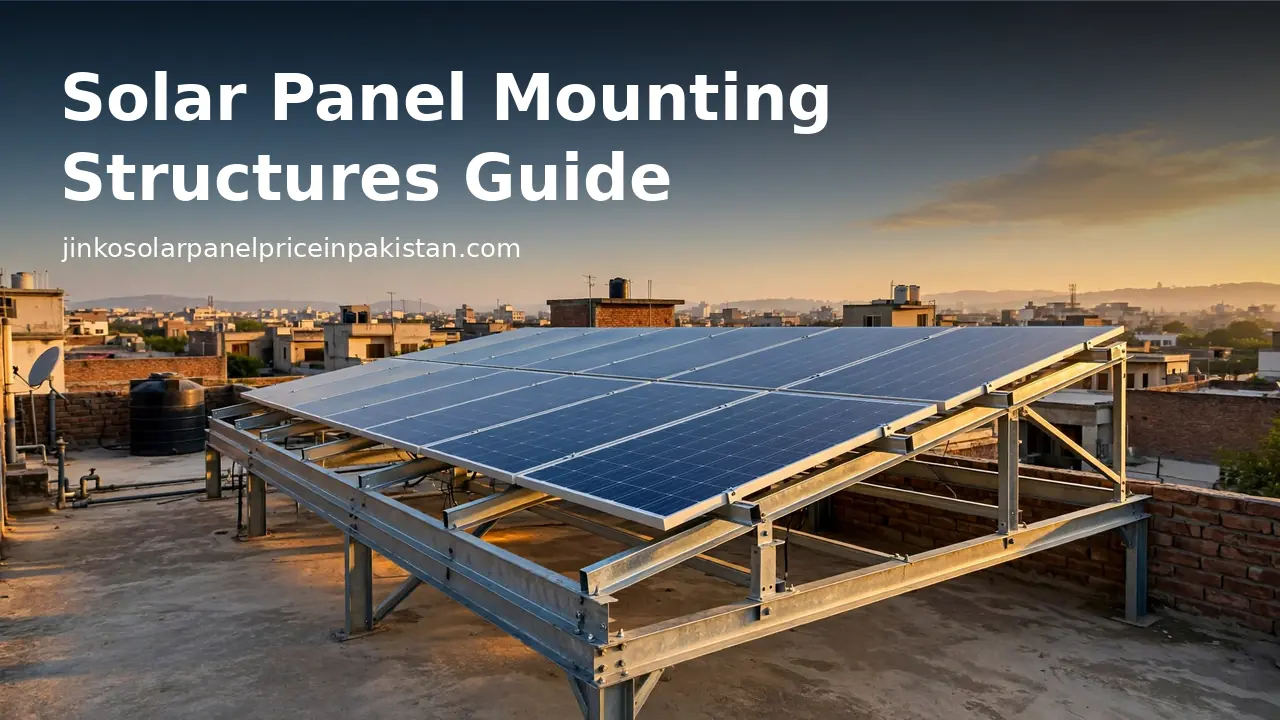
Short answer: A solar panel mounting structure — commonly called a solar stand in Pakistan — is the steel or aluminum frame that holds your panels at the correct tilt and keeps them safe through monsoon rains and summer dust storms. The right choice for most Pakistani homes is a hot-dip galvanized (GI) steel structure — typically an L2 or L3 fixed stand for residential rooftops — installed at a tilt roughly equal to your city’s latitude and facing true south. This guide explains every type, the materials that matter, installation steps, wind-load safety, and the scams to avoid.
By anamta Khan
Types of Solar Panel Mounting Structures in Pakistan
Mounting structures in Pakistan fall into a few well-established categories. Understanding them helps you discuss your installation confidently with any installer — and spot when someone is cutting corners.
L2 and L3 Fixed Stands
The L2 and L3 are the workhorses of residential solar in Pakistan. An L2 stand carries two panels and suits small residential systems, while the L3 carries three panels for medium-sized homes and small offices. Both use the same material quality — the number only refers to how many panels the frame supports. These are fixed-tilt structures: once installed, the angle stays put, which keeps things simple and maintenance-free.
Adjustable Tilt Stands
Adjustable structures let you manually change the panel angle between summer and winter. Because the sun sits lower in winter, a steeper winter angle captures noticeably more energy. The trade-off is a slightly more complex frame and the need to adjust it twice a year. They suit homeowners in cities with strong seasonal variation, such as Islamabad or Murree, who want maximum year-round yield.
Rooftop Flush Mounts
On sloped roofs — metal sheets or tiles — panels mount nearly flat on rails fixed directly to the roof surface. This is the cheapest mounting option, but you cannot tilt panels independently and heat builds up underneath, which trims efficiency. It works well for carports, sheds, and boundary walls rather than the main house array.
Ground-Mounted Structures
Where open land is available — farms, schools, factories, large rural homes — panels go on ground frames anchored with concrete footings. Ground mounts are easier to clean and service, allow perfect south-facing orientation regardless of roof direction, and scale easily. They do need dedicated land and proper foundation work.
Pole-Mounted Structures
A single pole carries one or two panels, commonly used for solar tubewells, street lights, and remote applications. Pole mounts are compact and economical for small loads but are not meant for full home systems.
Elevated Structures
Elevated structures raise panels several metres high on a heavy steel frame, creating usable shaded space underneath — a terrace, carport, or parking area. They need proper engineering and foundations because a taller frame catches more wind. For a deep dive into carports, pergolas, and agrivoltaic designs, see our complete guide to solar panel elevated structures.
Materials Compared: GI Steel vs Mild Steel vs Aluminum
The material of your structure decides whether it lasts 25 years or starts rusting after two monsoons. Here is how the options compare.
Hot-Dip Galvanized (GI) Steel — The Standard
Hot-dip galvanized steel is the industry standard for solar structures in Pakistan. The zinc coating protects the steel from rust even in humid, rainy conditions, and the strength-to-cost ratio is excellent. For rooftop and ground systems alike, GI steel is the safest default choice.
Mild Steel (MS) — Cheap but Risky
Plain mild steel costs less upfront but has no corrosion protection. In Pakistan’s monsoon climate, an unprotected MS frame can start rusting within a couple of seasons, weakening joints and endangering the panels it carries. Some fabricators paint MS silver to pass it off as galvanized — a scam covered in detail below.
Aluminum — Light and Corrosion-Proof
Anodized aluminum is naturally corrosion-resistant, lighter than steel, and looks cleaner. It is the preferred material in coastal areas like Karachi, where salt air attacks steel aggressively. The downside is higher material cost and lower stiffness, so aluminum suits rails and lighter frames rather than heavy elevated structures.
Stainless Steel Hardware
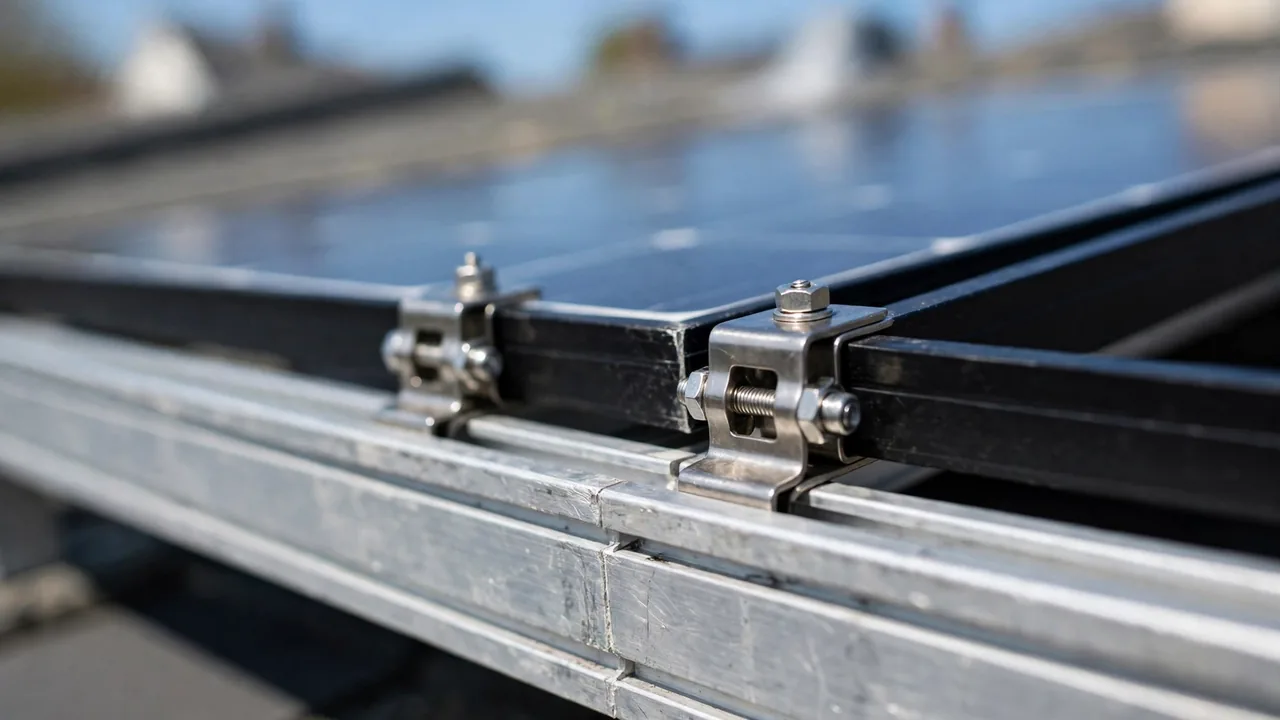
Every bolt, nut, washer, and clamp should be stainless steel (SS304 or SS316) or properly galvanized. Ordinary steel fasteners become galvanic corrosion points that loosen over time — exactly what you do not want on a rooftop frame facing 90 km/h seasonal winds.
Steel Gauge: The Detail Most Buyers Miss
Gauge (SWG) measures steel thickness — and lower numbers mean thicker, stronger steel. For full-size modern panels, installers recommend 14 SWG as the standard and 12 SWG for heavy-duty builds. Thin 16-gauge frames may look fine on day one but can flex and fatigue under large panels and wind load. Always ask your fabricator the gauge in writing before work begins.
Rooftop vs Ground-Mounted: Which Is Right for You?
| Factor | Rooftop Mount | Ground Mount |
|---|---|---|
| Space needed | Uses existing roof — no extra land | Needs dedicated open land |
| Orientation control | Limited by roof direction | Perfect south-facing alignment possible |
| Cleaning access | Harder — rooftop work | Easy — walk around the array |
| Cooling airflow | Moderate (raised frames help) | Excellent |
| Foundation work | Anchor to roof slab | Concrete footings required |
| Best for | Urban homes and offices | Farms, factories, rural homes |
Tilt Angle and Orientation for Pakistan
Pakistan lies roughly between 24°N (Karachi) and 34°N (Islamabad). The widely used rule of thumb is to set a fixed tilt roughly equal to your latitude: around 25° in Karachi, 28–29° in Multan/Bahawalpur, 31° in Lahore, and 33° in Islamabad. If your structure is adjustable, you can fine-tune seasonally — latitude minus 15° in summer, latitude plus 15° in winter — though most homeowners find the fixed-latitude tilt perfectly adequate.
Panels should face true south (not magnetic south — adjust for magnetic declination if you are using a compass). Before finalizing the layout, survey the roof through a full day: overhead water tanks, parapet walls, neighbouring buildings, and even antenna shadows can disproportionately cut output, since shade on one cell string drags down the whole string. Leave generous row spacing — roughly 1.5 to 2 times the panel’s tilted vertical height — so winter rows never shade each other, and keep walkways for cleaning. In dusty areas, panels need washing every two to four weeks, early morning or evening when the glass is cool.
Installation Steps: What a Proper Job Looks Like
Knowing the correct sequence helps you supervise the work and verify nothing is skipped.
- Site assessment: roof strength, direction, shading survey, and measurements for the planned system size.
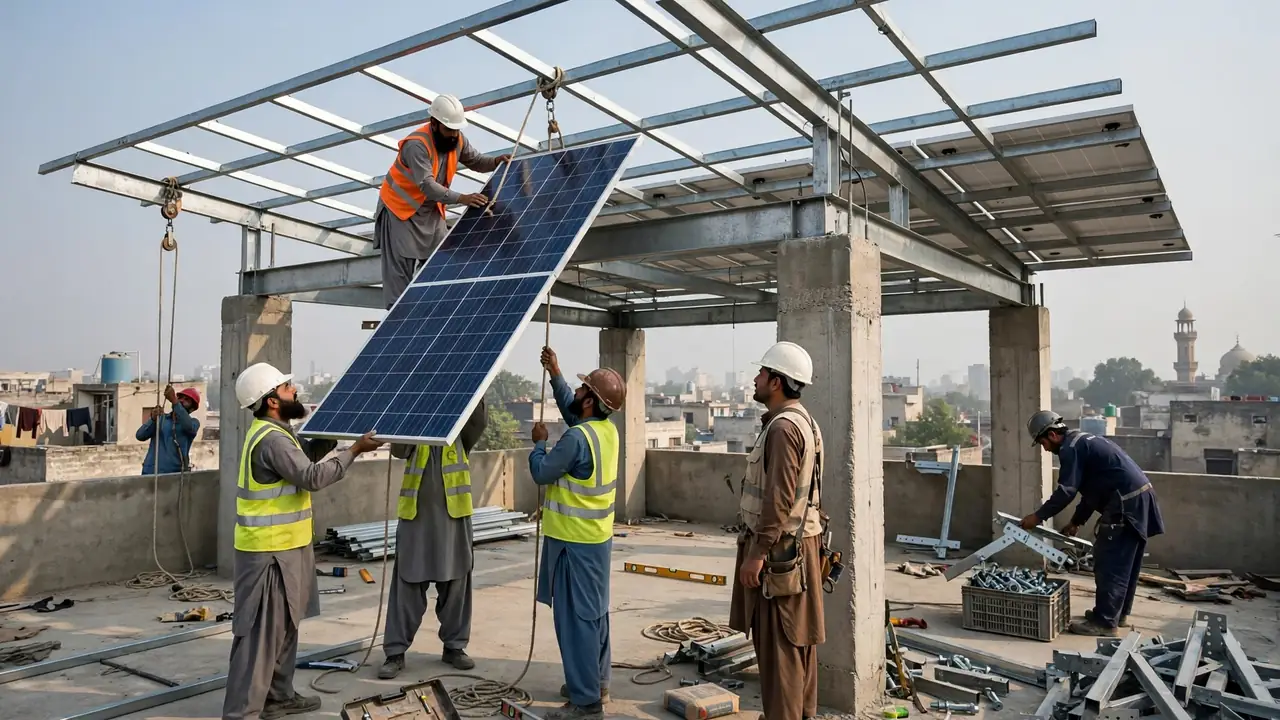
- Structure fabrication or delivery: pre-fabricated L2/L3 frames or on-site welding for custom elevated designs — confirm GI material and gauge.
- Anchoring: bases bolted with rawal bolts or set in concrete — never resting on gravity alone.
- Frame assembly: columns, rails, and cross-bracing torqued to spec with stainless hardware.
- Tilt setting: angle set per latitude and locked; south orientation verified.
- Panel mounting: panels clamped to rails with proper end and mid clamps — not drilled through the frame.
- Earthing: the entire metal structure bonded to an earth rod; critical for lightning and surge safety.
- Final check: all bolts re-torqued, no wobble, drainage clear, maintenance walkways accessible.
For how this fits into the full project schedule, see our solar panel installation timeline.
Wind Load and Safety in Pakistan’s Climate
Pakistan’s weather is the real stress test for any structure. Punjab’s seasonal winds can reach around 90 km/h, monsoon gusts hit hard in Sindh and coastal Karachi, and summer dust storms punish loose frames. A safe structure accounts for this: adequate steel gauge, cross-bracing on taller frames, air gaps between panel rows so wind passes through instead of lifting the array, and anchor bases concreted or bolted — not merely weighted down.
Earthing is the other non-negotiable. The mounting frame and rails must be bonded to a proper earth rod, because a floating metal array on an exposed rooftop is a lightning and fault hazard. Ask your installer for the structure’s earthing point and confirm it is actually connected — “it feels fine” is not a verification.
Common Scams and Mistakes to Avoid
- The paint trap: the most common fraud — ordinary mild-steel frames spray-painted silver and sold as galvanized. Scratch-test a hidden spot or ask for mill/galvanizing certification; real HDG has a distinctive spangled finish.
- Cheap fasteners: low-grade screws and rawal bolts loosen under vibration and wind. Insist on stainless or high-quality galvanized hardware throughout.
- No wind design: in Karachi and open plains, installers must engineer for high wind — air gaps between panels and proper bracing are not optional.
- Gravity-only fixing: frames held down by their own weight or loose blocks will shift in the first serious storm. Demand bolted or concreted anchors.
- No maintenance access: panels packed wall-to-wall with no walkways cannot be cleaned or serviced — and dirty panels lose significant output.
- Flat installation: panels laid flat collect dust and miss the optimal angle; always mount at the proper tilt.
Maintenance Tips for a Long Structure Life
- Inspect all bolts and clamps twice a year — before and after monsoon season — and re-torque anything loose.
- Check for rust spots, especially at welds and drilled holes; touch up with zinc-rich paint at the first sign.
- Keep the area under raised structures clear so airflow continues cooling the panels.
- After severe storms, walk the array and confirm no clamps shifted and no rails bent.
- Never drill new holes into galvanized members for add-ons — it breaks the zinc barrier; use clamps instead.
How to Choose the Right Structure: Quick Checklist
- Material confirmed as hot-dip galvanized steel (or aluminum for coastal sites) — in writing.
- Steel gauge 14 SWG standard, 12 SWG for heavy or elevated builds.
- All hardware stainless steel or galvanized.
- Tilt set to your city’s latitude, facing true south.
- Anchors bolted or concreted — verified, not assumed.
- Structure properly earthed to its own earth rod.
- Walkways left for cleaning and maintenance.
- Installer provides a written workmanship commitment.
Planning your system? Check current solar panel prices in Pakistan on our daily updated homepage, and buy only from authorized solar panel distributors to protect your warranty.
Frequently Asked Questions (FAQs)
What is a solar panel mounting structure?
It is the steel or aluminum frame that holds solar panels at the correct tilt angle and secures them against wind, rain, and dust. In Pakistan it is commonly called a solar stand. Without a proper structure, panels lose efficiency and can be damaged or blown off in storms.
Which structure is best for a home rooftop in Pakistan?
For most flat rooftops, a hot-dip galvanized steel L2 or L3 fixed stand is the standard choice — durable, simple, and suited to local weather. Homes needing usable shaded space should consider an elevated structure instead.
What is the difference between L2 and L3 solar structures?
The number indicates panel capacity: an L2 frame carries two panels while an L3 carries three. Material quality is the same — choose based on your system size and roof layout.
Should I choose GI steel or aluminum for my solar structure?
GI (galvanized) steel is the best all-round choice for most of Pakistan due to its strength and rust resistance. Aluminum is preferable in coastal areas like Karachi where salt air accelerates steel corrosion, and where lighter weight matters.
What tilt angle should solar panels have in Pakistan?
As a rule of thumb, set the tilt roughly equal to your latitude: about 25° in Karachi, 31° in Lahore, and 33° in Islamabad, always facing true south. Adjustable structures allow seasonal fine-tuning for slightly higher winter yield.
How do I know if my installer used real galvanized steel?
Real hot-dip galvanized steel has a distinctive crystalline spangled pattern and a matte grey finish — it is not shiny like paint. Ask for the steel gauge and galvanizing confirmation in writing, and be wary of unusually cheap quotes using painted mild steel.
