
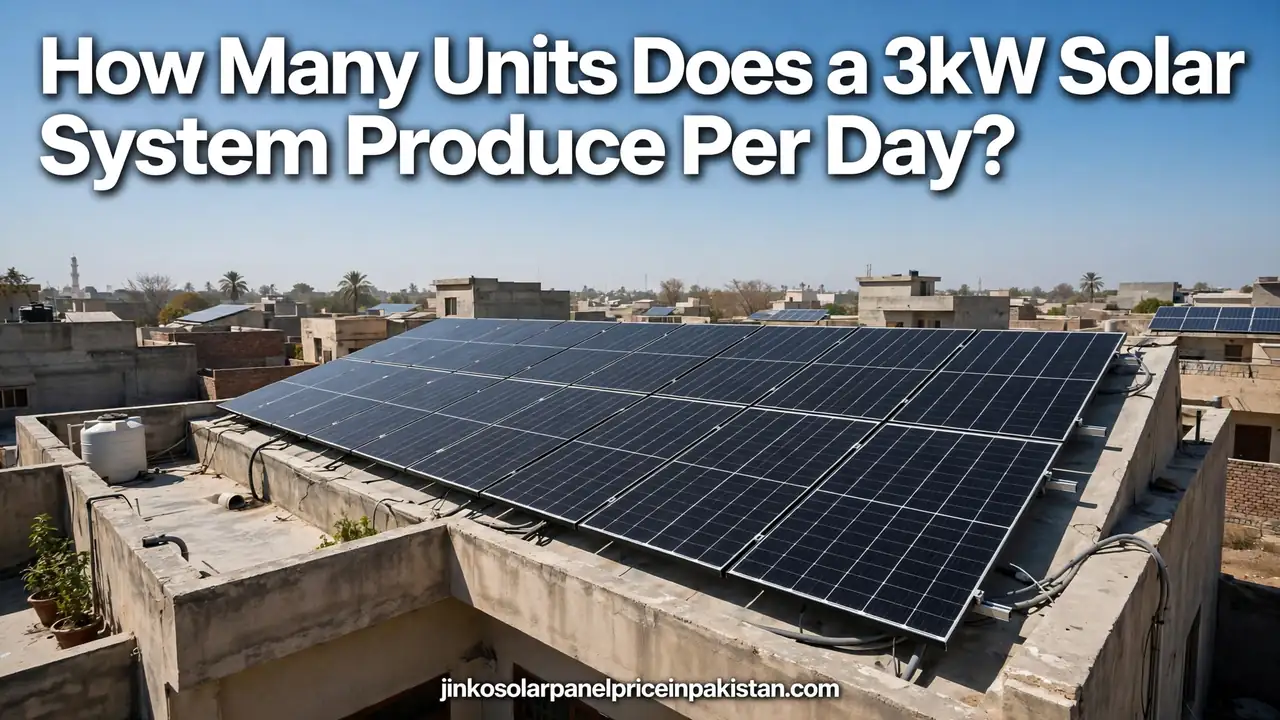
How Many Units Does a 3kW Solar System Produce Per Day?

The short answer is this: a 3kW solar system in Pakistan typically produces about 12 units (kWh) of electricity per day on average across the year — roughly 350 units a month and around 4,300 units a year. On a clear summer day the same system can produce more, and on a dull winter day it will produce less, but 12 units a day is a realistic planning figure for a well-installed, unshaded rooftop system in most of the country.
This guide explains the calculation, so you can work out your own system’s expected output. If you are still deciding how many panels your home needs overall, our guide on how many solar panels you need for your home works through that calculation from your electricity bill.
The Short Answer: Daily, Monthly and Yearly Output
A 3kW system is a popular size for a small to medium home in Pakistan, usually made up of five or six modern panels depending on panel wattage — for example, five panels of around 600 watts or six of around 500 watts. The system does not produce 3kW all day long: 3kW is its peak capacity under ideal test conditions, approached only for part of the day when the sun is high and the sky is clear.
That is why solar output is always quoted in units (kilowatt-hours, or kWh) rather than kilowatts. One unit is the electricity produced when a 1kW system runs at full power for one hour. For planning purposes, a typical 3kW system in Pakistan can be expected to deliver:
- Per day: about 11 to 13 units on average across the year, with 12 units a day a reasonable central planning figure.
- Per month: roughly 330 to 400 units, depending on the season and your city.
- Per year: roughly 4,000 to 4,700 units.
These are planning estimates. Two identical 3kW systems in different cities — or even on different roofs in the same street — can produce noticeably different totals, because sunlight, shading and installation quality differ.
How to Calculate a 3kW System’s Daily Units
The standard planning formula is simple:
Daily units = system size (kW) × peak sun hours × performance ratio
Peak sun hours are not the same as daylight hours. One peak sun hour is an hour’s worth of sunlight at full intensity (1,000 watts per square metre). A location with five peak sun hours may have twelve or more hours of daylight, but the weaker morning and evening sun adds up to the equivalent of five hours at full strength. This is where most wrong estimates come from: multiplying 3kW by twelve daylight hours badly overstates what a system can produce.
The performance ratio accounts for losses between the panels and your home’s wiring. No real system delivers everything its panels generate: heat reduces panel output, the inverter loses a small amount converting DC to AC, cables lose a little more, and dust takes its share. A performance ratio of 0.78 is a sensible planning value for a well-maintained rooftop system in Pakistan.
Worked example for a typical location with 5 peak sun hours: 3 kW × 5.0 peak sun hours × 0.78 = 11.7 units per day — about 351 units a month and 4,271 units a year. Change the peak sun hours and the whole result changes, as the table below shows. All figures use the same 0.78 performance ratio, and monthly figures assume 30 days; figures are rounded.
| Peak sun hours per day | Daily units | Monthly units (approx.) | Yearly units (approx.) |
|---|---|---|---|
| 4.5 | 10.5 | 316 | 3,843 |
| 5.0 | 11.7 | 351 | 4,271 |
| 5.5 | 12.9 | 386 | 4,698 |
| 6.0 | 14.0 | 421 | 5,117 |
If you want a more precise estimate for your exact roof, tools such as the US National Renewable Energy Laboratory’s PVWatts calculator model production from location and weather data — see the EnergySage explainer on how much energy a solar panel produces for how panel wattage, efficiency and sunlight combine to set real-world output. Your installer’s proposal should also state its assumed peak sun hours and performance ratio; if it does not, ask for them.
Peak Sun Hours Across Pakistan
Pakistan is a sunny country by world standards, but sunlight is not uniform. The south and west generally receive more intense sun than the north, and coastal humidity, smog and winter fog all trim the usable total. The ranges below are typical planning ranges, not measurements from any single rooftop — your own system’s monitoring data is always the better guide.
| Region | Typical peak sun hours per day | What it means for a 3kW system |
|---|---|---|
| Quetta and western Balochistan | 5.5–6.0 | Around 13–14 units a day on average. |
| Southern Punjab and interior Sindh | 5.0–5.5 | Around 12–13 units a day on average. |
| Central Punjab, including Lahore and Faisalabad | 5.0–5.5 | Similar average, but winter smog and fog can cut individual weeks sharply. |
| Karachi and the coast | 5.0–5.5 | Good sun, but humidity and sea haze soften the peak. |
| Islamabad, Peshawar and the north | 4.5–5.0 | Around 11–12 units a day on average. |
Two practical points follow from this table. First, a system sized from a national average may be slightly over- or under-sized for your city, so city-level planning matters. Second, seasonal swings matter more than the annual average suggests: a system that comfortably covers a home’s use in May may fall short in December, when days are shorter and fog is common in Punjab. Our on-grid solar inverter guide explains how grid-connected systems handle the difference between daytime production and evening use.
What Changes Your System’s Actual Output
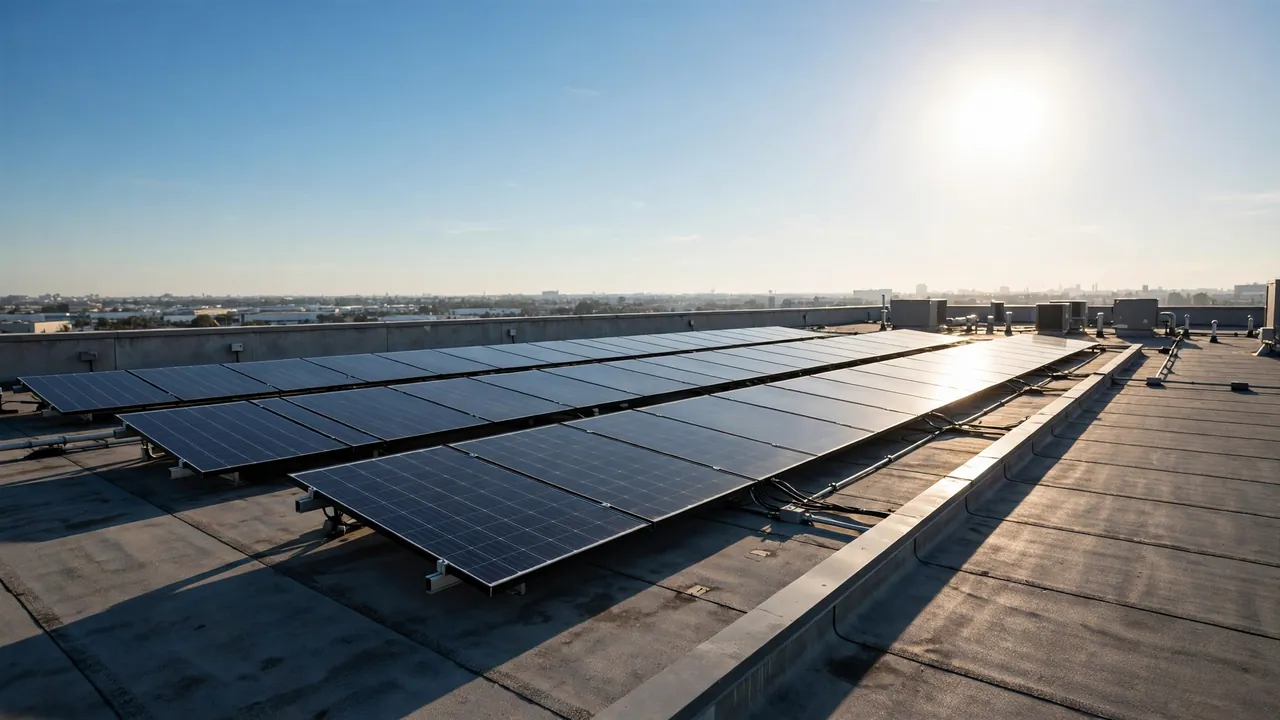
Six real-world factors decide whether your system lands above or below the planning estimate.
1. Tilt and direction
In Pakistan, panels facing south and tilted at roughly the latitude angle of the location capture the most sun over the year. Panels facing east or west still work, but they miss part of the midday peak, and a flat-mounted array loses output in winter when the sun sits lower. Our solar panel mounting structures guide covers tilt, orientation and structure types in detail.
2. Shading
Even partial shade has an outsized effect. A shadow from a water tank, neighbouring building or tree falling across one part of an array can drag down the output of a whole string of panels, because panels wired in series are limited by their weakest performer. Before installation, check the roof at several times of day and in different seasons, when the sun’s path changes.
3. Dust and smog
Dust is the quiet output thief in much of Pakistan. A layer of dust, pollen or smog residue on the glass cuts the light reaching the cells, and the effect builds up between cleanings. Homes near main roads, construction or agricultural burning notice it fastest. Regular cleaning with plain water and a soft tool, during cool hours, restores most of the lost output.
4. Heat
Solar panels produce less as they get hotter, which surprises many new owners. A panel’s rated wattage is measured at a cell temperature of 25°C, but rooftop panels in a Pakistani summer run far hotter than that. Good airflow beneath the panels, from a mounting gap that lets air circulate, limits the loss.
5. Inverter and wiring
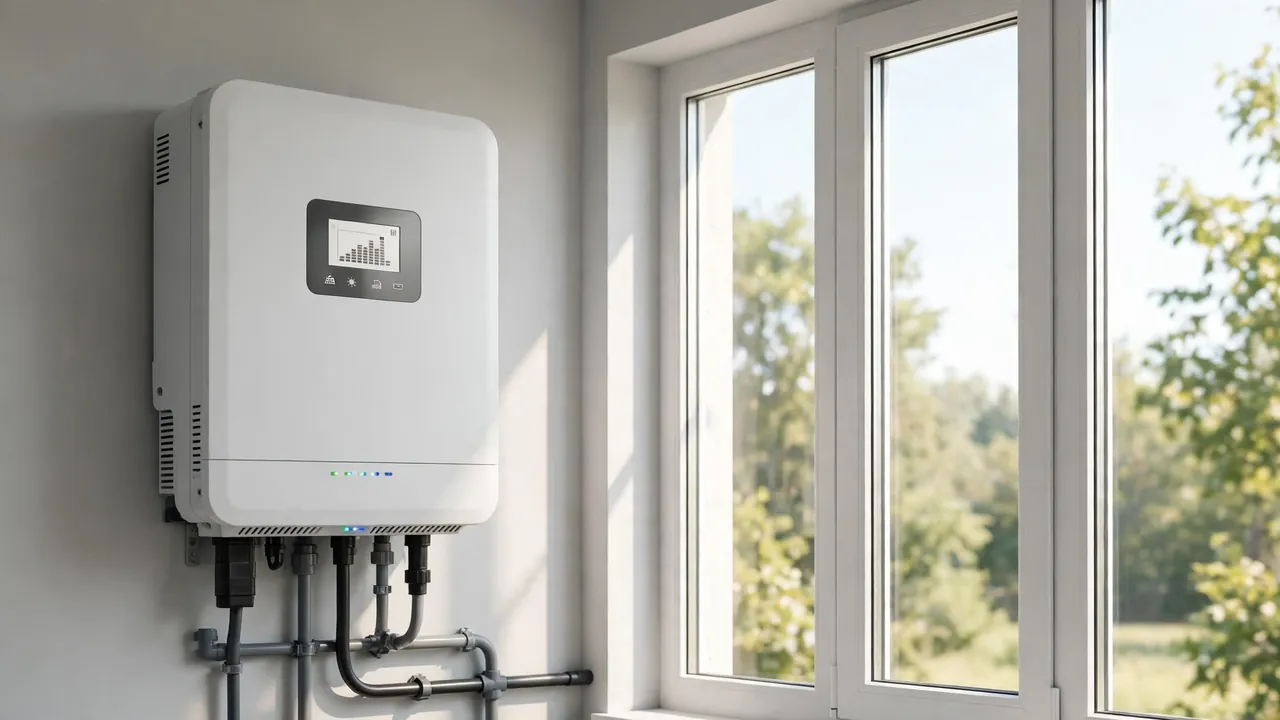
The inverter converts the panels’ DC electricity to the AC your home uses, and every conversion loses a small amount. An undersized inverter can also clip output on the brightest days, when the array briefly produces more DC power than the inverter can convert. Our solar inverter buying guide for Pakistan explains types, sizing and what to check before you buy.
6. Panel quality and age
Not all panels age equally. Output declines gradually over a system’s life, fastest in the first year and then slowly thereafter, and lower-grade panels tend to degrade faster and suffer more from defects such as hotspots. Buying from an authorised distributor and verifying that panels are genuine protects both the headline output and the long-term trend.
Summer, Winter and Cloudy Days
Expect a clear seasonal pattern rather than a flat daily figure. In summer, long days and a high sun push a 3kW system towards the top of its range — a clear June day can deliver around 14 to 15 units. In winter, shorter days, a lower sun and fog or smog pull it down, and a dull December day may deliver only around 8 to 9 units. Monsoon cloud has a similar effect for days at a time, though rain also washes dust off the panels, which partly offsets the loss once the sky clears.
This seasonality is normal and is already built into the annual average. Judge the system on its annual total, not on any single week — especially not a single winter week. If output drops suddenly outside the normal seasonal pattern, check for a tripped breaker, a failed inverter, heavy soiling or new shading.
What a 3kW System’s Output Means for Your Home
Translating units into household terms is straightforward: compare the system’s monthly output with your monthly electricity use, which is printed on your bill in units. A home using around 350 units a month will find a 3kW system roughly matched to its annual use, while a home using 600 units a month will cover roughly half to two-thirds of its use from the same system.
Timing matters as much as totals. Solar panels produce during the day, while many homes use most electricity in the evening. On a grid-connected system, daytime surplus flows to the grid and evening use draws from it, so the monthly balance is what counts. On a hybrid system with batteries, part of the daytime surplus is stored for the night instead.
If your bills show use well above 400 units a month, a larger system is usually the honest recommendation, and the same formula scales directly. If your use is well below 300 units a month, a 3kW system may already cover most of it. Either way, size from your bills, not from what a neighbour installed.
How to Check Your Own System’s Daily Units
Once a system is installed, guessing stops. Almost every modern inverter shows daily, monthly and total production, either on its own display or through a phone app connected over Wi-Fi. Check the daily figure at the end of a clear day and compare it with the planning estimate for your city and season. A month of readings, compared with the same month’s expected output, tells you a great deal.
Your electricity meter is a second check: on a grid-connected system it records imported and exported units, and the month-to-month difference shows whether the system is performing as expected. Keep a simple monthly record from the inverter app and your bill. Do not climb onto the roof to investigate electrical faults yourself; leave inverter and wiring checks to a qualified technician.
Is a 3kW System Enough for Your Home?
For many small to medium homes with moderate electricity use, a 3kW system is a sensible fit: it covers a large share of annual use and fits on a modest roof. It is less likely to be enough for a home running multiple inverter air conditioners through the summer plus a large family load all at once — those homes should size from their bills and consider a larger system from the start.
Two questions settle it. First, what does your bill actually say — your average monthly units over the last twelve months, not your highest or lowest month? Second, is your use likely to grow — a new air conditioner or a family member moving in? Answering both before you buy is cheaper than adding panels afterwards, though expansion is possible if roof space and inverter capacity were planned for it.
Check Current Prices
Production figures tell you what a 3kW system can generate; the other half of the decision is which panel brands are currently available. For the latest daily updated solar panel price tables, visit our homepage, where current prices for all major brands are refreshed every morning.
Frequently Asked Questions (FAQs)
How many units does a 3kW solar system produce per day in Pakistan?
On average across the year, a well-installed, unshaded 3kW system in Pakistan produces about 12 units (kWh) per day, roughly 350 units a month and around 4,300 units a year. Clear summer days can produce more and dull winter days less, so treat 12 units a day as a planning average, not a daily promise.
How do I calculate the daily units of a 3kW solar system?
Multiply the system size by your location’s peak sun hours and by a performance ratio of about 0.78. For example, 3 kW × 5.0 peak sun hours × 0.78 = 11.7 units per day. Peak sun hours are hours of full-strength sunlight, not total daylight hours.
How many units does a 3kW solar system produce per month?
A 3kW system produces roughly 330 to 400 units a month on average, depending on the season and city. A month of 30 days at 11.7 units a day gives about 351 units. Compare this with the monthly units printed on your electricity bill to see how much of your use it covers.
How many units does a 3kW solar system produce per year?
A 3kW system produces roughly 4,000 to 4,700 units a year under typical Pakistani conditions. The yearly total is the fairest way to judge a system, because summer months over-produce and winter months under-produce relative to the average.
Does a 3kW system produce more units in Quetta than in Islamabad?
Yes. The south and west, including Quetta, southern Punjab and interior Sindh, typically see around 5.5 to 6.0 peak sun hours a day, while northern cities such as Islamabad and Peshawar see around 4.5 to 5.0. That difference alone can change a 3kW system’s daily output by several units.
Does a 3kW solar system produce fewer units in winter?
Yes. Output is highest in summer, when days are long and the sun is high, and lowest in winter, when days are short and fog or smog is common. Monsoon cloud also reduces output for days at a time, though rain washes dust off the panels, which partly offsets the loss once the sky clears.
What reduces the output of a 3kW solar system?
The main factors are peak sun hours, panel tilt and direction, shading, dust and smog, heat, inverter and wiring losses, and panel quality and age. Of these, shading and dust are the two most common reasons a real system falls below its planning estimate, and both are largely preventabl.
How can I check my 3kW system’s actual daily units?
Check your inverter’s display or phone app, which shows daily, monthly and total production, and compare a full month against the planning estimate for your city and season. A sudden drop outside the normal seasonal pattern points to a fault, heavy soiling or new shading and is worth a call to your installer.
