
Half-Cell vs Full-Cell Solar Panels: What’s the Difference?

Quick answer: A half cell vs full cell solar panel differs in one simple way — half-cell panels use solar cells that have been laser-cut into two equal halves, so a panel the same size as a traditional 60-cell full-cell module carries 120 half-cells instead. That single change reduces internal resistance, so the panel produces slightly more power from the same footprint, handles partial shade better, runs cooler, and resists micro-cracks more effectively. Full-cell panels are the older, simpler design; half-cell is now the mainstream standard on most modern Tier-1 panels sold in Pakistan.
What Are Full-Cell Solar Panels?
Full-cell solar panels are the original panel design that dominated the industry for decades. Each photovoltaic cell inside the module is a full, uncut silicon wafer — typically arranged as 60 or 72 cells wired in series inside one frame. Electricity generated by each cell travels the full width of the cell to reach the busbars and interconnect ribbons, and the whole string behaves as one electrical unit.
This design is simple, proven, and still works reliably. Millions of full-cell panels installed over the years continue to generate electricity. The limitation is physics rather than quality: higher current per cell means higher resistive losses inside the panel (power loss rises with the square of current), and because every cell sits in one long series string, a single shaded or damaged cell can throttle the output of the entire string. That is why full-cell panels are more sensitive to partial shading from trees, parapet walls, water tanks, or neighboring buildings — extremely common on Pakistani rooftops.
What Are Half-Cell Solar Panels?
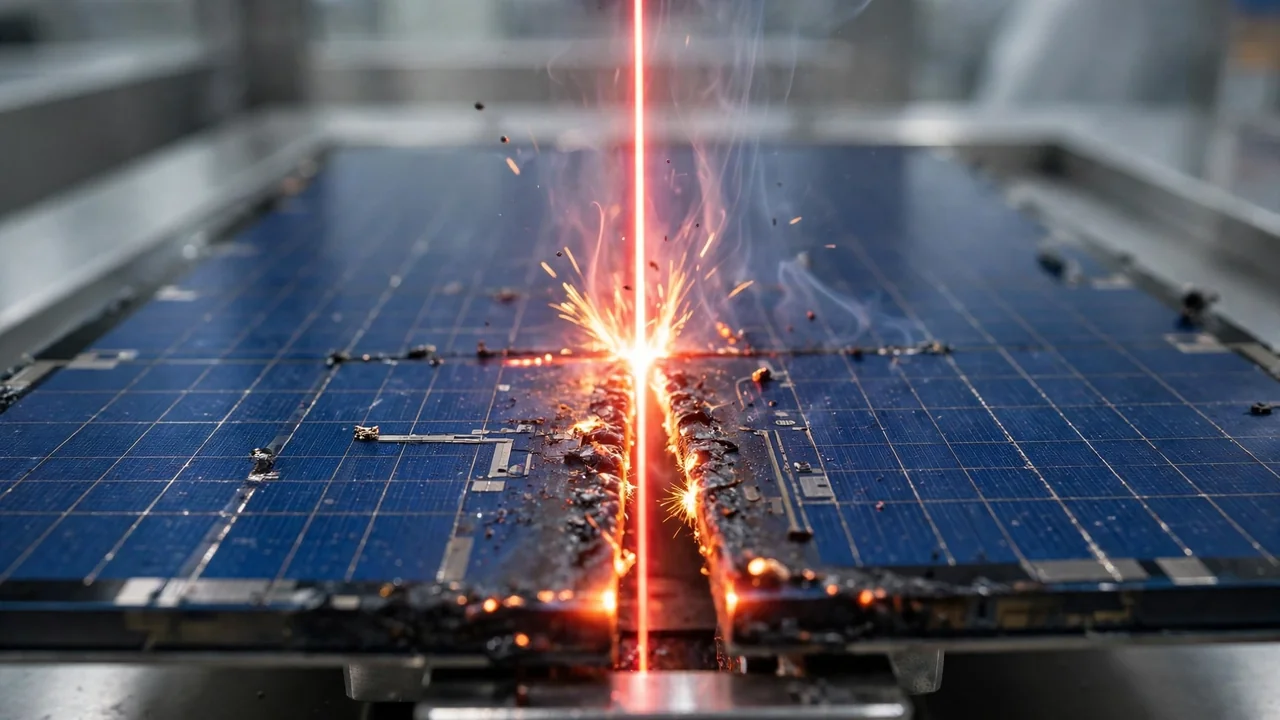
Half-cell (also called half-cut cell) solar panels take the same standard silicon cells used in full-cell panels and cut each one in half with a precision laser — often using a non-destructive cutting process that avoids cracking the wafer. A 60-cell panel therefore becomes a 120-half-cell panel, and a 72-cell panel becomes a 144-half-cell panel, in exactly the same frame size.
The cut itself is only the beginning. The two groups of half-cells are wired as two independent halves, each with its own set of bypass diodes, in a series-parallel arrangement. Each half-cell carries half the current of a full cell at the same voltage. In effect, one half-cell module behaves like two smaller panels joined inside a single frame — and that split is what unlocks the practical benefits described below.
This is not experimental technology. Half-cut cells have been in mass production for years and now appear on the mainstream product lines of major brands, often combined with other advances such as multi-busbar connections and bifacial designs. When you shop for panels from leading brands today, there is a good chance the models on the shelf are already half-cell designs.
How Half-Cell Technology Actually Works
Understanding the difference comes down to two electrical facts.
First, current halving cuts resistive losses. Every solar cell loses a little energy as electricity moves through the cell material and the ribbon connections — resistive loss, which grows with the square of the current. Because each half-cell carries half the current of a full cell, resistive losses inside the cell drop substantially. The strings are then wired in parallel, so the panel still delivers the same usable voltage and current at its terminals — but with less energy wasted as heat along the way. The net result is higher module power from the same cell area, which is why half-cell panels typically reach slightly higher wattage ratings than full-cell equivalents of identical size.
Second, the panel is split into two independent halves. In a full-cell module, shading on even a small part of one cell chokes the entire series string. In a half-cell module, the two halves work independently through their own bypass diodes. If the lower half of the panel is shaded by a parapet wall or a tree branch, the upper half keeps producing at full output. A bypass diode only has to cut out half the panel instead of the whole panel — a meaningful difference on real rooftops where partial shade is almost unavoidable.
Half-Cell vs Full-Cell: The Key Differences
1. Power Output and Efficiency
Half-cell panels consistently produce slightly more power than full-cell panels of the same size and cell type. The gain comes from reduced resistive losses, not from magic: less current per cell means less energy lost inside the module, so more of the sunlight captured by the cells reaches the terminals. On a limited roof where every panel must earn its space, that extra output adds up across an entire array — and it is one reason manufacturers can offer higher-wattage models (such as 580W-class and above) without making panels bigger.
2. Shade Tolerance
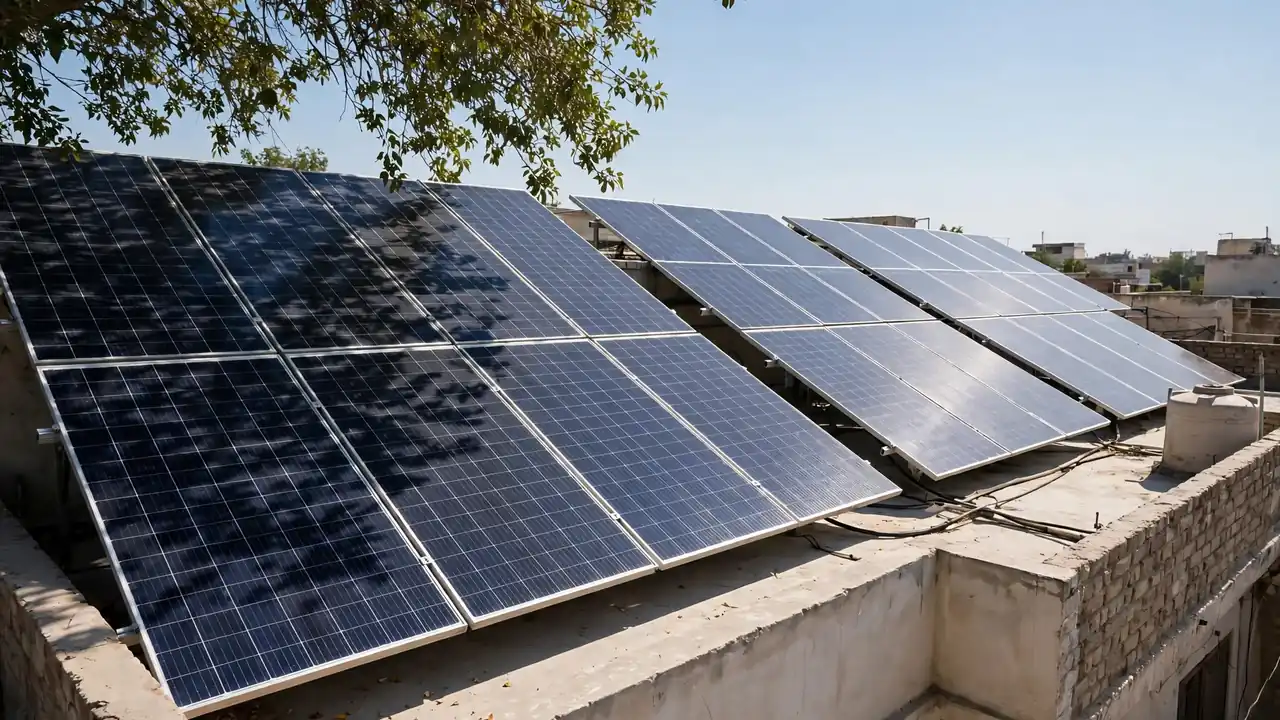
This is where the two designs differ most visibly in daily use. A full-cell panel under partial shade can lose a large share of its output, because the shaded cell limits current through the whole string. A half-cell panel keeps the unshaded half working at full capacity. For homes in Pakistan — where neighboring buildings, water tanks, stair bulkheads, and trees frequently cast shadows across rooftops — better shade tolerance translates directly into higher real-world energy yield over the day and year.
3. Heat and Hot-Spot Risk
Lower current means less heat. Half-cell modules tend to run slightly cooler than comparable full-cell modules, which matters twice over: panels are less efficient at higher temperatures, so cooler operation preserves output on hot afternoons, and lower heat reduces the risk of hot spots — localized overheating that occurs when a shaded or damaged cell dissipates energy instead of producing it. Severe hot spots can permanently damage cells, so the cooler running of half-cell designs is a genuine reliability advantage, not just an efficiency footnote.
4. Durability and Micro-Cracks
Smaller cells are mechanically more forgiving. The shorter distance between busbars and the reduced cell area make half-cells more resistant to micro-cracks — hairline fractures that can develop from thermal cycling, transport vibration, or mechanical stress during installation. Micro-cracks isolate parts of a cell and gradually erode output. Because cracks also cause smaller isolated losses in a half-cell layout, a panel that has endured years of heat cycles and monsoon storms degrades more gracefully. Combined with the split junction box design used on many half-cell modules, the result is a physically tougher panel.
5. Lifespan
Lower operating temperatures, reduced thermal stress, and better resistance to micro-cracks all point in the same direction: a half-cell panel is more likely to age well than a full-cell equivalent. No panel design eliminates degradation entirely, but the mechanisms that cause long-term power loss are milder in half-cell modules. As with any panel, the manufacturer’s warranty terms on the specific model remain the final word on expected durability — always check the product and performance warranty on the datasheet before buying.
Do Half-Cell Panels Really Produce More Power?
Yes — but keep expectations realistic. The improvement is a modest, measurable gain in output, not a doubling. The gain comes from recovered resistive losses and better shade behavior, and it shows up as higher wattage ratings on otherwise identical panels. Where half-cell really earns its keep is consistency: higher output under partial shade, steadier performance on hot afternoons, and slower degradation over the years. In the demanding rooftop conditions of Pakistan — high temperatures, dust, and frequent partial shading — that consistency often matters more than the headline wattage figure.
It is also worth noting what half-cell technology is not. It does not change the underlying cell chemistry — a half-cell PERC panel and a full-cell PERC panel share the same cell type; only the cutting and wiring differ. The technology stacks well with other advances: most modern high-efficiency panels combine half-cut cells with multi-busbar wiring, N-type cell technology (see our N-type vs P-type solar panels explainer), and sometimes bifacial construction. When comparing two specific panels, the cell technology and the build quality matter as much as whether the cells are cut.
Which One Should You Choose for Your Home in Pakistan?
For most buyers, half-cell is the better choice — and you may not have much of a choice to make. Major brands have shifted their mainstream lines to half-cell designs, so full-cell panels are increasingly found only in older stock or budget segments. If you are choosing between two panels and one is half-cell, prefer it, especially if:
- Your rooftop has trees, a neighboring building, a water tank, or a parapet wall that casts shadows at any time of day.
- You are in a very hot area, where the lower operating temperature protects afternoon output.
- Your roof space is limited, so every panel needs to produce as much as possible.
- You plan to keep the system for 20+ years, where slower degradation compounds into meaningful extra energy.
Full-cell panels still deserve consideration in one scenario: a large, completely unshaded roof where the buyer prioritizes the lowest upfront cost and accepts slightly lower output. But weigh that honestly against a slightly higher initial investment in half-cell panels that generate more energy every year for decades — a calculation that becomes clearer once you look at the actual numbers on the day.
How to Identify Half-Cell Panels Before Buying
Identifying half-cell panels is straightforward once you know what to look for. First, check the datasheet cell count: half-cell panels are listed as 120, 132, or 144 cells (or similar half-cell multiples), while traditional full-cell panels show 60, 66, or 72. Second, look for terms like “half-cut cell”, “half cell”, or “HCC” in the product specifications or brochure. Third, examine the panel face: half-cell panels often show a visible centerline down the middle of the module where the two halves meet, though not all designs make this obvious.
Identifying half-cell panels is straightforward once you know what to look for. First, check the datasheet cell count: half-cell panels are listed as 120, 132, or 144 cells (or similar half-cell multiples), while traditional full-cell panels show 60, 66, or 72. Second, look for terms like “half-cut cell”, “half cell”, or “HCC” in the product specifications or brochure. Third, examine the panel face: half-cell panels often show a visible centerline down the middle of the module where the two halves meet, though not all designs make this obvious. Many half-cell models are also built as bifacial panels — our bifacial solar panel guide explains how that second light-harvesting surface works.
Finally, verify authenticity the same way you would with any panel. Counterfeit and relabeled panels are a real problem in the Pakistani market — always check the panel’s serial number against the manufacturer’s verification channel and buy from an authorized distributor. A genuine half-cell panel from a reputable brand will carry matching cell-count specifications on the datasheet, the nameplate, and the verification record.
After choosing between half-cell and full-cell, check the solar panel price in pakistan for both types and the solar plate price in pakistan per watt on our homepage’s daily tables.
Frequently Asked Questions (FAQs)
What is the difference between half-cell and full-cell solar panels?
Half-cell (half-cut) panels use standard solar cells that have been laser-cut into two equal halves. A panel the same size as a traditional 60-cell full-cell module therefore carries 120 half-cells, wired as two independent halves with their own bypass diodes. Each half-cell carries half the current, which reduces internal resistive losses, improves shade tolerance, and lets the panel run cooler.
Are half-cell solar panels more efficient than full-cell panels?
They produce slightly more power from the same panel area, mainly because halving the current per cell cuts resistive losses inside the module (loss rises with the square of current). The gain is modest rather than dramatic, and it comes on top of the underlying cell technology — a half-cell PERC panel and a full-cell PERC panel share the same cell chemistry.
Do half-cell panels perform better in shade?
Yes, noticeably so. A half-cell module is effectively two smaller panels joined in one frame, each with its own bypass diodes. If one half is shaded by a tree, parapet wall, or water tank, the other half keeps producing at full output — where a full-cell panel’s whole series string would be throttled by a single shaded cell. This matters a lot on Pakistani rooftops, where partial shade is common.
How can I tell if a panel uses half-cut cells?
Check the datasheet cell count: half-cell panels are listed as 120, 132, or 144 cells (half-cell multiples), while traditional full-cell panels show 60, 66, or 72. The specifications may also say ‘half-cut cell’ or ‘HCC’. Many designs also show a visible centerline down the middle of the module face where the two halves meet. Always cross-check the count against the manufacturer’s verification channel to avoid counterfeits.
Do half-cell panels last longer than full-cell panels?
The physics points that way: lower operating temperatures, less thermal stress, and better resistance to micro-cracks all favor longer service life. No design eliminates degradation entirely, but a half-cell panel degrades more gracefully over years of heat cycles. For the concrete commitment, always check the product and performance warranty terms on the specific model’s datasheet before buying.
Can half-cell technology be combined with TOPCon or bifacial designs?
Yes — half-cell is a manufacturing and wiring approach, not a cell chemistry, so it stacks with other advances. Most modern high-efficiency panels combine half-cut cells with multi-busbar wiring, N-type or TOPCon cell technology, and sometimes bifacial construction. When comparing two panels, weigh the cell technology and build quality alongside whether the cells are cut.
Are full-cell panels obsolete now?
Not obsolete, but increasingly legacy. Full-cell panels still work reliably and can make sense on a large, fully unshaded roof where the lowest upfront cost is the priority. However, major brands have moved their mainstream lines to half-cell designs, so new full-cell models are mostly older stock. For most buyers choosing today, half-cell is the better default.