
Do Bifacial Solar Panels Work on Rooftops?

Quick answer: Yes, bifacial solar panels work on rooftops — but only when the installation gives the rear side something to see. A bifacial panel generates power from direct sunlight hitting its front face and from light bouncing off the surface underneath onto its rear face. On a flat roof with tilted, elevated panels above a light-colored, reflective surface, a bifacial rooftop installation earns a real rear-side bonus. On a dark, flush-mounted sloped roof, the gain can shrink to almost nothing. This guide explains how bifacial panels capture rear-side light, the flat-roof vs sloped-roof reality, the five bifacial requirements your roof must meet, and when bifacial is — and isn’t — worth it on a rooftop.
How Bifacial Solar Panels Capture Light from Both Sides
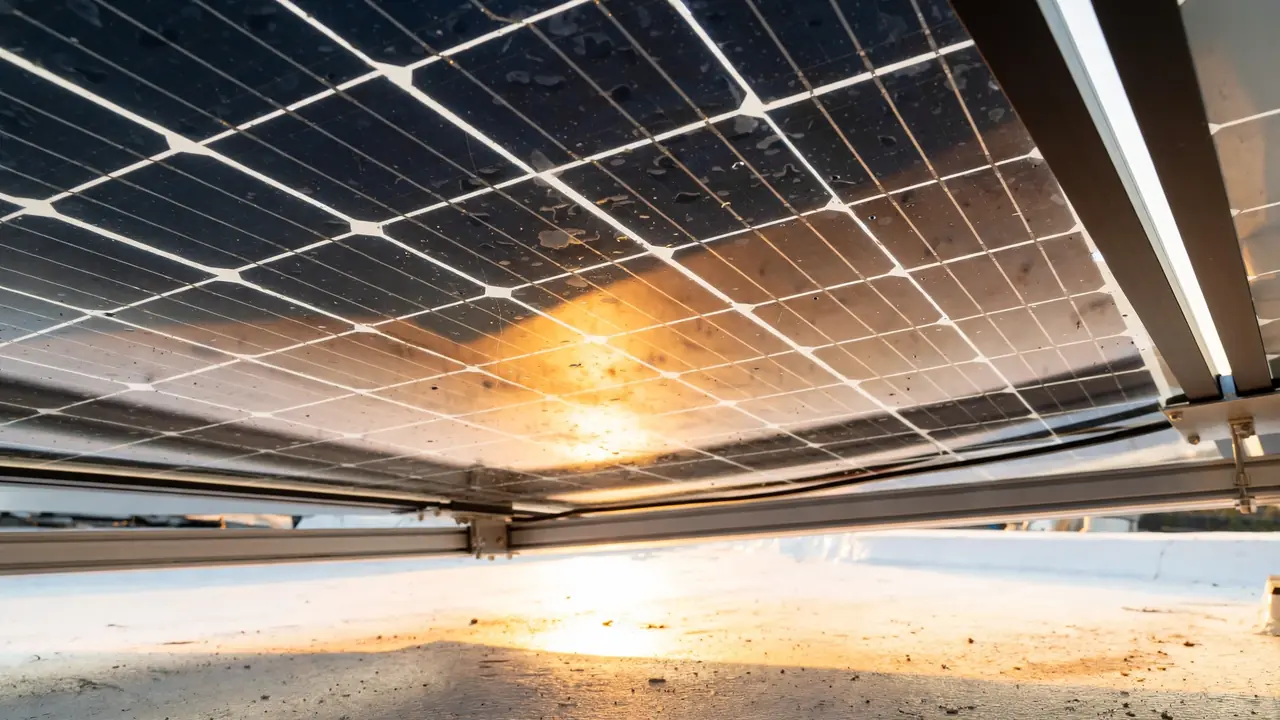
A conventional solar panel has an opaque backsheet: only the front face converts sunlight into electricity, and any light that lands on the back of the panel is simply wasted. A bifacial panel replaces that opaque backsheet with glass (or a transparent backsheet) on both faces, so the photovoltaic cells sealed between the layers can absorb light from the rear as well as the front.
The rear side never sees direct sunlight — it runs on reflected light bouncing off the roof. A surface’s reflectivity is described by its albedo: a bright white roof reflects far more than dark grey concrete. That’s why mounting height and roof color matter more for bifacial than for ordinary panels — a bifacial panel is only as good as the surface beneath it.
Most bifacial panels are built glass-on-glass — toughened glass on both faces instead of a polymer backsheet — which also resists moisture ingress and long-term weathering, a useful side benefit in Pakistan’s humid summers and monsoon season.
How much extra can the rear side actually contribute? According to bifacial solar panel installation best practices published by ItekEnergy, rear-side gains typically fall in the 5–30% range, depending on the reflectivity of the surface beneath the array and the mounting. The spread is wide: a raised array over a white-coated flat roof approaches the top of that range, while a low array over a dark surface sits near the bottom. Where your roof lands is decided by the five requirements below.
Flat Roofs: The Best Case for Bifacial on a Rooftop

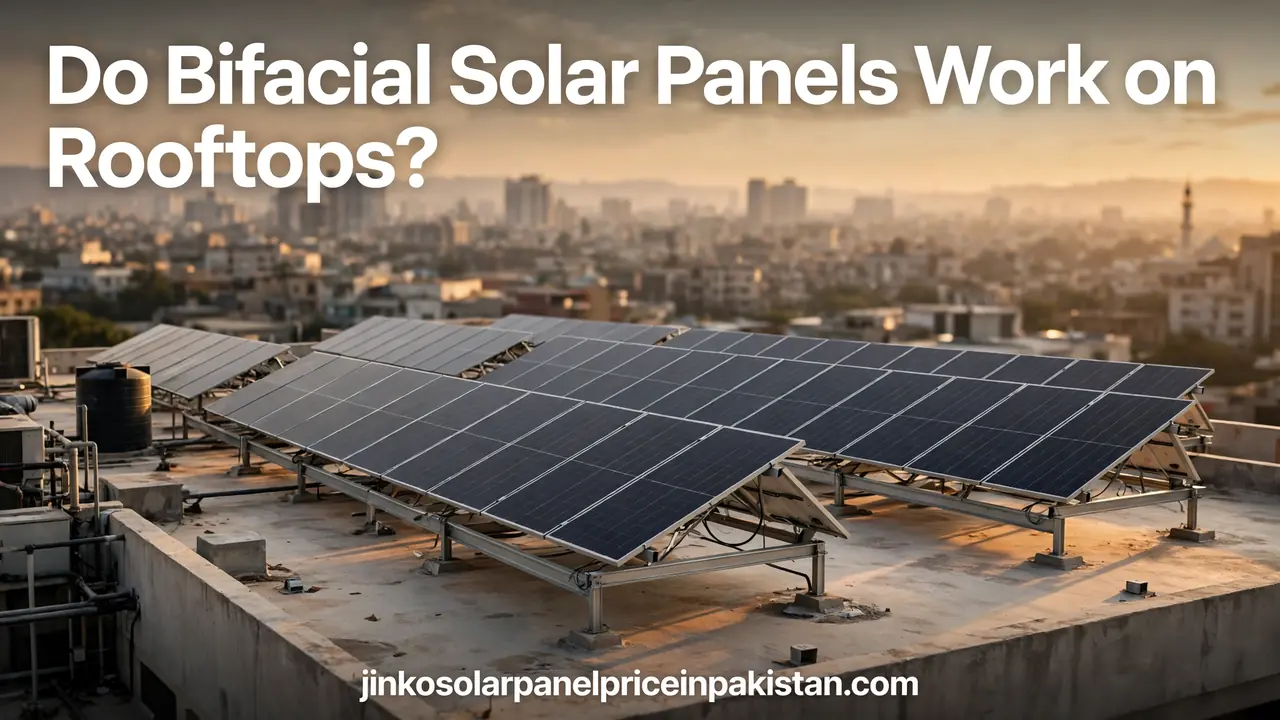
Bifacial on flat roof is the combination that makes the most sense: you can tilt the panels, lift them off the deck, and leave the bright roof surface beneath them fully exposed to reflected light. In practice, it’s the only rooftop arrangement where bifacial reliably earns back its premium over conventional panels.
On a flat roof, the winning recipe has three parts:
- Tilt the panels. Tilt bifacial panels as you would a conventional array — the angled rear glass then intercepts a wide cone of reflected light. Panels laid flat on the roof kill this geometry: the rear face looks mostly at its own shadow.
- Elevate the array. The higher the panel sits, the more reflected light reaches the rear — every cell “sees” a larger patch of roof. ItekEnergy recommends about 1 metre of mounting height as the minimum for flat roofs. The air gap is a double win: it also cools the panel, and hot panels produce less.
- Keep the surface bright. The roof beneath the array should be as reflective as practical — white roof paint, a reflective coating, or pale concrete. Roof color is the single biggest lever on your rear-side gain (see requirement 2 below).
A flat roof also lets you space rows deliberately so no row shades the reflective surface feeding the next, while parapet walls at the roof edge act as natural wind protection — as long as they don’t shade the panels.
Sloped (Pitched) Roofs: Where the Gains Shrink
Sloped roofs are the harder case, and honesty matters here. Panels mounted flush on a pitched roof sit close to the roof surface, leaving almost no air gap for reflected light to reach the rear glass. The rear side of a flush-mounted panel sees only a narrow sliver of roof in the gap between the panel and the surface — and most of that sliver is in the panel’s own shadow. Under these conditions a bifacial panel behaves almost exactly like a conventional one, so paying extra for bifacial construction buys you very little.
Bifacial isn’t impossible on a pitched roof: if the rails hold the panels 10–15 cm clear of the surface (ItekEnergy’s suggested minimum for pitched roofs), the rear side gets some bounce light, especially over a light-colored covering. But even then, a pitched roof can’t match a tilted, metre-high flat-roof array — the gap is small, the rear faces steeply downward, and the geometry caps how much reflected light can arrive.
The honest rule: on a sloped roof, choose bifacial only if the roof is light-colored and the racking maintains real clearance — otherwise a quality conventional panel is the better buy.
The 5 Key Bifacial Requirements for Rooftop Installation
The same five bifacial requirements decide whether the rear side earns its keep on any roof. Run through each one against your own roof before you buy.
1. Mounting Height and Clearance
Most rooftop quotes get this wrong. On flat roofs, ItekEnergy advises at least about 1 metre above the deck — enough for reflected light to flood the rear side and for air to cool the panel. On pitched roofs, where a metre is impractical, 10–15 cm of rail clearance is the working minimum: enough bounce light to reach the rear glass without turning the array into a sail in high winds. Anything flush-mounted wastes the bifacial design entirely — if your installer proposes a flush mount, bifacial is not the right choice.
2. A Reflective Roof Surface
Albedo is everything: a bright white-painted roof, a reflective coating, or pale concrete bounces plenty of light back to the rear side; dark grey or soot-stained roofs reflect very little, and the gain collapses with it. Roof color is the cheapest variable in the whole system — a coat of white roof paint costs a fraction of the panel premium — yet it’s the one most often ignored. Dark roof you won’t brighten? Buy conventional panels instead.
3. Row Spacing and Self-Shading
Bifacial panels are especially sensitive to row-to-row shading: a shadow from the row in front darkens the very roof surface the rear side depends on. Rows need generous spacing, calculated from panel tilt and latitude, so the low winter sun doesn’t shade the reflective surface feeding the row behind. Fewer, well-spaced rows beat more, cramped rows for a bifacial array.
4. Slim, Reflective Racking and Clean Wiring
The racking sits between the reflective surface and the rear glass, so bulky dark rails can shade the very light you’re harvesting. Choose slim, light-colored or galvanized rails and supports, and route cables and junction boxes so nothing dangles across the rear of the panels — see our guide to solar panel mounting structures for the racking types used in Pakistan. Never mount the inverter directly behind the panels.
5. Correct Tilt
Tilt matters for both faces. Match what your latitude demands for the front — the front still earns most of the energy — but remember tilt also decides how much reflective roof the rear side can “see.” Too flat and the rear faces mostly sky and shadow; too steep on a tight layout and rows shade each other. Ask your installer to account for both faces.
A Quick Self-Check: Does Your Roof Suit Bifacial Panels?
Spend ten minutes on your own roof with this checklist before asking for quotes:
- Roof type. Flat roof with room to tilt and elevate panels? Strong candidate. Sloped roof where panels must lie flush? Probably not.
- Roof color. White, pale grey, or light concrete you’d describe as bright? Good. Dark grey, stained, or blackened? The rear side will starve unless you repaint or coat it.
- Shade. Note everything casting shadows across the proposed area — water tanks, stair bulkheads, parapets, neighboring buildings, trees. If the reflective surface is shaded much of the day, the gain disappoints.
- Space. Is there room to elevate the panels about a metre and keep the rows properly spaced? A tiny roof forcing a cramped, low layout is a poor bifacial host.
- Dust load. Near a busy road or construction site? Plan regular cleaning of the roof surface, not just the panels — dust on the roof lowers its reflectivity.
If your roof passes most of these checks, bifacial is worth pricing. If it fails two or more, conventional panels are the safer investment.
What Pakistani Homeowners Should Know
Pakistan’s rooftops are, in one sense, made for bifacial: the flat concrete roof is the standard house design nationwide — exactly the roof type where bifacial performs best. A typical flat roof can host tilted, elevated arrays with the metre of clearance the technology wants, with room for proper row spacing.
But two local realities work against the rear side. First, dust: a thin film on the roof lowers its albedo — a white roof slowly turns grey, and the reflected light the rear side depends on shrinks with it. Keep the roof surface under the array clean, not just the panels: sweep or hose it down as part of your maintenance routine. (For background on the technology, see our bifacial solar panel guide.)
Second, roof clutter: water tanks, stair bulkheads, parapet walls, and neighboring buildings are classic Pakistani rooftop features — and anything shadowing the reflective surface steals rear-side light. Map your roof’s shadows at different times of day before committing: if the array area is shaded much of the day, the gain will disappoint.
One more note: a bright, light-colored parapet reflects extra light into the array from the sides — provided the panels are elevated enough to see it. Dark-painted parapets do the opposite, so a light coat of paint there helps too.
When Bifacial Is NOT Worth It on a Roof
Bifacial panels are not automatically the better buy. Skip them and choose a conventional panel when any of these apply:
- Your roof is dark and you won’t brighten it. Dark grey concrete, dark tiles, or soot-stained surfaces give the rear side almost nothing to work with.
- The array must be flush-mounted on a sloped roof. With no meaningful air gap, the rear glass sees mostly shadow — the bifacial premium buys nothing.
- The roof is heavily shaded. If water tanks, walls, or neighboring buildings shade the reflective surface for much of the day, rear-side gain collapses.
- The layout can’t allow proper row spacing. A cramped roof where rows must sit close together defeats the geometry bifacial needs.
- Budget is the deciding factor. If bifacial forces fewer panels or a weaker brand to stay in budget, more or better conventional panels beat the rear-side gain.
Conversely, a flat roof with elevated panels, a bright surface, and roomy rows makes bifacial one of the most effective rooftop upgrades — you’re harvesting energy from light that would otherwise just heat your roof.
If bifacial suits your roof, compare the solar panel price in pakistan for bifacial models with the solar plate price in pakistan per watt on our daily-updated homepage tables.
Frequently Asked Questions (FAQs)
Can bifacial solar panels be installed on a flat roof?
Yes — a flat roof is the ideal setting for bifacial panels. The panels can be tilted and elevated (about 1 metre is the recommended minimum mounting height), leaving the bright roof surface fully exposed so reflected light reaches the rear side. Tilted, elevated bifacial arrays on light-colored flat roofs earn the strongest rear-side gains.
Do bifacial panels work on sloped or pitched roofs?
The gains are limited on pitched roofs. Panels mounted flush against the slope leave almost no air gap, so the rear glass sees mostly its own shadow. Bifacial can still contribute if the rails hold the panels 10–15 cm clear of the surface and the roof covering is light-colored — otherwise a conventional panel is the better buy.
What is the minimum mounting height for bifacial panels on a rooftop?
For flat roofs, about 1 metre above the roof deck is the recommended minimum, since a larger gap lets more reflected light flood the rear side and keeps cooling airflow under the panel. For pitched roofs, 10–15 cm of rail clearance is the practical working minimum. Flush-mounted panels get almost no rear-side benefit.
What roof color is best for bifacial solar panels?
White or very light-colored surfaces work best, because the rear side runs on reflected light. A bright white-painted roof, a reflective roof coating, or pale concrete can bounce a large share of sunlight back onto the rear glass, while dark grey or soot-stained roofs reflect very little. In Pakistan, dust slowly greys a white roof, so the surface under the array needs regular cleaning.
Does dust affect bifacial panel performance?
Yes — twice over. Dust on the panels themselves blocks direct sunlight on the front, while dust on the roof lowers its reflectivity (albedo), starving the rear side of bounce light. With a bifacial rooftop installation, cleaning should cover the roof surface beneath the array as well as the panel faces, especially near busy roads or construction sites.
Do I need special racking for a bifacial rooftop installation?
No special racking brand is required, but the racking must meet the bifacial requirements: enough height or clearance, slim rails that don’t shade the rear glass, and preferably light-colored or galvanized steel over dark painted finishes. Cables, junction boxes, and inverters should be routed so nothing dangles across or shadows the rear of the panels.
How do I know if my roof suits bifacial panels?
Run a five-point self-check: a flat roof (not a flush sloped one), a bright light-colored surface, an area free of shade from water tanks, walls, or neighboring buildings for most of the day, enough space to elevate the panels and keep rows well spaced, and a manageable dust load. If your roof passes most of these, bifacial is worth pricing; if it fails two or more, conventional panels are the safer investment.