
Longi Solar Panels in Pakistan: Complete Brand Guide (2026)

Quick answer: LONGi is one of the largest solar panel makers in the world — founded in 2000 in Xi’an, China, and built on monocrystalline wafers before it ever sold a finished panel. Longi solar panels in Pakistan are now a default Tier-1 choice on home rooftops, and you will mostly meet them through the Hi-MO family: the Hi-MO X10 flagship with back-contact HPBC 2.0 cells, the Hi-MO 6 and Hi-MO X6 workhorses for home roofs, and the big-format Hi-MO 7 for larger systems. This guide explains each series, what HPBC technology does on a hot roof, what the warranty covers, and how to check a panel is genuine. It carries no prices — rates change too often for print, so check the live tables instead.
Check Current Prices
Panel rates in Pakistan move with the dollar rate, import costs and dealer stock. Our homepage updates the solar plate price in pakistan every day, and the same page tracks the wider solar panel price in pakistan market, so you can compare Longi against Jinko, Canadian Solar and Trina. The solar panels price in pakistan tables list all brands in one place.
Why Longi Is One of the Biggest Names in Solar
LONGi Green Energy Technology — usually written LONGi, sometimes Longi — started in 2000 as a maker of monocrystalline silicon wafers, the thin slices of purified silicon every solar cell is built on. Controlling the wafer, the cell and the finished panel means controlling quality at every step, and LONGi grew from that base into one of the two or three largest module manufacturers in the world by shipment volume. It listed on the Shanghai Stock Exchange in 2012 and now sells in more than 150 countries — and its panels have become a standard sight on Pakistani home rooftops.
For a buyer, size is not just a bragging point. Independent lab Kiwa PVEL has named LONGi a Top Performer in its reliability scorecard multiple times, and the company holds BloombergNEF Tier 1 status, which banks and large project developers use as a shortlist. None of that guarantees a single panel on a Lahore rooftop, but it does mean the brand has far more to lose from a bad batch than a no-name importer does. Longi only makes monocrystalline panels, and its recent generations use back-contact cell technology instead of the standard PERC cells most budget panels still use. If you are comparing brands, read this guide alongside our Jinko brand guide and Jinko vs Longi comparison — the two Tier-1 rivals are close on efficiency and warranty, so the exact model and the dealer matter more than the logo.
Longi Panel Series Explained
Dealers quote longi solar panels in Pakistan by series name, and the names are confusingly similar: Hi-MO 5, Hi-MO 6, Hi-MO X6, Hi-MO 7, Hi-MO 9, Hi-MO X10. They are not just different wattages — they use different cell technologies and target different roofs. (Hi-MO 5, the previous PERC generation, is still quoted in some shops: p-type cells, around −0.34%/°C, shorter warranty — worth it only if the saving is large.)
Hi-MO X10 — the Current Flagship
The Hi-MO X10 is the flagship of longi solar panels in Pakistan for homes and small businesses, built on second-generation HPBC 2.0 back-contact cells. The residential format runs from about 475W to 500W at around 23.3% to 24.5% efficiency, and the same cells scale up to large-format bifacial modules — the Hi-MO X10 650W class dealers quote for bigger systems. Its temperature coefficient is −0.26%/°C, the number that matters most on a hot roof (explained below).
X10 panels also carry LONGi’s longest power promise: a 30-year linear performance warranty, guaranteeing at least 88.85% of rated output at year 30, with first-year degradation of no more than 1% and then no more than 0.35% a year. The product warranty on the standard X10 datasheet is typically 15 years, although some trims and markets carry 25 years — read the warranty sheet for your exact model code.
Hi-MO 6 and Hi-MO X6 — the Residential Workhorses
Hi-MO 6 was LONGi’s first back-contact series, launched in late 2022, and it is still widely quoted in Pakistan. It uses first-generation HPBC cells, reaches about 22.8% module efficiency in mass production, and comes in versions for different uses — Explorer, Scientist, Guardian and Artist — with the residential 54-cell format the one most homes see. Its temperature coefficient is −0.29%/°C and its power warranty typically runs 25 years. The Hi-MO X6 refines the same idea for distributed roofs. It is the safe middle of the Longi range — if the X10 and Hi-MO 6 are quoted almost the same, take the X10.
Hi-MO 7 and Hi-MO 9 — the Big-Format Panels
Hi-MO 7 is LONGi’s utility-scale series, built on HPDC cell technology (High Performance and Hybrid Passivated Dual-Junction Cell) and aimed at solar farms and large commercial roofs rather than homes. Its datasheets run from 585W to 620W at up to about 23% efficiency, with a temperature coefficient around −0.28%/°C. You will still see Hi-MO 7 quoted for Pakistani homes — a 585W or 605W panel needs fewer panels for the same system size — but check the physical size first, since large-format panels are longer and heavier.
What Is HPBC Technology — and Why It Matters in Pakistan’s Heat
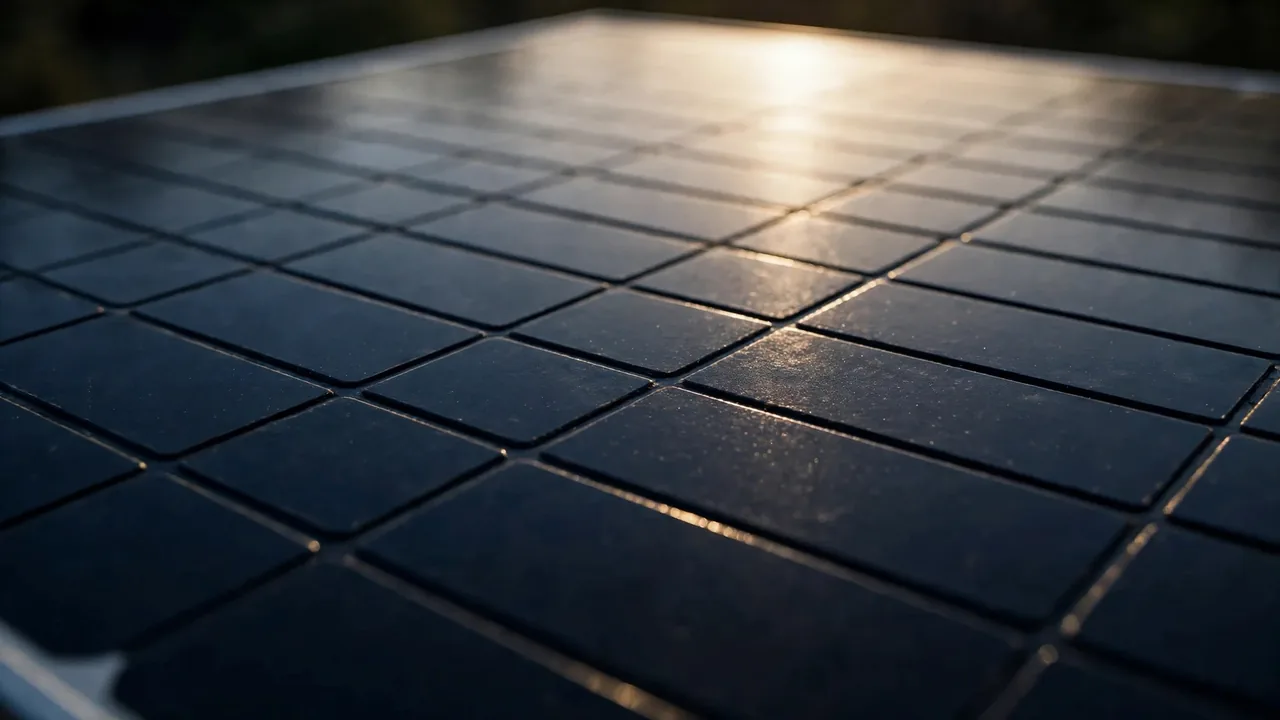
HPBC stands for Hybrid Passivated Back Contact. In a normal solar cell, thin metal fingers run across the front face to collect electricity — and every finger shades a little of the cell from the sun. In a back-contact cell, all the wiring moves to the rear, so the whole front face catches light. The result is a cleaner-looking panel and a little more power from the same area, but the bigger win in Pakistan is heat.
Every solar panel loses output as it gets hotter — panels are rated at 25°C cell temperature, and a Pakistani rooftop in June runs far hotter. The temperature coefficient tells you how much power you lose per degree above 25°C: the Hi-MO X10 loses about 0.26% per degree, the Hi-MO 6 about 0.29%, and older PERC panels about 0.34%. On a roof where cells reach 65°C, the X10 keeps roughly 3% more of its rated output than an old PERC panel in the same heat. HPBC 2.0, the version inside the X10, adds LONGi’s TaiRay wafers and a zero-busbar design, so the X10’s front face looks almost completely smooth and dark. That smooth face is the easiest way to recognise a genuine X10 — a clear silver grid on the front means questions before you pay.
How to Read a Longi Model Code
Longi model codes look like alphabet soup until you know the pattern. Take LR7-54HVH-485M, a residential Hi-MO X10: LR7 is the platform (LR5 marks the older Hi-MO 6, LR7 covers the X6 Max and X10), 54 is the cell count in the standard home format, the letters after it describe the cell type and variant, and 485M is the rated watts — so LR7-72HGD-605M is a 72-cell Hi-MO 7 at 605W.
Why bother? Two panels can both be called “Longi 585W” and be completely different products — one a Hi-MO 7, the other an older series. The model code is the only thing that tells you exactly which panel you are paying for, so match it against the datasheet, the quotation and the invoice. Our N-type vs P-type guide explains the cell-type letters in more depth.
Warranty: What Longi Actually Promises
Every Longi panel carries two warranties, and buyers mix them up. The product warranty covers defects — a failed junction box, delamination, a cracked frame — and on the standard Hi-MO X10 datasheet it is typically 15 years (25 years on some trims and markets). The performance warranty covers output: LONGi promises at least 88.85% of rated power after 30 years for the X10, and about 88.9% after 25 years for the Hi-MO 6. Hi-MO 7 datasheets typically show 12 years product and 30 years performance.
Exact numbers depend on the model code, so ask for the warranty sheet matching your panel. The warranty on longi solar panels in Pakistan is claimed through the importer or distributor who sold the panel, so the stamped warranty card and the serial numbers on your invoice are what make the promise real — without them, a claim becomes very hard to prove.
How to Make Sure Your Longi Panel Is Genuine
Fake and relabelled longi solar panels in Pakistan are the biggest risk in the market, and Longi is one of the most copied names. Every genuine panel carries a QR code and a serial number on its back label, and the same serial number is laser-etched under the front glass near the edge of the frame. Scan the QR code or type the serial number into LONGi’s official Module Authenticity page on longi.com — a genuine panel returns its model, specifications and warranty details. LONGi calls this system One Module One Code, and you can read about it on LONGi’s official website.
Do the check before you pay, not after the panels are on your roof. Ask the dealer for the full serial-number list with your quotation and check a few numbers yourself — a genuine dealer shares serial numbers freely. Our step-by-step guide to verifying an original Longi solar panel walks through the QR scan and the label check with photos, and our general solar panel verification guide for Pakistan covers the checks that apply to every brand. Buy from an authorized distributor where you can — the distributor’s stamp on your warranty card is part of the product.
Installing Longi Panels on a Pakistani Roof
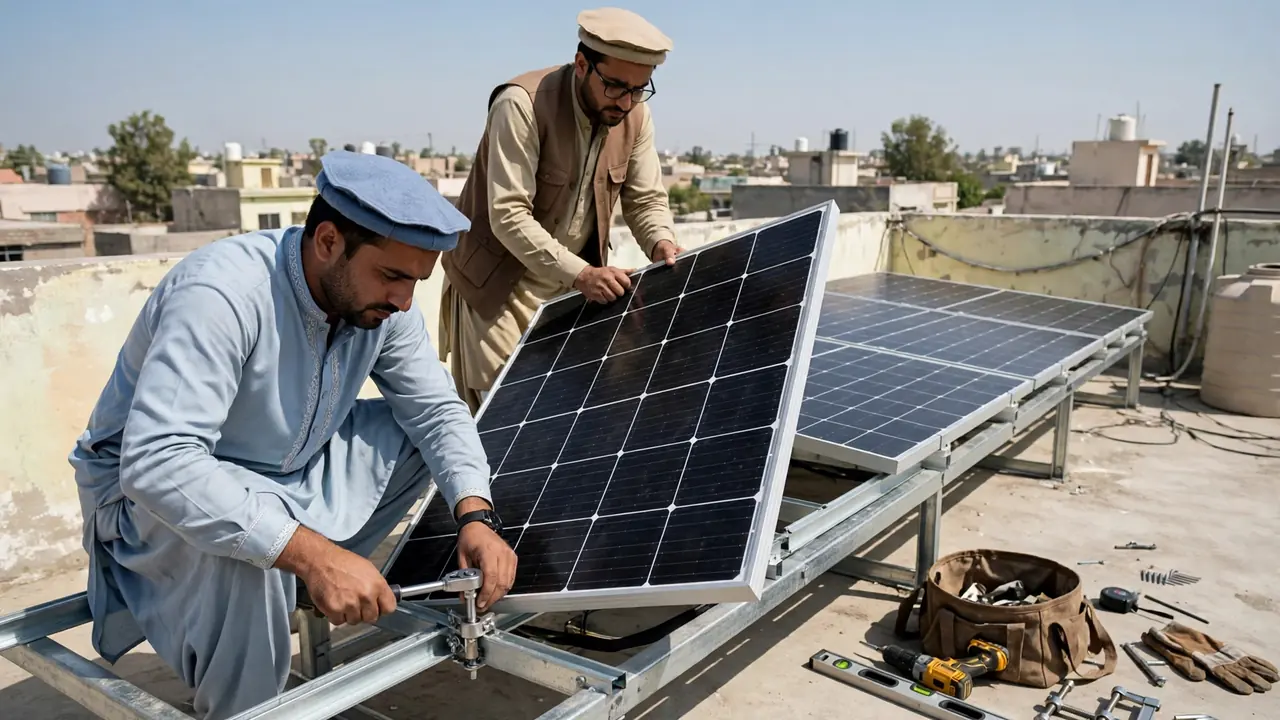
Longi panels install like any other Tier-1 panel, but three things deserve attention. First, size: the residential X10 and Hi-MO 6 formats are standard home sizes, but the 650W-class X10 and Hi-MO 7 formats are longer — measure your roof and structure before ordering. Second, heat: leave a ventilation gap under the panel and avoid mounting flush against a hot concrete slab. Third, shade: a single shaded cell drags down its whole string, so keep panels clear of water tanks, parapets and dish antennas. Use a proper elevated structure rather than laying panels flat — the tilt sheds rain and dust and the gap underneath keeps the cells cooler; our mounting structures guide explains the options. Pair the panels with a correctly sized inverter — the solar inverter buying guide covers the sizing — and if you want power during load shedding, add a hybrid inverter with batteries, since panels themselves store nothing.
Who Should Buy Longi — and Who Should Look Elsewhere
Longi solar panels in Pakistan suit homeowners who want a Tier-1 panel with genuinely modern cell technology, a long performance warranty, and a verification system you can check yourself before paying — people who plan to keep their system for decades and care about heat performance. The X10 is the pick if you want the best of what Longi makes today; the Hi-MO 6 is the sensible pick if the X10 quote stretches your budget and the saving is real.
Look elsewhere — or at least pause — if the dealer cannot show you the model code and datasheet, cannot share serial numbers before payment, or quotes a “Longi” panel far below every other quote. A price that looks too good usually means an older series, a relabelled panel, or no warranty paperwork at all. Check the live Longi price page to see what genuine Longi panels are going for today, then buy the panel — and the paperwork — that matches it.
Longi solar panels in Pakistan earned their place on the country’s rooftops by making the wafer, the cell and the panel to a consistent standard, and by putting a verification code on every module. Buy the right series, check the serial numbers before you pay, and keep the paperwork safe.
Frequently Asked Questions (FAQs)
Are Longi solar panels good?
Yes. LONGi is one of the two or three largest solar module manufacturers in the world by shipment volume, holds BloombergNEF Tier 1 status, and has been named a Kiwa PVEL Top Performer multiple times. Quality still depends on the series and — critically — on buying genuine, documented stock from an authorized distributor.
Which Longi series is best for homes in Pakistan?
For most homes, the Hi-MO X10 is the current flagship — the best heat behaviour and the longest power warranty in the range. The Hi-MO 6 and Hi-MO X6 are the sensible mainstream picks if the X10 quote stretches your budget. The big-format Hi-MO 7 suits larger roofs and commercial systems, not small homes.
What is HPBC technology in Longi panels?
HPBC stands for Hybrid Passivated Back Contact. The cell’s wiring sits on the back instead of the front, so the whole face catches sunlight and the panel handles heat better — the Hi-MO X10 loses about 0.26% of output per degree above 25°C, against about 0.34% for older PERC panels. HPBC 2.0 is the second generation of this design, used in the Hi-MO X10.
What warranty comes with Longi panels?
Two warranties apply. The product warranty covers defects and is typically 15 years on the standard Hi-MO X10 datasheet (25 years on some trims and markets), and 12 years on Hi-MO 7. The performance warranty covers output: at least 88.85% of rated power after 30 years for the X10, and about 88.9% after 25 years for the Hi-MO 6. Always read the warranty sheet for your exact model code, and keep serial numbers on your invoice.
How can I check if my Longi panel is genuine?
Scan the QR code on the back label with your phone, or type the serial number into LONGi’s official Module Authenticity page on longi.com. A genuine panel returns its model, specifications and warranty details. Do the check before you pay, match the model code against the datasheet and invoice, and buy from an authorized distributor.
How many Longi panels do I need for a 5 kW system?
Divide 5,000W by the panel wattage and round up: about eight 650W-class panels, or about eleven 485W residential panels. Have your installer confirm the exact count against your sanctioned load and inverter input limits.
Are Longi panels N-type or P-type?
Most current Longi panels — Hi-MO X10, Hi-MO 6 and Hi-MO 7 — use n-type cells (HPBC or HPDC technology). The older Hi-MO 5 series is p-type PERC, and a few special variants differ, so check the cell type on the back label and datasheet for your exact model rather than assuming.