
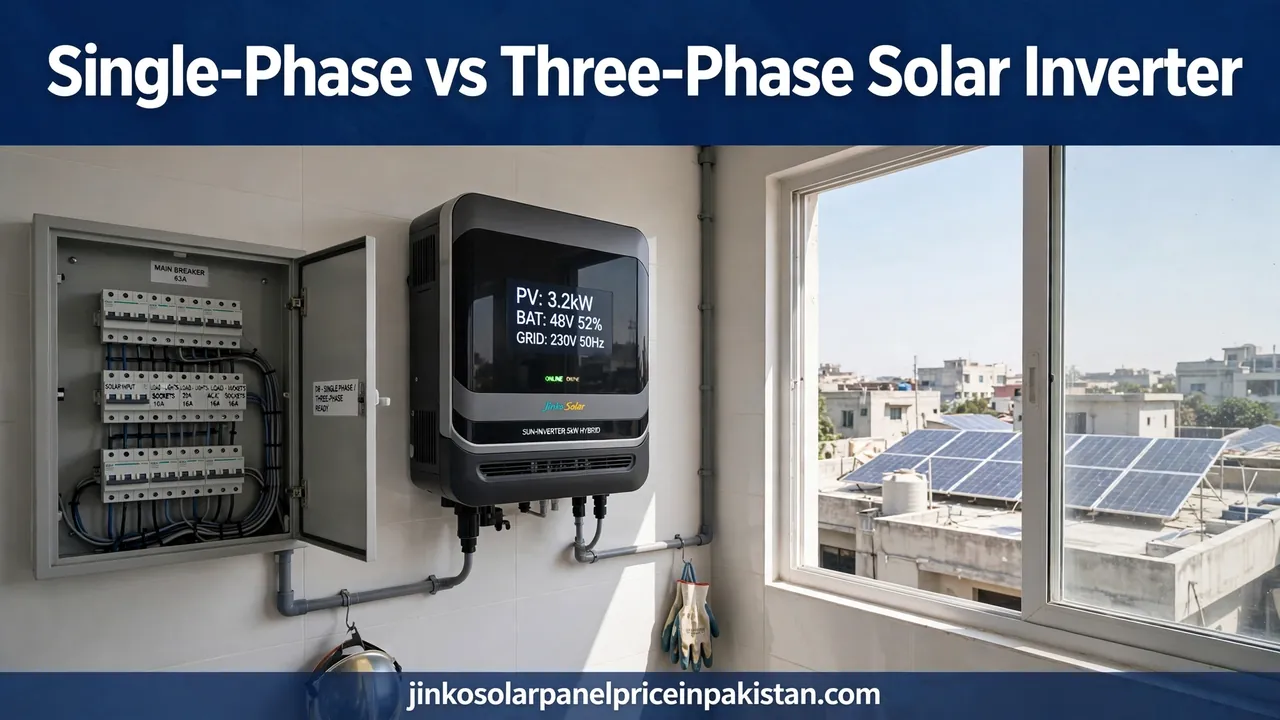
Single-Phase vs Three-Phase Solar Inverter: Which Do You Need?

Direct answer: A single-phase solar inverter suits an ordinary home with a standard single-phase electricity connection, while a three-phase solar inverter is needed for a premises with a three-phase connection or heavy three-phase loads such as large motors. The right choice is not about which inverter is “better” in general — it is about matching the inverter to the electricity supply your home or business already has. A mismatch means the system cannot be connected properly, no matter how good the inverter is.
In this guide, you will learn how single-phase and three-phase supplies differ, how to check which one your premises has, and which inverter type fits homes, shops, and larger commercial setups in Pakistan. For current solar panel and inverter price tables, see the daily updated prices on our homepage.
What Is a Single-Phase Solar Inverter?
A single-phase solar inverter converts the DC electricity produced by your solar panels into AC electricity on one live conductor (plus neutral). This is the standard supply for most ordinary homes in Pakistan: lights, fans, a fridge, a washing machine, and a standard air conditioner all normally run on a single-phase supply.
Single-phase inverters are typically used for smaller residential systems. They connect to the home’s existing distribution board in the same way as other household circuits, and for grid-connected homes they feed surplus electricity back through the same single-phase connection under net metering. If your home has a single-phase meter, your inverter must be single-phase too — a three-phase inverter cannot be connected to a single-phase supply.
For most households, a single-phase inverter is simpler to install and easier to maintain, because the wiring, breakers, and protection devices all follow the familiar single-phase layout already present in the home.
What Is a Three-Phase Solar Inverter?
A three-phase solar inverter converts DC electricity from the panels into AC electricity across three live conductors. Instead of delivering all the power through one phase, it spreads the output across three phases. This is the standard arrangement for larger premises: bigger houses with heavy loads, shops, offices, workshops, and agricultural or industrial setups.
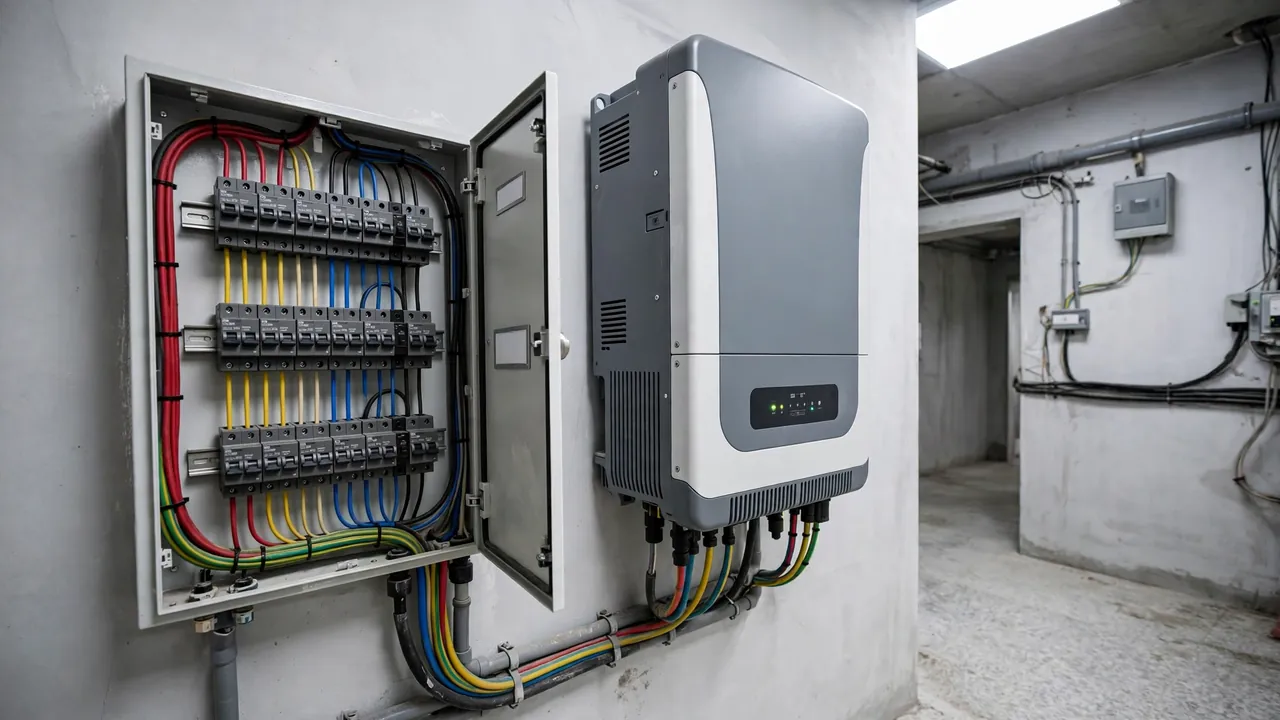
Three-phase supply matters most when the load itself is three-phase. Large motors — for example in tube wells, workshops, cold storage, or commercial machinery — often require a three-phase supply to run at all. A single-phase inverter cannot power a three-phase motor, even if the total system size looks large enough on paper. Spreading the load across three phases also keeps the system balanced, which matters for larger installations where a single phase would otherwise carry an uneven share of the load.
Three-phase inverters are therefore not “more powerful” by definition. They are designed for a different kind of electrical supply. A small three-phase system and a large single-phase system can both exist; what decides the inverter type is the supply, not the system size alone.
Single-Phase vs Three-Phase: Key Differences at a Glance
| Feature | Single-Phase Inverter | Three-Phase Inverter |
|---|---|---|
| Supply type | One live conductor plus neutral | Three live conductors plus neutral |
| Typical premises | Ordinary homes and small shops | Larger homes, shops, offices, workshops |
| Heavy motors | Not suitable for three-phase motors | Can run three-phase motors |
| Load balancing | All load on one phase | Load spread across three phases |
| Wiring and protection | Simpler single-phase board layout | Three-phase board with per-phase protection |
| Net metering | Exports through the single-phase meter | Exports across the three-phase meter |
The table above describes electrical design, not quality. A well-installed single-phase system on a single-phase home will outperform a mismatched three-phase inverter that cannot be connected correctly.
How to Check Whether Your Premises Is Single-Phase or Three-Phase
Before you buy any inverter, confirm your supply type. Guessing is the most common cause of a wrong purchase. Here are reliable ways to check:
1. Look at your electricity meter
A three-phase meter is usually larger and has more terminals and display readings than a single-phase meter. Some meters and electricity bills state the phase or connection type directly. If the wording on your bill is unclear, the meter number and connection details can be confirmed with your distribution company (DISCO).
2. Open the distribution board (safely)
A single-phase board has one main breaker feeding the circuits. A three-phase board has a three-pole main breaker and breakers arranged across three rows or busbars. Do not open live covers or touch conductors yourself — ask a qualified electrician to confirm if you are unsure. A quick visual check by an electrician settles the question in minutes.
3. Check your heavy loads
If your premises runs three-phase motors — for example a tube well pump or workshop machinery — you almost certainly have a three-phase supply. Conversely, if every appliance in the home is an ordinary household appliance, the supply is very likely single-phase. This is a clue, not proof: always confirm with the meter or distribution board.
4. Ask your installer before ordering
A good installer checks the supply type during the site survey, before recommending an inverter. If an installer quotes an inverter without asking about your phase, treat that as a warning sign and confirm the phase yourself. Our solar inverter buying guide for Pakistan lists the other questions worth asking before you commit.
Which Inverter Do You Need? Homes, Shops, and Larger Premises
Ordinary homes
For a standard home with a single-phase connection, a single-phase inverter is the correct choice. It matches the existing wiring, the meter, and the household loads. Choosing a three-phase inverter “for future expansion” does not help if the home supply stays single-phase — the inverter still cannot connect. If you later upgrade the supply itself to three-phase, the inverter question can be revisited at that point.

Larger homes with heavy loads
Some larger homes have a three-phase connection even though most appliances are single-phase. In that case, a three-phase inverter is normally the right match, because it connects to the supply as it exists and balances the solar output across the phases. Your installer should also check how the home’s loads are distributed across the phases, so that solar generation and household consumption stay reasonably balanced.
Shops, offices, and commercial premises
Commercial premises commonly have three-phase supply, especially where air conditioning, refrigeration, or machinery runs for long hours. A three-phase inverter fits these setups and keeps the electrical design consistent with the building’s existing distribution board. For help sizing the system behind the inverter, see our guide on how to choose the right size inverter for your solar system.
Tube wells, workshops, and industrial loads
Where three-phase motors are the main load, a three-phase inverter is not optional — it is a requirement. Confirm the motor’s phase and starting arrangement with your installer, because motors can draw a large surge when starting. The inverter and the overall system design must account for that behaviour, not just the running load.
Single-Phase vs Three-Phase for Net Metering
Net metering works with both supply types, but the metering arrangement follows the connection. A single-phase home exports surplus units through its single-phase meter, while a three-phase premises exports across its three-phase meter. The inverter must match the meter type so that export is recorded correctly. The U.S. Department of Energy’s overview of grid-connected systems explains how inverters, safety disconnects, and metering work for grid-connected homes.
If you are comparing inverter types specifically for a grid-connected home, our comparison of on-grid vs off-grid vs hybrid inverters explains how the inverter’s operating mode interacts with the grid and with backup. The phase question sits on top of that choice: first decide grid-connected, hybrid, or off-grid, then match the phase to your supply.
Can You Change from Single-Phase to Three-Phase?
Yes, in many cases a premises can be upgraded from a single-phase to a three-phase connection, but it is a supply change, not just an inverter swap. It usually involves an application to your DISCO, possible changes to the service cable and meter, and rewiring or rebalancing work in the distribution board. It takes time and coordination, so it should be planned before ordering equipment — not discovered after the inverter has arrived.
There are two situations where an upgrade is worth considering. The first is when you are adding genuine three-phase loads, such as a new motor or a commercial setup. The second is when a larger home’s single phase is already heavily loaded and the supply itself is the bottleneck. If neither applies, upgrading the supply just to fit a three-phase inverter adds work without benefit. A hybrid solar inverter guide can also help if backup during load shedding is part of your plan, since hybrid models exist in both single-phase and three-phase versions.
Common Mistakes to Avoid
- Buying the inverter before checking the phase. This is the costliest mistake. Always confirm the meter and distribution board first.
- Assuming bigger means three-phase. System size and phase are different things. A large home system can still be single-phase if the supply is single-phase.
- Mixing phases across the system. Panels, inverter, meter, and loads must be consistent. A single-phase inverter on a three-phase board needs a deliberate design decision by an electrician, not a guess.
- Ignoring load balance on three-phase systems. On a three-phase premises, loads and solar output should be reasonably balanced across phases. A badly balanced board can cause nuisance tripping and uneven performance.
- Skipping the site survey. A proper survey catches phase, roof, shading, and wiring issues together. See our ranked top hybrid inverters list only after the survey has confirmed what your premises actually needs.
Quick Decision Checklist
Work through these questions in order, and the answer usually becomes clear:
- Is your electricity meter single-phase or three-phase? (This is the deciding factor.)
- Do you run any three-phase motors or machinery? If yes, you need a three-phase inverter.
- Is your premises an ordinary home with standard appliances? If yes, single-phase is almost certainly correct.
- Are you planning a supply upgrade with your DISCO? If yes, decide the inverter after the supply is confirmed.
- Has a qualified electrician confirmed the phase from the meter and distribution board? If not, get that confirmation before ordering.
When in doubt, the meter and the distribution board give the answer — not the inverter brochure. Match the inverter to the supply, size it to your load, and the rest of the system design falls into place.
Once you’ve chosen single-phase or three-phase, check the solar inverter price in pakistan on our daily tables — and read our inverex inverter guide for a detailed brand breakdown.
Frequently Asked Questions (FAQs)
How do I know if my home is single-phase or three-phase?
Check your electricity meter and distribution board, or look at your electricity bill for the connection type. A three-phase board has a three-pole main breaker and breakers arranged across three rows, while a single-phase board has one main breaker. If you are unsure, ask a qualified electrician to confirm — it takes only a few minutes.
Can I use a three-phase inverter on a single-phase connection?
No. A three-phase inverter cannot be connected to a single-phase supply. If your premises has a single-phase connection, you need a single-phase inverter, unless you first upgrade the supply itself through your distribution company.
Can I use a single-phase inverter on a three-phase connection?
A single-phase inverter can sometimes be connected to one phase of a three-phase supply, but only as part of a deliberate design by a qualified electrician, and it will not power three-phase motors. For a three-phase premises, a three-phase inverter is normally the correct choice.
Is a three-phase inverter better than a single-phase inverter?
Neither is better in general — the right one matches your electricity supply. A single-phase inverter is correct for a single-phase home, and a three-phase inverter is correct for a three-phase premises or where three-phase motors must run.
Do I need a three-phase inverter for net metering?
Yes, net metering works with both. The difference is the meter: a single-phase home exports through a single-phase meter, while a three-phase premises exports across a three-phase meter. The inverter must match the meter type so export is recorded correctly.
Can I upgrade my home from single-phase to three-phase supply?
In many cases, yes, but it is a supply upgrade, not just an equipment swap. It usually involves an application to your distribution company, possible changes to the service cable and meter, and work in the distribution board. Plan the upgrade before ordering the inverter.
Which phase do most houses in Pakistan have?
Ordinary homes in Pakistan are usually supplied single-phase, while larger homes, shops, offices, and premises running three-phase motors more often have three-phase supply. The meter and distribution board give the certain answer for your own premises.