
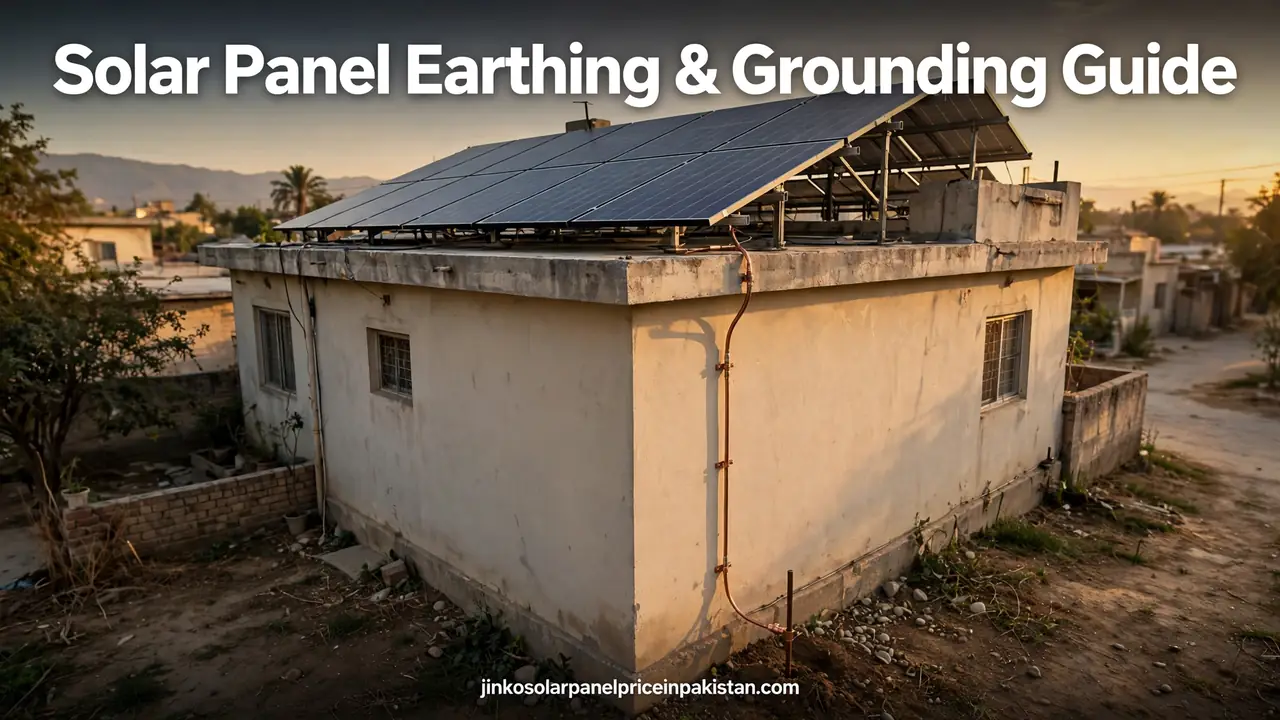
Solar Panel Earthing and Grounding: Complete Guide for Pakistan

Solar panel earthing and grounding means connecting every exposed metal part of your solar system — panel frames, mounting rails, the inverter body, and the distribution board — to the earth through a low-resistance path, so that a fault current has somewhere safe to go instead of through a person touching the equipment. Done properly, earthing protects your family from electric shock and your inverter and appliances from fault damage, and helps your system pass inspection. This guide explains what must be earthed in a Pakistani home solar system, how earthing electrodes work, how lightning protection fits in, and the mistakes installers make most often.
Earthing is one of those parts of a solar installation you never see once the work is finished — the rod is buried and the connections sit inside boxes. That invisibility is exactly why it gets skipped or done badly. A system without proper earthing can look normal and generate electricity every day, yet become dangerous the moment a wire’s insulation fails or lightning strikes nearby.
What Is Earthing and Grounding in a Solar System?
In Pakistan, people use the words earthing and grounding for the same job: connecting the non-current-carrying metal parts of an electrical system to the earth. The international standards term (IEC 60364) is earthing; the North American term (NEC) is grounding. In practice, both mean the same thing.
It helps to separate two ideas that installers sometimes mix up. Bonding means connecting all the metal parts together — panel frames to rails, rails to each other, the inverter body to the distribution board — so they all sit at the same electrical potential. Earthing means connecting that bonded metalwork to an electrode buried in the ground. Bonding without earthing leaves the metalwork floating; earthing without bonding leaves some metal parts unprotected. A safe system needs both.
One thing earthing is not: it is not a substitute for proper wiring, fuses, or breakers. Earthing gives fault current a path; protective devices such as breakers and the inverter’s built-in ground-fault protection are what actually interrupt that current. The two work as a team.
Why Solar Panel Earthing Matters
A solar array sits on your roof, exposed to sun, rain, dust, and wind, with DC voltages far higher than a household socket. Over years of heat and vibration, insulation can crack or a cable can chafe against a sharp rail edge. If a live conductor touches a panel frame, that frame becomes live. Without earthing, anyone touching the frame can receive a shock, and the fault can smoulder unnoticed.
With proper earthing, the fault current flows through the earthing conductor back to the source, and the protective device trips quickly, cutting the power. That fast trip is the whole point: earthing turns a hidden, dangerous fault into a visible, switched-off one.
Earthing also matters for lightning. A rooftop array is often the highest metal structure on a house, and a nearby strike can push a surge into the system through the DC cables. A bonded array with surge protection devices gives that surge a controlled path to earth instead of through your inverter and home appliances. It also protects the equipment itself: inverters monitor insulation and earth leakage continuously, and a system with poor earthing can throw repeated earth-fault alarms and shut down unexpectedly.
What Parts of a Solar System Must Be Earthed?
Every exposed metal part that could become live in a fault must be bonded and earthed. In a typical Pakistani home installation, that list is:
- Solar panel frames: each module’s aluminium frame is bonded to the mounting rail, usually with serrated washers or bonding clips that cut through the frame’s anodised coating to make real metal-to-metal contact.
- Mounting rails and structure: rails are bonded to each other and to the main earthing conductor. A galvanised steel structure is itself conductive, so it must be part of the bonded system, not left floating.
- Inverter body: the inverter enclosure has a dedicated earthing terminal connected to the building’s main earthing terminal, and modern inverters also provide built-in ground-fault protection for the DC side.
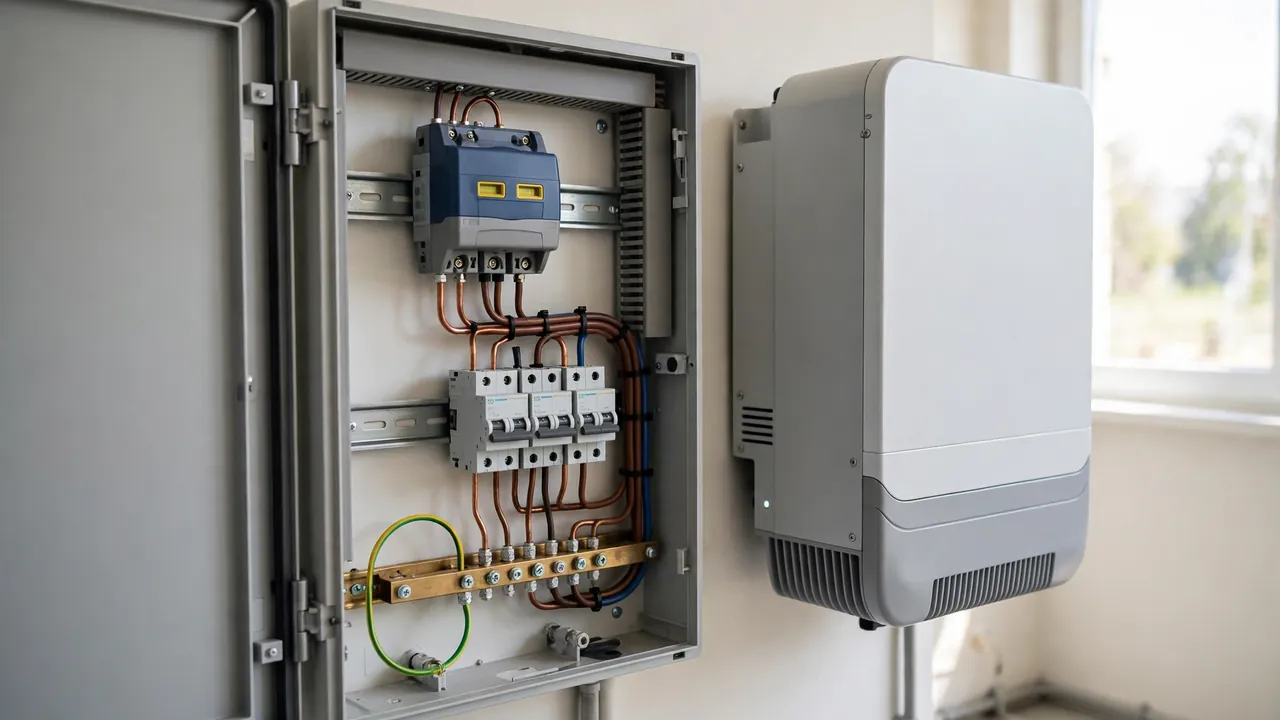
- AC and DC distribution boards: the metal enclosures of the DC combiner box, AC distribution board, and changeover switch are all bonded to the earthing system.
- Surge protection devices (SPDs): SPDs on both the DC and AC sides need a short, direct connection to earth — a long, looping SPD earth wire defeats the purpose.
- Battery racks and enclosures: in hybrid systems, metal battery racks and cabinets are bonded to the same earthing system as the rest of the installation.
What must not be earthed is the DC circuit itself in a modern transformerless system. Today’s inverters are typically functionally grounded, meaning the DC conductors stay floating and the inverter’s internal ground-fault detection watches for leakage. Deliberately connecting a DC conductor to earth on such a system can cause faults and nuisance tripping, so follow the inverter manufacturer’s earthing instructions exactly.
Types of Earthing Electrodes Used in Pakistan
The electrode is the part buried in the ground, and its job is to make good, lasting contact with the soil. The common types used in Pakistani homes are:
Copper-Bonded Earth Rod
A copper-bonded steel rod driven vertically into the ground is the most common choice for homes. It is driven deep enough to reach permanently moist soil, because dry surface soil is a poor conductor. In rocky or very dry ground, installers sometimes drive two rods and bond them together.
Earth Plate
A copper or galvanised iron plate buried in a pit with layers of salt and charcoal around it is the traditional method still seen in many Pakistani homes. The salt and charcoal keep the surrounding soil moist and conductive. Plate earthing works well when done properly, but it needs periodic maintenance — the pit must stay moist, and the salt eventually washes away and needs topping up.
Chemical or Gel Electrodes
Factory-made chemical electrodes come pre-filled with a conductive compound that keeps the surrounding soil moist and low-resistance for years with little maintenance. They cost more than a plain rod, but they are a sensible choice where the soil is rocky, sandy, or dry for most of the year — conditions common across much of Pakistan.
Earthing for On-Grid, Hybrid, and Off-Grid Systems
The earthing principles are the same for every system type, but the details differ. In an on-grid system, the inverter’s AC output connects to your home’s distribution board and the utility grid, so the solar earthing must tie into the building’s main earthing system. In a hybrid system with batteries, the battery enclosure and racks join the same bonded system. In an off-grid system with no utility connection, the earthing system stands alone: the array, inverter, and battery bank all bond to a dedicated electrode system installed for the solar setup. In every case, a single common earthing point matters — separate rods for the array and the inverter, left unbonded, create two earth potentials in one house. For all three types, follow the earthing instructions in the inverter manufacturer’s manual: inverter designs differ, and the manual, not habit, decides.
Lightning Protection and Surge Protection Devices
Earthing and lightning protection are related but not identical. Earthing handles fault currents and gives surges a path to ground; a lightning protection system — air terminals, down conductors, and its own earth termination — is designed to intercept a direct strike. For most homes, the practical protection is a combination of proper array earthing and surge protection devices.
Install SPDs on both sides of the system: a DC SPD at the array or DC combiner box, and an AC SPD at the distribution board. The SPD’s earth wire must be as short and straight as possible — every extra bend and metre of wire adds impedance that a fast lightning surge will simply jump across. If your house already has a lightning protection system, the solar earthing must be bonded to it, not kept separate: two unbonded earth systems on one roof are worse than one, because a strike can flash over between them through your equipment.
Common Earthing Mistakes in Pakistani Installations
The same earthing mistakes come up again and again in Pakistani rooftop installations:
- A separate, unbonded rod for the solar array. The array rod is driven next to the house and never connected to the building’s main earthing terminal, creating two earth potentials.
- Bonding washers skipped. Panel frames are bolted to rails through their anodised coating without serrated washers or bonding clips, so the “bond” is cosmetic — paint and oxide insulate the joint.
- The water pipe used as the only earth. Bonding to a metal water pipe was once common, but modern homes use plastic piping in places, and a pipe is not a reliable, inspectable electrode.
- Undersized or aluminium earthing conductors. Thin wire or aluminium conductor used to save cost, which corrodes and cannot carry fault current safely.
- Loose or corroded connections. Earth connections made without proper lugs, left exposed to rain, and never re-tightened. A corroded earth clamp can look fine while conducting almost nothing.
- Long, looping SPD earth wires. The SPD is earthed with metres of wire coiled around the board, which is nearly useless against a fast surge.
- No testing at handover. The system is switched on without anyone measuring earth resistance or checking continuity between the array and the main earthing terminal.
How to Check Your Solar System’s Earthing
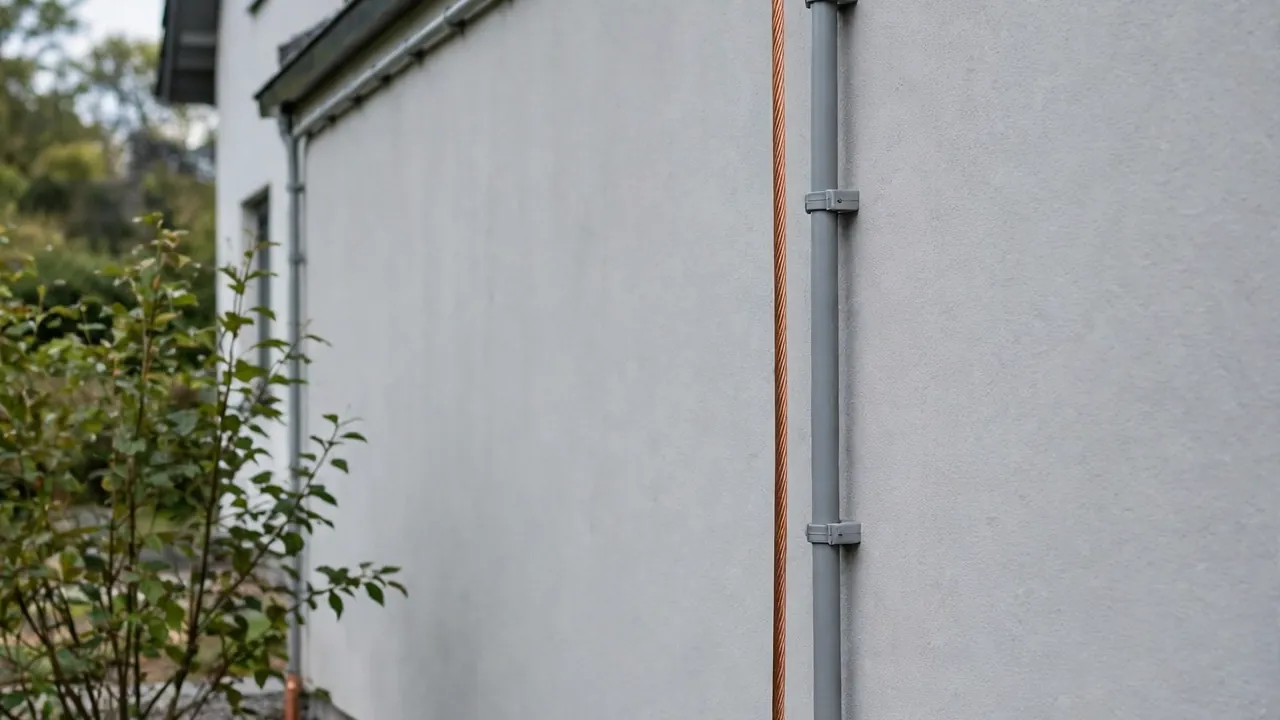
You do not need to be an electrician to spot the obvious problems, but testing must be left to a qualified person with the right instrument. At handover, ask for the earth test reading and keep it with your system documents for future comparison. Visually, every panel frame should have a bonding connection to its rail, and a copper conductor should run from the array structure down to the main earthing terminal. Check that the rod’s clamp is tight and free of heavy corrosion, and that the conductor runs in conduit where it could be damaged. Watch the inverter’s fault alarms too: repeated earth-fault or insulation alarms are a warning that something needs investigation, not something to keep resetting. Finally, have the earth resistance re-tested every year or two, and always after roof work, an array extension, or a lightning incident.
If you are planning a system, put earthing in the written scope before work starts: electrode type, conductor material and size, bonding hardware, SPD placement, and a recorded earth test at handover.
Earthing Before Net Metering Inspection
If you plan to apply for net metering, finish the earthing work before the inspection stage. Inspectors check the safety of the installation, and an incomplete or visibly poor earthing system is the kind of defect that sends an application back for rework. A complete, tested earthing system with a recorded reading makes the inspection straightforward. Keep the test record with your net metering file so you can show it if asked.
Earthing is not the exciting part of going solar, but it is the part that keeps the exciting part safe. A bonded array, a proper electrode, short SPD earth leads, and a recorded test reading cost little at installation time and protect your family and your investment for the life of the system. When you compare installer quotes, compare their earthing scope too.
Frequently Asked Questions (FAQs)
What is the difference between earthing and grounding in a solar system?
Earthing and grounding mean the same job in a solar system: connecting the non-current-carrying metal parts to the earth. Bonding is the related step of connecting all those metal parts together so they sit at the same electrical potential. A safe system needs both — everything bonded together, and the bonded assembly connected to an earth electrode.
What parts of a solar system must be earthed?
Every exposed metal part that could become live in a fault must be earthed: panel frames, mounting rails and structure, the inverter body, AC and DC distribution board enclosures, surge protection devices, and battery racks in hybrid systems. What must not be earthed is the DC circuit itself in a modern transformerless system — those DC conductors stay floating and the inverter’s ground-fault detection watches for leakage.
Does a solar system need a separate earth rod?
No. A separate, unbonded rod for the solar array is a common mistake. The array’s earthing must be bonded to the building’s main earthing terminal. Two unbonded earth systems in one house create two different earth potentials, and a fault or lightning surge can then drive current through unexpected paths, including your home’s wiring.
Can a solar system work without earthing?
No. Without earthing, a fault that makes a panel frame live can give a shock to anyone touching it, and the fault can smoulder unnoticed. Earthing gives fault current a safe path so the protective device trips quickly and cuts the power. A system without earthing may generate electricity normally yet be dangerous the moment insulation fails.
How do I know if my solar earthing is correct?
Ask your installer for the earth test reading recorded at handover and keep it with your system documents. Visually, every panel frame should have a bonding connection to its rail, a copper conductor should run from the array structure to the main earthing terminal, and the rod’s clamp should be tight and free of heavy corrosion. Repeated earth-fault alarms on the inverter display are a warning sign that needs investigation.
Does earthing protect a solar system against lightning?
Earthing alone does not stop lightning, but it is part of the protection. A bonded array with surge protection devices on both the DC and AC sides gives a surge a controlled path to earth instead of through your inverter and appliances. The SPD’s earth wire must be short and straight, and if your house has a lightning protection system, the solar earthing must be bonded to it.
How often should solar earthing be checked?
Have the earth resistance re-tested every year or two, and always after roof work, an array extension, or a lightning incident. Soil dries out, clamps corrode, and structures shift, so an earthing system that tested well at installation can degrade over time. Plate electrodes also need their pits kept moist, with salt topped up as it washes away.
Is earthing required before net metering inspection in Pakistan?
Finish the earthing work before the inspection stage. Inspectors check the safety of the installation, and an incomplete or visibly poor earthing system is the kind of defect that sends an application back for rework. A complete, tested earthing system with a recorded reading makes the inspection straightforward — keep the test record with your net metering file.