
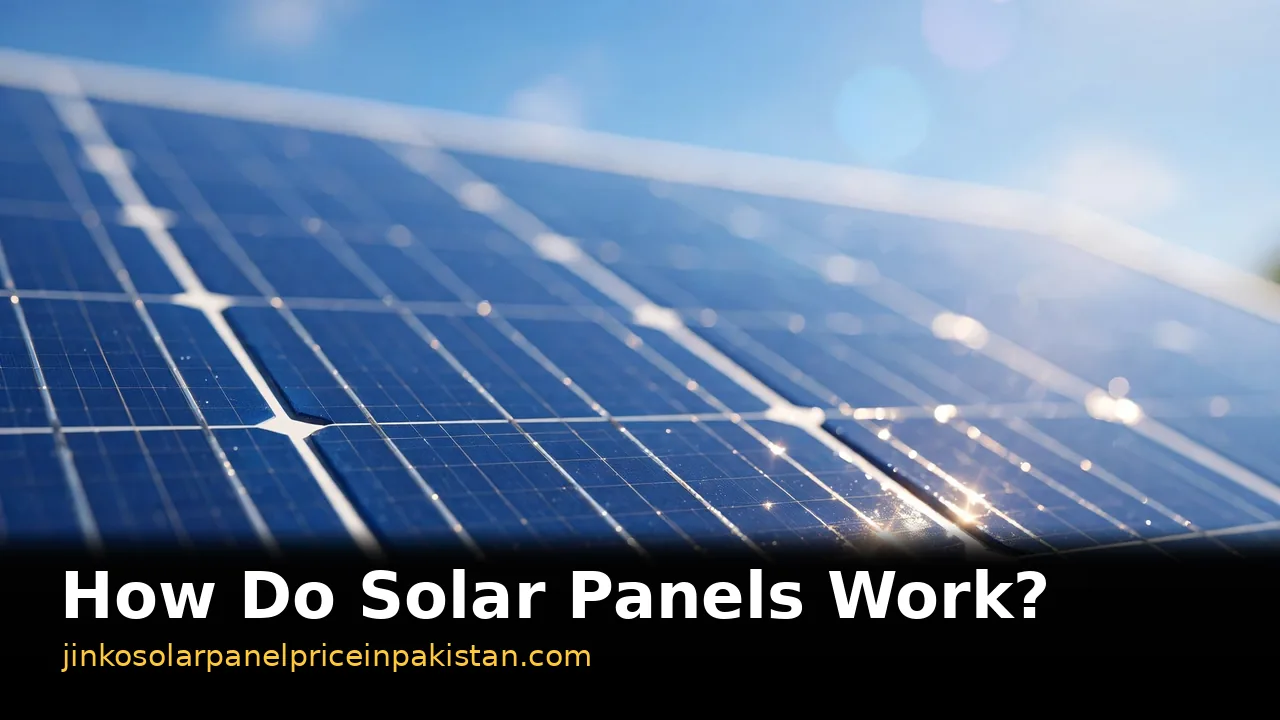
How Do Solar Panels Work? Complete Guide

How do solar panels work? A solar panel converts sunlight directly into electricity through the photovoltaic effect: sunlight knocks electrons loose inside silicon cells, the movement of those electrons creates direct current (DC), and an inverter converts that DC into the alternating current (AC) your home appliances use. This guide explains each step in plain language — from photon to socket — so you can understand what happens on your roof every sunny day. Once the process is clear, the solar panel price in pakistan tables on our homepage become much easier to read, because you will know exactly what you are paying for.
How Solar Panels Work
The short version has four steps. Sunlight hits the panel. Photons — tiny packets of light energy — strike the silicon cells inside the panel. Electrons start moving. The photons knock electrons loose from the silicon atoms, and the cell’s internal electric field pushes them in one direction. Direct current flows. That orderly flow of electrons is DC electricity, which travels through wiring to the inverter. The inverter converts it. The inverex inverter or whichever inverter you choose turns DC into AC — the same kind of electricity that comes from the grid — and your home uses it instantly, stores it in batteries, or exports it through net metering.
Nothing burns, nothing spins, and there are no moving parts wearing out in the panel itself. That simplicity is why panels keep working for decades with almost no maintenance. Our complete guide to solar panel costs explains what drives the price of the hardware behind this process.
How Do Solar Panels Generate Electricity
Electricity is the flow of electrons through a conductor. A solar cell generates it by forcing electrons to flow in one direction using nothing but light. Here is the sequence inside every working panel:
1. Photons arrive. Sunlight is a stream of photons. When they strike the panel’s glass and reach the silicon cells beneath, each photon carries a fixed packet of energy.
2. Electrons break free. If a photon’s energy is high enough, it knocks an electron loose from its silicon atom. This is the photovoltaic effect — light converted directly into free electric charge, with no heat engine or turbine in between.
3. The electric field directs traffic. A solar cell is built like a sandwich with two differently treated silicon layers. The boundary between them creates a permanent electric field that shoves freed electrons toward one side of the cell and the resulting “holes” toward the other. Without this field, electrons would wander randomly and no usable current would flow.
4. Current leaves the cell. Metal contacts on the cell’s front and back collect the electrons and feed them into the panel’s internal wiring. The cells are wired in series, so their small individual voltages add up to a useful panel voltage that can drive current through your system cables.
The U.S. Department of Energy notes that a single PV cell typically produces only about 1 or 2 watts — which is why cells are chained into modules, modules into arrays, and arrays into full systems sized for a home’s needs.
How Does a Solar Panel Work
Zoom out from one cell to one panel and the picture stays the same, just scaled up. A standard residential solar panel holds several dozen cells wired in series under tempered glass, sealed against dust and rain, framed in aluminium. Sunlight enters through the glass, every cell contributes its small voltage, and the panel delivers DC power through the junction box on its back. Whether it is a mono or poly module — our monocrystalline vs polycrystalline comparison covers the difference — the working principle is identical: photons in, electrons out, in one direction.
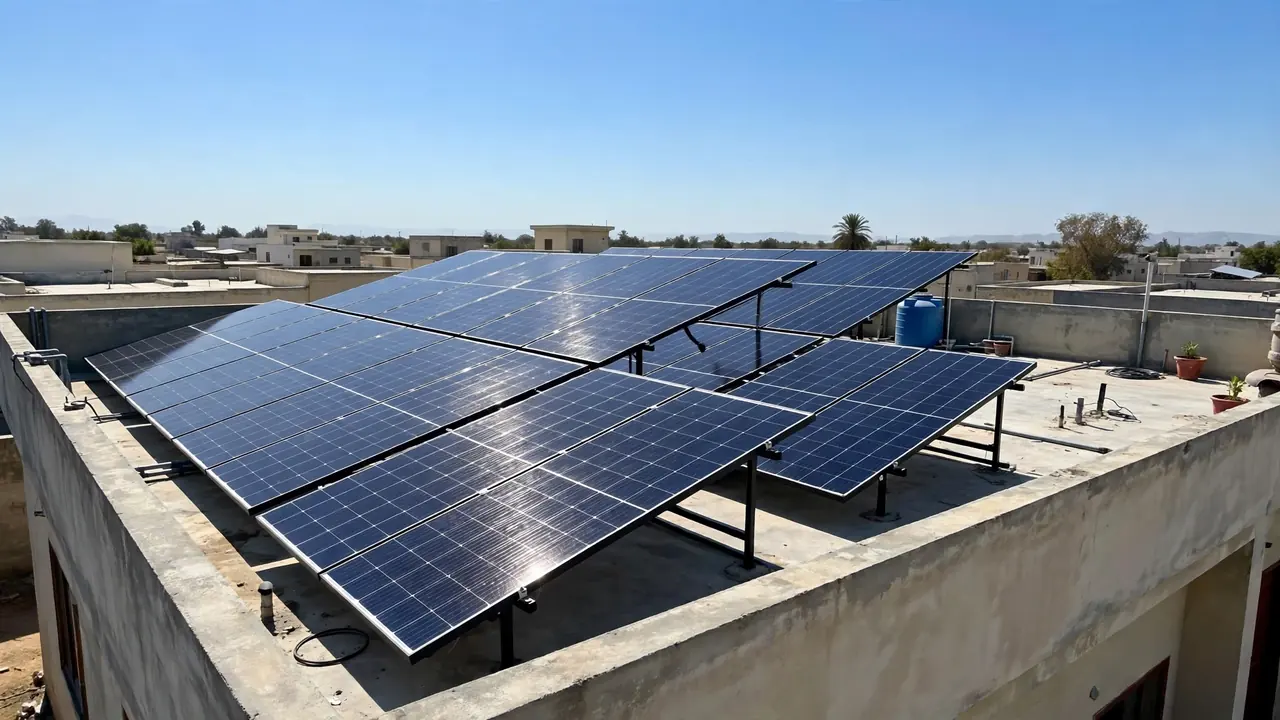
How Do Photovoltaic Panels Work
“Photovoltaic” literally means light-to-voltage, and the magic ingredient is silicon treated in two opposite ways. Manufacturers dope one silicon layer with phosphorus, giving it extra free electrons (N-type, negative), and the other with boron, giving it extra holes where electrons are missing (P-type, positive). Press these layers together and electrons spill across the junction until an electric field builds up that stops further crossing — that built-in field is the engine of the cell.
When sunlight arrives, photons generate new electron-hole pairs throughout the silicon. The built-in field sweeps electrons to the N-side and holes to the P-side before they can recombine. Connect an external circuit and the electrons flow from the N-side, through your wires and inverter, back to the P-side — doing useful work along the way. This is the same physics in every silicon panel on the market, from basic poly modules to advanced N-type designs like the ones in our N-type TOPCon technology guide.
Two honest caveats complete the picture. First, not every photon becomes electricity: low-energy photons pass through unused, and excess energy in high-energy photons becomes heat. That is normal physics, not a defect. Second, heat slightly reduces a cell’s voltage, which is one reason panel placement and airflow matter — a topic our installers cover in the mounting structures guide.
How Solar Power Panels Work
A panel alone does not power a home — it is one component in a chain. Here is how the full system turns panel output into usable household electricity:
Panels produce DC. Your rooftop array generates direct current whenever light hits it, rising and falling with sunshine through the day.
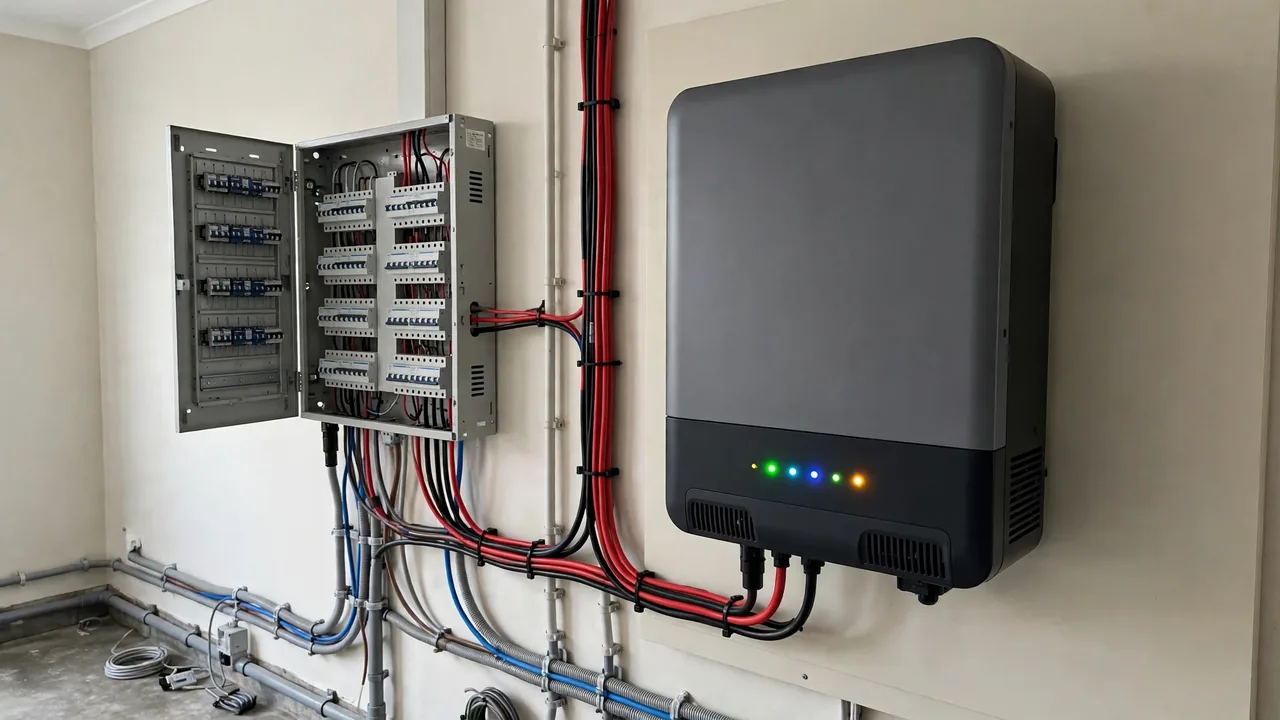
The inverter converts DC to AC. Home appliances run on alternating current, so the inverter is the translator at the heart of every system. String inverters handle the whole array at once; our solar inverter buying guide for Pakistan explains the types and how to size one. Shoppers comparing the solar inverter price in pakistan listings should remember the inverter does this conversion work every second the system runs — it is not a passive box.
Power flows where it is needed. The AC output feeds your distribution board. Whatever your home consumes at that moment is used instantly. Surplus flows into batteries if you have them, or out to the grid through a net-metering connection, spinning your import-export balance in your favour.
Batteries bridge the gaps. Panels do not produce at night, so stored daytime energy covers the evening. Whether you look at the phoenix battery price in pakistan for tubular options or the lithium battery price in pakistan for LiFePO4 banks, the battery’s job in the working chain is the same: hold the day’s surplus for the night’s loads. Mentions of dyness lithium battery price in pakistan and fronus lithium battery options come up in the same decision.
What Do Solar Panels Do
Strip away the jargon and a solar panel does exactly one thing: it turns light into electricity, silently, with no fuel and no exhaust. Everything else — lower bills, backup during load shedding, net-metering credits — is a consequence of that one job being done well, day after day.
In a Pakistani home, that electricity runs fans, lights, refrigerators, water motors and air conditioners during sunshine hours directly, and charges batteries for the evening. A grid-tied system without batteries simply offsets whatever the grid would have supplied while the sun shines. A hybrid system with storage goes further, carrying the house through outages. Readers weighing the financial side should see our worth-it guide alongside this technical one — and anyone comparing hardware can check the solar panels price in pakistan tables to see what each watt of this silent work currently costs.
What panels do not do is store energy themselves. Storage is always a separate component — the battery bank. And panels do not “use up” sunlight; the same sunshine falling on an empty roof is simply wasted heat unless a panel is there to intercept it.
How Is the Solar Energy Generated
Follow one unit of energy from the sun to your wall socket and the chain has five links. Generation at the sun: fusion in the sun’s core releases energy that travels outward as light. Travel: photons cross space and Pakistan’s atmosphere in about eight minutes, arriving as the sunlight on your roof. Capture: photons strike the panel and free electrons via the photovoltaic effect. Collection: the cell’s electric field organises those electrons into DC current, cells add their voltages in series, and the array delivers real power. Conversion and use: the inverter makes AC, your home consumes it, batteries store the surplus, and net metering banks the rest with your distribution company.
Every link matters, but the panel is where the actual generation happens — the only step where a new form of energy comes into existence on your property. The rest of the system is transport and translation. That is why panel quality, honest A-grade documented stock, and proper installation angle deserve the attention buyers give them when they study the solar plate price in pakistan and solar plates price in pakistan listings before choosing.
How Do Solar Panels Work Explained Simply
If the physics above felt heavy, here is the five-line version to tell a friend. Sunlight is made of tiny energy packets called photons. A solar panel is a special sandwich that lets photons knock electrons loose. The sandwich is built so the loose electrons can only march in one direction — and marching electrons are electricity. Wires carry that electricity to a box called an inverter, which converts it into the type your home uses. Your fans spin, your lights glow, and the extra charges your batteries or goes back to the grid.
Think of it like rain on a sloped roof: the panel is the slope, photons are the rain, and the gutter that catches every drop in one channel is the electric field. No slope, no collected water; no electric field, no usable current. Once this clicks, shopping gets easier too — whether you are scanning the solar price in pakistan overview, the solar plate rate listings, the today solar panel price in pakistan tables, the solar panel 585 watt price in pakistan today rows, the solar plate price in pakistan 585 entries, the jinko solar panel price in pakistan section, the aiko solar panel price in pakistan row, the inverex solar panel 585 watt price in pakistan listings, or the canadian solar panel price in pakistan page, you now know what every panel on those lists actually does. Shoppers comparing inverter brands will also meet names like crown inverter and itel inverter in the market, and the solar system price in pakistan overview ties the whole working chain — panels, inverter, structure, wiring — into one picture.
Frequently Asked Questions (FAQs)
How does solar panels work?
Sunlight knocks electrons loose inside the panel’s silicon cells, the cell’s built-in electric field pushes those electrons in one direction to form direct current, and an inverter converts that DC into AC electricity for your home. No fuel, no moving parts, no noise.
How is solar energy produced?
Solar energy is produced when photons from sunlight strike a photovoltaic cell and transfer their energy to electrons in the silicon, freeing them to flow as electric current. The U.S. Department of Energy’s photovoltaic technology basics page describes exactly this cell-to-module-to-array chain.
Can solar panels generate electricity at night?
No — panels need light to free electrons, so output stops after sunset. Night-time power comes from batteries charged during the day, or from the grid. This is why hybrid systems pair panels with storage.
What is the photovoltaic effect?
It is the physical process where light energy frees electrons in certain materials, creating electric current. Discovered in the 19th century and first put to practical use in silicon cells in the 1950s, it is the foundation every modern panel is built on.
Do I need batteries for solar panels to work?
No. Panels work whenever light hits them, batteries or not. Batteries only decide what happens to surplus energy: without them, extra power goes to the grid through net metering; with them, it is stored for night use and outages.
What happens on cloudy days?
Panels still work on cloudy days because diffuse daylight still carries photons — output is simply lower than in direct sun. Heavy overcast can cut production substantially, which is one reason systems are sized with real local weather in mind.
How long do solar panels keep working?
The photovoltaic effect does not wear out on a schedule — panels degrade very slowly and keep producing for decades. Our roof lifespan guide covers degradation and what affects long-term output.
Where can I check current solar panel prices in Pakistan?
Right here: the solar panel price in pakistan tables on our homepage are updated every morning from live market listings, so you always see today’s rates next to the technology explained above.