

Peak Sun Hours in Pakistan: What They Mean for Solar Output

The short answer is this: a peak sun hour is not an hour of sunshine — it is a way of counting how much solar energy your roof receives in a day. One peak sun hour means your location received as much solar energy as one full hour of sunlight at maximum test intensity, which is 1,000 watts per square metre. So when someone says a city in Pakistan gets 5 peak sun hours, they mean the whole day’s sunlight — the weak morning light, the strong midday sun, and the fading evening light combined — added up to the same energy as 5 hours of perfect midday sun.
This single number matters more than most people realise, because it is the bridge between a system’s size and what it actually produces: multiply the system size in kilowatts by the peak sun hours for your location, and you get a realistic estimate of daily output. Understand this one concept, and every sizing calculation, installer quotation, and production estimate you ever read starts to make sense.
What a Peak Sun Hour Actually Is
Solar panels are rated under standard test conditions at a sunlight intensity of 1,000 watts per square metre (1 kW/m²). A peak sun hour is simply one hour of sunlight at that intensity. Because it is defined by energy, not by clock time, 1 peak sun hour always equals 1 kilowatt-hour of solar energy per square metre (1 kWh/m²).

Sunlight intensity changes all day long. It is weak just after sunrise, climbs to its strongest around midday, and fades again toward sunset. Peak sun hours repackage that whole uneven day into an equivalent number of full-strength hours. The arithmetic is straightforward: receiving 500 W/m² for two hours counts as 1 peak sun hour (500 × 2 = 1,000), just as 250 W/m² for four hours does. Add up every slice of the day this way and you get the day’s total in peak sun hours.
That is why a location can have 12 or more hours of daylight but only 5 peak sun hours. The daylight hours are real, but most of them are too weak to count for much. EnergySage explains the same distinction in its guide to peak sun hours: a peak sun hour describes the intensity of sunlight in an area, it does not refer to merely hours of daylight.
Peak Sun Hours Are Not Sunshine Hours
This is the most common misunderstanding in solar planning, and it causes real mistakes. “Sunshine hours” count how long the sun is up. “Peak sun hours” count how much usable energy arrived. The two numbers can be very far apart.
Think of it as filling a bucket with a tap that runs at different pressures through the day. At dawn and dusk the tap is barely dripping; around midday it runs full blast. Peak sun hours do not count how long the tap was on — they count how much water ended up in the bucket, expressed as if the tap had run at full pressure the whole time. The strongest production window on a clear day is roughly late morning to early afternoon, when the sun is highest in the sky. The low, warm light in the hour after sunrise and before sunset looks bright to our eyes but delivers only a small fraction of the day’s energy.
Why does the distinction matter for a homeowner? Because counting daylight hours leads to badly overestimated production. If you assume 12 hours of sun means 12 hours of full output, a 5 kW system looks like it should produce 60 units a day. In reality, 5 peak sun hours give about 25 units before losses — less than half. Every honest sizing method uses peak sun hours, never daylight hours. Our guide on how many solar panels you need for your home uses this exact input in its panel-count formula.
Why Peak Sun Hours Decide What Your System Produces
Peak sun hours are the bridge between two different units: kilowatts measure a system’s size (how much power it can make at any instant), and kilowatt-hours — the “units” on your electricity bill — measure energy over time. The formula connecting them is simple:
Daily output in units ≈ system size in kW × peak sun hours × (1 − loss allowance)
Take a 5 kW system on a roof receiving 5 peak sun hours, with a 15 percent loss allowance for heat, dust, wiring, inverter conversion, and less-than-perfect orientation. The ideal output is 5 × 5 = 25 units a day; after the loss allowance it is about 21 units. These figures are a planning illustration, not a promise for any particular roof — but the method is the same one installers use everywhere.
Notice what this means: two identical 5 kW systems in two different cities will produce different amounts of electricity, purely because of peak sun hours. A system in a high-irradiance location can produce meaningfully more units per year than the same hardware elsewhere. That is why location is a required input in every serious sizing guide, including our 3kW system production guide and our home load calculation guide — you cannot size a system from your bill alone.
How Peak Sun Hours Vary Across Pakistan
Pakistan sits at a favourable latitude for solar energy, roughly between 24 and 37 degrees north, and most of the country receives strong solar irradiance. But “strong on average” hides real variation, and three factors move the number up or down for any specific roof.
Region: south versus north
As a rule, the closer a location is to the equator, the more peak sun hours it collects. Within Pakistan, the southern plains — much of Sindh, southern Punjab, and Balochistan — generally receive more solar energy over the year than the northern mountainous regions, where terrain, cloud cover, and longer winters reduce the total. Coastal areas can lose some hours to cloud cover, and northern cities lose more to winter fog and smog. None of this makes solar unviable in the north; it means the same system size produces somewhat less there, so sizing must use the local figure, not a national one.
Season: summer versus winter
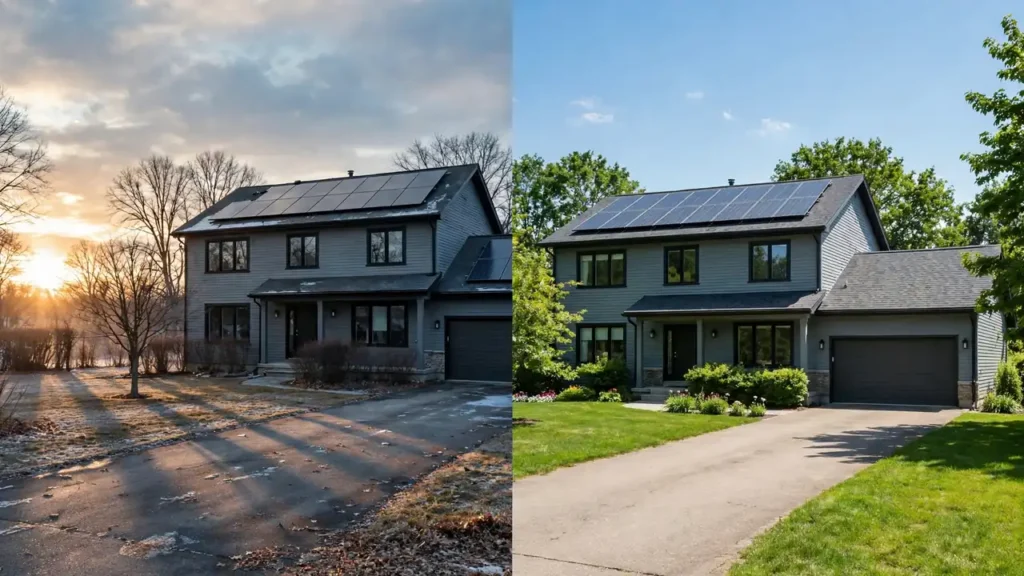
Peak sun hours are highest in the summer months, when days are longer and the sun climbs higher, and lowest in winter, when the sun stays lower and the days are short. The monsoon season can also dip the numbers in affected regions because of extended cloud cover. A system sized to just cover your summer daytime use may fall short on a short, hazy winter day — which is why installers work from annual averages but check the design against the weaker months too.
How to find the figure for your own city
Because the number varies by city and season, do not size a system on a figure you guessed or read for a different city. There are two reliable ways to get your local value. The first is to ask your installer: a proper site survey should state the peak sun hour assumption behind the quotation, and you should ask what figure they used before comparing quotes. The second is to look it up yourself in a solar resource tool — the World Bank’s Global Solar Atlas lets you click any location in Pakistan and read its solar irradiance data, which converts directly to peak sun hours (1 kWh/m² per day equals 1 peak sun hour).
Treat any single national number you see online as a rough planning illustration only. Your roof’s actual figure depends on your city, your roof’s tilt and direction, and how much of the day it spends in shade.
How Installers Use Peak Sun Hours When Sizing Your System
When an installer prepares a quotation, peak sun hours sit at the centre of the calculation. The working method looks like this: take your average daily electricity use in units (from twelve months of bills, as explained in our home load calculation guide), divide it by the peak sun hours for your location adjusted for losses, and the result is the system size in kilowatts that roughly covers that use.
This also explains something homeowners often find confusing: why two installers quote different system sizes for the same home and the same bill. The most common reason is that they assumed different peak sun hours — one used a generous summer figure, the other a conservative annual average. Neither is necessarily wrong, but you cannot compare the two quotes fairly until you know which assumption each one made. Ask directly: “How many peak sun hours did you assume for my location?” An installer who can answer clearly is usually the one who sized the system properly.
The same logic runs in reverse after installation. If your new system produces less than you expected, the first thing to check — before suspecting faulty panels — is whether the production matches the peak sun hours your location actually received that month. A hazy winter month with fewer peak sun hours will always show lower output, and that is normal, not a defect.
Common Peak Sun Hour Mistakes to Avoid
- Counting daylight hours instead of peak sun hours. Twelve hours of daylight might contain only five peak sun hours. Sizing on daylight hours overstates production by more than double.
- Using one national figure for every city. A figure quoted for Karachi does not apply to a rooftop in the northern areas. Always use the local value.
- Treating the average as a daily guarantee. Peak sun hours are usually quoted as averages. A cloudy week will produce less than the average suggests, and a clear week will produce more. Batteries or net metering exist precisely to smooth out this variation.
- Forgetting that your roof is not a laboratory. The published figure for your city assumes an unshaded, well-oriented surface. Tilt, direction, and shading from neighbouring buildings, water tanks, or trees all reduce the effective peak sun hours your panels actually receive. Our guide to solar panel mounting structures in Pakistan explains how tilt and elevated structures change what your roof captures.
- Assuming more peak sun hours automatically means proportionally better economics. Sunlight is only one input. Your electricity tariff, how much of the production you use directly versus export, and your consumption pattern matter just as much — a location with slightly fewer peak sun hours but higher electricity rates can still be the better investment.
Once you know your peak sun hours, compare the solar panel price in pakistan and see how a solar panel at today’s rates performs in your city’s sunlight hours on our homepage’s daily tables.
Frequently Asked Questions (FAQs)
What are peak sun hours in simple words?
A peak sun hour is a unit of solar energy, not an hour on the clock. One peak sun hour means your location received as much solar energy as one full hour of sunlight at maximum test intensity (1,000 watts per square metre), which equals 1 kilowatt-hour of energy per square metre. A day with 12 hours of daylight might contain only 5 peak sun hours, because morning and evening light is too weak to count for much.
How many peak sun hours does Pakistan get?
It varies by city and season, so there is no single national figure to size a system on. Southern plains generally receive more solar energy over the year than northern mountainous areas, and summer months deliver more peak sun hours than winter months. For planning illustrations a value around five is often used, but your installer’s site survey — or a solar resource tool like the Global Solar Atlas — should supply the figure for your actual location.
Are peak sun hours the same as sunshine hours?
No. Sunshine hours count how long the sun is above the horizon; peak sun hours count how much usable solar energy arrived, repackaged as equivalent hours at full 1,000 W/m² intensity. A long summer day can have 13+ sunshine hours but only around 5 to 6 peak sun hours. Sizing a system on sunshine hours overstates production by more than double.
How can I find the peak sun hours for my city in Pakistan?
Two reliable ways: ask your installer to state the peak sun hour assumption behind their quotation, or look it up yourself in a solar resource tool such as the World Bank’s Global Solar Atlas, where you can click your location in Pakistan and read its solar irradiance data (1 kWh/m² per day equals 1 peak sun hour). Never size a system on a figure quoted for a different city.
Do peak sun hours change between summer and winter?
Yes. Peak sun hours are highest in the summer months, when days are longer and the sun climbs higher, and lowest in winter, when the sun stays lower and days are short. Monsoon cloud cover can also reduce them in affected regions. Systems are normally sized on annual averages but checked against the weaker months, since a hazy winter day will always produce less than a clear summer day.
Why does my system produce less than the peak-sun-hour calculation suggests?
Usually because of system losses and real-roof conditions. The basic math (system size × peak sun hours) gives the ideal output; real systems lose energy to heat, dust on the panels, wiring, inverter conversion, and less-than-perfect tilt or orientation. Shading from nearby buildings, water tanks, or trees cuts it further. A 10 to 20 percent gap between the ideal figure and measured output is normal planning territory, not a sign of faulty panels.
Does a higher peak sun hour value mean I need fewer panels?
Generally yes, all else being equal. Daily output is roughly system size multiplied by peak sun hours, so a location with more peak sun hours produces more units from the same panels. In practice the effect is moderated by your roof’s tilt, shading, and local weather — and by how much of the production you use directly — so the local figure should feed the sizing calculation rather than decide it alone.