
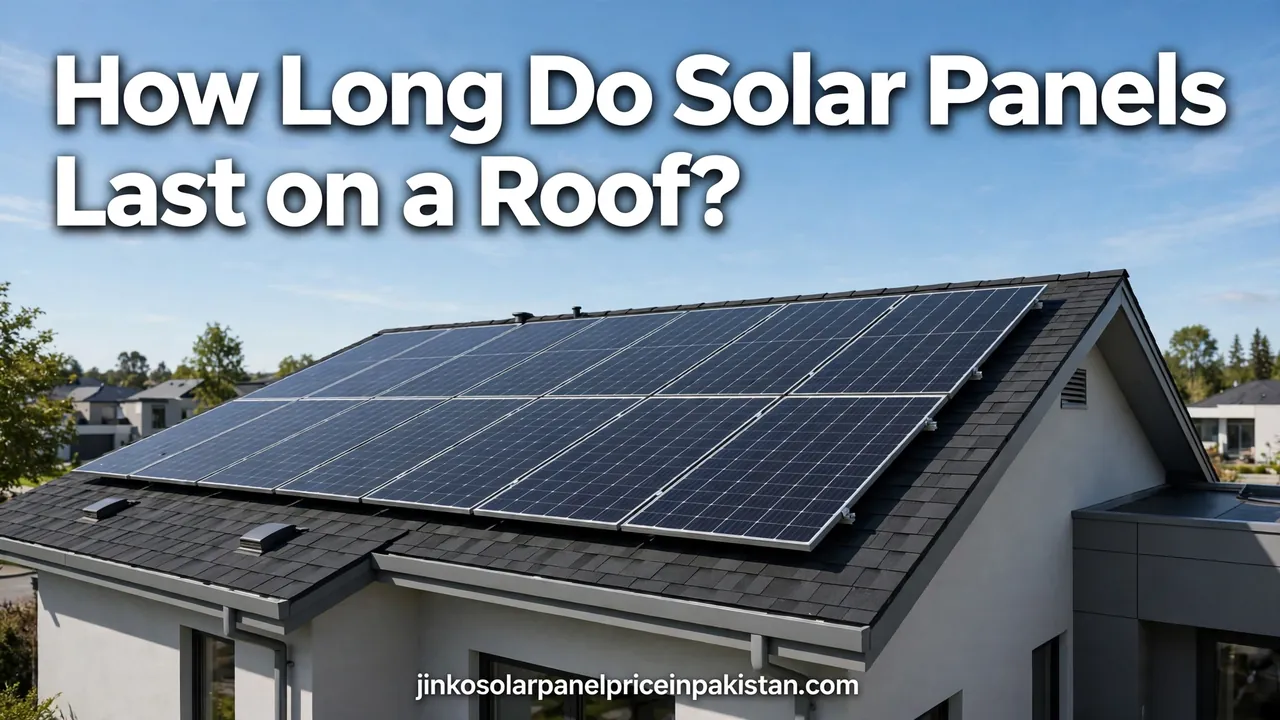
How Long Do Solar Panels Last on a Roof? Complete Guide

How long do solar panels last on a roof? For most modern rooftop systems, the honest short answer is 25 to 30 years of productive life — and often longer. Panels do not suddenly stop working at year 25. They lose a small amount of output each year, so a 30-year-old array is usually still generating electricity, just less than it did when new. How long your panels last depends less on the calendar and far more on where you live, what weather your roof faces, the quality of the panels and the installation, and how well the system is looked after. A well-installed array on a mild, temperate roof can outlive a poorly installed one in a harsh climate by many years. This guide explains how panel lifespan is actually measured, how it changes across humid, dry, mountainous, desert and windy regions, how it differs by country, and what you can do to push your own roof system toward the top of the range. For today’s panel prices, check the daily updated price tables on our homepage.
How Solar Panel Lifespan Is Actually Measured
Three numbers describe a panel’s life, and confusing them is the main reason lifespan claims sound contradictory.
Product warranty covers manufacturing defects and is typically 10 to 12 years, with some premium brands offering 25 years. Performance warranty is the more important number: it guarantees how much power the panel will still produce after a set time. The industry standard is around 90% of original output after 10 years and around 80% to 87% after 25 years, depending on the brand. Our Jinko solar panel warranty guide explains how these two warranties work in practice.
Degradation rate is the slow yearly decline in output. Research by the US National Renewable Energy Laboratory (NREL), covering almost 8 GW of solar sites, found a median performance loss of about 0.75% per year — and, crucially, found that systems in hotter zones degraded at roughly twice the rate of those in cooler climates. NREL’s large-scale degradation study, reported by pv magazine, puts hot-climate loss at 0.88% per year against 0.48% per year in cooler climates. That single finding explains most of the country-to-country and climate-to-climate differences in this guide: heat is the biggest long-term enemy of panel life.
Useful life is the practical end point: the age at which the array’s output has fallen so far that replacement makes more sense than keeping it. For most homes that point arrives somewhere between 30 and 40 years, well past the warranty period. Panels rarely “die” — they fade. When output drops below roughly 80% of the original rating, most owners start weighing replacement, especially if newer, more efficient panels are available.
What Decides How Long Panels Last on Your Roof
Before climate, five factors set the baseline for any roof:
Panel quality. Tier-1 manufacturers with strict quality control and lower published degradation rates consistently outlast budget panels. N-type TOPCon cells, now common in modern panels, generally degrade more slowly than older P-type cells.
Installation quality. Correct mounting torque, proper waterproofing of roof penetrations, and secure wiring matter enormously. A large share of early failures trace back to installation, not the panel itself — which is why certified installers and wind-rated mounting hardware are worth insisting on. Our solar panel mounting structures guide covers what a sound roof mounting setup looks like.
Airflow under the panels. Panels mounted flush against a roof run hotter than panels with a ventilation gap beneath them. Since heat accelerates degradation, that gap is free lifespan: rooftop temperatures on a dark roof in summer can far exceed the air temperature.
Roof type and condition. Panels on a sound concrete flat roof — the most common setup in Pakistan — face different stresses than panels on pitched tile or metal roofs. If the roof itself needs repair within the panels’ lifetime, the array must be removed and reinstalled, which is costly and risks damage. Always fix the roof first.
Maintenance and monitoring. Cleaning when soiling builds up, a yearly visual inspection, and output monitoring that catches a failing string early all add years. A panel that runs hot because of an undetected fault ages faster than its neighbours.
Lifespan by Weather and Climate
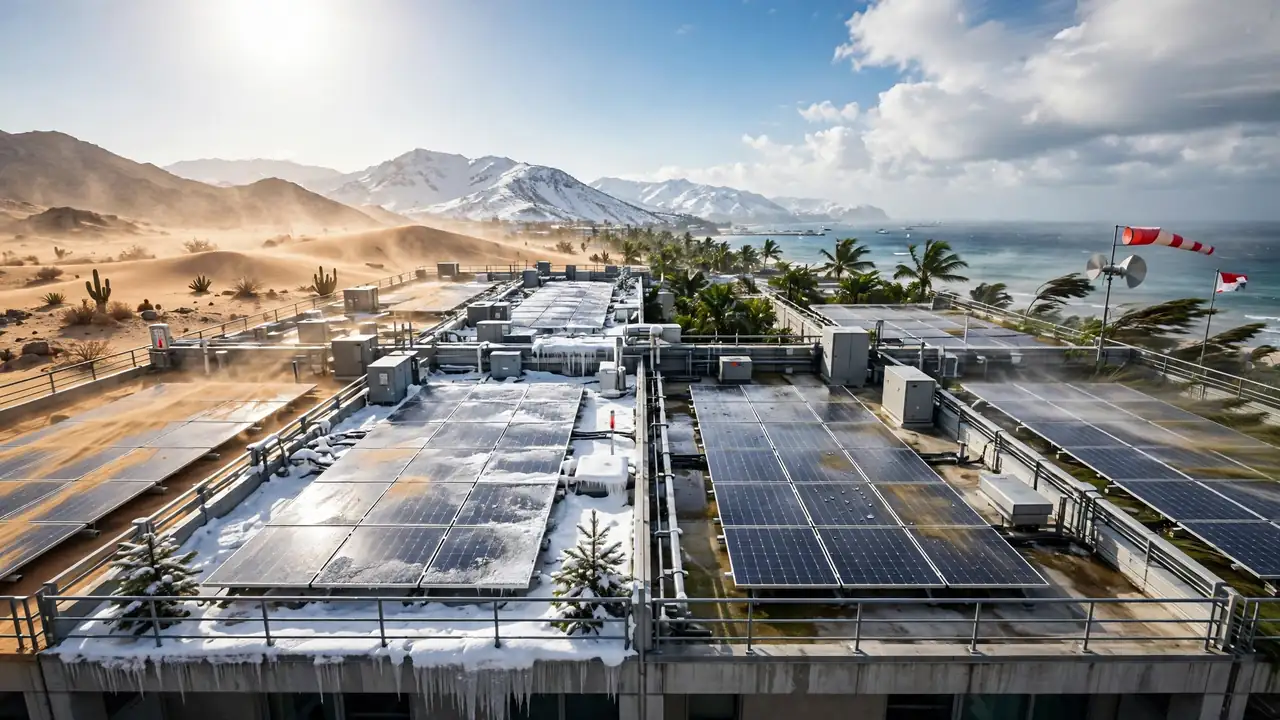
Climate is the variable that moves a roof system most. The same panel model can age at very different speeds in Karachi, Skardu, or Jacobabad. Here is how each major climate type treats rooftop panels.
Humid and Coastal Areas (Nami Ilaqay)
Coastal humidity and salt mist are a slow corrosion threat. Salt-laden air attacks aluminium frames, mounting rails and electrical contacts, and persistent dampness can let moisture creep into a panel’s edges over many years, causing delamination — the separation of the panel’s layers — and a fault called potential-induced degradation (PID), which drags output down. Karachi’s coastal belt, Gwadar, and any seaside town fall in this category, as do monsoon-soaked regions during the wet months.
In humid zones, expect panels to sit toward the middle-to-lower end of the 25 to 30 year range unless protected: anodised, corrosion-resistant frames, stainless or properly coated mounting hardware, PID-resistant panels, and regular cleaning of salt deposits all help. The good news is that rain itself is not the enemy — frequent rain washes dust away — but standing moisture around poorly sealed roof penetrations can damage the roof long before it damages the panels.
Dry and Hot Plains (Khushk Ilaqay)
Dry heat is the most common lifespan shortener. In the plains of Punjab and Sindh, rooftop panels routinely bake at very high cell temperatures through long summers, and the NREL finding quoted above — hot climates degrading at roughly double the rate of cool ones — applies directly. Daily thermal cycling, the expansion and contraction between scorching days and cooler nights, stresses solder joints and cell connections over decades.
Dry regions also bring dust. A dusty panel does not age faster by itself, but soiling cuts output, and if dust bakes onto hot glass it becomes harder to clean. With a ventilation gap under the array, quality panels and periodic cleaning, dry-plains systems still commonly reach 25 to 30 years — they simply lose output a little faster each year than the same panels in a cool climate.
Mountainous Areas (Pahari Ilaqay)
Mountains are a mixed blessing for panels. Cold air is genuinely good for them: solar cells convert sunlight more efficiently at low temperatures, and the chemical aging that heat drives slows down — which is why cool-climate systems in the NREL data degraded at only 0.48% per year. High altitude also means stronger ultraviolet light, which ages the panel’s encapsulant material faster, but the cold usually wins that trade.
The real mountain threats are mechanical. Heavy snow loads, hail, and freeze-thaw cycles — water seeping into tiny cracks, freezing, and expanding — stress glass and frames. NREL’s research found that snow deeper than about 1 metre, hail larger than about 25 mm, and winds above about 90 km/h were the thresholds where long-term losses grew. Steeper tilt angles help snow slide off, and panels rated for high snow and wind loads are essential in places like Gilgit-Baltistan, Murree, and the Himalayan foothills. With the right tilt and load ratings, mountain systems often land at the upper end of the lifespan range.
Desert and Barren Areas (Banjar Ilaqay)
Deserts combine the worst of heat with a unique enemy: sand. In Balochistan, the Thar desert, and the deserts of the Middle East, wind-blown sand slowly abrades panel glass over years, dust storms coat arrays in a single afternoon, and summer cell temperatures reach extremes. Day-night temperature swings in deserts are also among the largest on Earth, which maximises thermal cycling stress.
Desert systems live or die by cleaning. Without it, soiling alone can slash output, and a permanently dusty array runs hotter still. With regular cleaning, anti-soiling coatings, and a tilt angle that sheds dust, desert installations still reach 25 years and beyond — but they demand the most maintenance of any climate in this guide. This is the climate where neglecting the array costs the most lifespan.
Windy Areas (Hawadar Ilaqay)
Wind rarely harms the panel itself — it harms the mounting. Sustained high winds and gusts create uplift forces that try to peel panels off the roof, and the NREL study flagged winds above 90 km/h as a threshold for greater long-term losses, largely through mechanical stress on cells and connections. Coastal wind corridors, exposed hilltop roofs, and cyclone- or hurricane-prone regions are the risk zones.
The defences are all in the installation: wind-rated mounting systems, through-bolting rather than ballast alone on pitched roofs, keeping modules set back from roof edges where wind pressure peaks, and extra rails on exposed sites. A well-engineered windy-site installation lasts just as long as a sheltered one; a weakly mounted one may not survive its first major storm. If your roof is in a known wind corridor, the mounting specification matters more than the panel brand.
Climate Comparison at a Glance
| Climate | Typical rooftop lifespan | Main threats | Key protection |
|---|---|---|---|
| Humid / coastal | 25–30 years | Salt corrosion, moisture, PID, delamination | Corrosion-resistant frames and mounts, PID-resistant panels, salt cleaning |
| Dry / hot plains | 25–30 years | Heat degradation, thermal cycling, dust | Ventilation gap, quality panels, periodic cleaning |
| Mountainous | 28–30+ years | Snow load, hail, freeze-thaw, high UV | High snow/wind load ratings, steep tilt, cold slows aging |
| Desert / barren | 25–30 years | Extreme heat, sand abrasion, dust soiling | Frequent cleaning, anti-soiling coating, dust-shedding tilt |
| Windy / exposed | 25–30 years | Wind uplift, mounting fatigue, debris | Wind-rated mounting, through-bolting, roof-edge setback |
These ranges assume Tier-1 panels and a competent installation. A budget panel with a weak mounting in any of these climates can fall short; a premium panel with a careful installation can exceed them.
Lifespan by Country
Country comparisons are really climate comparisons with a local flavour — the same physics applies everywhere, but each country’s dominant weather, building styles and installation standards shift the outcome. The ranges below are typical expectations for a quality rooftop system, not guarantees for any individual roof.
Pakistan: 25–30 Years, Varying Sharply by Region
Pakistan is almost a continent of climates in one country, so a single national figure hides the real story. Karachi and the Sindh coast face salt air and humidity; the Punjab and Sindh plains face long, dry heat; the northern mountains face snow, hail and cold; Balochistan faces desert heat and dust; and the southern wind corridor faces sustained high winds. A rooftop system in cool, dry Murree or the northern valleys will generally age more slowly than an identical system on a Karachi rooftop — heat and salt are simply harder on materials than cold. Across the country, the realistic expectation for a well-installed Tier-1 system is 25 to 30 years, with the inverter needing replacement roughly halfway through (see below).
India: 25–30 Years
India’s picture closely mirrors Pakistan’s: intense summer heat across the plains, a long humid monsoon that tests seals and frames, and coastal salt exposure in cities like Mumbai and Chennai. High temperatures push degradation toward the faster end of the range, while the monsoon keeps panels washed but humidity high. Himalayan states, by contrast, enjoy the same cold-climate advantage as Pakistan’s north.
United States: 25–30+ Years
The US shows the widest internal spread. Desert Arizona and Nevada systems endure extreme heat and UV; mild California and Pacific Northwest systems enjoy some of the gentlest aging conditions in the world; Florida and the Gulf Coast combine humidity, salt air and hurricane winds, making mounting quality decisive. American systems are also among the most studied — the NREL data in this guide comes largely from US sites — and the fleet-wide picture is reassuring: modest, predictable degradation, with catastrophic failure rare.
United Kingdom and Germany: 25–30+ Years
Cool, cloudy northern Europe is arguably the kindest climate for panel longevity. Low temperatures slow chemical degradation, UV exposure is modest, and extreme weather is uncommon. Panels there commonly reach the upper end of the lifespan range and keep working well beyond it. The trade-off is lower annual energy yield per panel — the panels last longer, but each year they produce less electricity than the same panel in a sunny climate.
United Arab Emirates and Saudi Arabia: 25–30 Years
Gulf systems face desert conditions at their most intense: extreme summer heat, frequent dust and sand, and high humidity along the coast. These are among the fastest-aging environments for panels, yet Gulf rooftop and utility systems routinely meet their 25-year warranties, because the market there uses high-specification panels, robust cleaning regimes and mounting engineered for heat and wind. The lesson transfers directly to Pakistan’s hottest districts: in extreme heat, maintenance discipline decides whether you get 25 years or more.
Australia: 25–30 Years
Australia combines very high UV levels — among the highest in the world — with coastal salt exposure in its big cities and cyclone risk in the tropical north. UV ages encapsulants and backsheets faster, which is why Australian standards for panel certification are strict. Despite that, Australian rooftop systems routinely deliver 25 to 30 years, helped by strong installation standards and a mature inspection culture.
Country Comparison at a Glance
| Country | Dominant rooftop conditions | Typical lifespan | Main lifespan threat |
|---|---|---|---|
| Pakistan | Heat, coast, mountains, desert, wind — all in one country | 25–30 years | Heat and salt air, varying by region |
| India | Heat plus long humid monsoon | 25–30 years | Heat degradation and humidity |
| United States | Desert heat to mild coasts to hurricanes | 25–30+ years | Depends on state: heat, humidity or wind |
| United Kingdom / Germany | Cool, cloudy, mild | 25–30+ years | Very little — gentle aging, lower yield |
| UAE / Saudi Arabia | Extreme desert heat and dust | 25–30 years | Heat, sand abrasion, soiling |
| Australia | Very high UV, coastal salt, northern cyclones | 25–30 years | UV aging and coastal corrosion |
The pattern is consistent: cooler countries age panels more slowly, hotter and coastal countries age them faster — but in every country, panel quality and installation quality matter more than the flag on the map. A premium panel on a well-built Karachi roof will outlast a budget panel on a careless Berlin roof.
Panels vs Inverter vs Roof: What Fails First
It is almost never the panel that ends a system’s life first. The inverter — the device converting panel DC power to household AC power — typically lasts 10 to 15 years for a string inverter, so most owners replace it once during the panels’ life. Microinverters last longer but cost more upfront. Our solar inverter warranty guide and solar inverter installation guide cover inverter life and placement in detail.
The mounting system should last as long as the panels if it is properly specified — galvanised or stainless hardware, correct for the roof type and wind zone. The roof itself is the wildcard: a concrete roof in good condition will outlast the array, but a roof that needs re-tiling or re-waterproofing mid-life forces a costly remove-and-reinstall. That is why reputable installers inspect the roof before a single panel goes up.
Signs Your Rooftop Panels Are Aging
Gradual output decline is normal; the following signs are not, and they deserve attention:
Output falling faster than expected. If monitoring shows a string dropping well beyond roughly 1% per year, or one panel dragging a whole string down, something is wrong — a failing cell, a hot spot, or a connection fault.
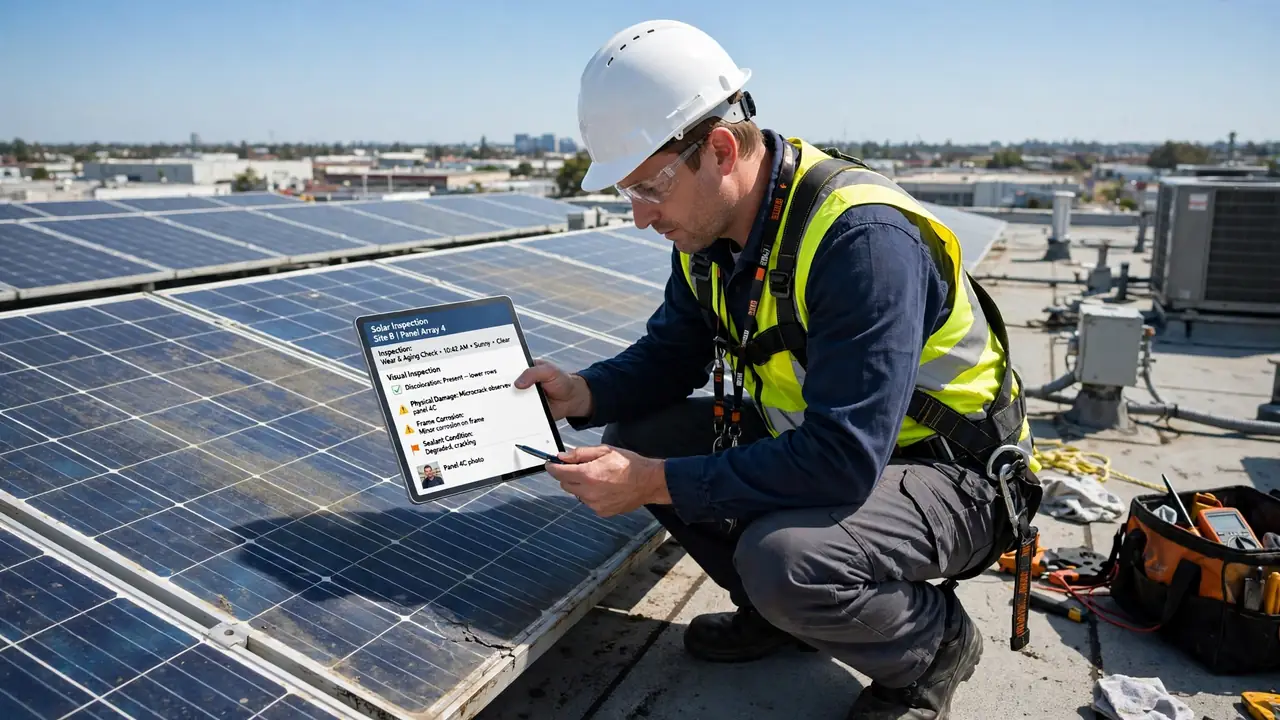
Visible discoloration or browning of cells, delamination (bubbling or peeling layers), cracked glass, or hot spots visible on a thermal check. These are the physical signatures of aging and damage, and they worsen with time.
Frequent inverter trips or error codes can point to panel-side faults such as insulation breakdown or PID rather than to the inverter itself.
How to Make Your Roof Panels Last Longer
Buy Tier-1 panels with a low published degradation rate and a 25-year performance warranty, and read the warranty terms before purchase — not after.
Insist on a certified installer and a mounting system rated for your wind and snow zone, with panels set back from roof edges in windy locations and through-bolting where the roof type requires it.
Leave an airflow gap under the array. Flush mounting looks neat but traps heat; a ventilated gap keeps cells cooler and degradation slower.
Clean on your climate’s schedule, not a fixed calendar. Desert and dusty-plains roofs may need cleaning several times a year; rainy temperate roofs may need little more than a yearly check. Never clean hot panels with cold water in direct sun, and never walk on panels.
Inspect yearly and monitor output monthly. A five-minute look at your monitoring app each month catches a failing string years before it would show up on an electricity bill.
Fix the roof before installing, and keep trees and new structures from shading the array. Shade does not just cut output — partial shading can create hot spots that age the shaded cells faster.
When to Replace Rather Than Keep
Keep panels while they still cover a useful share of your needs and show no physical damage — even at 80% of original output, an array is still a working power plant. Replace when output has fallen below the point of usefulness, when physical damage (widespread delamination, cracked glass, severe hot spots) makes operation unsafe, or when a roof repair forces removal anyway and the panels are already near end of life. Old panels should be recycled through proper e-waste channels: their glass, aluminium and silicon are recoverable, and dumping them wastes both materials and the energy invested in making them.
Final Word
A rooftop solar array is a multi-decade asset, not a short-term appliance. Expect 25 to 30 years from a quality system, longer in cool and mountain climates, and toward the faster-aging end in hot, coastal and desert conditions. The country matters less than the climate on your specific roof — and less still than the quality of the panels, the mounting, and the care they receive. Choose well, install properly, clean to your climate’s rhythm, and your roof will likely still be generating power long after the warranty paperwork has been forgotten.
Frequently Asked Questions (FAQs)
Do solar panels last 25 or 30 years?
Most modern rooftop panels are warranted for 25 years of performance and typically deliver 25 to 30 years of productive life. The 25-year figure is the warranty period, not a shutdown date — panels keep generating beyond it at gradually lower output, and many systems remain useful for 30 to 40 years.
Do solar panels stop working after 25 years?
No. Panels do not switch off at year 25. They lose a small percentage of output each year — typically around 0.5% to 0.75% per year — so a 25-year-old panel usually still produces roughly 80% to 88% of its original power. Replacement becomes worth considering only when output falls below the point of usefulness or physical damage appears.
Which climate is worst for solar panel lifespan?
Extreme desert heat combined with sand and dust is the harshest combination: heat accelerates degradation, sand abrades the glass, and dust soiling cuts output. Hot, humid coastal climates are also hard on panels because salt air corrodes frames and moisture can cause delamination and PID. Both still reach 25 years with quality panels and proper maintenance.
Do solar panels last longer in cold or mountain areas?
Yes, generally. Cold slows the chemical aging that heat drives — NREL data shows cool-climate systems degrading at about 0.48% per year versus 0.88% per year in hot climates — and cold cells also convert sunlight more efficiently. Mountain systems must still be rated for snow load and hail, but with the right ratings they often land at the upper end of the lifespan range.
Does humidity and rain damage rooftop solar panels?
Rain itself helps by washing dust away, but persistent humidity and coastal salt air are a different matter: salt corrodes frames and mounts, and long-term moisture ingress can cause delamination and potential-induced degradation (PID). Corrosion-resistant frames, PID-resistant panels and salt cleaning keep humid-climate systems healthy.
How long does the inverter last compared to the panels?
No — the inverter is usually replaced first. A typical string inverter lasts 10 to 15 years, so most owners replace it once during the panels’ 25 to 30 year life. The mounting system should last as long as the panels if correctly specified, and the roof itself must be in good condition before installation.
Can solar panels damage my roof, and what if my roof needs repair later?
Panels do not damage a sound roof when installed correctly, but a roof that needs repair during the panels’ lifetime forces a costly remove-and-reinstall of the array. Always repair or re-waterproof the roof before installation, and use proper flashing and sealing on every roof penetration to prevent leaks.