
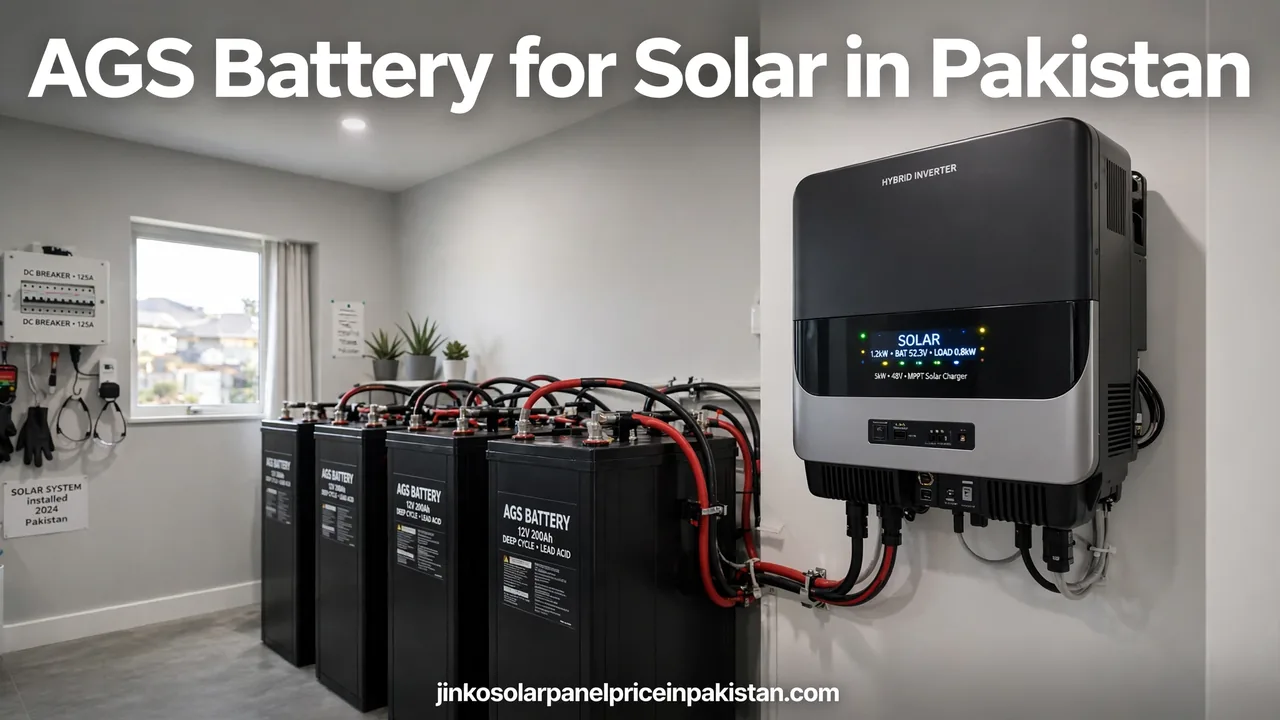
AGS Battery for Solar Systems: Complete Guide

Looking for an AGS battery for solar in Pakistan? Here is the short answer: AGS is the battery brand of Atlas Battery Limited, a Pakistani manufacturer that has produced batteries since 1969 under a technical collaboration with Japan’s GS Yuasa Corporation, and its deep-cycle and tall tubular batteries are a common choice for home solar systems across the country. But not every AGS battery suits solar — an automotive battery from the same brand will wear out quickly under daily solar cycling, while a deep-cycle AGS battery is built for exactly that workload. The key is choosing the right type, sizing your bank correctly, and buying a genuine unit from an authorized dealer. This guide covers which AGS batteries work with solar, how to size and maintain your bank, and what to check before buying. For today’s battery and system prices, check the daily updated price tables on our homepage.
Why AGS Batteries Are a Common Name in Solar Conversations
Atlas Battery Limited was incorporated as a public limited company on October 19, 1966, and its shares are quoted on the Pakistan Stock Exchange. In 1969 the company signed a technical collaboration agreement with Japan Storage Battery Co. Ltd. (now GS Yuasa Corporation) and began production under the brand “AGS” — “A” for Atlas and “GS” for Genzo Shimadzu, the founder of the Japanese company. That collaboration is the reason AGS is often described as a Japanese-technology battery made in Pakistan. You can read the full company background on the official Atlas Battery website.
The company’s product range runs from conventional batteries to low-maintenance hybrid, maintenance-free and deep-cycle batteries, and AGS is used for cars, motorcycles, gensets, construction equipment, UPS equipment and solar panels — the company’s own about page lists solar panels among the applications the brand serves.
Three practical reasons explain why the AGS name keeps coming up in solar discussions:
- Deep-cycle range: AGS makes deep-cycle and tall tubular batteries with thick plates built for repeated charging and discharging — the exact workload a solar system creates every day.
- Local manufacturing and service network: Atlas Battery operates manufacturing facilities in Karachi with branches in Lahore, Multan, Islamabad, Faisalabad, Sahiwal, Peshawar, Sukkur and Rahim Yar Khan, which means fresh stock, spare parts and after-sales support stay local for the life of the battery.
- Wide dealer availability: AGS batteries are sold through dealers across Pakistan, so matching batteries are easy to find when you expand your bank later, and warranty support is arranged through the local network.
Brand alone never decides performance, though. Battery type, sizing and maintenance matter far more than the logo on the case. If you are still comparing battery technologies, our best battery for solar system in Pakistan guide compares all the major types side by side.
Which AGS Battery Types Are Suitable for Solar?
AGS batteries are made for many applications, and they are not interchangeable for solar use. Here is how to tell the solar-suitable ones apart.
Deep-Cycle and Tall Tubular Batteries — The Default Pick for Home Solar
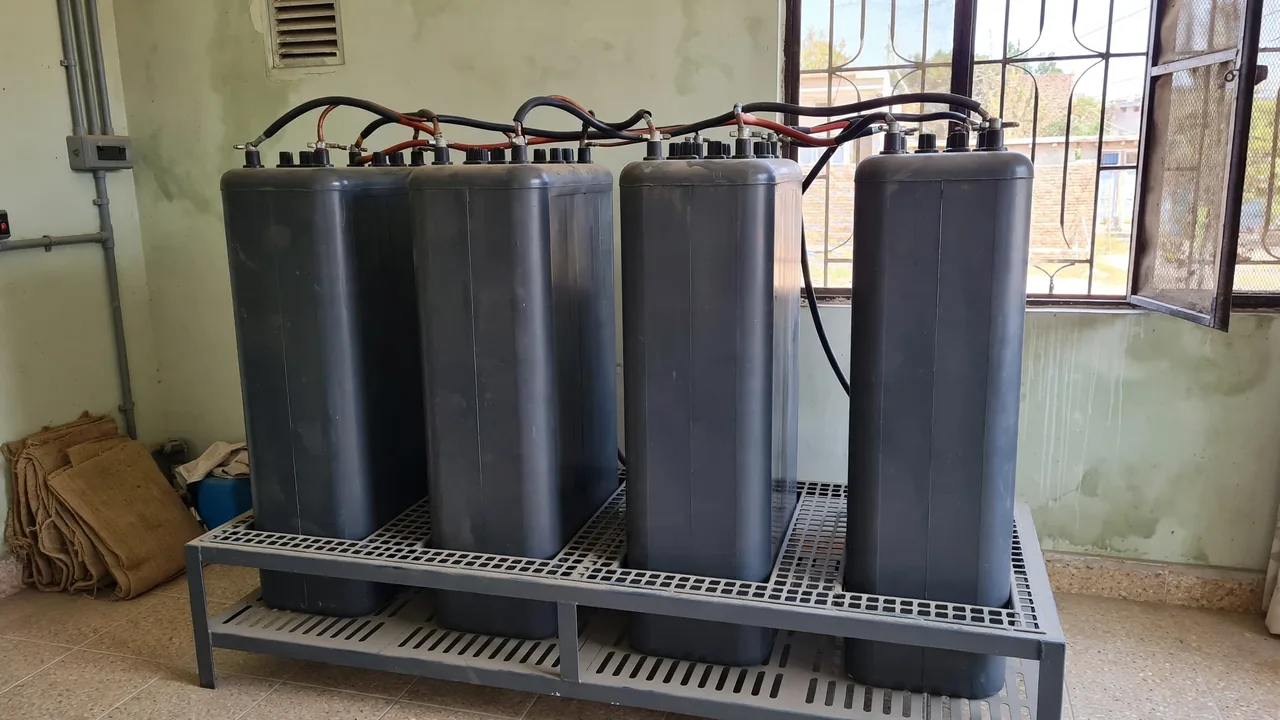
The batteries you want for a home solar system are AGS deep-cycle batteries — flooded lead-acid units with thick, tubular-type plates, sold in the tall tubular range (UTT series) for solar and UPS inverter duty. These are the workhorses of Pakistani home solar setups: they are engineered to be charged and discharged deeply every single day, which is precisely the cycling pattern a solar system produces. When a shopkeeper or installer recommends “an AGS battery for solar” without further detail, this is what they mean — a deep-cycle or tall tubular battery, not a car battery.
Our tall tubular battery guide explains the technology in depth, and the types of solar batteries guide shows where tubular batteries sit among all the options.
Maintenance-Free and Low-Maintenance Options — For Convenience
Alongside its flooded deep-cycle range, AGS also produces low-maintenance hybrid and maintenance-free batteries. These sealed designs lose little or no water during charging, which suits locations where you cannot easily check electrolyte levels — a roof-mounted battery bank in a tall building, for instance. The trade-off is that sealed batteries are less forgiving of deep discharges and overcharging than their flooded tubular cousins, and they generally do not recover from neglect the way a flooded battery can. For a system that cycles hard every day, flooded tall tubular batteries remain the more durable and serviceable choice; maintenance-free options make sense for lighter backup duty.
If you are weighing this decision across technologies, our dry vs tubular battery comparison explains the chemistry trade-offs plainly.
Car and General-Purpose Batteries — Not Ideal for Daily Solar Cycling
You will see AGS automotive (starter) batteries in the same shops. These are built with thin flat plates optimized for short, high-current bursts — starting an engine. Put them on a solar system that deep-cycles them every day, and their plates shed active material fast, losing usable capacity within months.
They are a false economy for daily solar use. When shopping, always ask specifically for the deep-cycle or tall tubular range — “AGS” alone is not enough to guarantee the battery is solar-suitable.
Tubular vs Flat Plate: Why the Plate Design Matters
The single most important technical difference between a solar-suitable AGS battery and an ordinary one is the plate design:
- Tubular plates enclose the positive active material in fabric-like tubes. During cycling, the material cannot easily shed or fall to the bottom of the case, so the battery keeps its capacity through hundreds of deep cycles.
- Flat plates are simpler pasted grids. They are cheaper to make and fine for occasional backup duty, but repeated deep cycling washes the paste off the grids and capacity fades quickly.
This is why two 12V batteries of the same amp-hour rating can behave completely differently on solar: a deep-cycle tubular-type AGS battery and a flat-plate starter battery may look similar on the shelf, but only the deep-cycle one is engineered for the daily deep cycling a solar system demands. Always confirm the battery comes from the deep-cycle or tall tubular range before paying.
How to Size Your AGS Battery Bank
Undersized banks die early because they discharge too deeply every day; oversized banks waste money. Sizing is simple arithmetic — no prices needed, just your load and backup needs.
Step 1 — Add up your backup load. List the appliances the battery bank must run after sunset: fans, lights, TV, Wi-Fi router, a laptop charger, maybe a refrigerator. Note each appliance’s wattage from its label or manual and sum them up. Suppose the total is 800 watts.
Step 2 — Multiply by backup hours. If you want 4 hours of backup at 800W, you need 3,200 watt-hours of usable energy.
Step 3 — Allow for depth of discharge. Flooded lead-acid batteries last far longer when you do not drain them fully every day. Size for about 50 percent depth of discharge, which doubles the figure: 3,200 ÷ 0.50 = 6,400 watt-hours of rated capacity.
Step 4 — Convert to amp-hours at your system voltage. Divide watt-hours by the bank voltage. At 48V: 6,400 ÷ 48 ≈ 133 amp-hours — so a 48V bank of tall tubular batteries in the 140Ah class fits. At 24V the same bank would need roughly double the amp-hours.
The worked example above uses generic math that applies to any deep-cycle brand. Our battery-count guide walks through sizing for different home sizes and voltages step by step.
Matching AGS Batteries to Your Inverter
The battery bank voltage must match what your inverter requires. Most modern hybrid inverters need a 48V battery bank, which means four 12V deep-cycle batteries in series. Smaller or older inverters may run on 12V or 24V banks.
Three matching rules to follow:
- Same voltage class: The bank’s total voltage must equal the inverter’s rated battery voltage — check the datasheet or the label near the inverter’s battery terminals before wiring.
- Identical batteries: All batteries in one bank should be the same model, the same age and ideally from the same manufacturing batch. Mixing old and new batteries forces the weakest one to limit the whole string, and mismatched capacities cause uneven charging.
- Adequate cable size: A 48V bank delivering kilowatts of backup current draws serious amperage. Use the thick DC cables specified by your installer, keep cable runs short, and keep the positive and negative runs of equal length so every battery in the bank charges evenly.
Series wiring adds voltage while amp-hours stay the same; parallel wiring adds capacity while voltage stays the same. Our series vs parallel wiring guide shows exactly how to wire each configuration safely, and the solar inverter buying guide for Pakistan explains how to choose the inverter itself.
Maintenance Tips for AGS Batteries in Solar Use
AGS solar-suitable batteries are flooded lead-acid types, so they reward simple, regular care with years of service. The biggest life-killers are deep discharge, chronic undercharging and neglect.
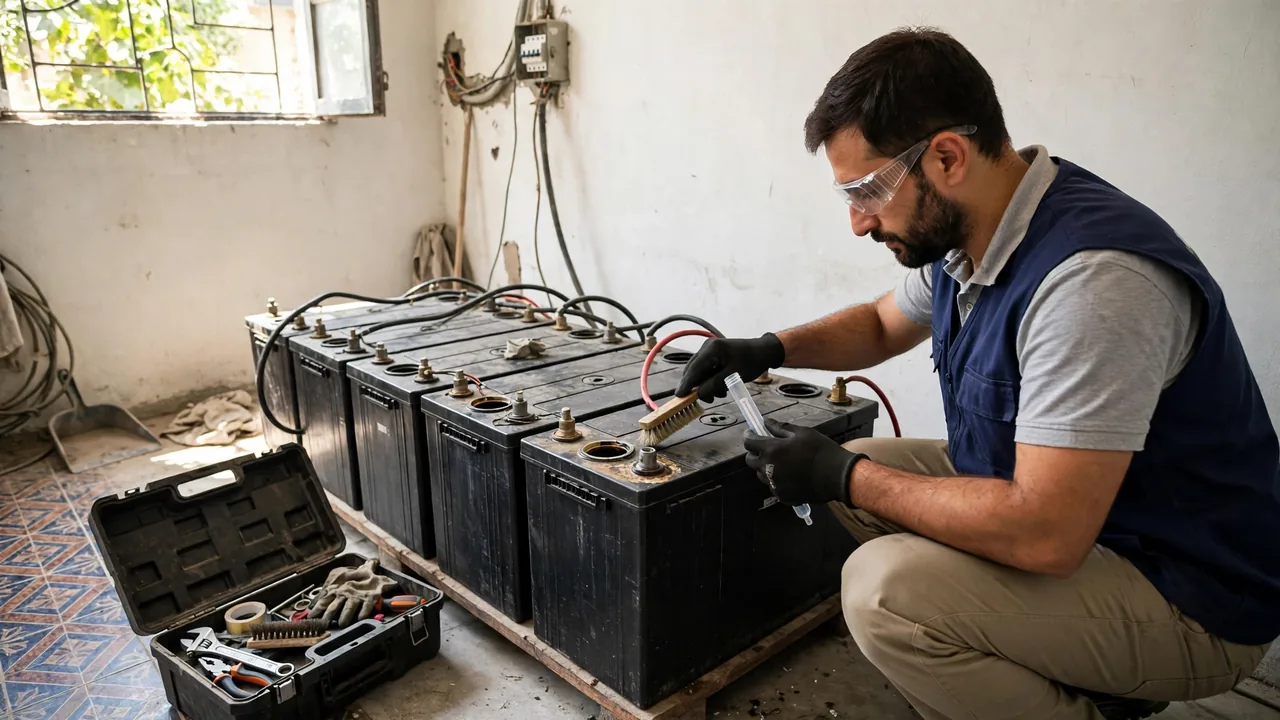
- Top up distilled water regularly. Flooded batteries lose water during charging. Check the electrolyte level every month or two and top up with distilled water only — never tap water, mineral water or acid. Keep the plates fully submerged at all times.
- Keep terminals clean and tight. Corroded or loose terminals cause voltage drop, uneven charging and excess heat. Brush off corrosion, tighten connections and apply a thin layer of petroleum jelly to slow future corrosion.
- Recharge fully every day. Letting a lead-acid battery sit partially charged causes sulfation — lead-sulfate crystals harden on the plates and permanently reduce capacity. Set your inverter’s charging voltages per the battery’s specifications and make sure the bank fully recharges daily.
- Limit daily depth of discharge. As the sizing section showed, drawing only about half the rated capacity each day dramatically extends plate life. Configure the inverter’s low-voltage disconnect to cut the load before the bank drains too far.
- Keep the bank ventilated. Charging lead-acid batteries releases hydrogen gas. Install the bank in a ventilated area away from direct sun, heat sources and living spaces, and keep it out of reach of children.
How to Buy a Genuine AGS Battery
Because AGS is a well-known brand, refurbished and counterfeit units exist in the market. Buying from the right channel and checking the battery in person protects you:
- Buy from an authorized dealer. Authorized AGS dealers can trace the battery’s serial and warranty through the Atlas Battery network; the company’s branch network across Pakistan’s major cities backs that support.
- Demand a computerized sales invoice with the dealer’s stamp. A proper invoice ties the purchase to the dealer’s name and date — essential for any warranty claim.
- Get the stamped warranty card. The warranty card should carry the battery’s serial details and the dealer’s stamp. Keep it safe for the full warranty period.
- Check the manufacturing date. Ask for fresh stock — a battery that has sat discharged on a shelf for many months has already lost some of its life.
- Confirm the model line. Make sure the battery is from the deep-cycle or tall tubular range, not an automotive line. Check the label and specifications yourself rather than trusting verbal assurance.
- Inspect for refurbishment. Look for signs of tampering: mismatched or repainted caps, scratched-off labels, uneven terminal posts or a case that does not match the brand’s current design.
Check Current Prices
Battery and system prices in Pakistan change frequently with currency moves, import duties and seasonal demand — which is exactly why this guide stays evergreen and carries no price figures. For today’s AGS battery prices, panel prices and full system costs, check the daily updated price tables on our homepage. If you are still comparing brands, our Exide battery guide, Osaka battery guide and Phoenix battery guide use the same framework so you can compare them directly.
Frequently Asked Questions (FAQs)
Is an AGS battery good for solar systems?
Yes, provided you choose the right type. AGS deep-cycle and tall tubular batteries are built for the daily deep cycling that solar systems demand, and the brand is manufactured in Pakistan by Atlas Battery Limited with a wide dealer and service network. Automotive batteries from the same brand are not suitable for daily solar cycling.
Which AGS battery type is best for solar?
Deep-cycle, tall tubular 12V batteries are the best pick for home solar systems because their tubular plate design resists shedding during repeated deep discharges. Low-maintenance and maintenance-free options suit lighter backup duty, but flooded tall tubular batteries are the more durable workhorse for daily solar cycling.
Who makes AGS batteries in Pakistan?
AGS is the battery brand of Atlas Battery Limited, a public company incorporated in 1966 and listed on the Pakistan Stock Exchange. The company has produced batteries since 1969 under a technical collaboration with Japan Storage Battery Co. (now GS Yuasa Corporation); the name combines A for Atlas with GS for the Japanese founder.
How long do AGS batteries last in solar use?
It depends on the battery type, depth of discharge and maintenance. Deep-cycle tubular batteries last noticeably longer than flat-plate batteries in daily solar cycling. Keeping daily discharge to about half of rated capacity, topping up distilled water and reaching full charge each day are the biggest factors in a long service life.
Can AGS batteries work with hybrid inverters?
Yes, as long as the voltage matches. Most modern hybrid inverters need a 48V bank, which means four 12V deep-cycle batteries wired in series. Check the inverter’s datasheet or the label near its battery terminals before wiring, and keep all batteries in one bank the same model and age.
How many AGS batteries do I need for my solar system?
Add up the wattage of the appliances the bank must run after sunset, multiply by your backup hours, then double the figure to allow for about 50 percent depth of discharge. Divide the result by your system voltage (12V, 24V or 48V) to get the amp-hours your bank needs.
How do I know my AGS battery is original?
Buy from an authorized AGS dealer, demand a stamped computerized invoice and warranty card with the battery’s serial details, ask for fresh manufacturing stock, confirm the battery is from the deep-cycle or tall tubular range rather than an automotive line, and inspect the case, caps and terminals for signs of refurbishment.
Do AGS solar batteries need distilled water?
Yes. AGS solar-suitable batteries are flooded lead-acid types, so they lose water during charging. Check the electrolyte level regularly and top up with distilled water only – never tap water or acid – and keep the plates fully submerged.
