
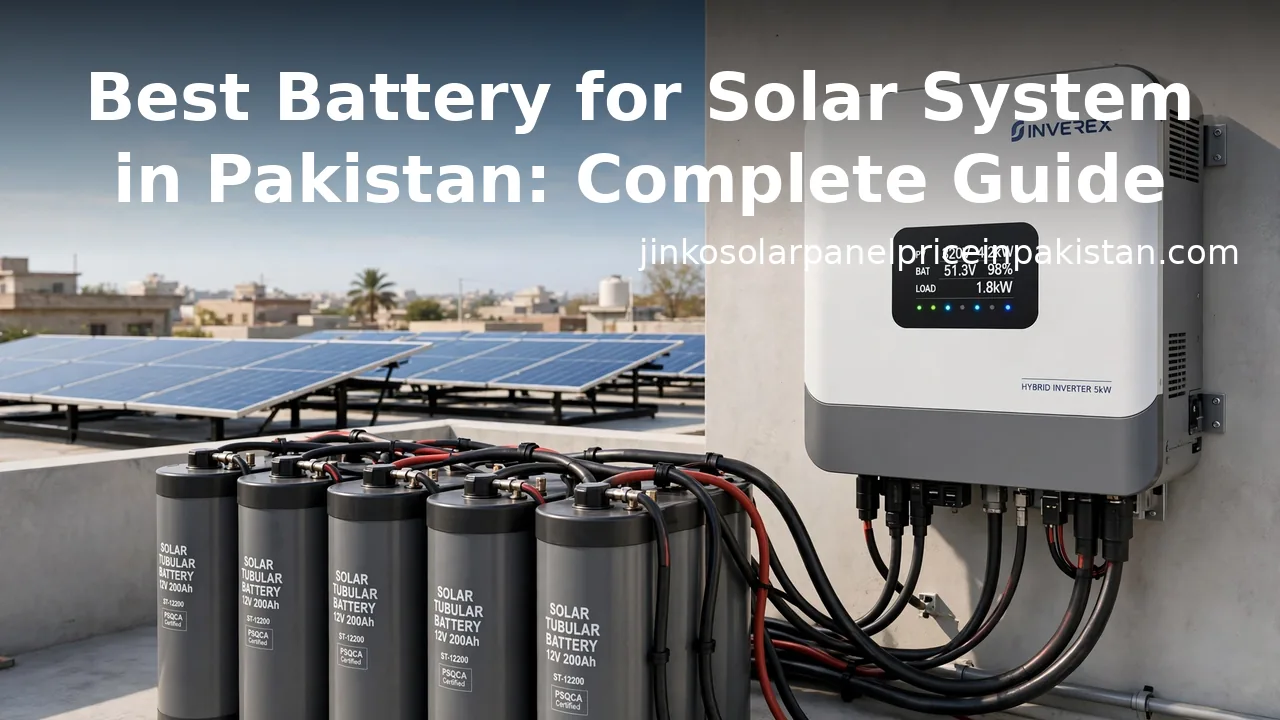
Best Battery for Solar System in Pakistan: Types, Sizing and Buying Guide

If you are searching for the best battery for a solar system in Pakistan, the short answer is this: there is no single battery that is best for everyone. For most Pakistani homes dealing with load shedding, tall tubular batteries are the practical choice because they handle deep daily cycling and are easy to maintain locally. If you want longer life, near-zero maintenance and are installing a modern hybrid system, lithium (LiFePO4) batteries are the better long-term option. The real key is not just the type, though — it is sizing the battery bank correctly for your night-time load, matching it with your inverter, and maintaining it properly. This guide explains all of that, step by step.
Why Your Solar Battery Choice Matters in Pakistan
Solar panels only produce electricity when the sun is shining. In Pakistan, where load shedding still affects many areas and net metering does not help you during a power cut, the battery is what keeps your fans, lights and fridge running after sunset. A wrong battery choice shows up fast: short backup hours, batteries dying within a year or two, or an inverter that keeps throwing low-voltage faults.
That is why it is worth understanding the options before you buy. Batteries are the component of a solar system most likely to need replacement, so choosing well directly affects how satisfied you are with your whole installation. For help with the other half of the backup equation, see our solar inverter buying guide for Pakistan, which explains how inverters and batteries work together.
Types of Batteries Used in Solar Systems in Pakistan
Four battery technologies are commonly paired with solar systems in Pakistan. Here is what each one is, honestly explained.
Tall Tubular Batteries
Tall tubular batteries are the most common choice for home solar backup in Pakistan. They are a type of deep-cycle lead-acid battery with thick tubular positive plates, which is what makes them survive the daily charge-and-discharge cycles that solar systems demand. Local manufacturers such as Osaka, Phoenix, Exide and AGS make tubular deep-cycle models widely available across the country, so finding replacements and service is easy almost everywhere.
Their strengths are proven durability in hot climates, tolerance of deep discharge, and wide availability. Their weakness is maintenance: you must top up the electrolyte with distilled water regularly and keep the terminals clean. They are also heavy and take up more space than lithium options.
Lithium (LiFePO4) Batteries
LiFePO4 (lithium iron phosphate) batteries are the newer premium option. They store energy in lithium cells managed by a built-in Battery Management System (BMS) that protects against overcharging, deep discharge and overheating. Most of their rated capacity can be used on a daily basis, unlike lead-acid types which should only be partially discharged.
Their strengths are a much longer cycle life (several thousand charge cycles under normal use), no water topping or maintenance, lighter weight, and stable performance in heat. Their weakness is the higher upfront cost and the fact that they need a compatible inverter or charge controller with the right charging profile. For a detailed comparison of two of these technologies, read our lithium battery vs dry battery comparison for solar panels.
Dry (AGM and Gel) Batteries
Dry batteries — sealed AGM (Absorbent Glass Mat) or gel batteries — are also lead-acid batteries, but the electrolyte is immobilized so they never need water topping. They are spill-proof and can be installed in any orientation, which makes them convenient for tight spaces.
Their strengths are zero maintenance and cleaner installation. Their weakness is a shorter cycle life than tubular batteries when cycled deeply every day, and they are sensitive to overcharging, so the charger’s voltage settings must be correct.
Flooded Lead-Acid Batteries
Standard flooded lead-acid batteries are the oldest and cheapest option, but they are not designed for the deep daily cycling of solar systems. They suit only very light or occasional backup use. For a daily-use solar system, tubular or lithium options are far more appropriate.
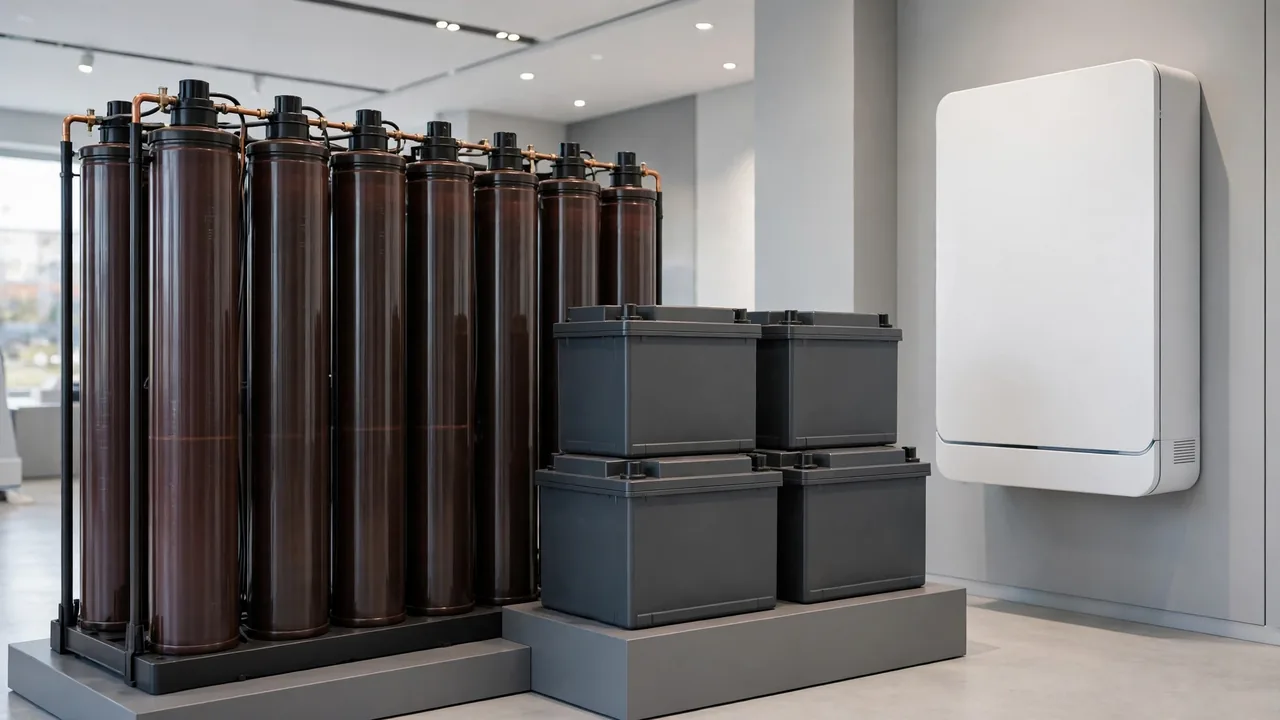
Quick Comparison: Which Battery Type Fits Your Needs?
Here is how the three main options compare on the factors that matter most, without any marketing noise:
- Daily deep cycling: tubular and lithium handle it well; dry batteries are acceptable but wear faster.
- Maintenance: lithium and dry need none; tubular needs regular distilled-water top-ups.
- Usable capacity: lithium lets you use most of the rated capacity; tubular and dry types should only be discharged to about half to protect their life.
- Lifespan: lithium lasts the longest by a wide margin; a well-maintained tubular battery serves for several years; dry batteries fall in between for solar use.
- Space and weight: lithium is compact and light; tubular banks are bulky and heavy.
- Upfront cost: tubular is the most affordable entry point; dry sits in the middle; lithium costs more initially but lasts far longer.
As the U.S. Department of Energy explains in its Solar-Plus-Storage 101 guide, lithium batteries are growing in popularity worldwide because they hold a charge well, have a small footprint and can be installed almost anywhere — the same reasons they are gaining ground in Pakistani homes and businesses.
How to Size Your Solar Battery Bank
Buying the wrong size is the most common battery mistake. Too small and you run out of backup by midnight; too big and you waste money on capacity you never use. Here is a simple method anyone can follow:
- List your night-time load. Add up the watts of everything the battery must run after sunset — fans, lights, fridge, TV, Wi-Fi router. Multiply by the hours each runs to get watt-hours (Wh). For example, 500 W of load for 6 hours needs 3,000 Wh.
- Convert to amp-hours. Divide the watt-hours by your system voltage (12V, 24V or 48V). At 48V, 3,000 Wh needs about 62 Ah of usable capacity.
- Account for depth of discharge. If you are buying tubular or dry batteries, only about half their rated capacity should be used daily. So 62 Ah usable means roughly 125 Ah of rated tubular capacity. With lithium, you can use most of the rated capacity, so a bank rated near your usable figure is enough.
- Add a safety margin. Round up to the next standard battery size rather than down. Batteries perform better and last longer when they are not pushed to their limit every night.
- Check your inverter. Confirm the inverter’s charger can handle the battery bank size and chemistry. See the top hybrid inverters commonly used in Pakistan to see which models support both tubular and lithium batteries.
If this math feels heavy, your installer should do it for you — but now you know enough to check their numbers.
7 Things to Check Before Buying a Solar Battery in Pakistan
- Deep-cycle design: The battery must be rated for deep-cycle solar use. Ordinary car batteries are starter batteries and fail quickly in solar service.
- Warranty terms: Read the warranty card carefully — what it covers, for how long, and what voids it. Keep the receipt and warranty card safe.
- Manufacturing date: A battery that has been sitting on a shelf for many months may already be degraded. Ask for a fresh unit.
- Authorized dealer: Buy from an authorized dealer so the warranty is honored. Check the serial number with the manufacturer where a verification service exists.
- Inverter compatibility: Confirm the battery voltage matches your system (12V, 24V or 48V) and that your inverter or charge controller has the correct charging profile — especially important for lithium and gel batteries.
- Ventilation: Lead-acid batteries release small amounts of hydrogen gas while charging. Plan for a ventilated spot, away from living areas.
- Cables and terminals: Thick, properly sized DC cables and tight, corrosion-free terminals matter as much as the battery itself for reliable backup.
Battery Maintenance Tips That Extend Battery Life
Most batteries that “die early” were actually killed by neglect. These habits add years of service:
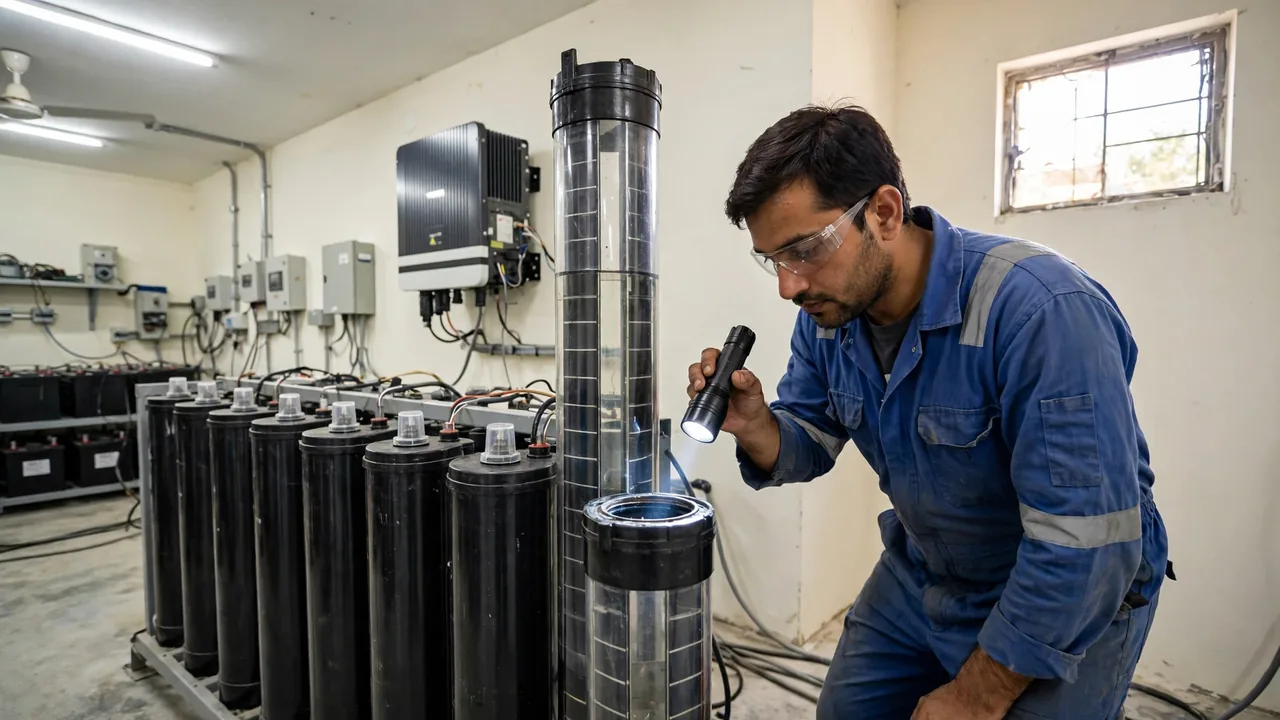
- Check the electrolyte level of tubular batteries monthly and top up with distilled water only — never tap water, which contains minerals that damage the plates.
- Keep terminals clean and tight; a light coating of petroleum jelly on terminals slows corrosion.
- Do not let batteries sit fully discharged for days. Deep discharge followed by delayed recharging is the fastest way to shorten lead-acid battery life.
- Keep the battery area ventilated, shaded and reasonably cool. Heat is the silent enemy of all battery types.
- Make sure your inverter or charge controller’s charging voltages match the battery type. Wrong settings quietly destroy batteries over months.
- Watch for warning signs: swelling cases, very hot batteries, backup hours dropping sharply, or a rotten-egg smell all mean you should call a technician.
Check Current Battery Prices in Pakistan
Battery prices in Pakistan change frequently with the dollar rate, import costs and demand, so this guide intentionally does not quote figures that would go stale. For today’s updated solar panel and system component prices, visit our homepage, where price tables are refreshed daily.
Frequently Asked Questions (FAQs)
Which battery is best for a solar system in Pakistan?
It depends on your usage and budget. Tall tubular batteries are the most practical choice for most Pakistani homes because they handle daily deep cycling and are easy to service locally. Lithium (LiFePO4) batteries are the better long-term option if you want much longer life and zero maintenance, paired with a compatible hybrid inverter.
How many batteries do I need for my solar system?
It depends on your night-time load, not your system size. Add up the watts of the appliances you run after sunset, multiply by the hours of use to get watt-hours, then divide by your system voltage (12V, 24V or 48V). For tubular and dry batteries, double the usable figure because only about half of their rated capacity should be used daily.
Can I use a car battery for my solar system?
No. Car batteries are starter batteries designed for short bursts of power to start an engine, not the deep daily charge-discharge cycles of a solar system. They fail very quickly in solar service. Always use deep-cycle batteries rated for solar use.
Do solar batteries provide backup during load shedding?
Yes, that is their main job in Pakistan. When paired with a hybrid or off-grid inverter, the batteries automatically take over your essential load during a power cut and recharge from the solar panels during the day.
How long do solar batteries last?
A well-maintained tubular battery typically serves for several years in daily solar use, while lithium (LiFePO4) batteries last much longer, rated for several thousand charge cycles. Actual life depends on how deeply they are discharged, charge settings, temperature and maintenance.
Do all solar batteries need distilled water?
No. Only flooded lead-acid types, including tall tubular batteries, need regular distilled-water top-ups. Sealed dry (AGM/gel) batteries and lithium batteries are maintenance-free and never need water added.
