
Jinko 550W Solar Panel: Complete Guide (Specs, 550W vs 555W & Buying Tips)

Short answer: The Jinko 550 watt solar panel is a legacy P-type monocrystalline module that was once among the most popular choices for Pakistani homes. It delivers 550 watts of peak power from a half-cell, multi-busbar design, needs about 9 to 10 panels for a standard 5 kW home system, and is now sold only as remaining dealer stock, since Jinko’s current line-up has moved on to N-type models. This guide covers its specifications, how it differs from the closely related 555W model, how many panels your home needs, and how to verify that the panel you buy is original.
The 550W size hit a sweet spot for Pakistani rooftops: enough output per panel to keep the panel count and mounting structure cost reasonable, in a size installers know well. Because it is a discontinued model, buying one today is mostly about verification and documentation — which is exactly what this evergreen guide focuses on. For live market rates, which change frequently, see our daily updated solar panel price tables.
Check Current Panel Prices
Solar panel rates in Pakistan move with dollar exchange rates, import costs, and dealer stock levels, so we keep all live pricing in one place instead of repeating it in every guide. Our homepage price tables are updated daily and cover Jinko, Longi, Canadian, Trina, Inverex, Aiko, Risen, Astronergy, and more brands — plus city-wise per-watt rates and complete solar system prices by capacity. Check there for today’s 550W and 555W market rates before contacting a dealer.
550W vs 555W — What Is the Difference?
Buyers often confuse the Jinko 550W with the Jinko 555W, and dealers sometimes use the names loosely. Here is the honest distinction:
- Jinko 550W is the generic legacy P-type model covered in this article — a 550-watt monocrystalline panel that was widely sold in Pakistan during the P-type era.
- Jinko P-Type 555W is a specific A-grade Tier-1 model (555 watts, P-type monocrystalline, ~21.48% efficiency) that we cover in detail in our dedicated 555W guide.
In practical terms, the two are 5 watts apart — essentially the same class of panel. If a dealer offers you a “550W” panel, ask for the exact model number on the specification label and compare it with the 555W model’s details. For a new purchase, also consider whether a current N-type model (such as the 585W) might give you better long-term value, since P-type stock is thinning out.
Jinko 550W Solar Panel Specifications
The Jinko 550W is a P-type monocrystalline panel built on the half-cell, multi-busbar (MBB) design that Jinko used across its Tiger P-type series. MBB technology reduces energy loss under partial shading — useful on Pakistani rooftops where a neighbouring wall or water tank often shades part of an array. Typical published specifications for this class of panel are:
| Specification | Value |
|---|---|
| Peak power output | 550 W |
| Cell technology | P-type monocrystalline, half-cell, multi-busbar (MBB) |
| Module efficiency | ~20.5 – 21.3% |
| Open-circuit voltage (Voc) | ~49 – 52 V |
| Maximum power voltage (Vmp) | ~41 – 44 V |
| Short-circuit current (Isc) | ~13 – 14.5 A |
| Dimensions (approx.) | ~2278 × 1134 × 35 mm |
| Weight | ~27 – 30 kg |
| Frame | Anodised aluminium alloy |
| Product warranty | ~10 – 12 years |
| Performance warranty | ~25 years |
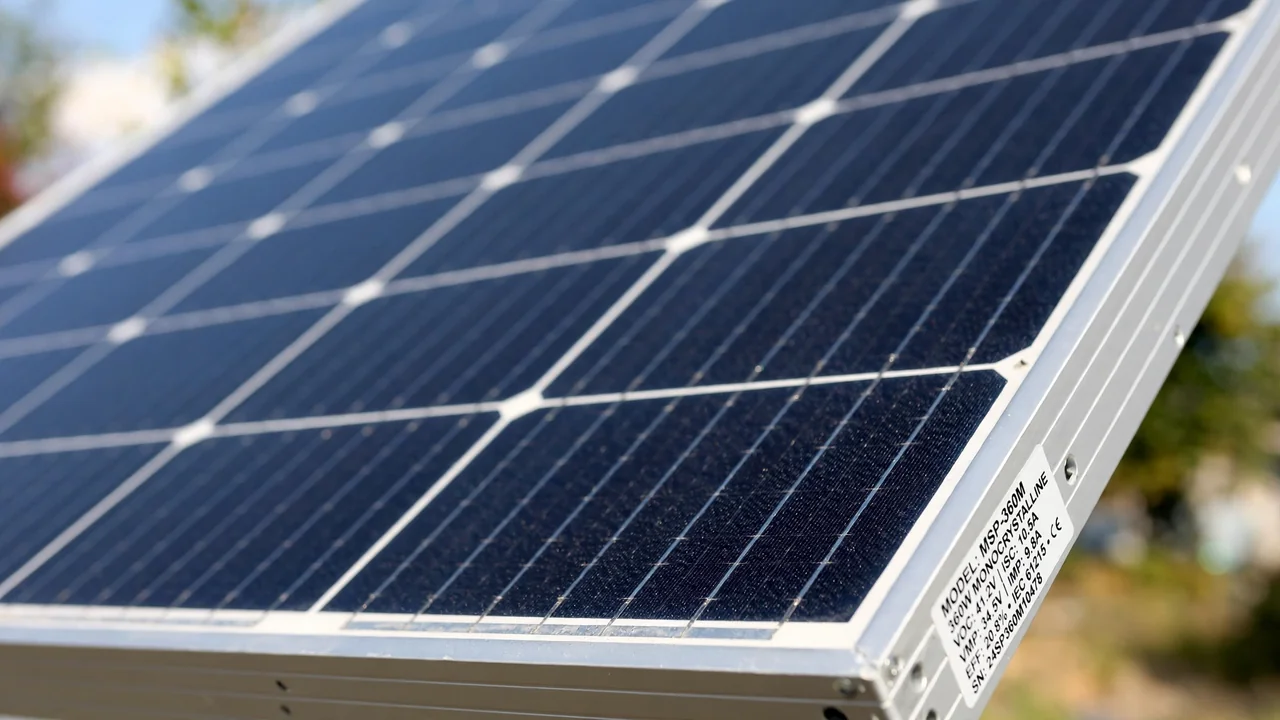
Note: exact figures vary slightly between production batches. Always read the specification label on the back of the actual panel you are buying — the label in the image below shows where to find the model number, wattage, and serial number.
N-Type vs P-Type at This Wattage
All Jinko 550W panels on the market are P-type. Jinko’s current generation is N-type TOPCon (the Tiger Neo series — see JinkoSolar’s official Tiger Neo page), which offers roughly 1–1.5 percentage points higher efficiency and slower annual degradation (around 0.4% per year versus about 0.55% for P-type PERC). That difference compounds over a 25-year system life.
Does that make the 550W a bad buy? Not necessarily. For a budget system with ample roof space, documented 550W stock can still be a sensible choice — you simply install one or two extra panels to reach the same total capacity, while N-type models deliver more power per square metre of roof. Our detailed N-type vs P-type comparison walks through the trade-offs so you can decide based on your roof size and goals rather than marketing claims.
How Many 550W Panels Do You Need?
Pakistan receives roughly 5 to 6 peak sun hours per day in most regions. A single 550W panel therefore produces about 2.5 to 3.3 units (kWh) per day, or roughly 75–100 units per month, depending on roof direction, tilt, dust, and shading. Use this table as a starting point:
| Monthly consumption | Recommended system | 550W panels needed |
|---|---|---|
| 150 – 250 units | 1.5 – 2 kW | 3 – 4 |
| 300 – 400 units | 3 kW | 5 – 6 |
| 500 – 600 units | 5 kW | 9 – 10 |
| 700 – 900 units | 7 kW | 12 – 13 |
| 1,000+ units | 10 kW | 18 – 20 |
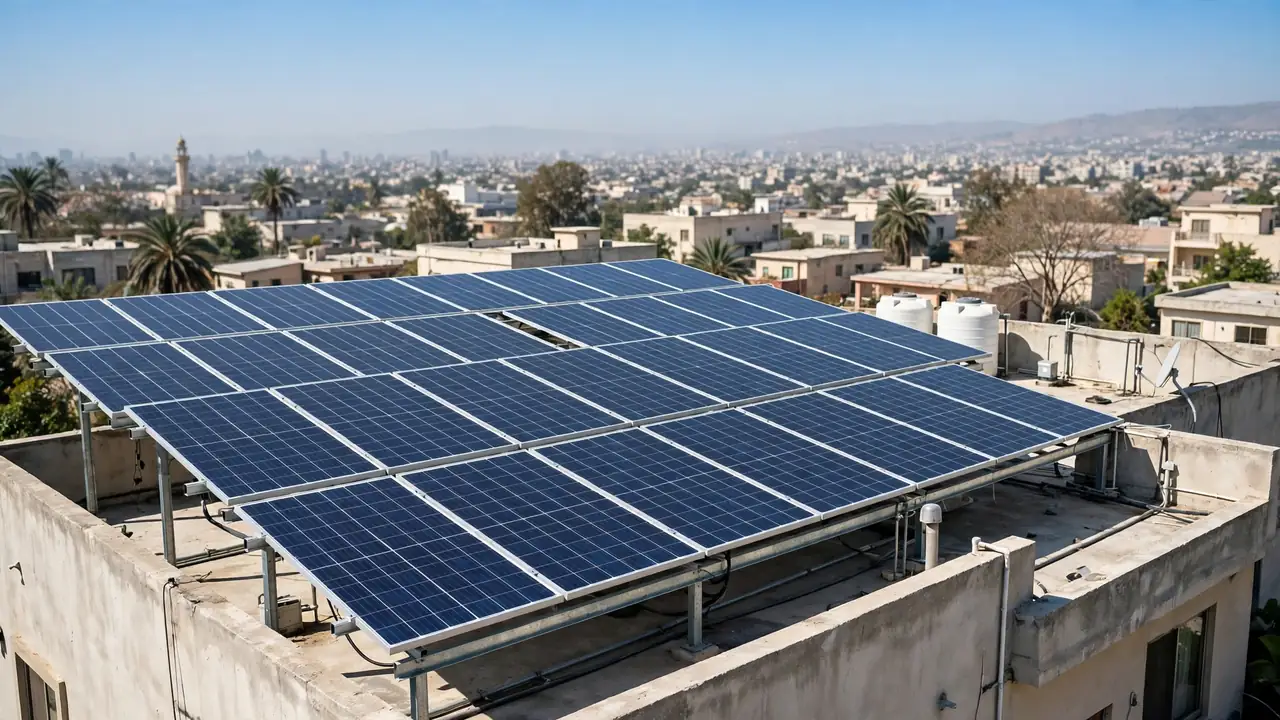
A 5 kW setup — the most common size for Pakistani homes — needs 9 to 10 panels of 550W. Remember to budget for the inverter, mounting structure, wiring, and installation in addition to the panels. The image below shows a typical residential rooftop installation of this class.
How to Verify an Original Jinko 550W Panel
Because the 550W is a legacy model, the used and B-grade market around it is active — which makes verification especially important. Before paying:
- Read the back label. The model number, wattage, Voc/Vmp ratings, and serial number are printed on the specification sticker. Compare the wattage on the label with what the dealer told you.
- Check the serial number through Jinko’s verification channels. Our Jinko solar panel serial number check guide explains the process step by step.
- Demand documented A-grade. For any on-grid or net-metering system, distribution companies (DISCOs) generally require documented A-grade panels — undocumented panels are frequently rejected during the net-metering application review.
- Inspect the cells. A-grade cells have uniform colour with no visible cracks, snail trails, or discolouration. If a deal looks too good to be true for a claimed A-grade panel, be cautious — unusually cheap “A-grade” stock is often B-grade or undocumented.
- Get written warranty. A genuine new panel comes with manufacturer warranty papers, not just a verbal promise.
Factors to Consider Before Buying a 550W Panel
- Grade and documentation: documented A-grade stock is the only kind that reliably qualifies for net metering — undocumented or B-grade panels may be rejected during the DISCO application review.
- Stock age: as a discontinued model, older dealer stock may be discounted to clear, while fresh documented lots hold firmer. Ask when the stock was imported.
- City and market: wholesale markets (Karachi Saddar, Lahore Hall Road, Rawalpindi College Road) are usually cheaper than retail shops in smaller cities.
- Quantity: buying a full system (9–10 panels) usually gets a better per-watt rate than buying one or two panels.
- Currency and import costs: the rupee-dollar rate feeds directly into landed costs, so market rates can shift week to week — check our daily price tables before you buy.
Frequently Asked Questions (FAQs)
Is the Jinko 550W an N-type or P-type panel?
P-type. All Jinko 550W panels on the market use P-type monocrystalline half-cell technology from Jinko’s Tiger P-type series. Jinko’s current generation is N-type TOPCon (Tiger Neo).
Is the Jinko 550W still available in 2026?
Only as remaining dealer stock. Jinko’s current line-up has moved to N-type models, with the P-type 540-560W range discontinued. If you specifically want 550W, buy from a reputable dealer and verify the serial number.
What is the difference between Jinko 550W and 555W?
About 5 watts. The 550W is the generic legacy P-type model; the 555W is a specific A-grade Tier-1 P-type model with ~21.48% efficiency. They belong to the same panel class – check the exact model number on the back label rather than relying on the wattage name alone.
How many units does a 550W panel produce per day?
Approximately 2.5-3.3 units (kWh) per day in Pakistan’s 5-6 peak sun hours, assuming a clean, unshaded, south-facing installation. Dust, shading, and tilt angle can reduce this.
How many 550W panels do I need for a 5kW system?
Nine to ten panels. Ten 550W panels give 5.5 kW of DC capacity, which pairs well with a standard 5 kW inverter after accounting for real-world losses. Your installer should confirm the string configuration matches your inverter’s MPPT specifications.
Can I use Jinko 550W panels for net metering?
Yes, provided they are documented A-grade panels with verifiable serial numbers and warranty papers. Undocumented panels are commonly rejected by DISCOs during the net-metering approval process.
Is a used Jinko 550W panel worth buying?
It can be for a small off-grid setup if the condition is good and the cells are undamaged – but used panels carry no manufacturer warranty and are not accepted for net metering. For a main home system, a new documented panel is the safer investment.
