
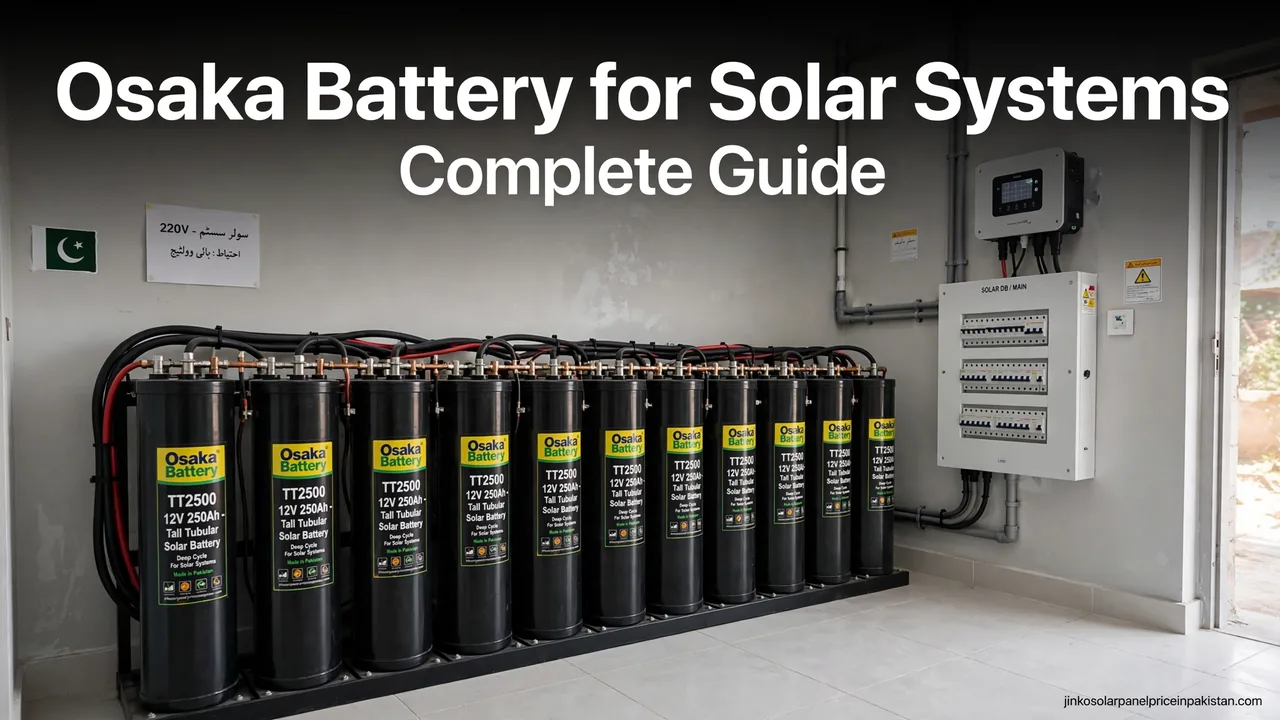
Osaka Battery for Solar Systems: Complete Guide

Looking for an Osaka battery for solar in Pakistan? Here is the short answer: Osaka’s tall tubular batteries are one of the most common choices for home solar systems in the country, because they are specifically built for the daily charge-and-discharge cycling that solar demands. A standard car or UPS battery will wear out quickly under solar use, while a tall tubular battery is designed for exactly this job. The key is picking the right type of Osaka battery – not every battery carrying the Osaka name is meant for solar – and sizing the bank correctly for your load and backup hours. This guide explains which Osaka batteries suit solar systems, how tubular technology differs from flat-plate batteries, how to size your bank, and how to buy a genuine unit. For today’s battery and system prices, check the daily updated price tables on our homepage.
Why Osaka Batteries Are a Common Choice for Solar in Pakistan
Osaka is the battery brand of Pakistan Accumulators (Pvt) Ltd, a long-established Pakistani manufacturer. The company is the first in Pakistan to manufacture tubular plate flooded lead-acid batteries for deep-cycle, solar and UPS applications, which is why the Osaka name shows up so often when people shop for solar storage.
Three practical reasons explain the brand’s popularity in solar setups:
- Deep-cycle design: Unlike starter batteries, which are built to deliver short bursts of high current to crank an engine, Osaka’s solar-oriented batteries use a tubular positive plate with a thick negative plate. This construction is made to be charged and discharged deeply, day after day – which is precisely what a solar system does.
- Wide availability: Osaka batteries are sold through a large dealer network across Pakistan, so replacements, warranty claims and matching batteries for bank expansion are easier to arrange than with imported brands.
- Solar-specific product lines: The manufacturer produces dedicated solar and deep-cycle ranges, including 12V tall tubular batteries for homes and 2V OPzS cells for larger or off-grid installations.
That said, brand alone does not decide performance. Battery type, sizing and maintenance matter far more than the logo on the case. Our best battery for solar system in Pakistan guide covers how all the major battery types compare, so start there if you are still deciding between tubular, lithium and other chemistries.
Which Osaka Battery Types Are Used in Solar Systems?
Osaka makes several battery ranges, and they are not interchangeable for solar use. Here is how to tell them apart.
Tall Tubular Batteries – The Default Pick for Home Solar
Tall tubular batteries are the workhorse of Pakistani home solar systems. They are 12V flooded lead-acid batteries with tall cases and tubular positive plates, sold in a range of amp-hour capacities to suit different bank sizes. The tubular plate design holds the active material in place far better than flat plates during repeated deep cycling, which is why these batteries last noticeably longer in daily solar duty than ordinary UPS batteries.
If a shopkeeper or installer recommends “an Osaka battery for solar” without further detail, this is almost always what they mean: a tall tubular battery, not a car battery and not a small UPS battery. Our tall tubular battery guide explains the technology in depth, and the types of solar batteries guide shows where tubular fits among all the options.
2V OPzS Cells – For Large and Off-Grid Banks
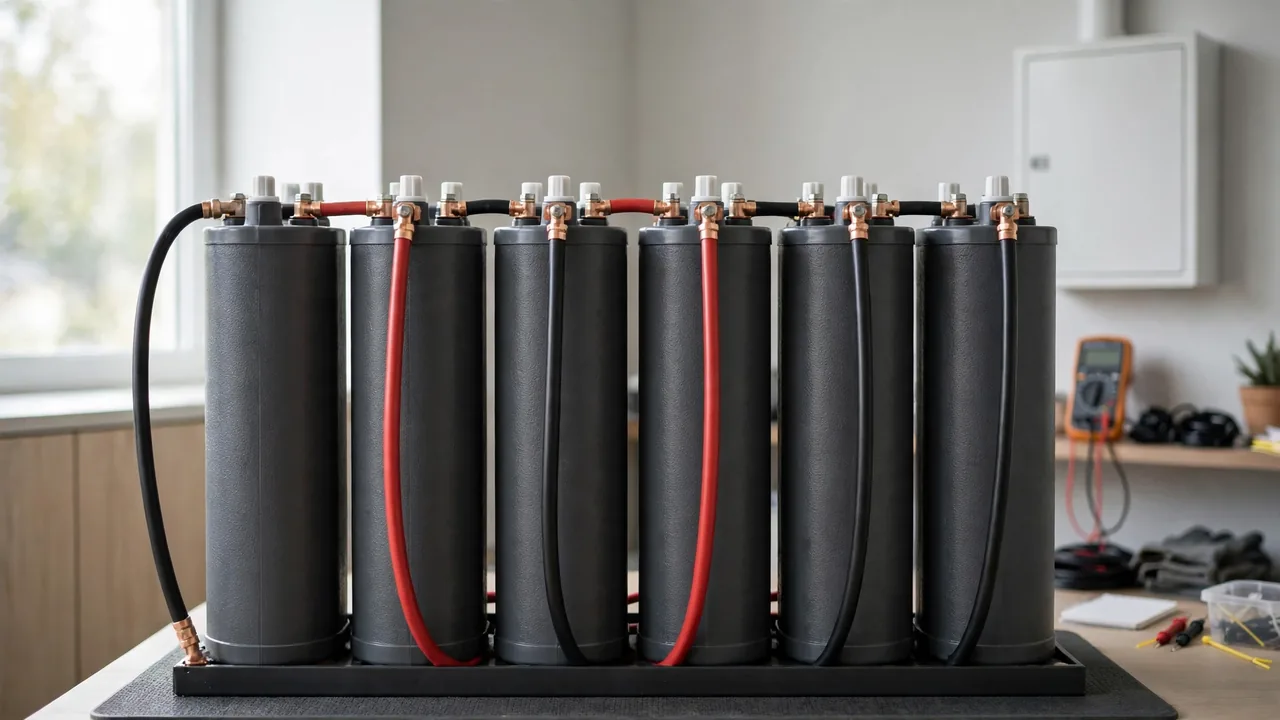
For bigger systems – farmhouses, small commercial setups and off-grid installations – Osaka manufactures OPzS 2V flooded cells. These are single 2V cells with tubular plates, designed specifically for renewable energy applications such as solar and wind, as well as off-grid use. Individual cells are wired in series to build 12V, 24V or 48V banks, so a 48V bank needs twenty-four 2V cells in series.
The advantage of 2V cells is serviceability: if one cell in the string weakens, you can replace that single cell instead of scrapping an entire 12V block. According to the manufacturer’s technical datasheet, the OPzS series is designed for regular and long deep-discharge duty with an 18 to 20 year designed life in standby service. In daily solar cycling the real-world lifespan is lower and depends heavily on depth of discharge and maintenance – which is covered later in this guide.
Car and UPS Batteries – Not Ideal for Daily Solar Cycling
You will also see Osaka automotive (SLI) and general-purpose UPS batteries in the same shops. These are built with thin flat plates optimized for short, high-current bursts – starting a car engine or bridging a brief power cut. Put them on a solar system that deep-cycles them every single day, and their plates shed active material fast.
They are cheaper upfront, which tempts some buyers, but they are a false economy for daily solar use. If you want the chemistry comparison laid out plainly, our lithium vs dry battery comparison explains why plate and chemistry choice matters more than brand.
Tubular vs Flat Plate: Why the Plate Design Matters
The single most important technical difference between a solar-suitable Osaka battery and an ordinary one is the plate design:
- Tubular plates enclose the positive active material in fabric-like tubes (gauntlets). During cycling, the material cannot easily shed or fall to the bottom of the case, so the battery keeps its capacity through hundreds of deep cycles.
- Flat plates are simpler pasted grids. They are cheaper to make and fine for occasional backup duty, but repeated deep cycling washes the paste off the grids, and capacity fades quickly.
This is why two 12V batteries of the same amp-hour rating can behave completely differently on solar: a tall tubular Osaka battery and a flat-plate UPS battery may look similar on the shelf, but only the tubular one is engineered for the daily deep cycling a solar system demands. When comparing options in a shop, always ask specifically for the tubular range – “Osaka” alone is not enough.
How to Size Your Osaka Battery Bank
Buying the right battery type is only half the job; the bank also has to be big enough for your needs. An undersized bank gets discharged too deeply every day and dies early, while a wildly oversized bank wastes money. Follow this practical sequence:
- List your backup loads: Write down every appliance the batteries must run during load shedding or at night, with each appliance’s wattage. Our battery-count guide walks through this step with worked examples.
- Decide your backup hours: How many hours must the bank carry those loads? Multiply total watts by hours to get the watt-hours you need per day.
- Respect depth of discharge: Flooded lead-acid batteries, including tubular ones, last much longer when you do not drain them fully every day. As a rule of thumb, size the bank so that a normal day uses about half of its rated capacity. Our battery backup time calculator guide shows the exact math.
- Convert to amp-hours at your system voltage: Divide the required watt-hours by your system voltage (12V, 24V or 48V) to get the amp-hours you need, then divide by the per-battery Ah rating to get the number of batteries.
- Match your inverter: Small inverters typically run on 12V or 24V battery banks, while most modern hybrid inverters need 48V. Wire the bank to match that voltage exactly – our series vs parallel wiring guide shows how voltage and capacity combine when you connect multiple batteries.
A common mistake is mixing old and new batteries in one bank, or mixing different models and capacities. Every battery in a bank should ideally be the same brand, model, capacity and age – bought together – so they charge and discharge evenly. A single weak battery drags the whole bank down with it.
Matching Osaka Batteries to Your Inverter
The inverter decides your bank voltage, and the bank voltage decides how you wire the batteries:
- 12V systems: Small inverters and UPS-style setups. One or more 12V tall tubular batteries in parallel for extra capacity.
- 24V systems: Mid-size setups. Two 12V batteries wired in series make 24V; add more pairs in parallel for capacity.
- 48V systems: Most modern hybrid inverters. Four 12V batteries in series make 48V, or twenty-four 2V OPzS cells in series for larger installations.
Before buying batteries, check your inverter’s datasheet or the label near its battery terminals – the required battery voltage is always specified there. If you are still choosing an inverter, our solar inverter buying guide for Pakistan explains types, sizing and what to check so the inverter and battery bank end up compatible from day one.
Maintenance Tips for Osaka Batteries in Solar Use
Osaka’s solar-suitable batteries are flooded lead-acid types, which means they need a little regular attention. None of it is difficult, and it directly decides how many years you get out of the bank:
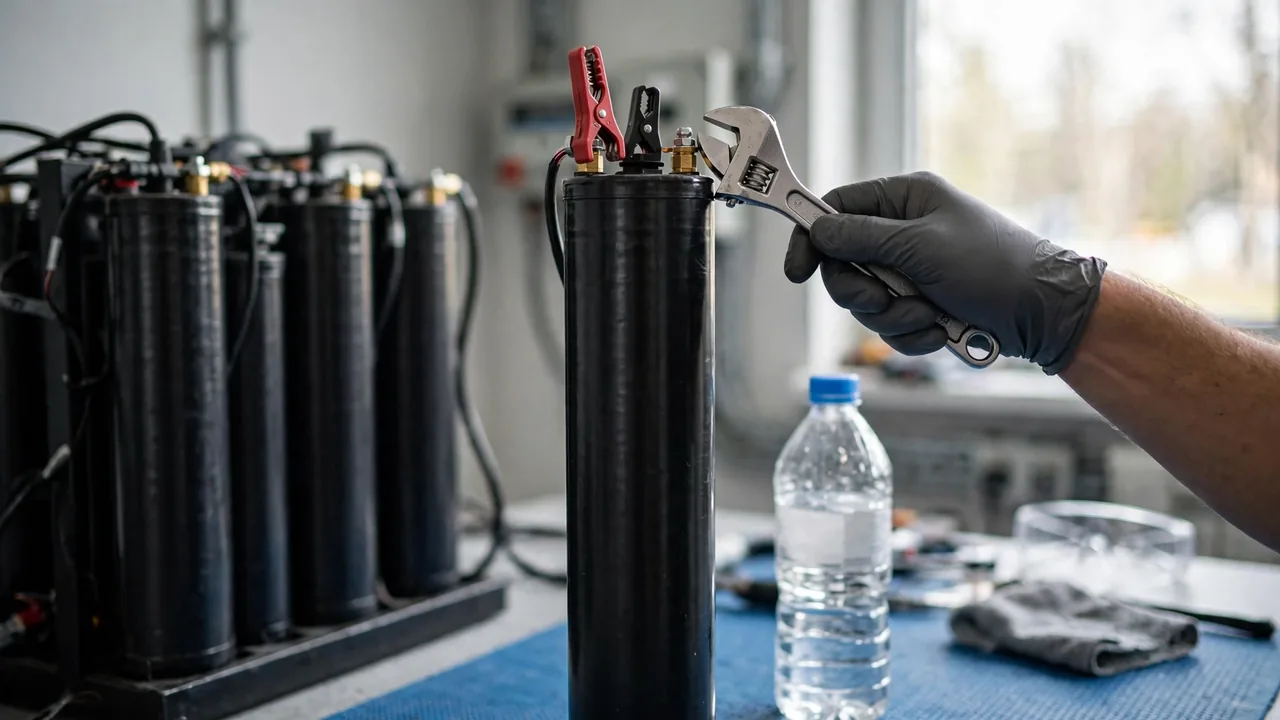
- Top up with distilled water: Flooded batteries lose water during charging. Check the electrolyte level regularly and top up with distilled water only – never tap water, and never add acid. Our tubular battery water maintenance guide covers the correct levels and frequency.
- Keep terminals clean and tight: Corroded or loose terminals cause voltage drop and uneven charging. Clean terminals periodically and keep connections snug.
- Ensure ventilation: Flooded batteries release small amounts of hydrogen gas while charging. Install the bank in a ventilated area, away from sparks and flames.
- Avoid deep discharges: Try not to drain the bank below about half its capacity on a regular basis. Shallower cycles mean a longer battery life.
- Recharge fully and regularly: Leaving a lead-acid battery sitting partially discharged for days causes sulfation on the plates. Make sure your charge controller or inverter settings bring the bank to a full charge routinely.
- Watch for one weak battery: In a series bank, a single failing battery limits the whole string. If backup time drops suddenly, have each battery tested individually before replacing the entire bank.
For a complete routine you can follow month by month, see our solar battery maintenance guide.
Buying Tips: How to Get a Genuine Osaka Battery
Osaka’s popularity means counterfeit and misrepresented batteries circulate in the market. Protect yourself with these checks:
- Buy from authorized dealers: Purchase from an authorized Osaka dealer or a reputable solar shop, and ask for the stamped warranty card with the battery’s serial details filled in. Keep it safe – it is your proof for any warranty claim.
- Check the manufacturing date: Lead-acid batteries self-discharge on the shelf. Prefer fresh stock and avoid batteries that have been sitting discharged for many months.
- Confirm the exact model: Make sure the model on the case matches a tubular solar/deep-cycle range, not an automotive or general UPS line. If the listing does not say “tubular”, ask directly.
- Be wary of too-good-to-be-true prices: Prices far below the market average are a classic sign of remanufactured cores or counterfeits. Compare a few dealers first.
- Buy the bank as a matched set: All batteries in one bank should be the same model and from the same batch. Adding one new battery to a bank of old ones shortens the new battery’s life.
If you are hiring an installer, our authorized distributor guide explains how to vet sellers and installers before you commit.
Check Current Prices
Battery prices in Pakistan move with the dollar rate, lead costs and seasonal demand, so any fixed price in a guide goes out of date quickly. That is why this guide stays evergreen: for today’s Osaka battery prices, system costs and dealer offers, visit our homepage, where the price tables are updated every morning from live market data.
Frequently Asked Questions (FAQs)
Is an Osaka battery good for solar systems?
Yes, provided you choose the right type. Osaka’s tall tubular batteries are built for the daily deep cycling that solar systems demand, and the brand is widely available across Pakistan with dealer support. Car and general UPS batteries from the same brand are not suitable for daily solar cycling.
Which Osaka battery type is best for solar?
Tall tubular batteries are the best pick for home solar systems because their tubular positive plates resist shedding during repeated deep discharges. For larger or off-grid installations, 2V OPzS cells wired in series are the purpose-built option.
How long do Osaka batteries last in solar use?
It depends mainly on depth of discharge and maintenance. Tubular batteries last noticeably longer than flat-plate batteries in daily solar cycling. Keeping daily discharge to about half of rated capacity, topping up distilled water and recharging fully each day are the biggest factors in reaching a long service life.
Do Osaka tubular batteries need distilled water?
Yes. Osaka’s solar-suitable batteries are flooded lead-acid types, so they lose water during charging. Check the electrolyte level regularly and top up with distilled water only, never tap water or acid.
Can I use a car battery with my solar system?
Technically it will work for a short time, but it is a poor choice. Car batteries use thin flat plates designed for brief high-current bursts, and daily deep cycling on solar wears them out quickly. A tall tubular deep-cycle battery costs more upfront but lasts far longer in solar duty.
How many Osaka batteries do I need for my solar system?
It depends on your backup loads, how many hours of backup you need and your system voltage. Add up the wattage of the appliances the bank must run, multiply by backup hours, allow for about 50 percent depth of discharge, then convert watt-hours to amp-hours at your system voltage (12V, 24V or 48V).
Can Osaka batteries work with hybrid inverters?
Yes. Match the battery bank voltage to what the inverter requires – most modern hybrid inverters need a 48V bank, which means four 12V tubular batteries in series. Check the inverter’s datasheet or the label near its battery terminals before wiring the bank.
How do I know my Osaka battery is original?
Buy from an authorized Osaka dealer or a reputable solar shop, ask for the stamped warranty card with the battery’s serial details, check the manufacturing date for fresh stock, and confirm the model is from the tubular solar or deep-cycle range rather than an automotive line.
