
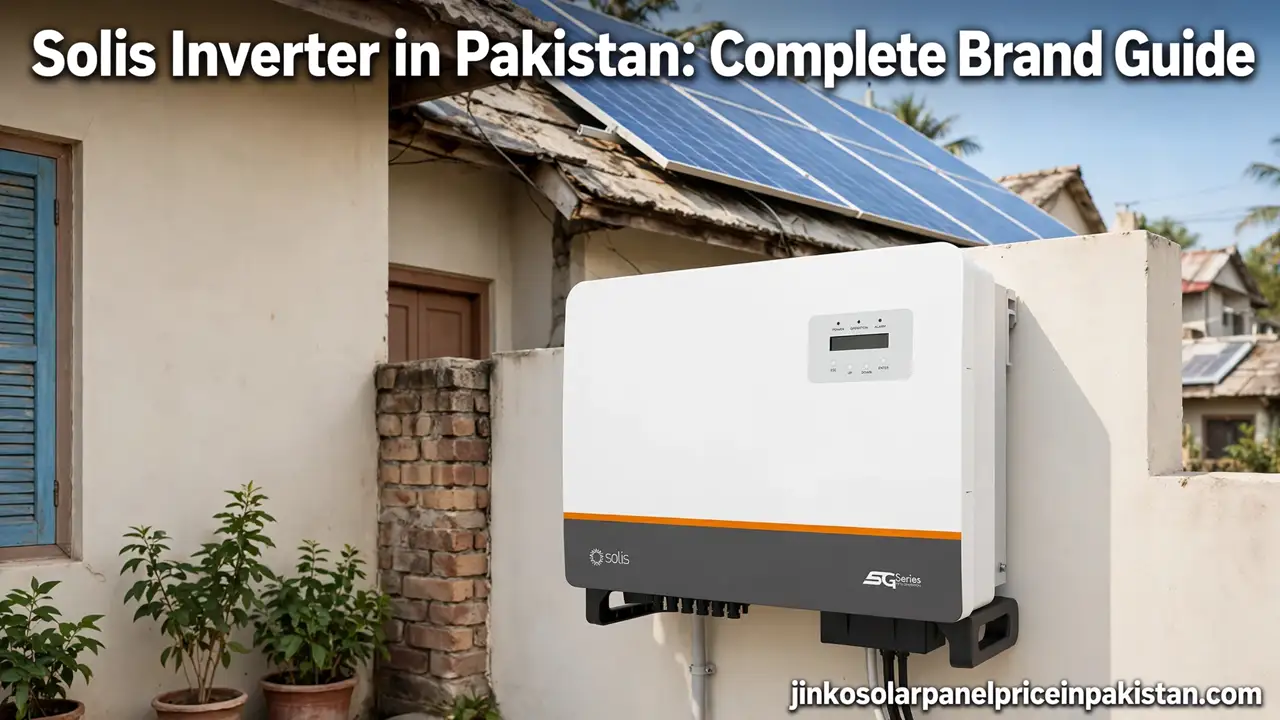
Solis Inverter in Pakistan: Complete Brand Guide

Is a Solis inverter a good choice for a solar system in Pakistan? The short answer is yes – Solis is an established global inverter brand with a track record going back to 2005, and its two main lines fit the two situations Pakistani buyers care about most: grid-tied string inverters for net metering homes, and hybrid inverters with battery backup for areas hit by load shedding. This guide explains who makes Solis inverters, which types are relevant in Pakistan, the key features to know, how to match a model to your situation, and what to verify before you buy. For today’s inverter prices, check the daily updated price tables on our homepage.
Who Makes Solis Inverters?
Solis is the brand name of Ginlong Technologies, a solar inverter manufacturer founded in 2005 and headquartered in Ningbo, China. The company focuses specifically on string inverters for residential, commercial, and utility-scale solar, and it is listed on the Shenzhen Stock Exchange. The Solis brand has earned BNEF Tier 1 recognition, which matters to buyers because it signals bankability – banks and large project developers treat the brand’s equipment as a safe long-term bet, which usually means better-documented warranties and more consistent spare-parts availability than you get from no-name or newly launched brands.
Two decades in a fast-moving industry also means the company has shipped inverters through many product generations, and its firmware, monitoring platform, and certification paperwork have had time to mature. For a Pakistani homeowner, the practical payoff is simple: installers know the brand, its monitoring app is stable, and datasheets and manuals are easy to find on the Solis official website.
Types of Solis Inverters
Solis organizes its lineup into two big families: grid-tied (on-grid) string inverters and hybrid/off-grid inverters. Within each family, single-phase models cover typical Pakistani homes while three-phase models cover larger houses and commercial rooftops.
Solis Grid-Tied (On-Grid) String Inverters
Grid-tied string inverters convert the DC power from your solar panels into AC for your home and the national grid. They are the standard choice for net metering, because they sync with the grid and shut down safely during outages (anti-islanding protection). Solis offers:
- Single-phase residential string inverters (the S6-GR1P series) for smaller homes, covering roughly the 1-6 kW class. Per official datasheets, the smaller models list max efficiency around 97.1% and the larger around 97.7%, with dual MPPT inputs so you can connect panels facing two different roof directions and still harvest well from each. The enclosures are IP66-rated, meaning they are dust-tight and protected against water jets – fine for outdoor mounting in a shaded, ventilated spot.
- Three-phase string inverters (the S5-GR3P series, 5-20 kW class) for larger homes and small commercial rooftops, listing max efficiency around 98.7% on official datasheets, with 2 MPPTs and IP66 protection.
- Utility-scale three-phase models (the S5-GC series, up to 125 kW and beyond) with up to 10 MPPTs and max efficiency up to 99% – relevant for factories and solar farms rather than homes, so this guide will not dwell on them.
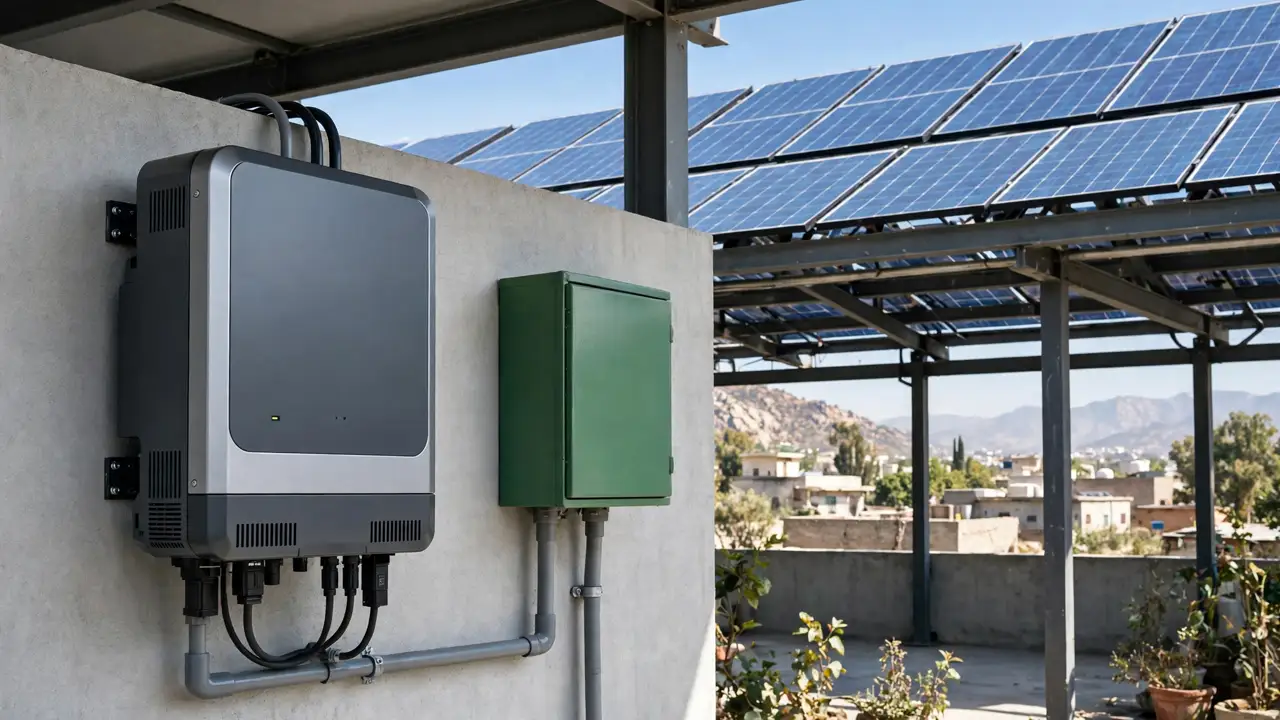
If you are still deciding between inverter types for your situation, our on-grid vs off-grid vs hybrid inverter comparison walks through the trade-offs, and the net metering policy guide explains how exported units are treated in Pakistan.
Solis Hybrid Inverters
Hybrid inverters do everything a grid-tied inverter does, plus they manage batteries – so when the grid goes down, they keep your essential loads running from the battery and panels. This is the line Pakistani buyers ask about most, because backup during load shedding is often the whole point of the system.
The residential hybrid line is the S5-EH1P series, single-phase models in the 3.6, 5, and 6 kW class. The points that matter for buyers:
- Dual MPPT inputs with up to 15A string current, so they pair with modern high-current panels without wasting panel capacity.
- Low-voltage battery support for both lithium (with BMS communication) and lead-acid batteries – so you can start with tubular batteries and upgrade to lithium later without replacing the inverter.
- Backup/UPS function with fast switchover, keeping essential circuits alive when the grid fails.
- Fanless natural cooling – no fan noise and no moving parts to fail in dusty rooms.
- Integrated AFCI (arc-fault circuit interruption) on these models, which detects dangerous DC arcs and shuts down before a fire risk develops.
- 5-year product warranty, extendable to 10 years – but always confirm the local warranty terms in writing in Pakistan (more on that below).
- Parallel operation with an accessory, so you can scale up by adding a second unit later instead of replacing the first.
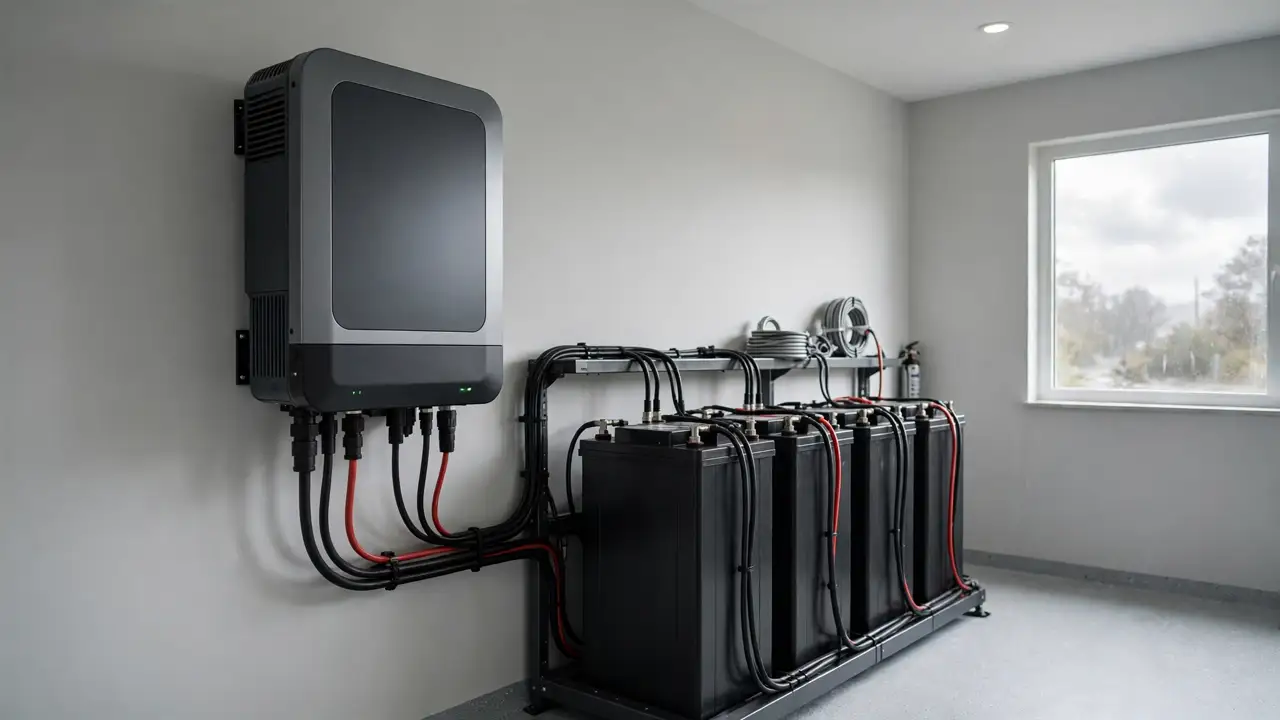
For a deeper look at how hybrids work in general, see our hybrid solar inverter guide for Pakistan, and if you are weighing ranked options, the top-5 hybrid inverter list compares the models Pakistani installers commonly quote.
Off-Grid and AC-Coupled Models
Solis also lists off-grid single-phase inverters and AC-coupled models (for adding batteries to an existing on-grid system). These suit niche cases – a farmhouse or tubewell with no grid connection, or an existing net-metered system getting a battery retrofit. Most urban and semi-urban buyers will choose from the two families above.
Key Features Worth Noting
A few Solis design choices show up consistently across the lineup and are worth understanding before you compare quotes.
MPPT tracking. Every residential model carries at least two independent MPPT channels (three or four on the larger three-phase units). In practice this means east- and west-facing panel strings each get their own optimizer logic instead of dragging each other down – useful on Pakistani roofs where perfect south-facing space is rare.
Efficiency. Official datasheets list maximum efficiency from about 97% on the smallest residential models up to 98.7-99% on the larger three-phase units. Differences of a fraction of a percent translate into small but real yield differences over years of operation; they matter most on large systems, less on small ones.
Monitoring. Solis runs its own monitoring platform, SolisCloud, with a mobile app and web portal. Models support Bluetooth for local commissioning and optional Wi-Fi or GPRS sticks for cloud logging. Being able to see daily generation, grid export, and battery state from your phone is genuinely useful – it is how most owners first notice a dirty panel or a tripped string.
Safety and certifications. The lineup carries standard international certifications (IEC/EN 62109 safety, IEC/EN 61000 EMC, IEC 62116 anti-islanding) and grid codes such as G98/G99 and VDE. Anti-islanding protection – the feature that disconnects the inverter when the grid fails – is mandatory for net metering and standard on Solis units.
Build for outdoor use. IP65/IP66 ratings and fanless designs on the smaller models mean the inverter tolerates heat, dust, and humidity better than older fan-cooled designs – though you should still mount it in shade with ventilation, not baking in direct afternoon sun.
Which Solis Inverter Fits Your Situation in Pakistan?
Match the inverter family to your goal, not to whatever the dealer has in stock.
For a net metering home with stable grid supply: a single-phase grid-tied string inverter in the size your installer designs (typically 5-10 kW for a normal house). Simpler, cheaper, and with nothing to maintain – no batteries, no changeover wiring. Our solar inverter buying guide for Pakistan explains the full sizing logic.
For a home with frequent load shedding: a hybrid inverter from the S5-EH1P line with a battery bank. This is the most common Pakistani use case. Pair it with a battery type that matches your budget and patience for maintenance – the lithium battery guide and the types of solar batteries guide cover the trade-offs in detail.
For a commercial rooftop or factory: three-phase grid-tied or hybrid units sized by a proper site survey. At this scale, the MPPT count and monitoring granularity matter more, and so does the installer’s track record.
What to Verify Before Buying a Solis Inverter in Pakistan
Inverter brands are widely available in Pakistan, which is good – and also means you should check a few things before paying.
- Genuineness. Check the serial number and confirm the model number (including suffixes like “-L” or “-M”) against the datasheet on the Solis official website. Counterfeit and grey-market inverters exist; a mismatch between the label and the official datasheet is a red flag.
- Warranty in writing. The factory warranty on the residential hybrid line is 5 years, extendable to 10. What matters is who honors it in Pakistan: get the warranty card, the importer’s name, and the service contact in writing. A verbal “warranty hai” is not a warranty.
- Net metering acceptance. Confirm with your DISCO (distribution company) that the model is acceptable for a net metering connection before you buy. Requirements can change, and the installer should be able to show recent approved applications with the same model.
- Datasheet match. Verify the MPPT voltage range against your panel string design – a mismatch here is one of the most common causes of underperforming systems, and it is an installer error, not an inverter defect.
- Installer quality. Inverter brands do not install themselves. Proper earthing, correct breaker and cable sizing, a changeover switch for the backup output on hybrids, and commissioning on the monitoring app separate a good installation from a future service call. Vet the installer as carefully as the inverter.
Installation and Care Tips
Once installed, a Solis inverter needs little attention, but a few habits keep it healthy. Mount it in a shaded, ventilated spot with clear airflow around the casing – IP-rated does not mean heat-proof, and electronics age faster in sustained heat. Keep the area around it dry and dust as free as practical. Register the unit on SolisCloud and glance at the generation figures weekly; a sudden drop usually means a tripped breaker, a blown string fuse, or heavy panel soiling – all cheap to fix when caught early. When the installer commissions the system, ask them to walk you through the app’s key screens (daily yield, grid export, battery state on hybrids) so you know what normal looks like.
Check Current Solis Inverter Prices in Pakistan
Inverter prices in Pakistan move with the dollar rate, import duties, and dealer stock levels, so any fixed figure printed in a guide goes stale quickly. Our homepage carries daily updated price tables for panels, inverters, and batteries – check the current prices on the homepage before you start collecting quotes, so you can spot an inflated offer immediately.
Frequently Asked Questions (FAQs)
Who makes Solis inverters?
Solis is the brand name of Ginlong Technologies, a solar inverter manufacturer founded in 2005 and headquartered in Ningbo, China. The company focuses on string inverters for residential, commercial and utility-scale solar, is listed on the Shenzhen Stock Exchange, and the Solis brand has earned BNEF Tier 1 recognition.
Is Solis a good inverter brand for Pakistan?
Solis is an established global brand with product lines that fit Pakistan’s two main needs: grid-tied string inverters for net metering homes and hybrid inverters with battery backup for areas with load shedding. As with any brand, buy through a genuine channel and confirm the warranty and after-sales support terms in Pakistan before you pay.
What types of Solis inverters are available?
Solis offers grid-tied (on-grid) string inverters in single-phase models for homes and three-phase models for larger homes and commercial rooftops, hybrid inverters that manage batteries for backup power, plus off-grid and AC-coupled models for niche cases like sites without a grid connection.
Does Solis make hybrid inverters with battery backup?
Yes. The residential hybrid line (S5-EH1P series) includes single-phase models in the 3.6, 5 and 6 kW class with dual MPPT inputs, support for both lithium and lead-acid batteries, a backup/UPS function for outages, fanless silent cooling, and a 5-year product warranty that can be extended to 10 years.
What warranty do Solis inverters carry?
The residential hybrid line carries a 5-year product warranty, extendable to 10 years. What matters most is who honours the warranty in Pakistan – get the warranty card, the importer’s name and the service contact in writing from your dealer or installer.
How can I check that a Solis inverter is genuine?
Check the unit’s serial number and confirm the full model number – including suffixes like -L or -M – against the datasheet on the Solis official website. Buy from an established dealer or installer who provides written warranty documents, and treat any mismatch between the label and the official datasheet as a red flag.
Can Solis inverters be used with net metering in Pakistan?
Yes – Solis grid-tied inverters are built for net metering use, with anti-islanding protection that disconnects the unit safely when the grid fails, plus standard international safety and EMC certifications. Still, confirm with your distribution company (DISCO) that the specific model is acceptable for a net metering connection before you buy.
Which Solis inverter size do I need?
The right size depends on your household load, your panel array design and whether you want battery backup – it is an installer’s sizing calculation, not a guess. Single-phase grid-tied or hybrid models in the 5 to 10 kW class suit most Pakistani homes, while larger homes and commercial rooftops use three-phase units sized from a proper site survey.
