
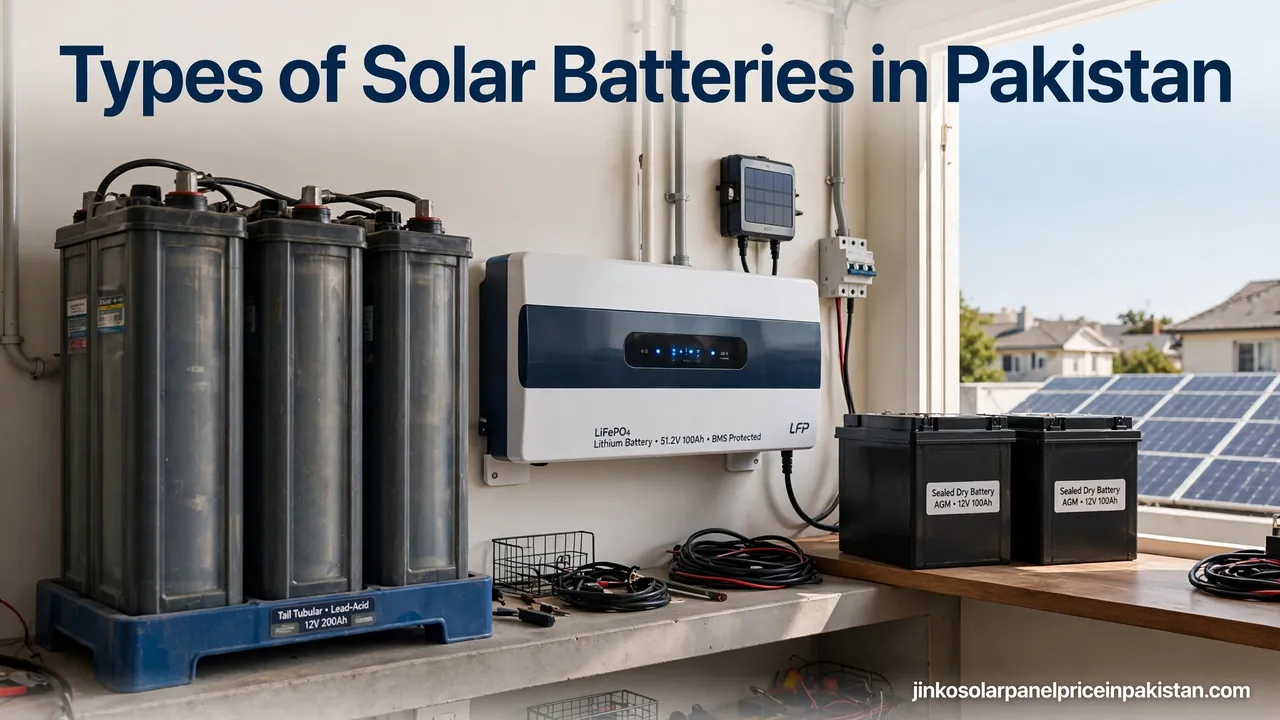
Types of Solar Batteries in Pakistan: Complete Guide (2026)

If you are trying to understand the types of solar batteries in Pakistan, here is the direct answer: four battery types are commonly paired with solar systems — tall tubular lead-acid, lithium (LiFePO4), dry sealed batteries (AGM or gel), and standard flooded lead-acid. Tall tubular is the most common choice for home backup in Pakistan because it handles deep daily cycling and is serviced everywhere. Lithium is the longest-lasting, maintenance-free premium option for modern hybrid systems. Dry batteries suit installations where you want zero maintenance, while flooded lead-acid is only appropriate for light or occasional backup use. This guide explains each type honestly — how it works, its real strengths, its limitations, and which situation it fits — so you can choose with confidence.
Why the Battery Type Matters in Pakistan
Solar panels only generate electricity while the sun is shining. In Pakistan, where load shedding still interrupts daily life in many areas, the battery is the part of your system that keeps your fans, lights and fridge running after sunset. And unlike panels or inverters, which are mostly install-and-forget, batteries are the component most likely to need replacement during the system’s life — which makes the type you choose one of the most consequential decisions in your whole setup.
Different battery chemistries behave very differently in real-world solar use: some tolerate deep daily discharge gracefully, others degrade fast under it. Some need regular maintenance; others are sealed for life. And not every battery type pairs with every inverter, so the choice ripples into the rest of your system. Understanding the options before you buy is what separates a setup that runs reliably for years from one that disappoints within months. If you want the full buying walkthrough after this overview, read our best battery for a solar system in Pakistan guide, which covers sizing and buying in detail.
Tall Tubular Batteries
How They Work
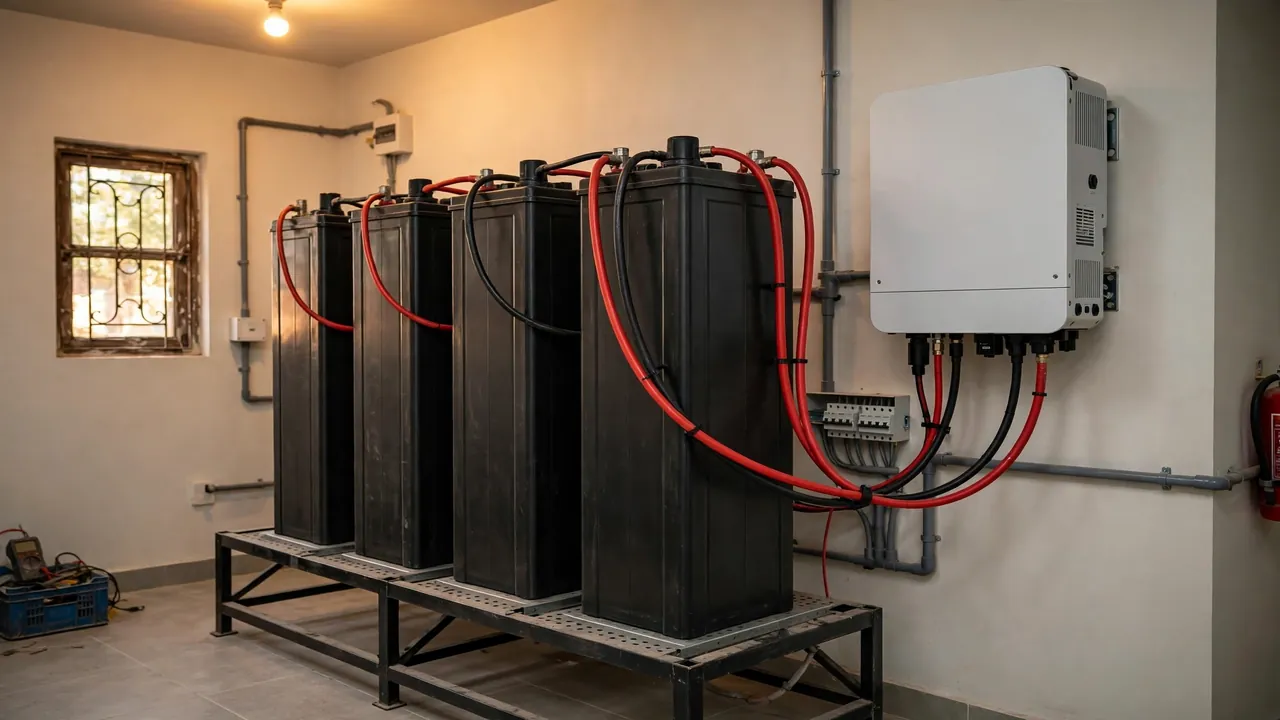
Tall tubular batteries are deep-cycle lead-acid batteries built with thick tubular positive plates instead of the flat plates found in ordinary batteries. The tubular plate design resists the corrosion and shedding that comes from being charged and discharged deeply every single day, which is exactly what a solar system demands. The electrolyte is liquid and the battery is vented, so water is lost gradually during charging and must be replaced with distilled water.
Local manufacturers such as Osaka, Phoenix, Exide and AGS produce tubular deep-cycle models that are sold in virtually every city and town in Pakistan, which is a big part of their popularity: spares, replacements and experienced technicians are easy to find anywhere.
Strengths
- Proven deep-cycle durability: designed specifically for the daily charge-discharge pattern of solar systems.
- Heat tolerance: perform reliably in Pakistan’s hot climate when installed with basic ventilation.
- Wide availability: easy to buy, replace and service anywhere in the country.
- Tolerant charging: forgiving of the voltage variations common with older charge controllers.
Limitations
- Regular maintenance is mandatory: electrolyte must be topped up with distilled water, and terminals need periodic cleaning.
- Limited usable capacity: only about half of the rated capacity should be used daily, so you need a larger bank than the raw numbers suggest.
- Bulky and heavy: a battery bank takes up real floor space and needs a sturdy, ventilated spot.
- Gassing: vented design means the installation area needs airflow; they should not sit in a sealed living space.
Lithium (LiFePO4) Batteries
How They Work
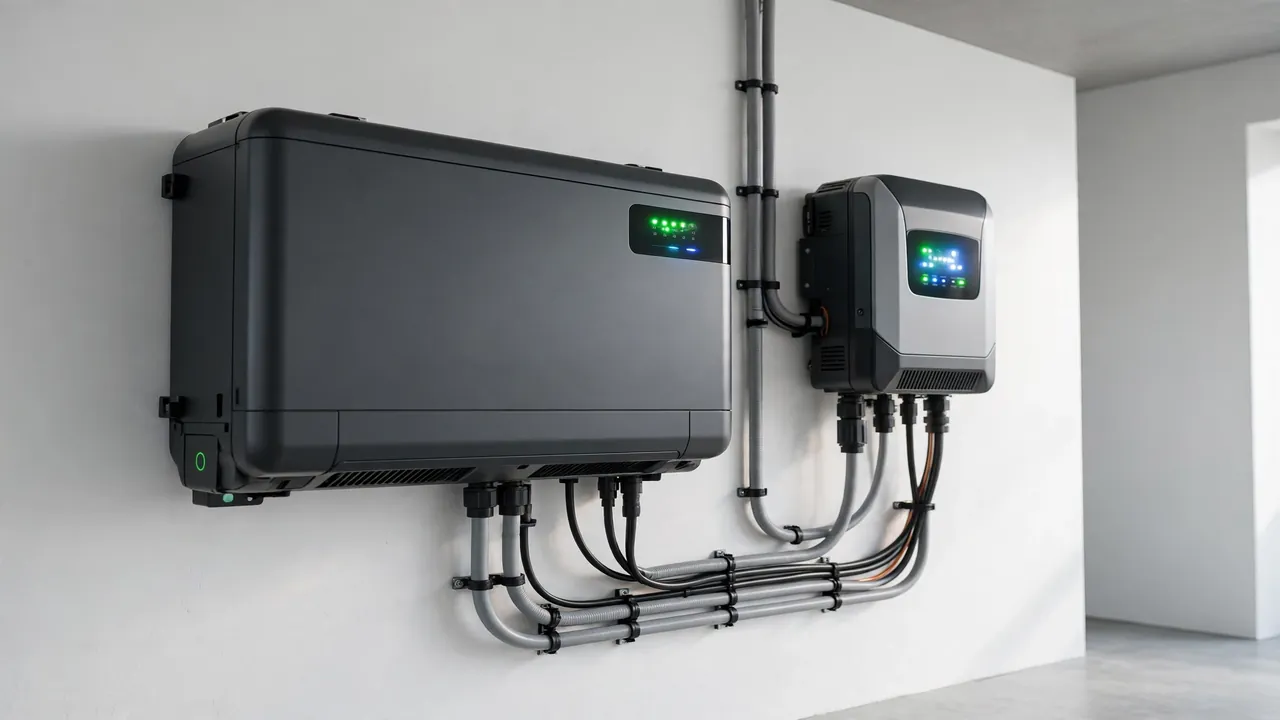
LiFePO4 (lithium iron phosphate) batteries store energy in lithium cells managed by a built-in Battery Management System (BMS). The BMS is the brain of the battery: it continuously monitors cell voltage and temperature, protecting against overcharging, deep discharge, short circuits and overheating. Most of the rated capacity can be used every day without harming the battery, and charging is fast and efficient.
Strengths
- Longest cycle life: rated for several thousand charge cycles under normal use — many times the life of lead-acid options.
- Zero maintenance: sealed for life; no water topping, no terminal corrosion issues.
- High usable capacity: nearly the full rated capacity is available daily, so a smaller bank does the same job.
- Compact and light: wall-mounted designs take up minimal space and install almost anywhere.
- Stable in heat: the LiFePO4 chemistry is among the most thermally stable lithium chemistries available.
Things to Know Before Buying
- Inverter compatibility is essential: the inverter or charge controller must have a lithium charging profile. Not every older inverter supports lithium, so confirm compatibility before buying.
- Higher upfront cost: the initial investment is significantly more than lead-acid options, though the long life offsets this over time.
- Buy from reputable sources: because the BMS does the safety work, a genuine unit from an authorized dealer matters more than with simpler battery types. Counterfeit lithium batteries without proper BMS protection are a real hazard.
As the U.S. Department of Energy explains in its Solar-Plus-Storage 101 guide, lithium-based batteries are growing in popularity worldwide because they can be installed almost anywhere, have a small footprint and hold a charge well — the same reasons they are gaining ground in Pakistani homes and businesses.
Dry Batteries: AGM and Gel
How They Work
Dry batteries are sealed lead-acid batteries in which the electrolyte is immobilized — absorbed into a glass mat (AGM, Absorbent Glass Mat) or thickened into a gel. Nothing spills, nothing needs topping up, and they can be installed in any orientation. AGM is the more common variant for solar use; gel handles deep discharge slightly better but charges more slowly and is more sensitive to incorrect voltage settings.
Strengths
- Maintenance-free: sealed for life — no water topping, no acid spills.
- Clean, flexible installation: can go in tight indoor spaces where vented tubular batteries cannot.
- Spill-proof and safe to transport: orientation-independent and easy to handle.
- Good for moderate use: reliable for backup loads that are not deeply cycled every day.
Limitations
- Shorter life under deep daily cycling: when discharged deeply every day, dry batteries wear out faster than tubular batteries — this is the main reason they are less common as the primary bank in Pakistani home solar systems.
- Sensitive to overcharging: charger voltage settings must be correct for sealed cells; overvoltage damages them permanently.
- Limited usable capacity: like tubular batteries, only about half the rated capacity should be used daily.
For a detailed head-to-head between two of these technologies, see our lithium vs dry battery comparison for solar panels.
Flooded Lead-Acid Batteries
Standard flooded lead-acid batteries — the flat-plate type used in cars and older UPS systems — are the oldest and most basic option. They have liquid electrolyte and need regular water topping, just like tubular batteries, but their thin flat plates are not built for deep daily cycling. In solar service they are suitable only for very light or occasional backup use: a weekend cabin, or a system where the battery rarely does heavy work. For any home running daily solar backup in Pakistan, tubular or lithium options are far more appropriate, and dry batteries are a better sealed choice.
Quick Comparison of All Four Types
Here is how the four types line up on the factors that actually matter for a solar system in Pakistan:
| Factor | Tall Tubular | Lithium (LiFePO4) | Dry (AGM/Gel) | Flooded Lead-Acid |
|---|---|---|---|---|
| Daily deep cycling | Good | Excellent | Acceptable | Poor |
| Maintenance | Regular water topping needed | None | None | Regular water topping needed |
| Usable daily capacity | About half of rated | Most of rated | About half of rated | About half of rated |
| Expected life in solar use | Several years with maintenance | Longest — several thousand cycles | Shorter under daily deep cycling | Short in daily solar use |
| Space and weight | Bulky and heavy | Compact and light | Moderate | Bulky and heavy |
| Indoor installation | Needs ventilation | Yes, wall-mountable | Yes | Needs ventilation |
| Best suited for | Daily home backup | Modern hybrid systems, long-term setups | Tight spaces, moderate backup needs | Light or occasional backup only |
Which Type Matches Your Situation?
Rather than asking which battery is “the best” in absolute terms, match the type to your situation:
- Daily load-shedding backup for a typical home: tall tubular batteries are the practical default — proven, widely available and serviceable anywhere in Pakistan. Be prepared for the maintenance routine.
- A new hybrid system you want to run for many years with minimal fuss: lithium (LiFePO4), provided your inverter supports a lithium charging profile. Confirm compatibility with your installer first.
- No space for a vented battery bank, or backup needed only occasionally: dry (AGM) batteries give you a sealed, maintenance-free installation — just do not expect them to match tubular or lithium life under heavy daily cycling.
- A small secondary setup with light use: flooded lead-acid can work, but stepping up to tubular is usually the smarter long-term call.
Battery Type and Inverter Compatibility
One thing buyers often miss: the battery and the inverter must agree on chemistry. Lithium batteries need an inverter or charge controller with a lithium charging profile; lead-acid types (tubular, dry, flooded) need the correct voltage settings for flooded or sealed cells. An inverter set to the wrong battery type will either undercharge your bank (short backup) or overcharge it (permanent damage, especially to dry batteries). Before buying any battery, confirm that your existing or planned inverter supports it — our solar inverter buying guide for Pakistan explains how inverter types and battery pairing work.
Maintenance Differences by Type
Maintenance is the hidden cost of a battery choice, and it splits cleanly by type. Flooded lead-acid batteries, including tall tubular, need the most attention: regular distilled-water top-ups, terminal cleaning and checking the electrolyte level. Dry (AGM/gel) batteries need no water, but their charge settings must be right from day one, and terminals still deserve an occasional look. Lithium batteries are genuinely maintenance-free — the BMS handles cell balancing and protection automatically — though a yearly glance at connections is still good practice for any battery bank.
Whatever type you choose, three habits extend battery life: avoid discharging deeper than the chemistry allows, keep the installation area ventilated and away from extreme heat, and fix charge settings correctly at installation rather than “later.”
Check Current Prices
Battery models and prices change constantly with the market. This guide stays evergreen on purpose — for today’s current solar battery prices in Pakistan, including tubular, lithium and dry options, check the daily updated price tables on our homepage, which we refresh every morning.
Frequently Asked Questions (FAQs)
What are the types of solar batteries used in Pakistan?
Four types of batteries are commonly used with solar systems in Pakistan: tall tubular lead-acid, lithium (LiFePO4), dry sealed batteries (AGM or gel), and standard flooded lead-acid. Tubular is the most common choice for home backup, lithium is the longest-lasting premium option, dry batteries suit maintenance-free installations, and flooded lead-acid is only suitable for light or occasional use.
Which battery type is most common for solar systems in Pakistan?
Tall tubular batteries are the most widely used type for home solar backup in Pakistan. They are deep-cycle lead-acid batteries with thick tubular plates that handle daily charging and discharging well, are widely available from local manufacturers, and can be serviced anywhere in the country.
Which battery type lasts longest in daily solar use?
Tall tubular and lithium (LiFePO4) batteries both handle deep daily cycling well. Lithium has the advantage of much longer cycle life — typically several thousand cycles — plus no maintenance. Tall tubular batteries are the proven, widely serviceable option with regular maintenance. Dry (AGM/gel) batteries wear faster under deep daily cycling than either of these.
Can solar batteries be fully discharged every day?
Yes, but the type matters for daily use. Lead-acid batteries — including tall tubular and dry (AGM/gel) types — should only be discharged to about half of their rated capacity on a daily basis to protect their lifespan. Lithium (LiFePO4) batteries can safely use most of their rated capacity every day thanks to their built-in Battery Management System.
Do all types of solar batteries need water maintenance?
No. Only flooded lead-acid batteries, including tall tubular batteries, need regular distilled-water top-ups. Sealed dry (AGM/gel) batteries and lithium batteries are maintenance-free and never need water. However, dry and lithium batteries still need correct charge settings and occasional terminal checks.
Can I use any battery type with any solar inverter?
Compatibility depends on the battery chemistry and the inverter’s charge settings. Lithium batteries need an inverter or charge controller with a lithium charging profile, while lead-acid types (tubular, dry, flooded) need the correct voltage settings for flooded or sealed cells. Always confirm your inverter supports your battery type before buying.
What is the difference between tubular, lithium and dry solar batteries?
The key differences are cycle life, maintenance, usable capacity and weight. Lithium batteries last much longer, need no maintenance and are lighter, but have a higher upfront cost. Tall tubular batteries are widely available and serviceable locally but need regular maintenance. Dry batteries sit in the middle — maintenance-free but with shorter life under deep daily cycling.
