
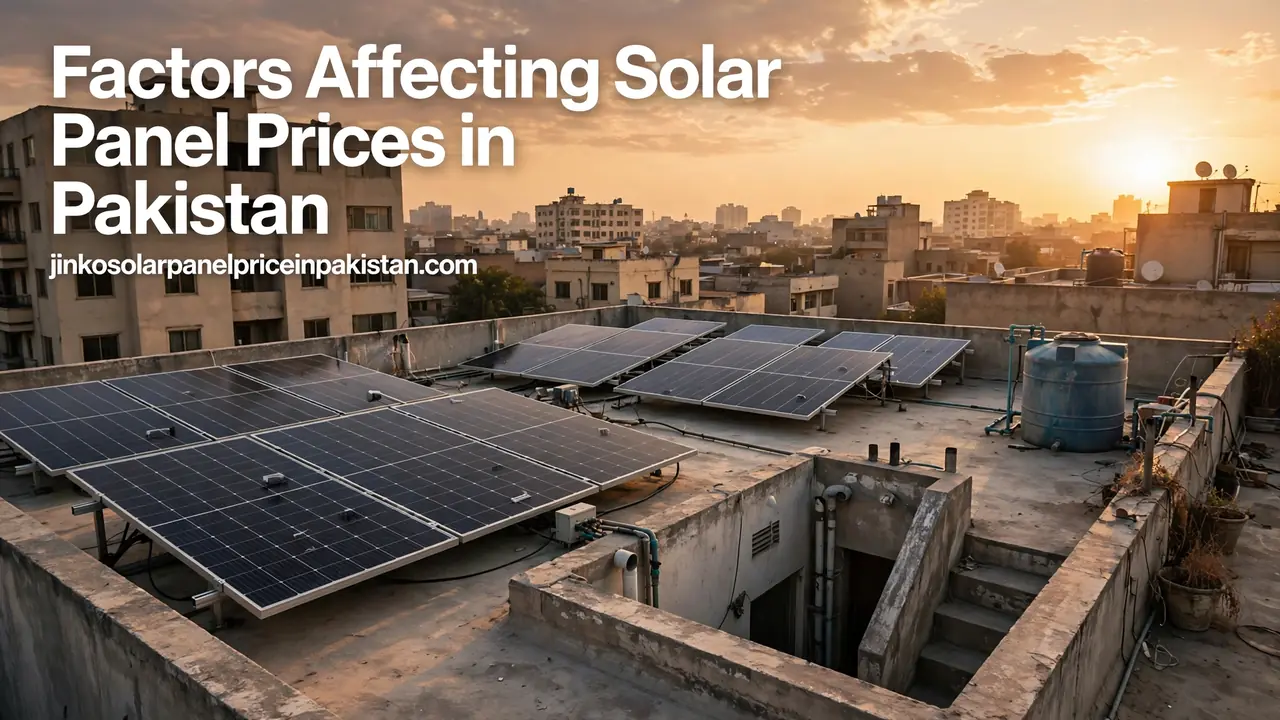
Factors Affecting Solar Panel Prices in Pakistan

Short answer: The factors affecting solar panel prices in Pakistan are the US dollar exchange rate, import duties and taxes, global solar manufacturing trends, local demand and seasonality, panel technology, brand and warranty quality, dealer networks, and government policy such as net metering rules. Because Pakistan imports almost all of its solar panels, any shift in these factors moves retail prices — which is why prices change far more often than most buyers expect. This guide explains each factor in plain language so you can judge whether it is a good time to buy.
By anamta Khan
Why Solar Panel Prices Keep Changing in Pakistan
Unlike locally manufactured goods, solar panels are a global commodity sold into a local market. Pakistan does not manufacture solar cells or modules at any meaningful scale, so nearly every panel installed on a Pakistani rooftop — whether a Canadian Solar panel, a Longi panel, or a Trina panel — begins its journey in a Chinese factory and reaches Pakistan through importers, distributors, and local dealers. Every step of that journey adds costs that respond to currency, tax policy, shipping, and global supply conditions.
Understanding the factors affecting solar panel prices in Pakistan helps you in three practical ways: you stop overpaying during temporary spikes, you recognize when a “discount” is really just a price correction, and you can plan your purchase around predictable seasonal patterns. Let us walk through each factor.
1. Dollar Exchange Rate (PKR vs USD)
The single biggest short-term driver is the exchange rate. Solar panels are manufactured abroad and purchased in US dollars, so when the rupee weakens against the dollar, importers pay more for the same shipment — and that increase reaches the retail market within weeks. When the rupee strengthens, the reverse happens and prices ease.
This is why solar panel prices in Pakistan can move even when nothing changes in the global market: the product is the same, but the currency it is bought in has shifted. For buyers, the practical takeaway is simple — a period of rupee stability is generally a better buying window than a period of sharp depreciation. If you follow the daily exchange rate news, you can anticipate which direction panel prices are likely to move before the market adjusts.
2. Import Duties, Taxes and Customs Policy
Solar panels cross Pakistani customs like any imported goods, and the duties and taxes applied there feed directly into the final retail price. Changes in customs duty, sales tax treatment, regulatory duties, or clearance procedures can raise or lower the landed cost of every container of panels arriving at the port.
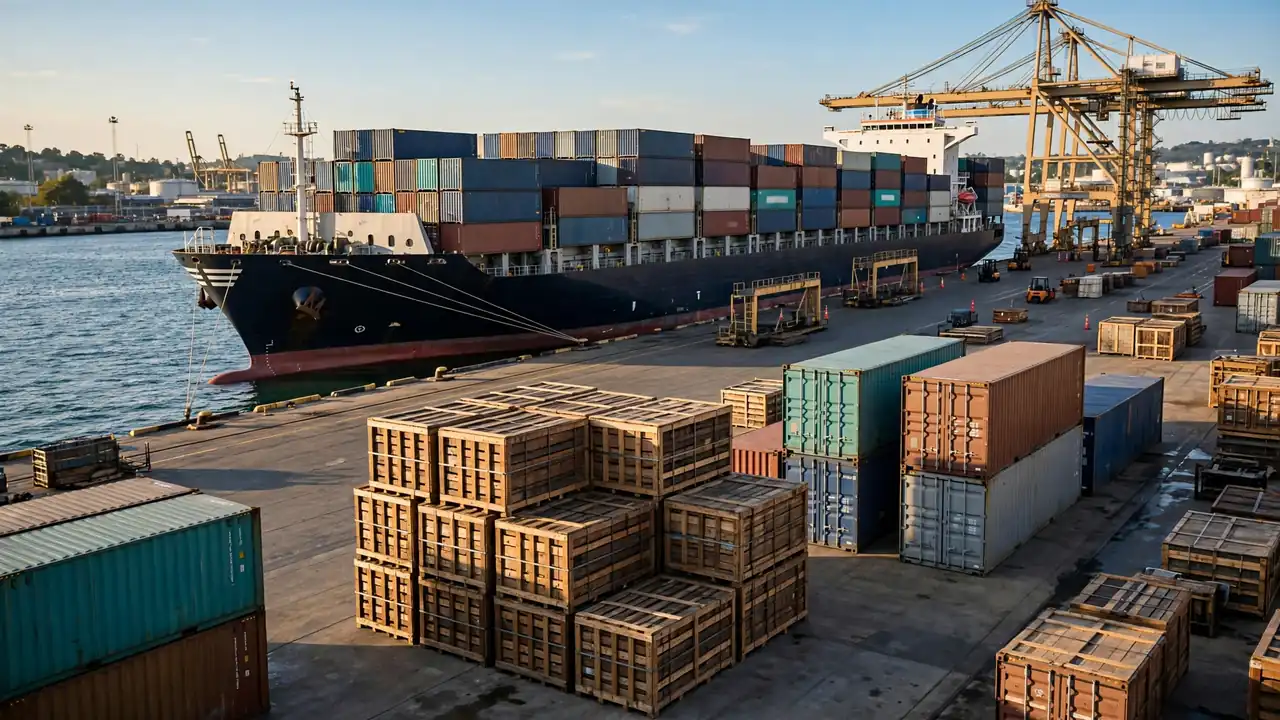
Pakistan has historically encouraged solar imports with favorable duty treatment compared to many other goods, which is one reason the local market grew so fast. But tax policy is reviewed periodically, and even small adjustments compound across the supply chain — an importer paying higher duties raises the wholesale price, the distributor adds their margin on the higher base, and the dealer does the same. Buyers rarely see these changes itemized; they only notice the shelf price moving.
Policy shifts around documentation and standards also matter. When customs enforces stricter verification of certificates or panel grades, low-quality grey-channel imports get squeezed out, which can firm up prices for genuine A-grade panels while protecting buyers from fakes. Our solar panel verification guide explains how to confirm you are buying original panels.
3. Global Solar Manufacturing and Supply Trends
The world manufactures far more solar panels than Pakistan alone could ever absorb, and Pakistan buys from that global pool — overwhelmingly from China, which dominates panel production. Global oversupply pushes factory-gate prices down worldwide; factory shutdowns, raw-material bottlenecks, or trade disputes push them up. These waves reach Pakistan a few months later, after existing stock clears and new shipments arrive at new costs.
The long-term direction has been strongly downward. According to data from the International Renewable Energy Agency, global weighted-average installed costs for solar PV fell by 87% between 2010 and 2024, to about US$708 per kilowatt, as manufacturing scale, better supply chains, and rising module efficiency compounded over a decade (IRENA data reported by Energy-Storage.News). Pakistani buyers have benefited enormously from this trend — today’s panels deliver far more power for far less money than the panels of ten years ago.
Short-term swings still happen. Polysilicon shortages, glass supply tightness, or shipping container scarcity have all squeezed prices in past years. When you hear that “panel prices are rising globally,” it usually means one of these supply-chain factors is at work — and the effect on Pakistan’s market follows with a lag.
4. Demand and Seasonality in the Pakistani Market
Local demand shapes prices just as much as global supply. Solar buying in Pakistan follows a clear seasonal rhythm: demand surges before and during summer, when electricity bills peak and load-shedding memories are fresh, and softens in winter when sunshine hours drop and buyers postpone decisions.
Dealers and distributors know this cycle. During peak season, fast-moving stock lets sellers hold firmer prices; during the off-season, slower turnover often brings more competitive offers and promotions. Weather events also create demand spikes — a severe heatwave or extended load-shedding period can empty dealer warehouses within days.

Beyond seasonality, structural demand keeps growing: rising grid electricity tariffs push more households toward solar every year, and each wave of new buyers adds pressure on available stock. A market with steadily growing demand and finite dealer inventory will always be more price-sensitive to supply shocks than a stagnant one.
5. Panel Technology: N-Type, Bifacial and Efficiency
Not all panels cost the same to make, and technology differences are one of the most durable factors affecting solar panel prices in Pakistan. Older P-Type PERC panels are cheaper to manufacture; newer N-Type TOPCon panels cost more to produce but deliver higher efficiency, slower degradation, and better heat performance. Bifacial panels, which generate from both sides, add another manufacturing step and sit at the premium end.
This technology spread means the market always has a range from budget to premium. When a new technology generation becomes mainstream — as N-Type TOPCon did — the older generation typically gets cheaper as factories clear inventory, while the new standard commands a premium that gradually erodes as production scales up. For more on these technologies, see our N-Type vs P-Type comparison and the Jinko brand guide, which explains how Tier-1 manufacturers position their lineups.
Higher-wattage panels add another dimension. A 580W or 615W panel needs fewer units to build the same system size, which saves on mounting structures, wiring, and labor — but the panel itself carries a technology premium over older lower-wattage stock. Smart buyers compare total system economics, not just the panel sticker price.
6. Brand, Warranty and Dealer Network
Brand reputation is a genuine cost factor, not just marketing. Tier-1 manufacturers — the globally bankable names like Jinko, Longi, Canadian Solar, and Trina — invest in quality control, testing, and warranty backing that smaller or unknown brands do not. That shows up in the price, and it also shows up in how long the panel actually performs.
Warranty length and claim support matter more than most buyers realize. A panel with a 12-year product warranty and 25–30-year performance warranty from a manufacturer with a real Pakistani presence is worth more than an identical-looking panel with a warranty nobody will honor. Authorized distribution channels, which we cover in our authorized distributor guide, protect you from counterfeit and B-grade stock — but they also explain why prices vary between dealers: an authorized dealer’s genuine stock costs more to source than grey-market panels of uncertain origin.
7. Government Policy and Net Metering
Government decisions move the market in two ways: through taxes and duties (covered above) and through demand-side policy. Net metering is the biggest demand-side lever — when regulations make it attractive to export surplus solar electricity to the grid, more households buy systems, and that demand supports firmer prices. When net metering terms are revised or debated, buying decisions pause and prices soften until clarity returns.
Pakistan’s net metering framework has been shaped over years by the Alternative Energy Development Board’s certification regulations for solar installations, which standardized how consumers connect systems to the national grid (Press Information Department, Government of Pakistan). Each round of regulatory review — rates, approval timelines, eligibility — ripples through buyer confidence and therefore through panel demand and pricing.
Subsidy schemes and government solar programs create similar waves. Large public programs can absorb enormous quantities of panels in a short time, tightening supply for the retail market. Keeping an eye on policy announcements is as useful for timing a purchase as watching the dollar.
How to Buy Smart When Prices Are Moving
You cannot control the dollar or global supply, but you can control how you buy. A few principles help in any market condition:
- Buy the technology, not the hype. N-Type TOPCon panels from Tier-1 brands are the current sweet spot for most Pakistani homes — proven, efficient, and widely available.
- Verify before you pay. Always check serial numbers and buy from authorized dealers. A suspiciously cheap “branded” panel is usually a counterfeit or B-grade unit.
- Watch the trend, not the day. One day’s price movement means little; the direction over several weeks tells you whether to buy now or wait.
- Consider the off-season. Late autumn and winter often bring calmer markets and more negotiable dealers.
- Think in systems, not panels. Structure, inverter, wiring, and installation quality affect your total return far more than small per-panel price differences.
Check Current Prices
Because the factors above move constantly, any fixed price figure in an article goes stale quickly. Our homepage tracks the latest solar panel prices in Pakistan with tables updated daily from the live market — brand-wise rates for Jinko, Longi, Canadian Solar, Trina, and more, including per-watt and per-panel prices.
Check today’s updated solar panel prices →
Frequently Asked Questions (FAQs)
Why do solar panel prices change so often in Pakistan?
Solar panel prices in Pakistan change frequently because the country imports almost all panels in US dollars. The dollar exchange rate, import duties, global manufacturing supply, local demand, and government policy all shift regularly — and each shift flows through importers, distributors, and dealers to the retail price.
Does the dollar rate really affect solar panel prices?
Yes — it is the strongest short-term factor. Panels are manufactured abroad and purchased in dollars, so when the rupee weakens, importers pay more for the same shipment and retail prices rise within weeks. Rupee stability usually means steadier panel prices.
Which panel technology affects prices the most?
The shift from older P-Type PERC to newer N-Type TOPCon technology is the biggest technology factor. N-Type panels cost more to manufacture but offer higher efficiency and slower degradation, so they command a premium that narrows as production scales.
Is summer or winter better for buying solar panels?
Demand peaks in summer when electricity bills are highest, which tends to firm up prices. Late autumn and winter are usually calmer, with slower dealer turnover and more room for negotiation — often a better buying window.
Do net metering policy changes affect panel prices?
Indirectly, yes. Favorable net metering terms encourage more households to install solar, increasing demand and supporting prices. When regulations are under review, buyers often wait, softening demand and prices until the policy direction is clear.
Where can I see today’s solar panel prices in Pakistan?
Our homepage maintains daily updated price tables for all major brands — Jinko, Longi, Canadian Solar, Trina, and more. Check the current solar panel prices page for today’s rates.
