
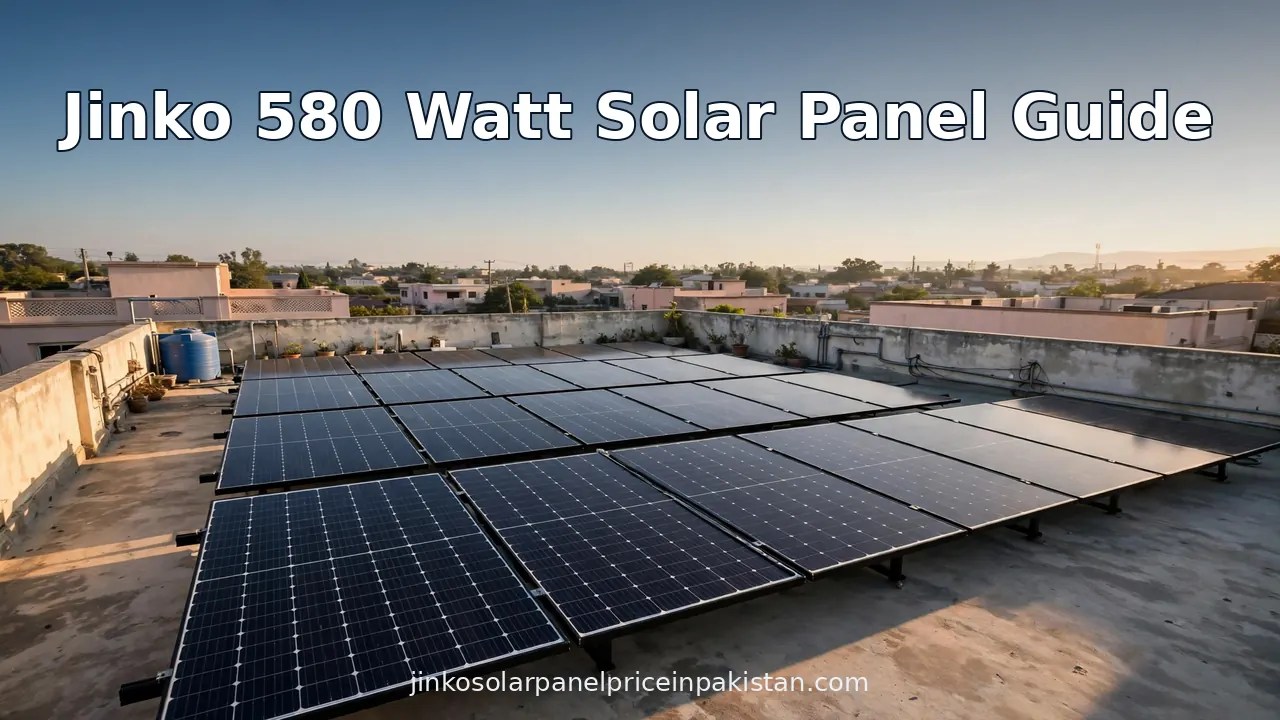
Jinko 580W Solar Panel: Complete Guide (Specs, Comparison & Buying Tips)

Short answer: The Jinko 580 watt solar panel is an N-type high-output module — sold in Pakistan in bifacial and mono PERC variants, generally under Jinko’s Tiger Neo N-type family — and it is one of the most practical wattages for residential systems: nine panels make a standard 5 kW setup. This guide covers its specifications, how it compares with the closely related 585W, how many panels your system needs, how to verify an original panel, and what to check before buying. Looking for today’s rates? Panel prices change frequently, so we keep all current figures in one place — see the daily updated solar panel price tables before you buy.
Check Current Jinko 580W Prices
Solar panel prices in Pakistan move with the dollar rate, import costs, and dealer stock, so any fixed figure in a guide goes stale fast. Instead of quoting numbers here, we maintain daily updated Jinko price tables on our homepage — covering the 580W alongside the 585W, 600W, 620W, and 645W models, with per-watt rates you can use tocompare dealers fairly. Check the tables, note the rupees-per-watt figure for documented A-grade stock, and use it as your benchmark when getting quotations.
Jinko 580W Specifications — What You Are Buying
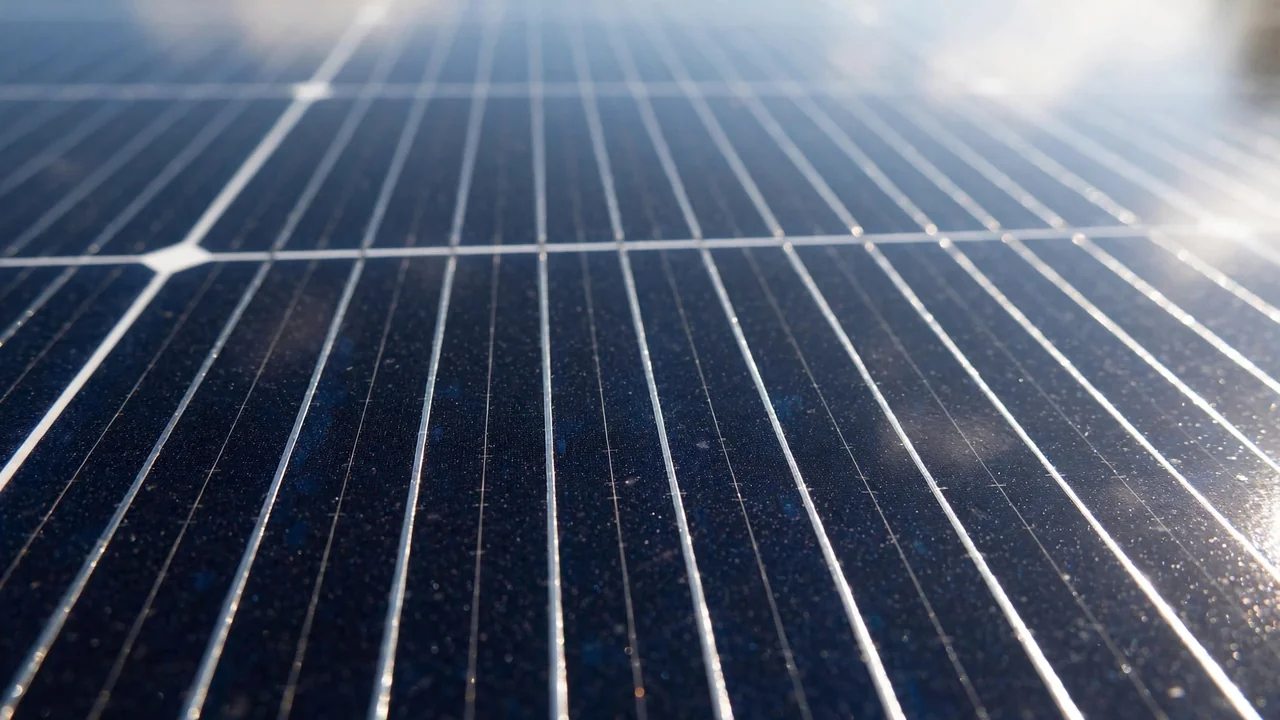
The Jinko 580W is sold in Pakistan in two main variants: N-type bifacial and N-type mono PERC, both marketed under Jinko’s Tiger Neo N-type family in local listings. N-type TOPCon is the current mainstream cell technology for panels in this wattage class — it has largely replaced older P-type mono PERC for new installations (a useful overview of the technology generations is available in this 2026 solar panel buyer guide).
Key points buyers should know:
- Tier-1 manufacturer: JinkoSolar is a Bloomberg-listed Tier-1 brand, which means bankable modules, traceable factory supply chains, and paperwork that DISCO inspectors accept without fuss for net-metering applications.
- Bifacial option: bifacial 580W variants can harvest extra energy from the rear side when mounted with elevation over a reflective surface — worth considering for ground-mount or white-roof installs.
- Warranty norms: industry guides for the Pakistani market typically list Tier-1 panels with around a 12-year product warranty and a 25-year linear performance warranty. Always insist on the physical warranty card and documented A-grade stock from your dealer.
- N-type vs P-type: N-type cells degrade more slowly than older P-type cells. If you are comparing generations, see our N-type vs P-type solar panels guide.
N-Type Bifacial vs Mono PERC — Which 580W Variant?
Both variants carry the 580W rating, but they suit different installs:
| Point of comparison | N-type bifacial 580W | N-type mono PERC 580W |
|---|---|---|
| Front-side output | 580W | 580W |
| Rear-side gain | Yes — extra yield with elevated mounting | No |
| Glass construction | Usually double glass | Usually single glass |
| Best for | Ground mounts, elevated structures, reflective roofs | Standard rooftop installs, tighter budgets |
If your mounting structure allows elevation and airflow beneath the panels, the bifacial variant earns its keep. For a flat rooftop install where the rear side sees nothing, mono PERC delivers the same rated output.
Jinko 580W vs 585W — Which One Should You Buy?
This is the most common question about the 580W panel, because the Jinko 585W panel is slightly more widely listed in Pakistan. Here is the honest comparison:
| Point of comparison | Jinko 580W | Jinko 585W |
|---|---|---|
| Rated output | 580W | 585W (5W / under 1% more) |
| Cell technology | N-type (bifacial & mono PERC variants) | N-type bifacial, double glass |
| Market availability | Good | Slightly wider dealer listings |
| System design | Identical string/inverter planning | Identical string/inverter planning |
Verdict: there is no meaningful performance difference between the two — 5 watts is under 1%, invisible on your electricity bill. Buy whichever variant your dealer has in documented A-grade stock. When comparing quotations, divide each quote by its wattage and compare the rupees-per-watt figures from our daily price tables — buy the cheaper documented panel per watt, regardless of the “580” or “585” label.
How Many 580W Panels Do You Need for Your System?
Divide your target system size by 0.58 kW and round up:
- 3 kW system: 6 panels (3.48 kW)
- 5 kW system: 9 panels (5.22 kW) — the most common residential size
- 10 kW system: 18 panels (10.44 kW)
Panel count is only half the design: the panels must be arranged in series strings that match your inverter’s MPPT voltage and current limits. Have your installer confirm string sizing before purchase — higher-wattage panels save roof space but demand compatible inverter specs.
Installation Considerations for 580W Panels
High-wattage panels like the 580W are physically large — plan the install, not just the purchase:
- Roof space: each 580W panel needs roughly 2.6–2.8 square metres including row spacing; measure before ordering, especially for 10 kW+ systems.
- Mounting structure: use a proper elevated GI structure with correct tilt (around 20–25 degrees facing south for most of Pakistan). A weak structure voids more warranties than dust ever will.
- Inverter matching: confirm your inverter’s MPPT range accepts your planned string voltage — share the panel count with your installer, not just the total kilowatts.
- Shading: even partial shade on one panel drags down its whole string; keep panels clear of water tanks, parapets, and neighbouring structures.
- Wiring and safety: use proper DC-rated breakers, surge protection, and earthing — non-negotiable for net-metered systems.
How to Verify an Original Jinko 580W Panel

Undocumented and mislabelled panels circulate in the Pakistani market, so verify before you pay:
- Check the serial number using our step-by-step Jinko solar panel serial number check guide — photograph the label on the panel’s back frame and validate it.
- Demand documented A-grade stock with a proper warranty card; undocumented panels may carry no enforceable warranty.
- Inspect the build: uniform cell colour, clean lamination, straight frame, and a crisp factory label. Faded labels or mismatched frames are red flags.
- Buy from established dealers and keep the purchase invoice — it is your warranty proof.
Frequently Asked Questions (FAQs)
Is the Jinko 580W an N-type or P-type panel?
In the Pakistani market the 580W is sold in N-type variants — both bifacial and mono PERC versions are listed by local retailers, generally under Jinko’s Tiger Neo N-type family. N-type is the current mainstream technology for this wattage class.
Jinko 580W vs 585W — which is better?
Neither is meaningfully better: the 585W produces just 5 watts (under 1%) more, which makes no practical difference. Choose based on which one your dealer has in documented A-grade stock, and compare their rupees-per-watt figures on our daily price tables to pick the better value.
How many Jinko 580W panels are needed for a 5kW system?
Nine 580W panels give 5.22 kW, which covers a standard 5 kW residential system. Your installer should confirm that the string configuration matches your inverter’s MPPT specifications.
How can I verify that my Jinko 580W panel is original?
Photograph the specification label on the panel’s back frame and validate the serial number using our Jinko serial number check guide. Also insist on documented A-grade stock, a warranty card, and a proper purchase invoice.
Is the Jinko 580W suitable for net metering in Pakistan?
Yes. As a Tier-1 module with traceable factory documentation, it meets the paperwork requirements DISCO inspectors ask for in net-metering applications — provided you buy documented A-grade stock and keep the warranty card and purchase invoice.
Can I mix 580W panels with other wattages in one system?
It is not recommended. Panels in the same series string should match in wattage and electrical characteristics; mixing wattages forces the string to perform at the level of the weakest panel. If you are expanding an older system, put the new panels on a separate MPPT input or string.
What is the difference between the bifacial and mono PERC 580W?
Both are rated 580W on the front side. The bifacial version can also capture reflected light on its rear side for extra yield when elevated, and usually comes in double-glass construction. The mono PERC version is single-sided and typically suits standard flat rooftop installs.
