
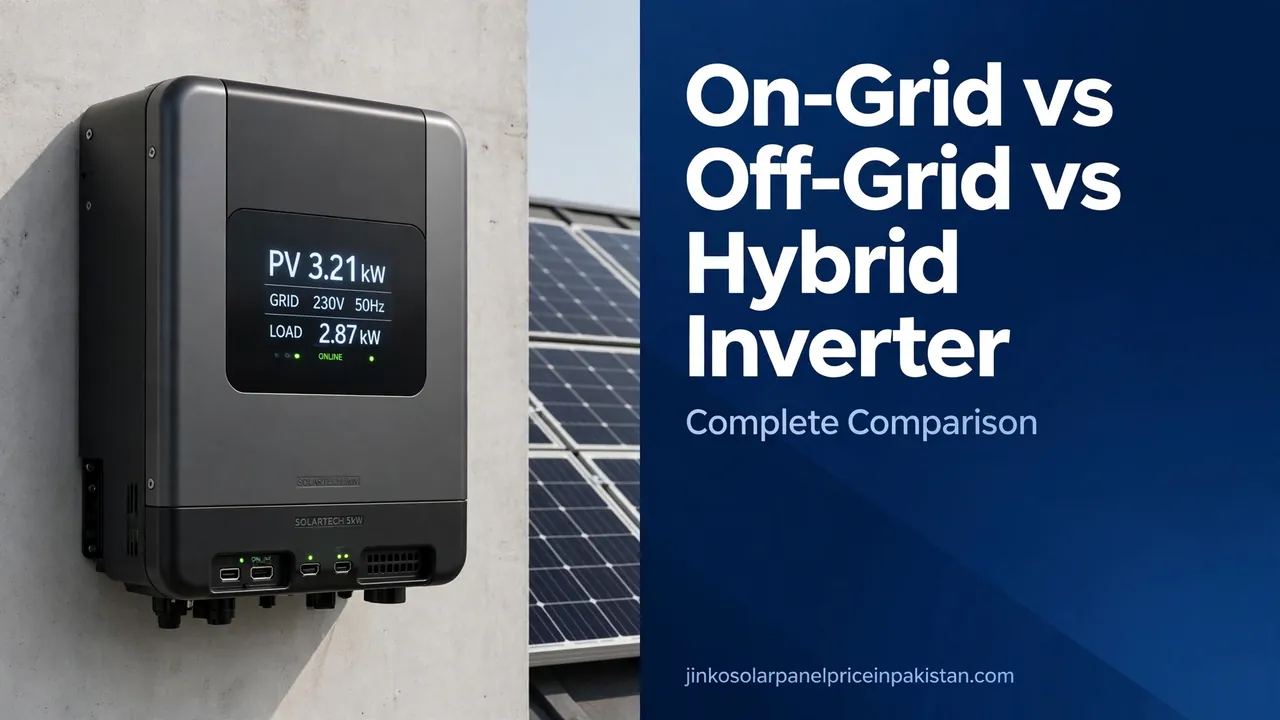
On-Grid vs Off-Grid vs Hybrid Inverter: Complete Comparison

Short answer: For most homes in Pakistan, a hybrid inverter is the best choice — it cuts your electricity bill on normal days and keeps your lights and fans running on battery backup during load-shedding. Choose an on-grid inverter only if your area has stable electricity and you want maximum bill savings through net metering with no backup. Choose an off-grid inverter only for sites with no grid connection at all, like remote farms or tube wells. This guide compares all three types side by side so you can match the right one to your situation.
The inverter is the heart of your solar system: it converts the direct current (DC) your panels produce into the alternating current (AC) your home runs on. But not all inverters treat the utility grid the same way, and that single difference — how the unit relates to the grid and to batteries — is what decides whether your solar system keeps working when the power goes out. Get this decision right, and everything else about the system becomes easier.
1. How the Three Inverter Types Work
Solar inverters are commonly classified by their relationship with the grid and batteries: grid-tie (on-grid), stand-alone/off-grid, and intelligent hybrid designs (Wikipedia’s solar inverter overview explains this standard classification). Here is what each one actually does in a real installation.
On-Grid Inverters: Maximum Bill Savings, No Backup
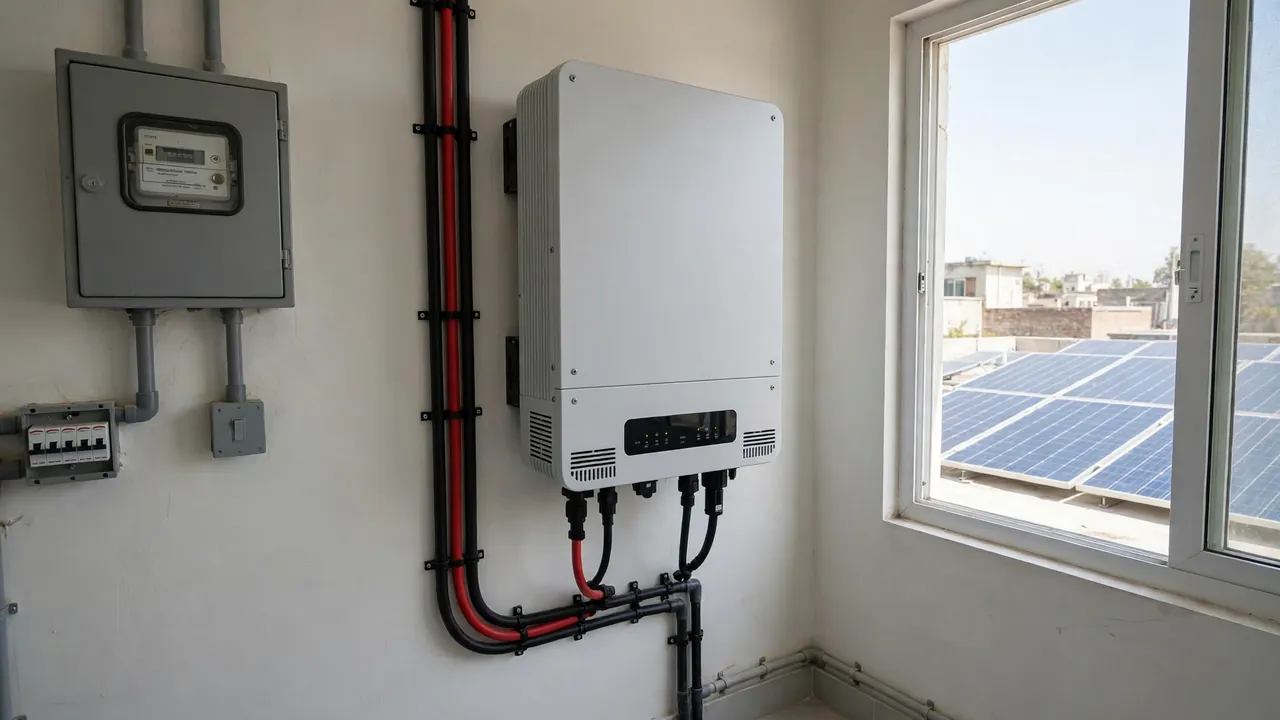
An on-grid inverter — also called a grid-tie inverter — synchronizes with the utility grid and feeds your solar power into your home, exporting any surplus to the grid if you have net metering. It has no battery connection, and this is the fact buyers most often miss: an on-grid inverter shuts down completely during a power outage. This is not a fault — it is a safety requirement called anti-islanding, so the unit never pushes electricity into lines that repair crews might be working on.
On-grid is the right choice for homes and businesses in areas with stable electricity supply where the only goal is reducing the bill and earning net-metering credits. Because there is no battery bank to buy or maintain, on-grid systems are also the simplest and most compact to install. If you plan net metering, confirm the inverter model appears on your distribution company’s accepted equipment list — our net metering policy guide walks through the approval process.
Off-Grid Inverters: Independent Power Where the Grid Does Not Reach
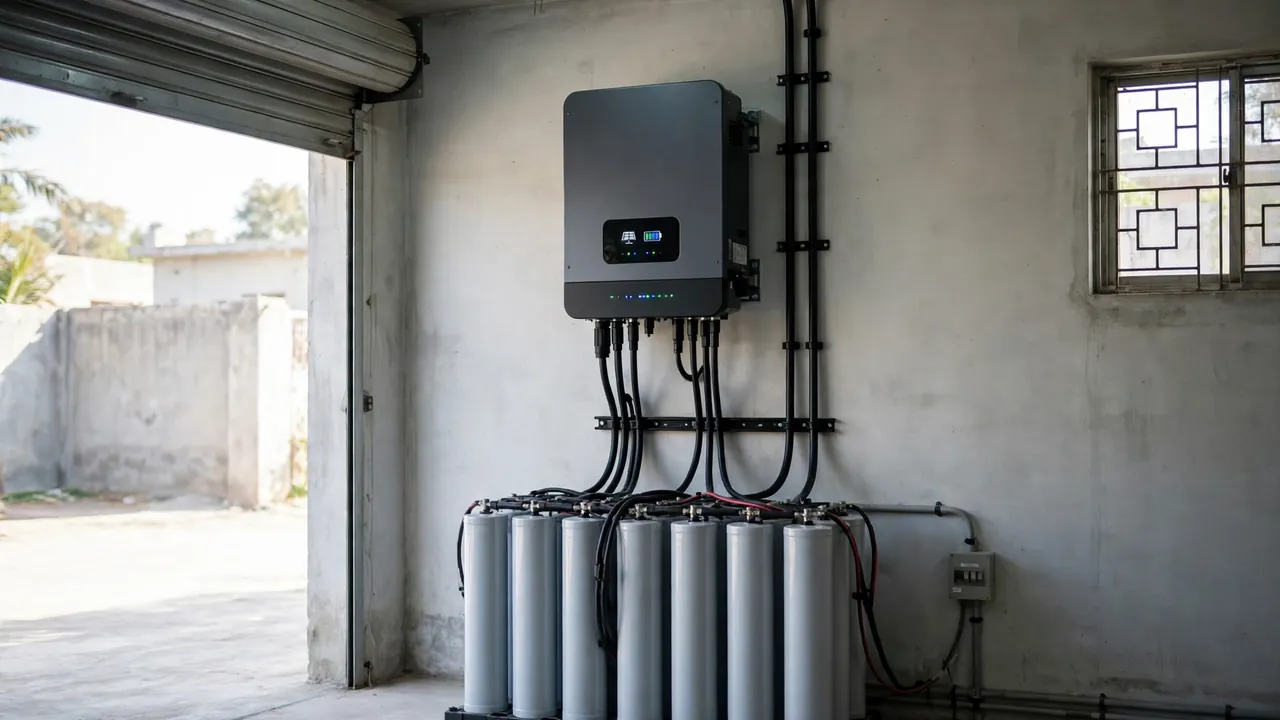
An off-grid inverter builds its own AC supply independently of the utility grid and is always paired with a battery bank that the solar panels keep charged. It is the right choice for sites with no grid connection — farms, remote homes, tube wells, hill-station cabins — or places where the grid is so unreliable it effectively does not exist.
Off-grid systems demand disciplined planning. When the battery bank is empty and the sun is weak, there is no grid to fall back on, so the battery bank and inverter must be matched to your real consumption, not your optimistic estimate. Our battery-count guide explains how to size the bank, and the best battery for solar systems guide covers which battery types survive daily cycling.
Hybrid Inverters: Bill Savings Plus Backup in One Unit
A hybrid inverter manages all three energy sources at once — solar panels, batteries, and the utility grid. During the day it runs your loads from solar and charges the battery; when the grid fails, it switches to battery power in a fraction of a second; and with net metering it can export surplus for credit. For a Pakistani household dealing with load-shedding, hybrid is the default recommendation: savings on normal days, backup on bad days.
Many hybrid models can be installed without batteries at first and have a battery bank added later — a useful upgrade path — but confirm battery-less operation on the specific model’s datasheet before buying, since it is not universal. For help with the finer details of selection, see our solar inverter buying guide for Pakistan, and for the models commonly sized for homes here, our top hybrid inverters roundup.
2. Head-to-Head Comparison
Putting the three types side by side makes the trade-offs clear. The question is not which inverter is “best” in the abstract — it is which one fits your grid situation and your backup needs.
| Feature | On-Grid | Off-Grid | Hybrid |
|---|---|---|---|
| Works during power outage | No — shuts down (anti-islanding) | Yes — runs on batteries | Yes — switches to battery backup |
| Battery bank required | No | Yes, essential | Optional (recommended for backup) |
| Net metering support | Yes — full export | No grid to export to | Yes — export surplus after charging |
| Best for | Stable-grid areas focused on bill savings | No-grid sites: farms, remote homes | Areas with load-shedding: savings + backup |
| System complexity | Lowest | Highest (battery management) | Medium |
| Ongoing maintenance | Minimal | Regular battery care | Moderate (battery care if fitted) |
| Upgrade path | Limited — no batteries | Grow by adding panels/batteries | Add batteries or panels later |
Notice the pattern: on-grid wins on simplicity, off-grid wins on independence, and hybrid wins on versatility. For the vast majority of urban Pakistani households — where the grid exists but load-shedding does not — hybrid is the only type that solves both problems (high bills and outages) at once.
3. Net Metering and Backup: The Two Deciding Factors
Two questions settle most of this decision in under a minute. Answer them honestly and the right type picks itself.
Question 1: Do you lose power often?
If the answer is yes — even a few hours a week — on-grid is off the table, because an on-grid system gives you nothing during outages. That leaves hybrid (with batteries) or off-grid (if there is no grid at all). This single question rules out on-grid for most of Pakistan outside a few very stable neighborhoods.
Question 2: Do you want to sell surplus back to the grid?
If yes, you need an on-grid or hybrid inverter with net metering, and the inverter model must be approved by your distribution company. Off-grid systems cannot participate because there is no grid connection to export through. Our net metering guide covers documents, sanctioned load, and the approval steps.
For homes that answer “yes” to both questions — outages happen, and net metering is desired — hybrid is the answer: it backs up essential loads during outages and exports surplus the rest of the time. A hybrid system is effectively an on-grid system that refuses to leave you in the dark.
4. Can You Upgrade or Switch Types Later?
This is a real concern, because many people install solar in stages as budgets allow. Here is what is actually possible:
- On-grid to hybrid: Not a simple swap. An on-grid inverter cannot accept batteries, so moving to hybrid means replacing the inverter. If you think you might want backup later, do not install on-grid — install a hybrid without batteries now and add the bank later.
- Hybrid without batteries to hybrid with batteries: This is the intended upgrade path. Many hybrid models support it, but verify on the datasheet of your exact model before relying on it — some units require the battery bank at installation.
- Off-grid to grid-connected: Possible if the inverter supports grid input, but the system was designed for independence; reworking it for net metering usually means reconfiguration by the installer.
The safest way to keep options open is to buy a hybrid inverter sized with headroom from the start. A one-time upgrade to a larger unit later costs far more than buying the right capacity the first time — the buying guide covers sizing method, MPPT design, and the checks that matter before you pay.
5. Common Mistakes When Choosing an Inverter Type
- Buying on-grid and expecting backup. The single most expensive misunderstanding in the market. An on-grid inverter stops during every outage — full stop. If backup matters at all, it must be hybrid or off-grid.
- Pairing a hybrid inverter with the wrong batteries. The inverter type and the battery chemistry have to match. Lithium batteries need an inverter that supports lithium charge profiles and ideally communicates with the battery’s management system; tubular lead-acid needs adjustable charge settings and a disciplined water top-up routine. Our lithium vs dry battery comparison covers the storage trade-offs, and the battery maintenance guide explains what “disciplined” looks like in practice.
- Ignoring surge ratings. Fridge compressors, water pumps, and ACs draw a starting surge several times their running wattage. An inverter that covers your running load but not the surge will trip every time a motor starts — regardless of type.
- Buying for today only. Systems grow: an extra room, a second AC, a bigger battery bank. Choosing the smallest unit that fits today’s load guarantees a replacement in a year or two.
- Skipping the originality check. The inverter market has counterfeit and refurbished units sold as new. Verify serial numbers with the brand where possible, buy through authorized channels, and keep your invoice — you will need it for any warranty claim.
Check Current Prices
Inverter and panel prices in Pakistan move with the dollar rate, import duties, and market demand, so any fixed figure printed in a guide goes stale fast. Our homepage tracks the latest solar panel prices in Pakistan with tables updated daily from the live market — brand-wise rates for Jinko, Longi, Canadian Solar, Trina, and more.
Check today’s updated solar panel prices →
Frequently Asked Questions (FAQs)
Can I connect batteries to an on-grid inverter?
No. On-grid inverters have no battery input and shut down during power outages for safety (anti-islanding). If you want battery backup, you need a hybrid inverter — ideally installed without batteries at first, with the bank added later.
Does a hybrid inverter give backup without net metering?
Yes. A hybrid inverter with a charged battery bank switches to battery power automatically during load-shedding, with no net metering required. Net metering only matters for exporting surplus to the grid, not for backup.
Can I add net metering to my hybrid inverter later?
Yes, provided the inverter model is on your distribution company’s approved equipment list. The net metering application is separate from the installation, so you can apply after the system is already running.
Which inverter type lasts the longest?
All three types use similar electronics, so lifespan depends more on installation quality, ventilation, and sizing than on type. An inverter kept cool, sized with headroom, and installed with proper wiring and earthing serves far longer than one pushed to its limit in a hot, dusty spot.
Can I connect an off-grid inverter to the grid later?
Only if the specific model supports grid input and the changeover is configured correctly. Most off-grid systems are designed for independence, so connecting them to the grid usually requires reconfiguration by an experienced installer rather than a simple cable swap.
Can a hybrid inverter run an air conditioner?
Yes, if the inverter’s surge rating covers the air conditioner’s starting current, which is several times its running wattage. Size for the worst-case moment when everything runs at once, and leave headroom above that peak.
Which is better for net metering: on-grid or hybrid?
Both have trade-offs. Hybrid systems export surplus and reduce bills, but grid outages stop export until supply returns. Off-grid systems give full independence but need careful battery sizing since there is no grid to fall back on.
