
Solar Panel Efficiency Explained: What the Percentage Really Means

Solar panel efficiency is the percentage of sunlight hitting a solar panel that gets converted into usable electricity. A panel rated 20% efficient turns one-fifth of the sunlight falling on its surface into electrical power, while the rest is reflected away or lost as heat. Most residential solar panels sold today carry efficiency ratings between 18% and 23%, and understanding exactly what that number measures is the key to comparing panels fairly and sizing your system correctly.
If you have ever looked at a solar panel datasheet and wondered what the efficiency percentage really tells you — and what it does not tell you — this guide explains it in plain language, with simple math you can check yourself.
What the Efficiency Percentage Actually Means

The efficiency rating answers one simple question: out of all the sunlight energy striking the panel, how much becomes electricity?
The formula behind it is straightforward:
Efficiency = (electrical power output ÷ sunlight power input) × 100
Solar panel testing uses a standard sunlight level of 1,000 watts per square meter. So a 20% efficient panel, under lab test conditions, converts 200 of every 1,000 watts of sunlight hitting each square meter into electricity.
Two things follow directly from this definition:
- Efficiency is a per-area measure. It tells you how much power you get for each square meter of panel — not how much power the panel produces in total. A physically larger panel can have lower efficiency and still produce more total watts than a smaller, more efficient one.
- It is a maximum, not a promise. The printed percentage is measured in a laboratory. Your roof is hotter, dustier, and shaded in ways the lab is not, so real-world output will always be somewhat lower. That gap is normal, and we will explain why it exists.
How Manufacturers Measure Solar Panel Efficiency
Every reputable panel is tested under the same Standard Test Conditions (STC), which is what makes efficiency ratings comparable across brands:
- Sunlight intensity: 1,000 watts per square meter
- Cell temperature: 25 °C
- Air mass: 1.5 (a standardized path of sunlight through the atmosphere)
The manufacturer measures the panel’s maximum power (Pmax), measures the panel’s area, and plugs both into the efficiency formula. Here is an illustrative example so you can see the math:
A panel measuring 2.5 square meters, rated at 530 watts maximum power:
Efficiency = 530 ÷ (2.5 × 1,000) × 100 = 21.2%
You will find this figure on every datasheet under the label “Module Efficiency.” Because every manufacturer uses the same STC recipe, you can compare that number across brands with confidence — it is one of the few genuinely apples-to-apples specs on the datasheet.
What Is a Good Efficiency Rating Today?
Efficiency ratings cluster into a few clear bands:
- 15–17%: older polycrystalline panels — still working on many roofs, but largely superseded by newer technology.
- 19–21%: standard monocrystalline PERC panels — the workhorse of most home installations.
- 21–23% and above: premium N-type (TOPCon/HJT) panels — the current top tier of commercial technology.
According to EnergySage, most solar panels today have cells that convert roughly 17–23% of the sunlight that hits them into usable electricity, and the most efficient residential panels available top out around 23% (research cells have gone higher — LONGi reached a 33% cell efficiency record in 2025 — but those record cells are not in commercial panels you can buy). On this site’s own comparison of cell types, N-type panels typically sit in the 21–23% band while P-type panels sit in the 18–21% band, which matches the industry-wide picture.
Anything above 21% is a strong rating for a residential panel. Below 18%, and you are likely looking at older stock.
7 Factors That Decide a Panel’s Efficiency
1. Cell material: monocrystalline vs polycrystalline
Monocrystalline cells are cut from a single silicon crystal, so electrons flow through them more freely. Polycrystalline cells are made from multiple melted crystals, with internal boundaries that slow the current down. This is why mono panels consistently out-rate poly panels on efficiency.
2. Cell technology: N-type vs P-type
N-type cells (doped with phosphorus) have fewer internal defects than P-type cells (doped with boron), which lets them convert more light to electricity and resist degradation better. The N-type vs P-type comparison on this site walks through the full difference — the short version is that N-type is the more efficient, more durable option.
3. Half-cut cell design
Many modern panels use half-cut cells: each cell is split in two, which halves the electrical resistance losses inside the panel. The same silicon area produces slightly more power, which nudges the efficiency figure up.
4. Temperature coefficient
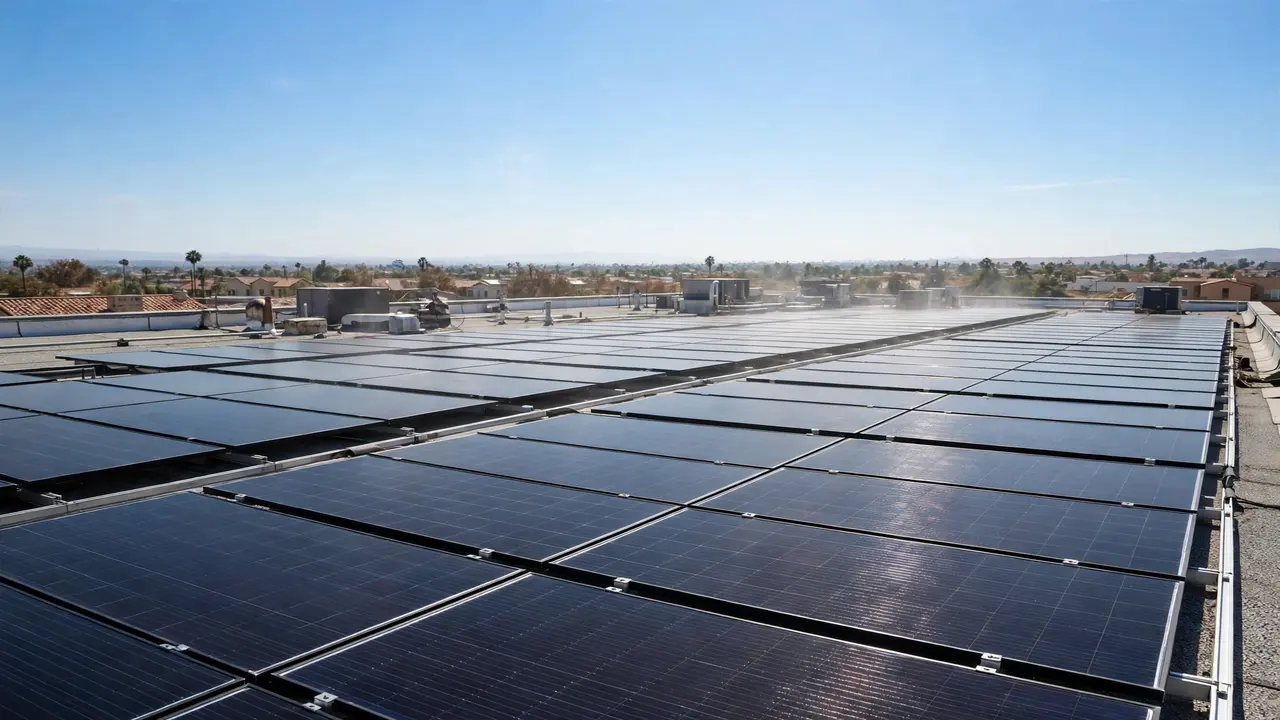
Solar cells hate heat. For every degree above the 25 °C test temperature, a panel loses a small percentage of its output — that loss rate is printed on the datasheet as the temperature coefficient. In Pakistani summers, roof panels run far hotter than the lab standard, so a panel with a better (less negative) temperature coefficient holds onto more of its rated efficiency in real conditions.
5. Optical losses
Some sunlight bounces off the glass or lands in the gaps between cells instead of hitting silicon. Anti-reflective coatings and tighter cell packing reduce these losses and raise the panel’s efficiency.
6. Electrical mismatch
A panel is only as strong as its weakest cell string. Small manufacturing differences between cells, or partial shading on one section, force the whole panel to behave like its worst-performing part.
7. Soiling and shading
Dust, smog film, bird droppings, and tree shade all cut the sunlight reaching the cells — which directly cuts the output the efficiency rating promised. Regular cleaning is the simplest way to keep your panels operating close to their rated efficiency.
Efficiency vs Wattage: Which Number Should You Compare?
This is where most buyers get confused. Wattage and efficiency answer different questions:
- Wattage = total power the panel produces (depends on panel size and efficiency).
- Efficiency = power produced per square meter of panel.
A 585-watt panel is not necessarily more efficient than a 550-watt panel — it may simply be physically larger. Two panels of the same size are best compared by efficiency. Two panels of different sizes are best compared by wattage when you care about total output for your system.
The practical rule:
- Limited roof space? Prioritize efficiency — you need maximum watts per square foot.
- Plenty of roof space? Wattage, reliability, and warranty terms matter more than squeezing out the last efficiency point.
Why Efficiency Matters More on Pakistani Rooftops
Efficiency is not an abstract spec in Pakistan — it interacts directly with local conditions:
- Small, irregular roofs. Many homes have limited usable roof area once you account for water tanks, parapets, and access paths. A more efficient panel produces the system’s target output from fewer panels, which can be the difference between fitting the system and not.
- Extreme heat. May and June temperatures push rooftop cell temperatures far above the 25 °C lab standard. That makes the temperature coefficient — the often-ignored cousin of the efficiency rating — a critical second number to check.
- Dust and smog. Fine dust and seasonal smog in the plains reduce the light reaching the cells. Panels that start with higher efficiency have more headroom before soiling eats into usable output.
Common Efficiency Myths, Busted
Myth 1: “A 22% panel always produces more units than a 20% panel.”
Only if the panels are the same size. A larger 20% panel can out-produce a smaller 22% panel. Compare watts for total output, efficiency for space use.
Myth 2: “Lab efficiency is what I’ll get at home.”
STC assumes a cool 25 °C cell and a spotless panel under perfect sun. Real rooftops involve heat losses, dust, wiring losses, and inverter conversion losses. Expect real-world output below the datasheet number — that is normal for every panel, not a defect.
Myth 3: “Efficiency is the only spec that matters.”
A slightly less efficient panel with a better temperature coefficient, slower degradation, and stronger warranty terms (see our guide to solar panel warranty terms) can deliver more total energy over 25 years than a high-efficiency panel that degrades faster.
Myth 4: “Efficiency crashes after a few years.”
Panels lose output gradually, not in a cliff. The efficiency figure describes day-one performance; the degradation rate describes how slowly it declines. Both numbers are on the datasheet, and both deserve a look.
How to Read Efficiency on a Datasheet in 4 Steps
Next time you hold a panel datasheet, verify the efficiency number yourself:
- Find Pmax (maximum power, in watts) in the electrical data table.
- Calculate the area: multiply the panel’s length by its width (convert millimeters to meters first), giving square meters.
- Apply the formula: efficiency = Pmax ÷ (area × 1,000) × 100.
- Compare your result with the printed “Module Efficiency” — they should match within rounding.
If they don’t match, the datasheet has an error — and that is useful information about the seller before you buy.
To find the best value per watt, compare efficiency ratings with the solar panel 585 watt price in pakistan today and the solar panel price in pakistan tables on our homepage, updated daily.
Frequently Asked Questions (FAQs)
What is a good solar panel efficiency rating?
Anything above 21% is a strong rating for a residential solar panel. Most standard monocrystalline panels sit between 19% and 21%, while premium N-type (TOPCon/HJT) panels reach 21-23% or higher. Older polycrystalline panels typically rate 15-17% and are largely superseded by newer technology.
Is a higher wattage panel always more efficient?
No. Wattage is total power output, which depends on both panel size and efficiency. A 585W panel is not necessarily more efficient than a 550W panel — it may simply be physically larger. Compare efficiency when panels are the same size, and compare wattage when you care about total system output.
Does solar panel efficiency drop over time?
Yes, but gradually — not in a sudden drop. All panels degrade slowly with age, losing a small fraction of output each year. The efficiency figure on the datasheet describes day-one performance; the degradation rate describes how slowly it declines. Quality panels hold their output well for decades.
Do solar panels lose efficiency in heat?
Yes. For every degree the cell temperature rises above the 25°C lab standard, a panel loses a small percentage of output — that loss rate is the temperature coefficient on the datasheet. In Pakistani summers, rooftop cells run far hotter than the test standard, so a better (less negative) temperature coefficient is especially valuable here.
Which solar panel type is the most efficient — monocrystalline or polycrystalline?
Monocrystalline. Mono cells are cut from a single silicon crystal so electrons flow more freely, giving them consistently higher efficiency ratings than polycrystalline cells, which are made from multiple melted crystals with internal boundaries that slow the current.
How can I check a panel’s efficiency from its datasheet?
Find Pmax (maximum power in watts), multiply the panel’s length by its width to get the area in square meters, then apply: efficiency = Pmax ÷ (area × 1,000) × 100. The result should match the printed ‘Module Efficiency’ — if it doesn’t, the datasheet has an error.
Does efficiency matter if my roof is large?
Less so. Efficiency matters most when roof space is limited, because it determines how many watts you get per square foot. With plenty of roof space, total wattage, reliability, and warranty terms usually matter more than squeezing out the last percentage point of efficiency.