
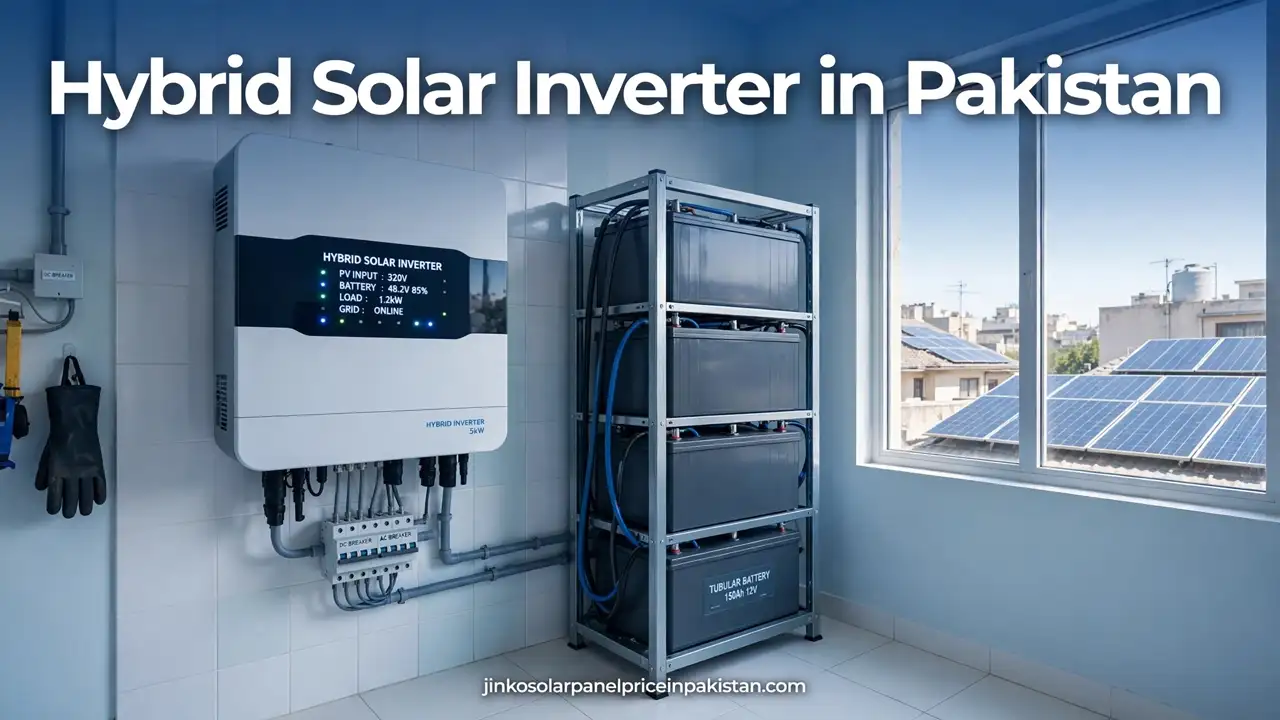
Hybrid Solar Inverter in Pakistan: Complete Guide (2026)

A hybrid solar inverter is an all-in-one unit that manages solar panels, battery storage and the grid connection together: it converts solar DC power into usable AC power for your home, charges your batteries with surplus daytime energy, and automatically switches to battery backup during load shedding or grid outages. It is the standard choice for Pakistani homes that want both solar savings and reliable backup. This guide explains how it works, its operating modes, battery compatibility and what to know before choosing one. For today’s inverter and system prices, check the daily updated price tables on our homepage.
How a Hybrid Solar Inverter Works
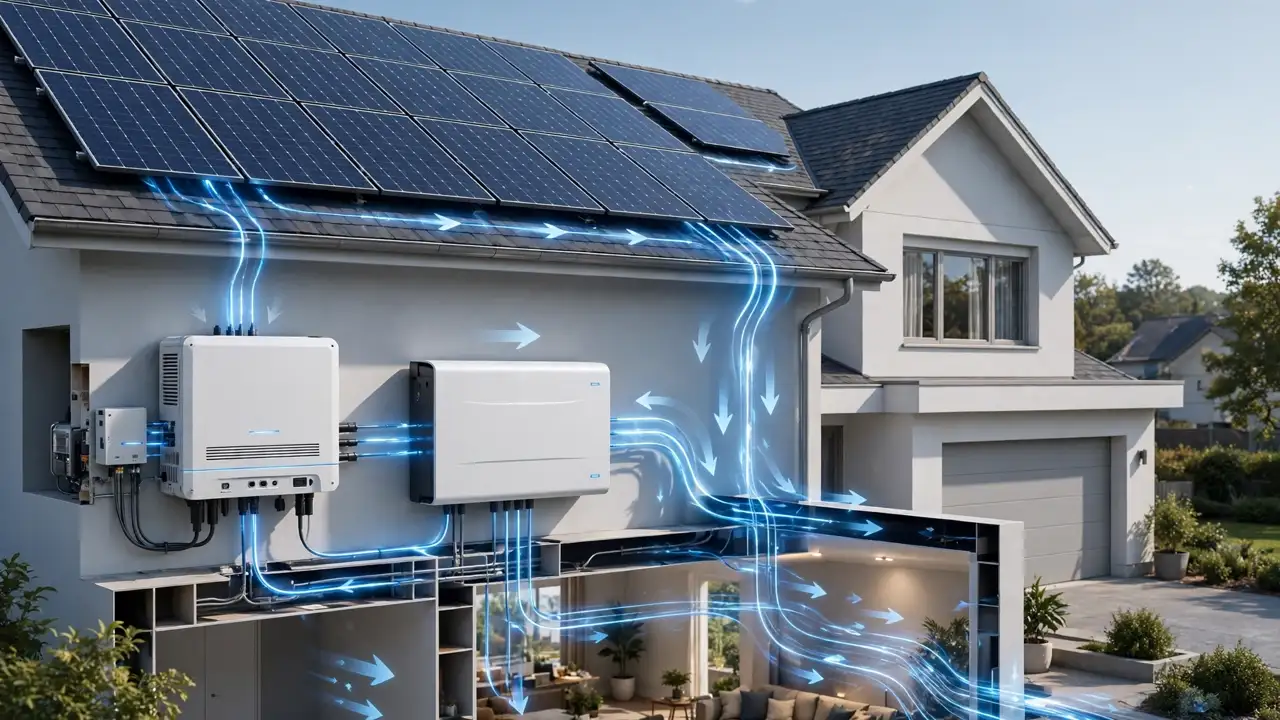
Think of a hybrid inverter as the traffic controller of your solar system. It constantly decides where electricity should come from and where it should go, following the priority rules you set. A typical day looks like this:
- Daytime, sun shining: the inverter converts solar panel DC power into AC power for your home first. Whatever is left over goes into charging the batteries.
- Evening, after sunset: with no solar generation, the inverter draws from the batteries, converting stored DC back into AC for your appliances.
- Battery low or heavy load: the inverter blends in grid electricity so your home never goes dark.
- Load shedding or grid outage: the inverter disconnects from the dead grid and switches to battery backup automatically — usually within milliseconds — so connected loads keep running.
The key feature that makes all this possible is bidirectional power conversion: unlike a basic solar inverter that only converts DC to AC, a hybrid inverter also converts AC back to DC to charge batteries from the grid or generator when needed. A detailed technical breakdown of this process is available in EGbatt’s explainer on how a hybrid inverter works.
Hybrid Inverter vs Other Inverter Types
Pakistan’s market has three main inverter types. The difference that matters most is what happens when the grid goes down:
| Feature | On-Grid (Grid-Tie) | Hybrid | Off-Grid |
|---|---|---|---|
| Works with batteries | No | Yes | Yes (required) |
| Backup during load shedding | No — shuts down for safety | Yes, automatic | Yes, always |
| Can export to grid (net metering) | Yes | Yes | No |
| Charges batteries from grid | Not applicable | Yes | Usually not |
| Best for | Stable grid, no backup need | Load shedding + net metering | No reliable grid access |
The hybrid is the only type that does both jobs — it behaves like an on-grid inverter for net metering and like an off-grid inverter for backup. That is why it dominates residential installations in Pakistan, where load shedding and net metering both matter. For a deeper breakdown of each type, see our solar inverter buying guide for Pakistan.
Key Features Built Into a Hybrid Inverter
A hybrid inverter is really several devices combined into one box. Understanding each function helps you read spec sheets and compare models sensibly:
Built-in MPPT solar charge controller
Almost every modern hybrid inverter includes one or more MPPT (Maximum Power Point Tracking) inputs. This is the circuit that squeezes the maximum available power out of your panel strings as sunlight and temperature change through the day. More MPPT inputs mean your panels can be split into independent strings — useful when parts of the roof get shaded at different times. Our buying guide has a full MPPT explainer if you want the technical detail.
Battery charging profiles
Different battery chemistries need different charging voltages and stages. A hybrid inverter lets you select the battery type (flooded lead-acid, AGM/gel, or lithium) so it charges with the correct profile — bulk, absorption and float stages for lead-acid, or the specific voltage limits a lithium battery’s BMS expects. Wrong settings shorten battery life, so this menu matters more than most buyers realize.
Automatic transfer switch (UPS/EPS output)
For backup during load shedding, hybrid inverters have a dedicated backup output (often labelled EPS or UPS). When the grid fails, the inverter switches connected loads to battery power in milliseconds — fast enough that computers and routers do not reboot. Only the circuits wired to this output get backup, which is why planning which loads are “critical” is part of every good installation.
Operating priorities and time-of-use settings
Most hybrid inverters let you set energy priorities: solar first, then battery, then grid — or variations of that order. Some also support time-based rules, such as reserving battery charge for evening peak hours. These settings are where the real savings come from, because they decide how much of your own solar energy you actually use instead of exporting or wasting it.
Monitoring and WiFi
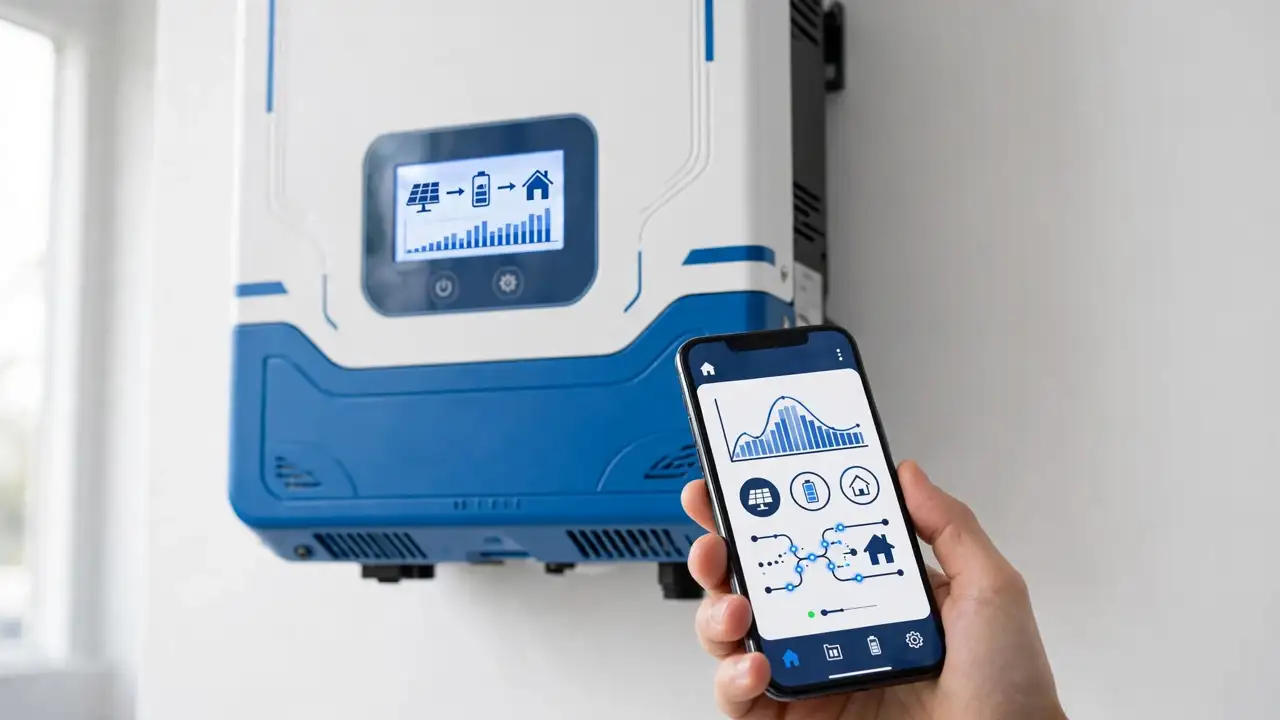
Nearly all current hybrid inverters include WiFi monitoring with a mobile app. You can see live solar production, battery state of charge, grid import/export and daily energy totals from your phone — the same data an installer uses to diagnose problems remotely. This is genuinely useful, not a gimmick: the first sign of a failing battery or a dirty panel string usually shows up in the monitoring graphs before you notice anything in the house.
Parallel stacking for expansion
Many hybrid inverters can be paralleled — two or more units wired together to double capacity later. If you think you may grow from a small system to a larger one, parallel capability means you add a second inverter instead of replacing the first.
Operating Modes Explained
Hybrid inverters run in several modes. The names vary by brand, but the concepts are the same:
- Self-consumption mode: solar powers the home first, surplus charges the battery, and the grid is only a last resort. This is the default for most Pakistani homes — it maximizes use of your own solar energy.
- Backup (UPS) mode: the inverter keeps the battery topped up from solar or grid so maximum backup is always available for load shedding. Useful in areas with frequent or unpredictable outages.
- Grid-assist / battery-free operation: a hybrid inverter can run without any battery connected, working exactly like a normal on-grid inverter. You can add batteries months or years later without changing the inverter — one of the strongest arguments for choosing a hybrid from the start.
- Generator support: in areas with very long outages, many hybrid inverters can accept a generator as an additional AC input to charge batteries when neither sun nor grid is available.
Which Batteries Work With a Hybrid Inverter?
A hybrid inverter does not dictate your battery chemistry — but the pairing has to be configured correctly. The three options in Pakistan:
- Tall tubular (flooded lead-acid): the traditional choice, widely available and serviceable everywhere. Needs the inverter’s lead-acid charging profile and regular water top-ups. Our tall tubular battery guide covers these in depth.
- AGM / gel (sealed lead-acid): maintenance-free but with similar charging logic to flooded batteries. Select the matching sealed-battery profile on the inverter.
- Lithium (LiFePO4): longer cycle life, deeper usable discharge and no maintenance, but the inverter must support lithium charging voltages — and ideally communicate with the battery’s BMS for safe operation. See our lithium battery guide for solar for the full comparison.
Three technical points to get right: voltage matching (the battery bank voltage — 12V, 24V or 48V — must match what the inverter expects), capacity (enough amp-hours for your backup needs — our battery-count guide walks through the math), and BMS communication for lithium batteries. If you have not chosen a battery yet, start with our best battery for solar system in Pakistan guide.
Backup During Load Shedding: What Actually Keeps Running
This is the question every Pakistani buyer really asks. The honest answer: a hybrid inverter keeps running whatever is wired to its backup output, within the inverter and battery’s limits. That means two things to plan:
- Critical loads list: typically fans, lights, WiFi router, refrigerator, TV and phone chargers go on backup; heavy loads like air conditioners, water heaters and electric stoves usually stay on the grid side unless the system is sized for them.
- Backup duration: depends entirely on battery capacity and how much load is running — a lightly loaded system runs for hours, a heavily loaded one drains the bank fast. The transfer itself is seamless; the planning is in the wiring and the battery bank size.
One common misunderstanding: the whole house does not automatically get backup. An installer splits your distribution board into “essential” and “non-essential” circuits during installation. Discuss this split before the wiring is done, not after.
Hybrid Inverters and Net Metering in Pakistan
Yes — a grid-connected hybrid inverter can export surplus solar energy to the grid and work with net metering, just like an on-grid inverter. During the day, after your home loads are served and batteries are full, excess generation flows to the grid through your net meter. The inverter’s anti-islanding protection still applies: during a grid outage it disconnects from the grid side and only powers your backup circuits, exactly as the safety rules require.
One practical note: some hybrid inverters also support zero-export mode, where the inverter deliberately limits generation to what your home consumes — useful if your net metering application is still in process or your sanctioned export capacity is limited. Read our net metering policy guide for the current process and documents.
Installation and Care Basics
Hybrid inverters are more complex than basic inverters, so installation quality matters more:
- Placement: install indoors or under shade in a ventilated spot — heat is the enemy of electronics. Keep clearance around the unit for airflow and leave the display accessible.
- Wiring: DC wiring from panels, AC wiring to grid and backup loads, and battery cables must all be correctly sized and protected with breakers. This is not DIY work; use a qualified installer.
- Firmware updates: manufacturers release firmware that improves battery compatibility and fixes bugs. Ask your installer whether your model supports updates over WiFi and keep it current.
- Routine checks: glance at the monitoring app weekly — sudden drops in production or a battery that never reaches full charge are early warnings. Keep vents dust-free and check that cooling fans run normally in summer.
For model-specific comparisons, our top 5 best hybrid inverter list ranks popular 5kW options, and the types of solar batteries guide helps you pair the right storage with your inverter.
Is a Hybrid Inverter Right for You?
Choose a hybrid inverter if any of these describe you: you face regular load shedding and want automatic backup; you plan to add batteries now or later (a hybrid lets you start battery-free and expand); you want net metering plus backup in one unit; or you want time-based energy management to cut grid dependence. Choose a plain on-grid inverter only if your grid is genuinely stable and you will never want batteries. For most Pakistani homes, the hybrid is the flexible, future-proof choice — and the solar inverter buying guide covers sizing and purchase checks step by step.
Check Current Prices
Inverter and battery prices in Pakistan move with currency rates, import duties and seasonal demand — which is exactly why this guide carries no price figures. For today’s hybrid inverter prices, battery prices and complete system costs, check the daily updated price tables on our homepage.
Frequently Asked Questions (FAQs)
What is a hybrid solar inverter?
A hybrid solar inverter is an all-in-one unit that manages three things together: solar panels, battery storage and the grid connection. It converts solar DC power into AC power for your home, charges batteries with surplus daytime energy, and automatically switches to battery backup during load shedding or outages.
What is the difference between a hybrid inverter and a normal inverter?
A normal (on-grid) solar inverter only converts solar DC power into AC power and shuts down during grid outages for safety, so it gives no backup. A hybrid inverter also manages battery charging and discharging, so it keeps selected loads running during load shedding and can charge batteries from the grid or generator when needed.
Can a hybrid inverter work without a battery?
Yes. A hybrid inverter can run without batteries, working just like a normal on-grid inverter – converting solar power for home use and exporting surplus to the grid. You can add batteries later without replacing the inverter, which is one of its biggest advantages.
Which battery works best with a hybrid inverter?
It depends on your priorities. Tall tubular (flooded lead-acid) batteries are the traditional, widely serviced choice; sealed AGM/gel batteries are maintenance-free; lithium (LiFePO4) batteries offer longer cycle life and deeper discharge but need an inverter with lithium-compatible charging settings and ideally BMS communication. The battery bank voltage must match what the inverter expects.
Can a hybrid inverter run my home during load shedding?
Yes – that is its main job in Pakistan. During a grid outage the inverter disconnects from the dead grid and switches the circuits wired to its backup (EPS/UPS) output to battery power, usually within milliseconds. What keeps running depends on which circuits your installer put on backup and on your battery bank’s capacity.
Does a hybrid inverter work with net metering?
Yes. A grid-connected hybrid inverter can export surplus solar energy to the grid like an on-grid inverter, so it works with net metering. After your home loads are served and batteries are full, excess generation flows to the grid through your net meter. Many models also offer a zero-export mode for while your net metering application is in progress.
How do I maintain a hybrid inverter?
Very little day-to-day care is needed. Keep the unit in a ventilated, shaded spot, keep vents and cooling fans dust-free, check the monitoring app regularly for sudden production drops or a battery that never reaches full charge, and keep the firmware updated so battery compatibility and bug fixes stay current.
