
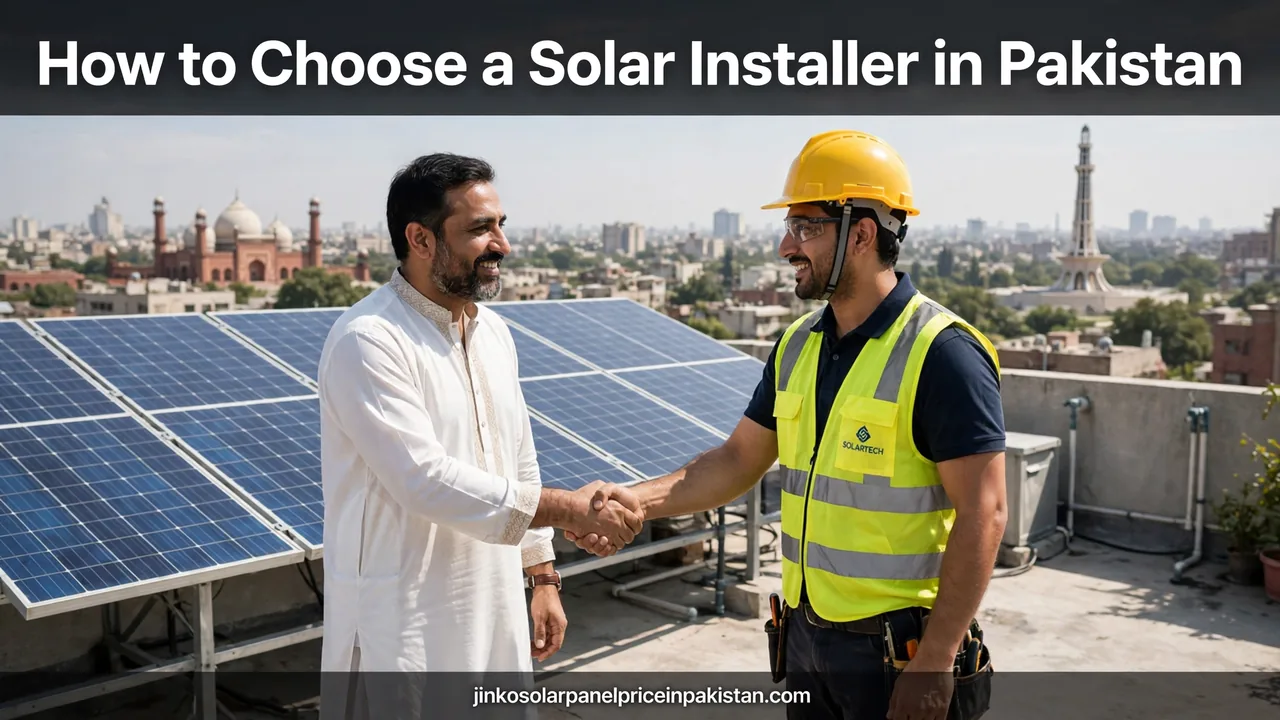
How to Choose a Solar Installer in Pakistan: Vetting Checklist

Choosing a solar installer in Pakistan matters more than choosing the panels. A good installer sizes the system from your actual electricity use, fits genuine equipment, secures the mounting properly, wires and earths the system safely, and files the net metering paperwork. A careless installer can make the best panels underperform and leave you with faults that only show up months later. In short, the right installer is one who is licensed and insured, has a verifiable track record of completed installations in your city, gives you a written quotation naming the exact panel and inverter models, handles net metering in writing, and backs the work with a written workmanship warranty. Use the checklist below to compare at least three installers on the same points — and never choose on the lowest quotation alone.
This guide is written for the homeowner. You do not need to become an electrician, but you do need to know what good work looks like and which questions separate a professional installer from a trader who subcontracts everything and disappears after the final payment. Work through the steps in order: shortlist, verify, compare quotations like-for-like, and only then sign.
Step 1: Check Credentials, Registration and Insurance
Start with the basics. A serious installer operates as a registered business with a proper office address, a tax registration and a verifiable business history — not only a mobile number and a social media page. Ask for the business registration details and check that the company name on the quotation matches the name on the invoice and the warranty documents.
Insurance matters because installation is roof work with heavy equipment and live electricity. Ask whether the company carries insurance that covers its workers and your property during the installation. If the installer uses subcontractors for any part of the job — roofing, wiring or mounting — ask who those subcontractors are and who remains responsible if their work fails. The answer should be the company you signed with, in writing. The U.S. Department of Energy’s guide to choosing a solar installer makes the same point: verify licences, insurance and subcontractor credentials before you commit, not after a problem appears.
Step 2: Look at Experience and a Track Record You Can Verify
Experience is not a number on a brochure — it is installations you can see and customers you can call. Ask how long the company has been installing solar systems and how many systems it has completed in your city. A company that has worked in your city knows the local distribution company’s net metering process, the common roof types in your area and how the summer heat and monsoon affect installations there.
Ask for three recent installations in your city that you can visit or whose owners you can call. A reputable installer will offer references without hesitation; an installer who cannot produce a single reachable past customer is telling you something. When you speak to a past customer, ask whether the system was finished on schedule, whether the quoted equipment was actually installed, whether net metering was completed, and whether the installer responded when something needed attention afterwards. Also ask whether the installer is an authorized dealer or distributor for the brands it sells — our guide to an authorized solar panel distributor in Pakistan explains why that status matters for genuine panels and warranty support.
Step 3: Visit a Past Installation Before You Decide
A photograph of a finished roof proves very little. If you can, visit one of the installer’s completed systems and look at the workmanship with your own eyes. Panels should sit square and level on rigid frames, with no wobble when pushed. Cables should be clipped to the rails, kept off the roof surface and away from standing water. The inverter should be mounted in a sheltered spot with clear labelling, and the isolator switches and earthing connection should be visible and tidy.
Ask the homeowner how the system has performed since handover and whether any fault appeared — and how quickly the installer fixed it. The visit also tells you how the installer treats a finished job: a company proud of its work will arrange a visit gladly. If every reference is “unavailable” or every past installation is “too far away”, treat that as a warning sign. For a sense of what to look for on the roof, read our guide to the common solar installation mistakes to avoid in Pakistan before you go.
Step 4: Compare Quotations Like-for-Like
Get at least three written quotations, and compare them on the same basis. A quotation that only states a system size and a total figure cannot be compared with anything — it hides the panel model, the inverter model, the mounting specification, the cable and protection equipment, and the scope of the net metering work. Ask every installer to quote in the same format: exact panel brand and model, exact inverter brand and model, mounting structure type and material, DC and AC cabling, earthing and surge protection, isolators, and the net metering application and meter.

Be wary of a quotation far below the rest with no explanation. Something has usually been left out: genuine panels replaced by lookalikes, a smaller inverter, thin ungalvanised mounting, missing surge protection, or the net metering work quietly excluded. A low total that omits the safety equipment is not a bargain — it is a system you will pay to fix later. Our solar inverter buying guide and our best solar panel brands in Pakistan guide explain how to judge the equipment named in each quotation.
Step 5: Insist on Exact Equipment Models in Writing
The quotation and the contract must name the exact panel model and the exact inverter model — brand alone is not enough. A brand sells many models at different efficiencies, wattages and warranty terms, and a vague line like “Tier-1 panels” lets the installer substitute whatever is cheapest on the day. Get the model names, the panel wattage, the inverter capacity and the quantities in writing before you pay any advance.
When the equipment arrives, check it against the contract before installation starts: the panel back labels should show the model and serial numbers, and those serial numbers should appear on your invoice. Panels without labels, or a delivery that does not match the agreed models, should stop the work until it is explained. Our solar panel verification guide walks through checking serial numbers and datasheets, and the Jinko solar panel warranty guide shows how warranty terms differ by model and importer.
Step 6: Separate the Equipment Warranty from the Workmanship Warranty
Two warranties protect you, and they are not the same thing. The equipment warranty comes from the panel and inverter manufacturers and covers defects in the product — the product warranty and the longer performance warranty are separate terms with separate conditions. The workmanship warranty comes from the installer and covers the quality of the installation itself: the mounting, the wiring, the earthing and the roof sealing.
Ask for both in writing, with their durations and their conditions. Confirm who honours the equipment warranty if the installer closes down — for most brands in Pakistan it is the importing distributor, which is why a stamped warranty card and an invoice showing serial numbers matter. And ask what happens if a roof leak appears where the mounting was fixed: who repairs it, and within what time. A verbal promise of “lifetime support” is worth nothing; a written workmanship warranty with a named duration and a response commitment is worth a great deal.
Step 7: Confirm the Contract, Payment Schedule and Net Metering in Writing
A professional installer works from a written contract, not a handshake. The contract should state the full scope — equipment models, mounting specification, earthing and surge protection, the net metering application and meter, the installation timeline, the payment stages and the handover documents. Payment should be staged: a modest advance, a payment on equipment delivery, and the final payment only after the system is running, the net metering is filed and the handover documents are in your hand. Never pay the full amount before the work is complete.
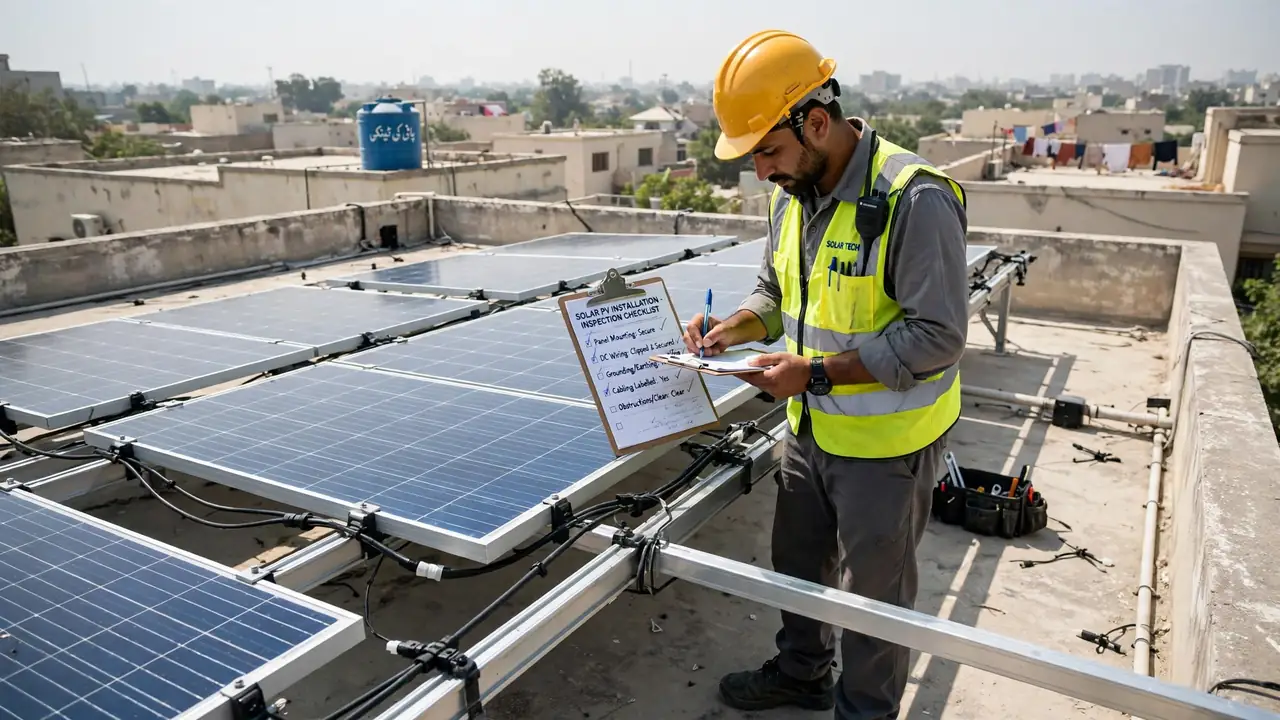
Net metering deserves its own line in the contract. Confirm in writing who files the application with your distribution company, who pays the meter charges, what the expected timeline is, and what happens if the application is delayed. A system without net metering can only self-consume, which wastes the daytime generation you paid for. Keep copies of every document: the contract, the application, the approval, the meter installation record and the final inspection.
Red Flags: Walk Away When You See These
Some signs mean you should stop, whatever the quotation says. The installer refuses to give a written quotation or a contract. The quotation names no panel or inverter models. No past installation can be visited and no reference will speak to you. The installer demands most of the payment upfront. The installer claims net metering is “not needed” or promises it without filing anything. The equipment delivered does not match the contract, or panels arrive without labels or serial numbers.
Other warning signs are quieter but just as real: the installer has never visited your roof yet quotes a system size; the quotation is far below the others with no explanation; the installer cannot explain the tilt angle, the earthing plan or the inverter placement; or the company has no office you can visit. Any one of these is a reason to pause. Two or more is a reason to choose someone else. Our guides to solar panel earthing and grounding, solar DC wiring and solar panel tilt angle for Pakistani cities give you the technical checks behind these warning signs.
Questions to Ask Every Installer Before You Sign
Take this list to every installer you interview, and write down the answers so the quotations can be compared fairly. How long have you been installing solar systems, and how many have you completed in my city? Can I visit three recent installations and speak to their owners? Are you an authorized dealer for the panel and inverter brands you are quoting? Which exact panel and inverter models are in this quotation, and why those models? What is the tilt angle and direction for my roof, and how was it decided? What mounting structure will you use, and how will roof penetrations be sealed? What earthing, surge protection and isolators are included? Who files the net metering application, and what is the timeline? What are the equipment warranty and the workmanship warranty, in writing? What is the payment schedule, and what handover documents will I receive?
An installer who answers clearly and in writing is an installer you can work with. An installer who rushes you, avoids specifics or pressures you to sign today is making your decision for you — by showing you who they are. The U.S. Department of Energy’s guide to choosing a solar installer recommends the same approach: research and interview several installers, check credentials and references, and compare transparent quotations before committing.
Frequently Asked Questions (FAQs)
How do I find a reliable solar installer in Pakistan?
Shortlist installers with a registered business and a real office, then verify them: visit three recent installations in your city, speak to past customers, check authorized-dealer status for the brands they sell, and compare written quotations that name exact panel and inverter models. An installer who cannot produce reachable references should not be hired.
What questions should I ask a solar installer before hiring?
Ask how long they have installed solar systems and how many they have completed in your city, whether you can visit recent installations, which exact panel and inverter models are quoted and why, what tilt angle and earthing plan they propose, who files net metering and on what timeline, what the equipment and workmanship warranties cover in writing, and what the payment schedule and handover documents are.
Should I choose the cheapest solar installer?
No. Compare quotations like-for-like on the same equipment models, mounting specification, safety equipment and net metering scope. A quotation far below the rest usually leaves something out — genuine panels, a proper inverter, galvanised mounting, surge protection or the net metering work — and fixing those omissions later costs more than the saving.
How do I verify a solar installer is genuine?
Visit a past installation and inspect the workmanship, call the references the installer gives you, check the company’s registration and office, confirm authorized-dealer status with the brand’s distributor, and verify the delivered panels’ serial numbers against the manufacturer’s portal before installation starts.
Does the installer handle net metering?
A professional installer should file the net metering application with your distribution company, arrange the bidirectional meter and handle the inspection — but only if it is written into the contract. Confirm in writing who files, who pays the meter charges and the expected timeline before you sign.
What warranty should a solar installer give?
Two warranties apply: the equipment warranty from the panel and inverter manufacturers (product warranty and the longer performance warranty are separate terms), and the workmanship warranty from the installer covering mounting, wiring, earthing and roof sealing. Get both in writing with durations and conditions, and keep the stamped warranty card and an invoice showing serial numbers.
Should my installer use subcontractors?
Some installers subcontract roofing, wiring or mounting work, which is not automatically a problem — but you should know who does each part of the job and verify their credentials too. The company you signed with must remain responsible for the whole installation in writing, including any subcontracted work.
What should be in a solar installation contract?
The contract should state the exact panel and inverter models and quantities, the mounting specification, earthing and surge protection, the net metering scope and timeline, the installation schedule, staged payments with the final payment only after handover, and the handover documents: manuals, warranties, the system diagram and the net metering papers.