
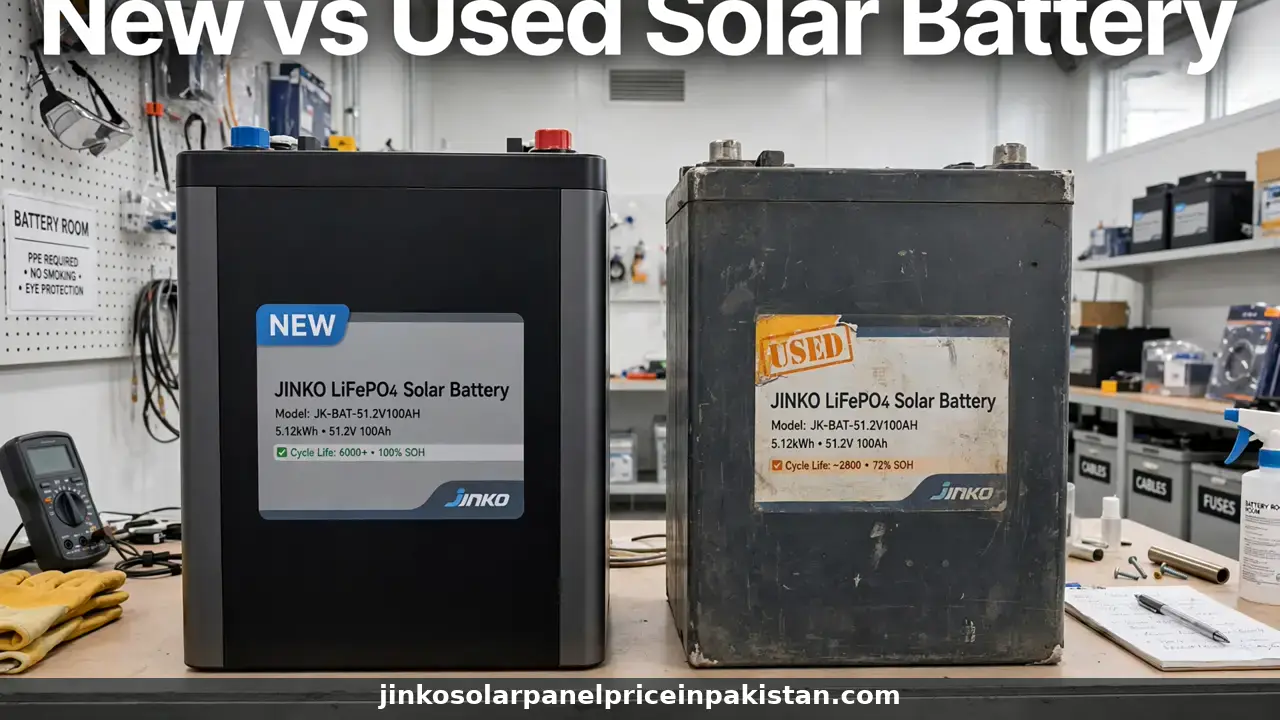
New vs Used Solar Battery: What to Check Before Buying

A new solar battery gives you full lifespan, a manufacturer warranty and a known history. A used solar battery can work well too, but only if you verify its age, remaining capacity and physical condition before you pay. The short answer is this: buy new when you want certainty and warranty cover, and consider used only when the battery passes a proper capacity test, shows no damage, and comes from a seller who lets you test it first.
Why a Used Battery Can Look Like a Bargain
Used batteries enter the market for many reasons. Some come from systems that were upgraded to a larger bank, some from homes that switched to a different battery chemistry, and some from installations that were dismantled. A battery that spent most of its life lightly used and properly charged can still have years of useful service left in it.
The risk is that a battery’s outside tells you very little about its inside. Plates wear, active material sheds, and capacity fades gradually, so a battery can look clean, hold a surface charge and still collapse under a real load. That is why a visual check alone is never enough, and why the tests in this guide matter more than the seller’s description.
New vs Used Solar Battery at a Glance
| What to compare | New battery | Used battery |
|---|---|---|
| Known history | Full history from day one | Depends on seller records and testing |
| Remaining lifespan | Full design life ahead | Partly consumed; must be measured |
| Warranty | Manufacturer warranty from purchase date | Usually expired or non-transferable |
| Capacity | Rated capacity, verified by datasheet | Must be proven by a load or discharge test |
| Compatibility | Easy to match with your inverter and charger | Must be checked against your existing bank |
| Risk | Low, covered by warranty | Higher, carried by the buyer |
Use this comparison as your starting point, not your decision. The real decision comes from the checks below, applied to the actual battery in front of you.
The Checks That Matter Most Before You Pay
1. Find the age and manufacturing date
Look for a date code stamped on the case, the label or the terminal. Battery makers use different coding formats, so ask the seller to explain the code or check the maker’s documentation. A battery that has sat unused for years still ages: lead-acid batteries self-discharge and sulphate, and lithium batteries slowly lose capacity even in storage. Age alone does not disqualify a battery, but an old battery must prove itself with a capacity test.
2. Ask about cycle history and usage
Ask how the battery was used: daily deep cycling, occasional backup use, or long periods standing idle. Deep, frequent discharges wear a battery far faster than shallow backup cycles. If the seller cannot describe the previous system, the charger settings or the depth of discharge it experienced, treat that as a warning sign and lean harder on the physical tests.
3. Test the capacity, not just the voltage
A resting voltage reading is a weak test. A sulphated or worn battery can show a healthy open-circuit voltage and still fail under load. Battery University’s guide to prolonging lead-acid batteries explains how capacity fades through a battery’s life phases, which is why a test under load reveals far more than a resting voltage reading. Before buying, ask for a load test or a controlled discharge test: the battery is charged fully, then discharged through a known load while voltage and time are recorded. Compare the delivered capacity with the battery’s rated capacity. As a rule of thumb, a battery delivering far below its rated capacity is near the end of its useful life, even if it still “works”. If the seller refuses any load test, walk away.
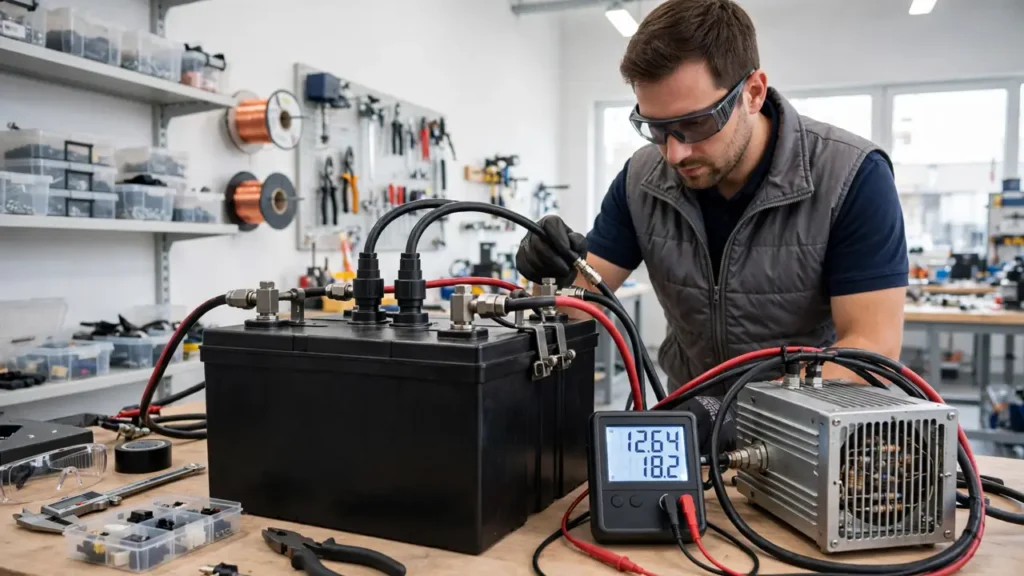
4. Inspect the battery physically
Check the whole case, not just the top. Look for cracks, bulging or swelling, leaks, stains around the terminals, and any sign of heat damage or melted plastic. On flooded batteries, check the electrolyte level in every cell and look for plates exposed above the liquid. On any battery, heavy corrosion on the terminals suggests poor maintenance or a leaking seal. Any swelling on a lithium battery is a serious defect: do not buy it, and do not attempt to charge it.
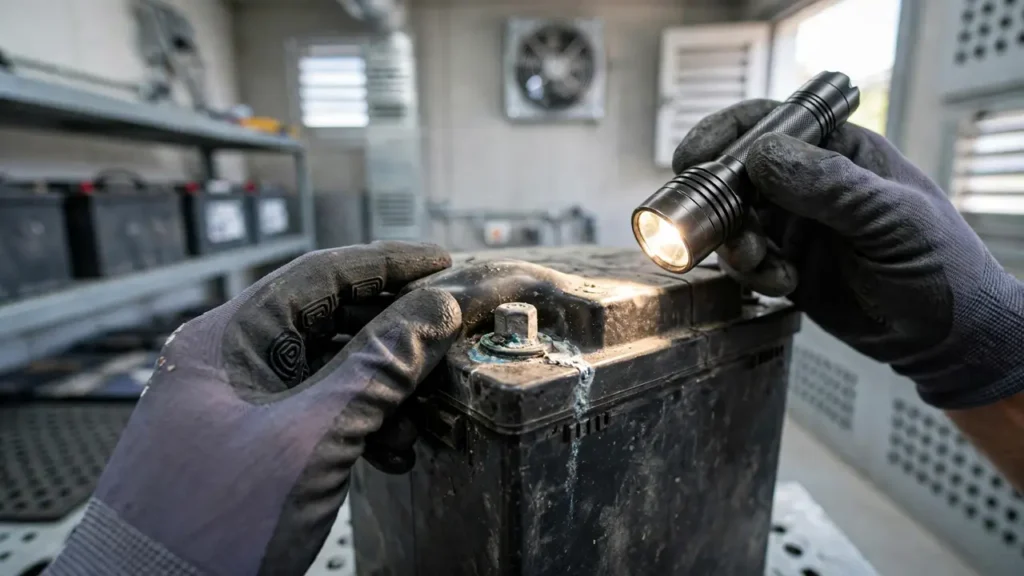
5. Check the terminals and connections
Terminals should be clean, tight and undamaged. Stripped threads, cracked terminal posts or terminals that have been repaired with improvised fixes are all red flags. Loose or corroded connections cause voltage drop, heating and uneven charging across a bank, and a damaged terminal can make the battery unsafe to install.
6. Confirm compatibility with your system
A used battery must match your system, not just your budget. Check the nominal voltage, the chemistry, and the capacity against your inverter and charge controller settings. Mixing a used battery with a bank of new batteries is risky: the weaker battery drags the whole bank down, charges unevenly and can fail early. Mixing chemistries in one bank should be avoided entirely. If you are adding to an existing bank, the used battery should be close in age, capacity and condition to the batteries already installed.
Checks Specific to Each Battery Type
Flooded tubular batteries
Open every cell cap and check the electrolyte level and colour. Plates exposed above the electrolyte have suffered permanent damage. Ask whether distilled water top-ups were done regularly, and check for one cell losing water much faster than the others, which points to an internal fault. A hydrometer reading across all cells is a useful extra check: cells that read far apart indicate an unbalanced, ageing battery. Our solar battery maintenance guide explains the routine care a healthy flooded battery should have received.
Sealed dry and AGM batteries
Sealed batteries cannot be opened for inspection, so the load test matters even more. Check the case for bulging, which suggests overcharging or internal pressure build-up, and check that the manufacture date is not so old that the battery spent years self-discharging on a shelf. Sealed batteries that have been deeply discharged and left flat for weeks often never recover full capacity.
Lithium batteries
For lithium batteries, ask for the battery management system (BMS) data if available: cycle count, cell voltage balance and any recorded fault or over-temperature events. Cells that are far out of balance, or a BMS that reports repeated protection trips, point to a battery with problems. Never buy a lithium battery with a swollen case, a damaged connector or a bypassed BMS. Our lithium battery guide explains how the BMS protects the cells and why it matters.
Warranty, Paperwork and Seller Questions
Ask these questions before money changes hands, and be wary of a seller who cannot answer them:
- What is the exact model, rated capacity and manufacturing date?
- What system did it come from, and how was it charged?
- Is any manufacturer warranty left, and is it transferable to a new owner?
- Has the battery ever been repaired, opened, or had cells replaced?
- Can I see a load test or discharge test result, or test it myself before paying?
- Is there a written return arrangement if the battery fails within the first days of use?
A reputable dealer or an authorized distributor is more likely to offer test results, honest age information and some form of return cover than an anonymous online listing. Keep the battery’s model and serial details, and the seller’s written answers, in case you need them later.
Red Flags: When to Walk Away
- Swelling, bulging, cracks or leaks anywhere on the case.
- The seller refuses a load test or a discharge test.
- Missing, scratched-off or unreadable labels and date codes.
- Exposed plates or very low electrolyte in a flooded battery.
- A lithium battery with a damaged connector, bypassed BMS or fault history.
- Claims of “like new” condition with no test evidence to support them.
- A battery offered without any way to verify its model, age or origin.
When a Used Battery Can Make Sense
A used battery is a reasonable choice when it passes a load test with a healthy share of its rated capacity, shows no physical damage, matches your system’s voltage and chemistry, and comes from a seller who allows testing and offers a short return window. It suits non-critical backup use, a small experimental setup, or a temporary bank while you plan a full upgrade. It is a poor choice for a primary daily-cycling bank, for a system you depend on during load shedding, or for any bank where one weak battery would drag down new batteries beside it.
If you are unsure, compare the used battery honestly with a new one: a new battery’s warranty, full lifespan and known history are worth a great deal, and a used battery that fails early can cost more in replacements and downtime than the saving was worth. For a broader view of battery types and sizing, see our best battery for solar system guide and our types of solar batteries guide.
Check Current Prices
Before you decide between new and used, check the daily updated price tables on our homepage for current solar panel and system pricing. Comparing a used battery against today’s new-system figures helps you judge whether the saving is real, and whether a new battery is the better value over its full lifespan.
Frequently Asked Questions (FAQs)
What should I check first when buying a used solar battery?
Check the manufacturing date code, ask about its previous use and charging history, and insist on a load or discharge test. A voltage reading alone is not enough: only a load test shows how much usable capacity the battery still delivers.
Does the age of a used battery matter more than its test result?
Age matters, but tested capacity matters more. A lightly used battery that passes a load test can still serve well, while a newer battery that was deeply discharged and left flat may already be damaged. Always judge a used battery by its test result, not its claimed age alone.
Can I mix a used battery with new batteries in the same bank?
No. Mixing a weak used battery with new batteries drags the whole bank down: the weaker battery charges unevenly, limits the bank’s usable capacity and can fail early. If you add to an existing bank, the new battery should be close in age, capacity and condition to the ones already installed.
How do I test a used battery’s remaining capacity?
Charge it fully, then discharge it through a known load while recording voltage and time, and compare the delivered capacity with the battery’s rated capacity. A battery delivering far below its rated capacity is near the end of its useful life even if it still holds a surface charge.
What are the red flags when buying a second hand solar battery?
Walk away from swelling, cracks, leaks, heavy terminal corrosion, missing or unreadable labels, exposed plates in a flooded battery, and any seller who refuses a load test. On lithium batteries, a swollen case or a bypassed battery management system is a serious defect.
Does a used solar battery still have a warranty?
Usually the manufacturer warranty is tied to the original buyer or has already expired, so a used battery normally comes without warranty cover. Ask the seller directly whether any warranty remains and whether it transfers, and get any return arrangement in writing before paying.
When is buying a used solar battery a good idea?
Yes, when it passes a load test with a healthy share of its rated capacity, shows no physical damage, matches your system’s voltage and chemistry, and comes from a seller who allows testing. It is a poor choice for a primary daily-cycling bank or any system you depend on during load shedding.
Why is a load test better than a voltage reading for a used battery?
A load test measures how much energy the battery actually delivers under a real load, while a voltage reading only shows its resting charge. A worn battery can show a healthy voltage and still collapse under load, which is why a voltage check alone cannot prove a used battery is good.
