
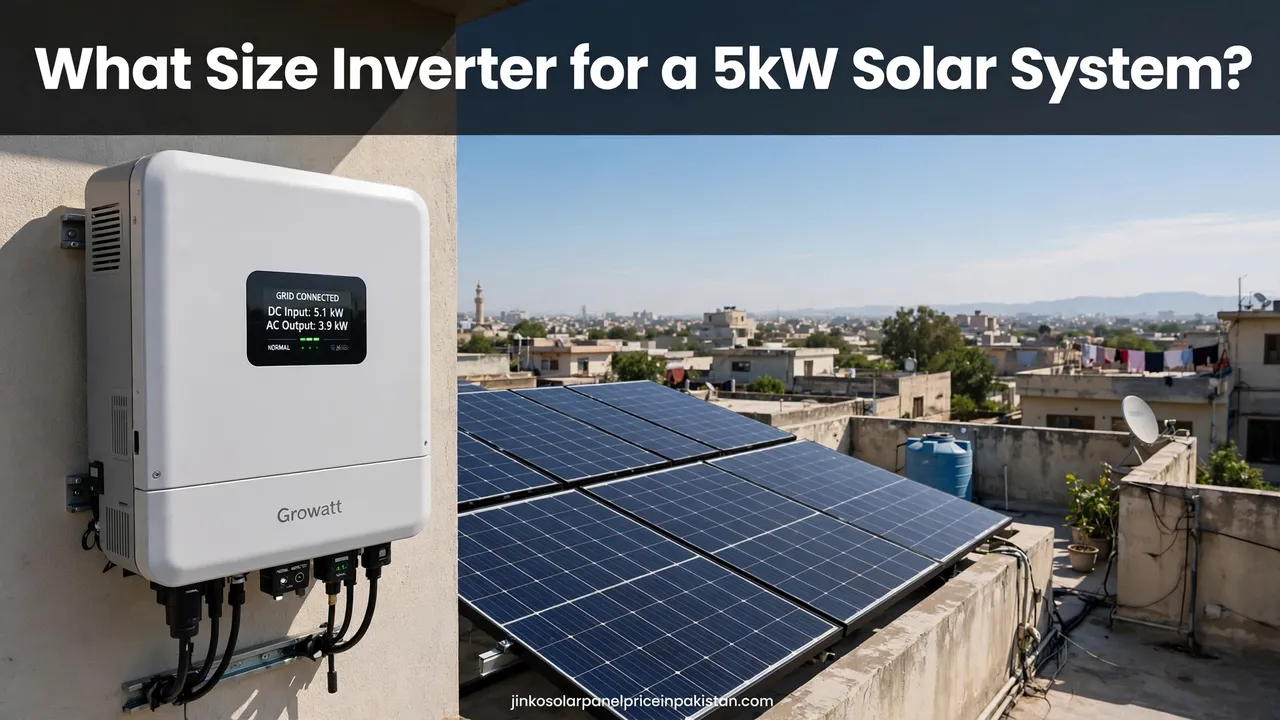
What Size Inverter Do You Need for a 5kW Solar System?

For most Pakistani homes, a 5 kW inverter is the natural starting point for a 5 kW solar system — but it is not automatically the right answer for every home. The correct size depends on the loads you run at the same time, the starting surge of motors such as air conditioners and water pumps, whether your connection is single-phase or three-phase, and whether you want battery backup. In many cases a slightly smaller or slightly larger inverter than 5 kW fits better, and choosing on panel wattage alone is the most common sizing mistake.
Why a 5 kW System Does Not Automatically Need a 5 kW Inverter
A solar system size and an inverter size measure two different things. The system size is the total rated capacity of all your solar panels, measured in kilowatts (kW) of direct current (DC). The inverter size is the maximum alternating current (AC) output the inverter can deliver to your home and, for grid-connected systems, to the grid. Panels rarely produce their full rated output all day: output changes with sunlight, temperature, roof direction and shading. That is why installers often pair an array with an inverter that is a little smaller than the array, a practice described by the Australian Government’s sizing guide, which notes that a 6.6 kW system is often paired with a 5 kW inverter because panels only rarely generate at full rated capacity.
For a 5 kW array, this means the sensible inverter range is usually around 4 kW to 5 kW for a straightforward on-grid home system, with 5 kW as the simple default and a smaller unit considered only when loads, export limits or the installer’s design calculations support it. Going much smaller risks clipping — losing usable solar output at midday when the array could produce more than the inverter can convert — while going much larger for no reason leaves capacity unused. The goal is a match between three things: your array, your simultaneous load, and your connection type. Our general guide to choosing the right inverter size explains the overall method; this article applies that method specifically to a 5 kW system.
Step 1: Add Up the Loads You Run at the Same Time
Start with simultaneity, not with the total of everything in the house. An inverter only needs to cover what runs together. List the appliances that are typically on during the day when solar output is strongest — for example lights, fans, a refrigerator, a television, a washing machine and an air conditioner — and add their running wattages. Then do the same for the evening backup scenario if you have a hybrid system with batteries, because evening loads run from stored energy and the inverter’s continuous output, not from the panels.
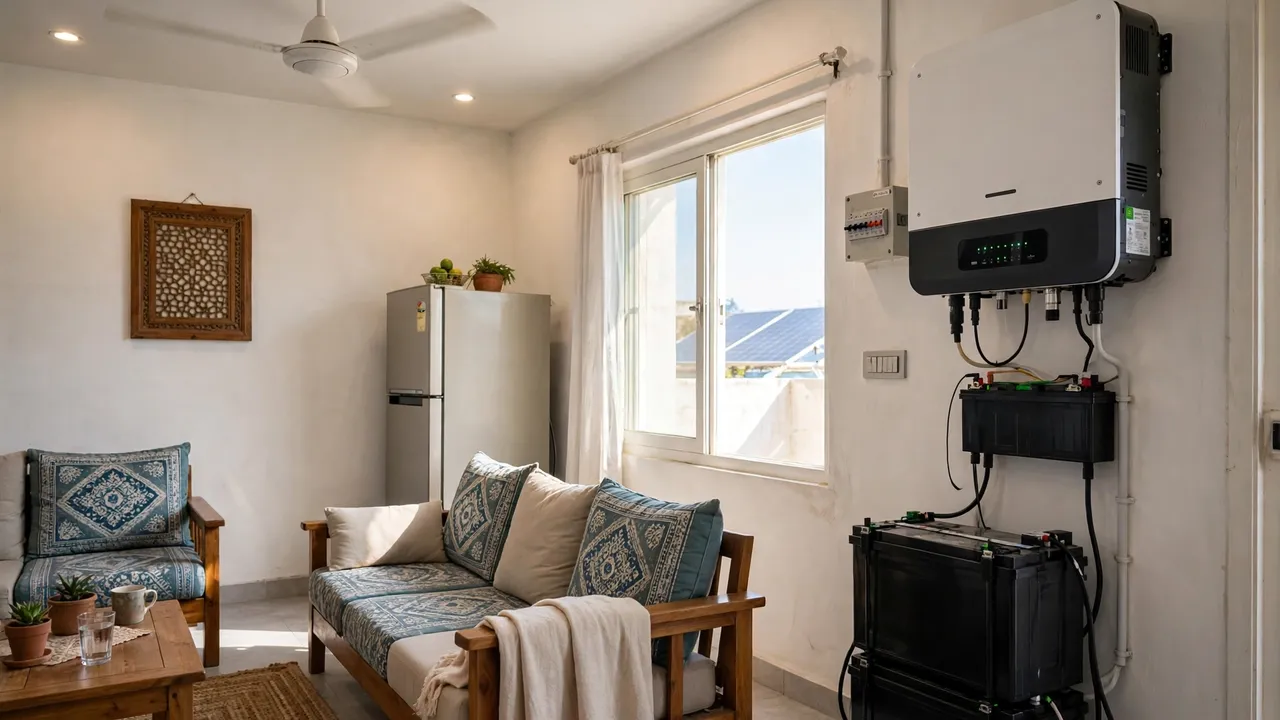
Work through this honestly. A home where one air conditioner, a fridge and normal household loads run together has a very different simultaneous demand from a home where two air conditioners, a water pump and a washing machine all start at once. If your simultaneous daytime load is regularly close to or above 5 kW, a 5 kW inverter will be working near its limit and may trip or curtail when an extra load starts. If your simultaneous load is modest — lights, fans, a fridge and electronics — the same 5 kW inverter has comfortable headroom. Our solar inverter buying guide for Pakistan walks through inverter types and the checks to make before you buy, and it pairs well with this load-first approach.
Step 2: Allow for Starting Surge, Not Just Running Load
Motor-driven appliances need a brief surge of power when they start, often well above their running wattage. Air conditioners, refrigerators, deep freezers and water pumps are the usual examples in Pakistani homes. An inverter that matches only the running load can trip the moment a compressor starts, even though the steady load looked fine on paper.
As a practical rule, check the surge rating on the inverter datasheet, not just its continuous rating, and confirm with your installer that the inverter can handle the largest motor starting while your other daytime loads are already running. If you regularly run a water pump or more than one air conditioner, that surge check alone can move you from a smaller inverter up to a full 5 kW unit, or confirm that 5 kW is the right ceiling. This is also where a hybrid inverter’s backup output matters: in battery mode, some inverters deliver less continuous power than their grid-connected rating, so the backup load list must be checked separately from the daytime list. See our inverter and battery pairing guide for how battery and inverter ratings interact.
Step 3: Understand the DC-to-AC Ratio and Clipping
The DC-to-AC ratio is simply the array size divided by the inverter size. A 5 kW array on a 5 kW inverter has a ratio of 1.0. A 5 kW array on a 4 kW inverter has a ratio of 1.25. A ratio slightly above 1.0 is common and often deliberate: panels spend most of the day below peak output, so a slightly smaller inverter runs closer to its efficient range for more hours, and only clips — caps output at its maximum — for a short period around midday on the clearest days.
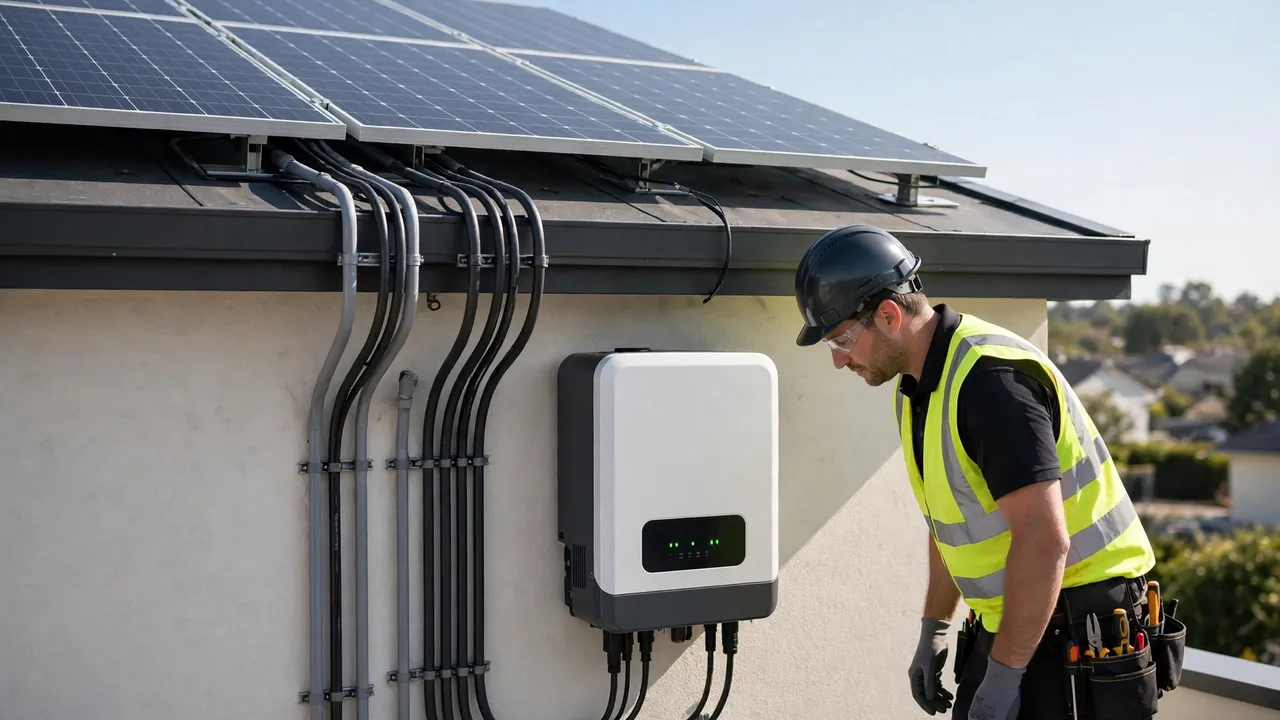
Clipping is not a fault, but excessive clipping wastes generation you have already paid for in panels. The right balance depends on your roof direction, shading and climate: a shaded or east-west roof rarely peaks sharply, so a higher ratio loses little, while a clear south-facing roof in strong sun peaks harder and benefits from an inverter closer to the array size. Always stay within the inverter manufacturer’s maximum DC input and voltage limits — exceeding them can void warranty cover and damage equipment. Your installer should show you the datasheet limits for the exact model, not a generic rule of thumb. For background on how inverters track the array’s best operating point, see our guide on what MPPT means in a solar inverter.
Single-Phase or Three-Phase? It Changes the Answer
Most Pakistani homes have a single-phase connection, and a single-phase 5 kW inverter suits them. If your home has a three-phase connection — common for larger homes, or where heavy motors and multiple air conditioners run — a three-phase inverter balances output across phases and avoids overloading one phase. Your distribution company may also set connection and export limits that cap the inverter size you can connect, regardless of what your array could support. Ask your installer to confirm both the connection limit and any export limit before finalising the inverter size, because an inverter larger than the allowed export limit may need export limiting configured, which adds complexity.
Phase also affects future plans. If you expect to add an electric vehicle charger, another air conditioner or more panels later, tell your installer now. An inverter chosen only for today’s array may need replacing when the system grows, while planning the phase and capacity for the future system can avoid a second purchase. Our guide to how many batteries a 5 kW system needs is a useful companion read if battery backup is part of that future plan.
On-Grid, Hybrid or Off-Grid for a 5 kW System?
The inverter type changes the sizing logic. An on-grid inverter for a 5 kW system is sized mainly around the array and the export rules, and it shuts down during a grid outage for safety. A hybrid inverter adds battery charging and backup output, so its backup rating and battery compatibility matter as much as its solar rating — a hybrid unit that is perfect on-grid may still be undersized for your chosen backup loads. An off-grid inverter must cover your full load from panels and batteries with no grid fallback, so it is sized more conservatively and paired with a larger battery bank.
For most homes in Pakistan dealing with load shedding, a hybrid inverter is the practical choice for a 5 kW system, but only if the backup load list has been checked separately. Read our complete hybrid solar inverter guide and our on-grid solar inverter guide to compare the two paths, and use our top 5 hybrid inverters list only as a shortlist of models to compare on datasheets, not as a substitute for sizing.
Common 5 kW Inverter Sizing Mistakes
The first mistake is copying a neighbour’s inverter size. Two homes with the same 5 kW array can have very different simultaneous loads, phases and backup needs, so the neighbour’s correct size may be wrong for you. The second mistake is sizing from panel wattage alone and ignoring surge and phase. The third is forgetting batteries: a hybrid inverter’s charging current and backup output must match the battery bank, or the system will charge slowly or trip under backup load. The fourth is ignoring the manufacturer’s maximum DC input — an oversized array on a small inverter is only safe within the datasheet limits. Finally, many buyers skip the export and connection limit check and discover after installation that the inverter must be curtailed.
A Simple Decision Checklist for a 5 kW System
- Write down your simultaneous daytime loads and your separate evening backup loads.
- Check the starting surge of your largest motor-driven appliance against the inverter’s surge rating.
- Confirm the DC-to-AC ratio and that the array stays within the inverter manufacturer’s maximum DC input and voltage limits.
- Confirm your phase — single-phase or three-phase — and your distribution company’s connection and export limits.
- Decide the inverter type — on-grid, hybrid or off-grid — based on whether you need backup during load shedding.
- If you want batteries, match the inverter’s battery charging and backup output to the battery bank, and plan for future expansion before you buy.
- Ask your installer to show the sizing calculation and datasheet limits for the exact model, and keep that record with your warranty documents.
If that checklist points to a 5 kW inverter, buy with confidence. If it points smaller or larger, trust the loads and the datasheet over the simple rule that a 5 kW array needs a 5 kW inverter — the right size is the one that runs your home without tripping, without excessive clipping, and without blocking your future plans. For an independent reference on the principle that inverters are often sized smaller than the panel array, see the Australian Government’s guide to sizing your solar system, which explains inverter sizing alongside roof area, usage and network limits.
Check Current Prices
Current solar panel and inverter prices change frequently, so this guide deliberately leaves them out. For today’s updated panel price tables, visit the homepage of Solar Panel Price in Pakistan, where prices are refreshed daily, and compare inverter models there before speaking to your installer.
Frequently Asked Questions (FAQs)
What size inverter do you need for a 5kW solar system?
A 5 kW inverter is the usual starting point, but the right size depends on your simultaneous loads, motor starting surge, phase and whether you need battery backup. Many straightforward on-grid homes suit a 4 kW to 5 kW inverter; the loads and the inverter datasheet, not panel wattage alone, should decide.
Can a 5kW solar system run on a 4kW inverter?
Yes, in many cases, because panels rarely produce their full rated output all day. A 5 kW array on a 4 kW inverter has a DC-to-AC ratio of 1.25, which is a common design choice. It only works safely if the array stays within the inverter manufacturer’s maximum DC input and voltage limits and clipping losses stay acceptable for your roof and shading.
What is the DC-to-AC ratio for a 5kW solar system?
The DC-to-AC ratio is the array size divided by the inverter size. A 5 kW array on a 5 kW inverter gives a ratio of 1.0, while the same array on a 4 kW inverter gives 1.25. A ratio slightly above 1.0 usually means the inverter runs efficiently for more hours and only clips output briefly around midday on the clearest days.
Does a 5kW inverter need to handle air conditioner starting surge?
Yes. Air conditioners, refrigerators and water pumps draw a brief starting surge well above their running wattage. Check the inverter’s surge rating on its datasheet and confirm it can start your largest motor while your other daytime loads are already running, otherwise the inverter may trip even when the steady load looks fine.
Should a 5kW system use a single-phase or three-phase inverter?
Most homes with a single-phase connection should use a single-phase inverter. A three-phase inverter suits homes with a three-phase connection, larger loads or heavy motors, because it balances output across phases. Your distribution company’s connection and export limits should also be confirmed before you finalise the size.
Is a hybrid inverter better than an on-grid inverter for a 5kW system?
A hybrid inverter is usually the more practical choice where load shedding matters, because it adds battery charging and backup output. An on-grid inverter is simpler and suits homes that do not need backup, but it shuts down during a grid outage. For a hybrid system, check the backup output separately from the daytime solar rating.
Can you add more panels to a 5kW inverter later?
Only within the inverter manufacturer’s maximum DC input, voltage and current limits. Planning for expansion before you buy is safer than adding panels later and discovering the inverter cannot accept them. If you expect to grow the system, tell your installer at the design stage so the inverter and phase are chosen for the future array.
What happens if the inverter is too small for a 5kW solar system?
An undersized inverter clips output at its maximum whenever the array could produce more, wasting generation on clear midday hours. It may also trip under heavy simultaneous loads or motor starting surge. Staying within datasheet limits and matching the inverter to your simultaneous load avoids both problems.
