
Microinverters vs String Inverters: Which Is Better?

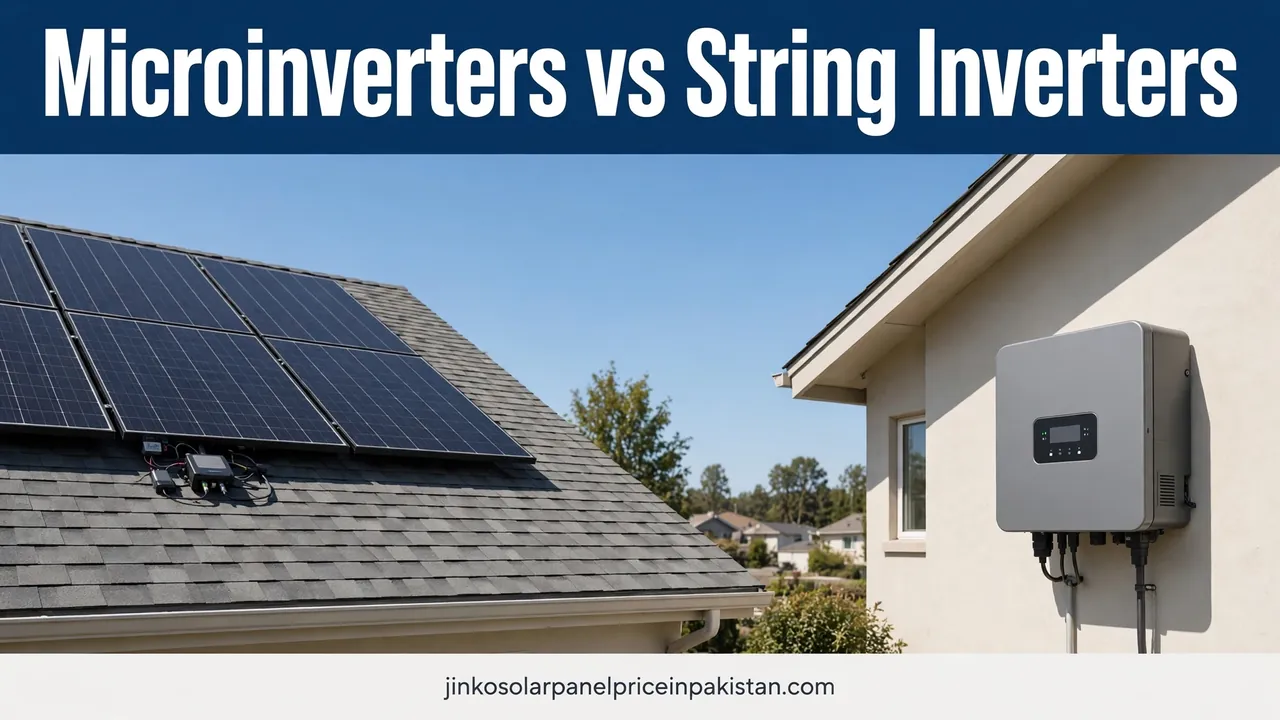
Microinverters are the better choice for shaded or complex roofs, while string inverters are usually the better choice for a simple, unshaded roof where every panel faces the same direction. The difference comes down to where DC power from your panels is converted into the AC power your home uses: a string inverter converts power for a whole group of panels at one central box, whereas a microinverter converts power at each individual panel. Neither design is universally better, so the right answer depends on your roof, your shading, and how much you value panel-level monitoring and easy expansion.
How a String Inverter Works
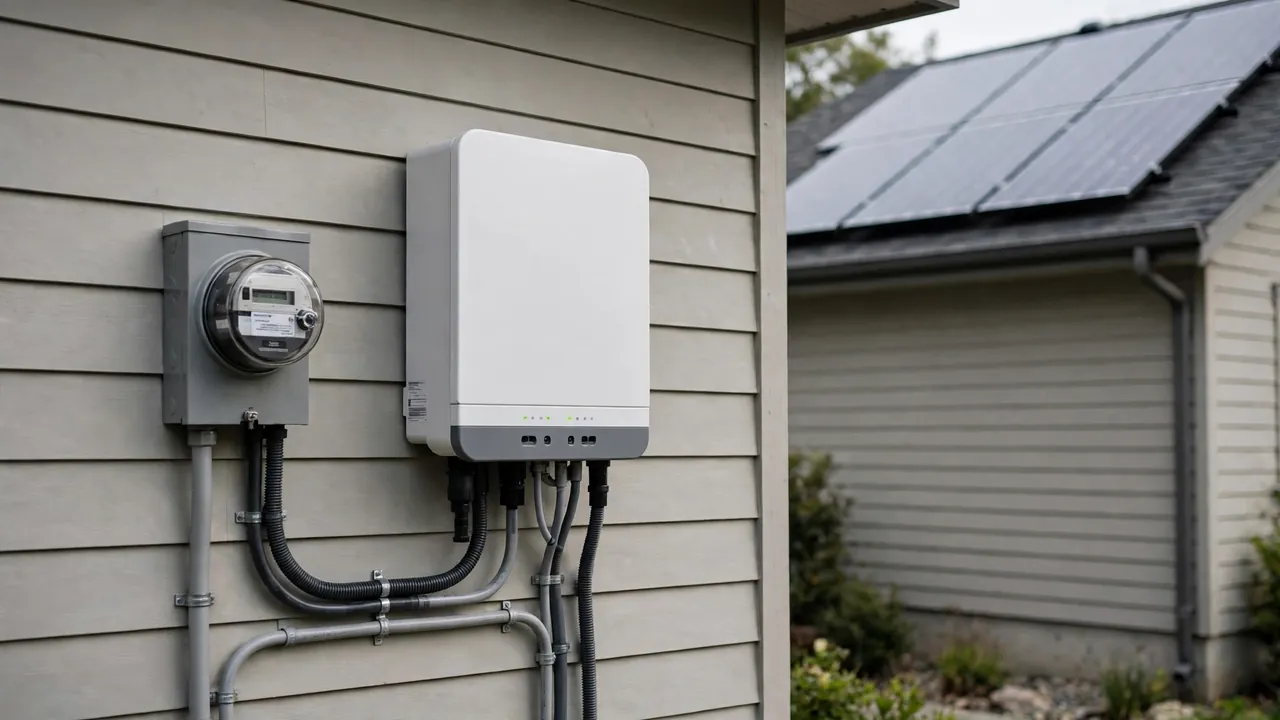
In a string inverter system, several solar panels are wired together in series to form a string, and one or more strings feed a single central inverter, usually mounted on a wall at ground level. That inverter converts the combined DC output of the whole string into AC power for your home. Because the panels in a string are electrically linked, the string tends to perform at the level of its weakest panel: if one panel is shaded, dirty, or underperforming, it can hold back the output of the other panels on the same string.
Modern string inverters often have more than one MPPT input, which lets different strings — for example, panels on two different roof faces — be tracked separately. That helps, but it does not give true panel-level independence. If you are still deciding between inverter types in general, our solar inverter buying guide for Pakistan explains types, sizing, and what to check before you buy.
How a Microinverter Works
A microinverter is a small inverter fitted at each panel, usually mounted on the racking behind the panel itself. Each microinverter converts the DC power of its own panel into AC power and tracks that panel’s maximum power point independently. Because of this, one shaded or faulty panel affects only its own output; the rest of the array keeps working at its own best level. This panel-level approach is why microinverters are classed as module-level power electronics, and it is the same idea explained in our guide to what MPPT means in solar inverters, applied to every panel instead of to a whole string.
The AC output from all the microinverters is combined and fed to your home’s electrical system. There is no single central inverter box, and there is no long high-voltage DC run from the roof to a wall-mounted unit. That changes how the system is serviced, how faults are found, and how the system can grow — all of which we compare below.
Microinverters vs String Inverters at a Glance
| Factor | String inverter | Microinverters |
|---|---|---|
| Where conversion happens | One central box for a whole string or array | At each panel |
| Shading effect | One weak panel can limit its string | Limited to the affected panel only |
| Roof layouts | Best with uniform orientation and tilt | Handles mixed orientations and split roofs well |
| Monitoring | System or string level as standard | Panel level as standard |
| Service access | One ground-level unit, easy to reach | Units on the roof, under the panels |
| Single point of failure | Yes — if the central unit stops, the array stops | No — one failed unit stops one panel |
| Expansion | Limited by the central unit’s capacity and string design | Add panels one at a time more easily |
| Upfront cost pattern | Typically lower for the inverter hardware | Typically higher, with one unit per panel |
Shading and Roof Layout: Where Microinverters Win
Shading is the clearest reason to choose microinverters. Chimneys, water tanks, neighbouring buildings, trees, and even a parapet wall can shade part of a roof for part of the day, and shade moves with the sun through the seasons. On a string system, that shaded panel drags its string down. On a microinverter system, only the shaded panel drops, and the rest keep producing normally. The same logic applies to roofs with panels facing east and west, or split across two levels: each panel is tracked on its own, so mixed orientations stop being a compromise.
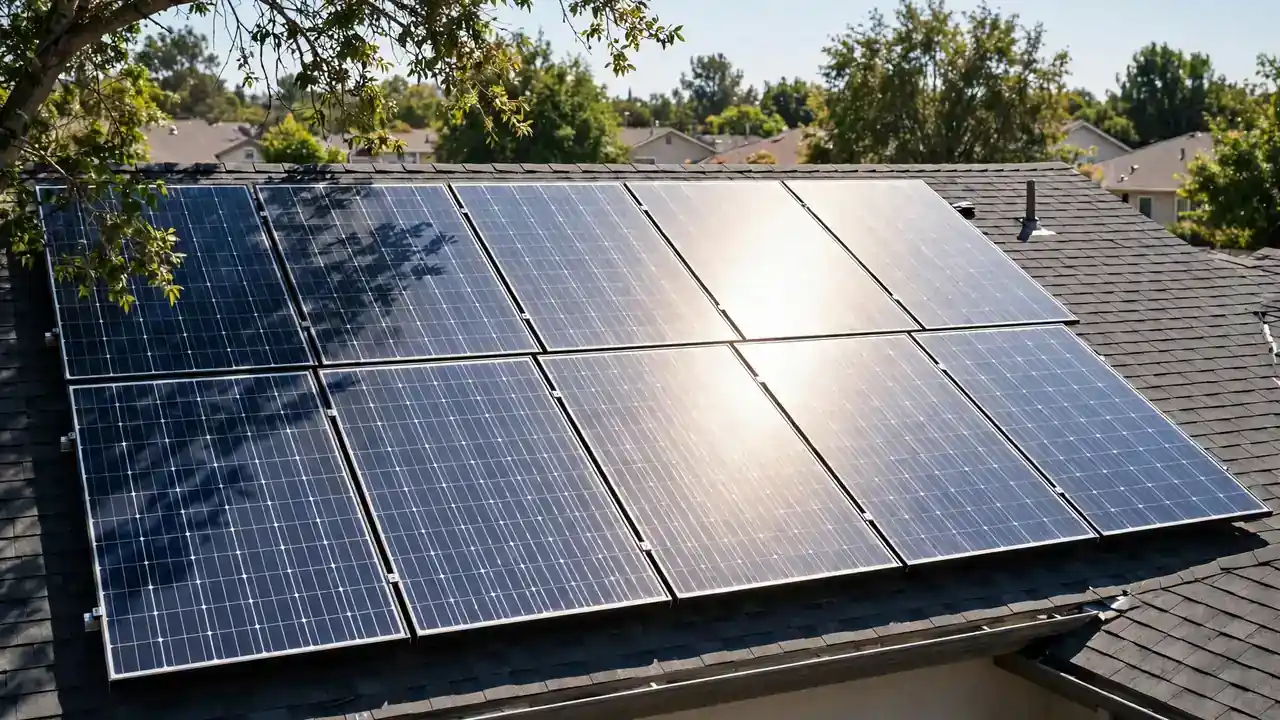
That said, not every roof needs panel-level conversion. A single, unshaded, south-facing roof plane with no obstructions is the ideal case for a string inverter, and many such systems perform very well. If your roof is simple, paying for a microinverter on every panel may buy little extra output. A shading check before installation matters either way — see the points in our solar inverter installation guide on planning the layout before any hardware is fixed.
Monitoring and Fault Finding
With microinverters, monitoring is panel by panel: you can see each panel’s output and spot a panel that has stopped, is dirty, or is underperforming compared with its neighbours. That makes diagnosis fast and specific. With a string inverter, monitoring usually shows the system or each string as a whole, so a single weak panel is harder to isolate without a roof visit and manual testing.
Panel-level monitoring is genuinely useful, but ask yourself whether you will use it. If you check your system regularly and want early warning of a fault, it is a strong advantage. If you are unlikely to open an app, the benefit is smaller. Either way, confirm before purchase what monitoring is included and whether it needs an internet connection or a gateway device.
Maintenance, Reliability and Service Access
Service access cuts the other way. A string inverter sits on a wall where a technician can reach it, test it, and replace it without going on the roof. A failed microinverter sits under a panel on the roof, so replacement means roof access, panel removal, and refitting — slower and more labour-intensive, even though only one panel is affected while you wait. The failure pattern is different too: a string inverter failure stops the whole array until it is fixed, while a microinverter failure stops a single panel and the rest of the system carries on.
Warranty terms also differ by design, and headline terms can mislead. Microinverters often carry longer headline warranty terms than a central string inverter, but the length of the term is not the whole story: check what the warranty covers, whether labour and roof access are included, who handles the claim, and how long a replacement is expected to take. Read the actual warranty document for the model you are quoted, not just the brochure headline, and keep the document with your system paperwork.
Expansion: Adding Panels Later
Microinverters make expansion simpler. Because each panel converts independently, you can usually add one or two panels later without redesigning strings or replacing a central inverter that has run out of capacity. With a string inverter, expansion depends on spare capacity in the existing unit, spare MPPT inputs, and string voltage rules — sometimes it is easy, sometimes it means a second inverter or a replacement. If you expect to add panels when your load grows, say so before the first installation, so the design leaves a sensible path open.
The same independence helps if a panel model is later discontinued and you add a different model: microinverters handle the mismatch panel by panel, whereas a string design may need careful matching to avoid the new panel limiting an old string.
Safety and Wiring Differences
A string system carries DC power from the roof down to the central inverter, so DC cabling, isolation, and protection need proper design and installation. A microinverter system converts to AC at the panel, so the roof-to-home run carries AC instead, and each panel can shut down at module level. That module-level shutdown behaviour is one reason microinverters are often discussed alongside rapid-shutdown and fire-safety requirements, though the exact rules that apply to your installation depend on local regulations and your installer’s design — ask your installer to explain which protections your quoted system includes, rather than assuming a feature from a brochure.
Whichever design you choose, installation quality matters more than the inverter label. Correct cable sizing, secure connections, proper earthing, and protection devices are what keep a system safe over its life.
Batteries and Hybrid Compatibility
Inverter architecture also affects battery choices, so do not decide on microinverters versus string inverters without thinking about storage. Many microinverter systems pair with AC-coupled batteries, while many hybrid string inverters integrate battery charging and backup operation in one central unit. The right pairing depends on whether you want backup power during outages, how much load you want to back up, and which battery products your installer supports. Our inverter and battery pairing guide explains how to match the two correctly, and our hybrid solar inverter guide covers the hybrid option in full. If backup during load shedding matters to you, compare the two routes on backup behaviour specifically, not just on daytime solar output.
Also confirm how each option behaves during a grid outage. Some systems shut down entirely when the grid goes down unless a backup-capable design is included. Do not assume backup capability from the words “hybrid” or “microinverter” alone — ask for the backup behaviour in writing for the exact configuration quoted.
Which Should You Choose? A Simple Decision Checklist
Choose microinverters if most of these apply: your roof has shading for part of the day; panels will face more than one direction; your roof is split across levels or has obstructions; you want panel-level monitoring and fault alerts; or you plan to add panels gradually over time.
Choose a string inverter if most of these apply: your roof is a single, unshaded plane with one orientation; you want the simplest service access at ground level; you prefer fewer electronic units on the roof; and your installer can confirm the string design handles your roof without compromise.
There is also a middle route worth knowing about: DC power optimizers. An optimizer sits at each panel like a microinverter, but instead of converting DC to AC at the panel, it conditions the panel’s DC output and sends it to a central string inverter for conversion. Optimizers give you panel-level shading and monitoring benefits while keeping the main conversion unit on the wall. They are a third option, not a variant of either side, and they deserve their own comparison if your installer proposes them — see EnergySage’s explainer on microinverters and how they compare with string inverters for an independent overview of all three approaches.
Questions to Ask Your Installer
- How much of my roof is shaded, and at what times of day and year?
- Will my panels face one direction or several, and how does each option handle that?
- What monitoring is included, and who watches it — me, the installer, or both?
- What exactly does the warranty cover, including labour and roof access for a failed unit?
- How would we add panels later, and what would that require under each option?
- How does each option work with batteries and with backup during a grid outage?
- What happens if the central unit fails, or if one microinverter fails — how much of the system stops, and for how long?
Take the answers in writing and compare like with like: the same panel layout, monitoring, and warranty terms. For help judging the inverter decision alongside system types, read our guide to choosing the right size inverter for your solar system and our on-grid vs off-grid vs hybrid inverter comparison.
Check Current Prices
Ready to see what a system costs today? Inverter and panel prices change with the market, so this guide deliberately keeps no price figures — for the latest, daily updated tables, visit the homepage, where current solar panel prices are updated every day.
Frequently Asked Questions (FAQs)
What is the difference between microinverters and string inverters?
A string inverter converts the DC power of a whole group of panels wired in series at one central box, while a microinverter converts the DC power of each individual panel at the panel itself. That is why one shaded panel can limit a string, but only affects its own output in a microinverter system.
Are microinverters better than string inverters?
It depends on your roof. Microinverters are usually better for shaded, split, or multi-direction roofs and for panel-level monitoring, while string inverters are usually better for a simple, unshaded roof where every panel faces the same direction. Neither design is better in every situation.
Do microinverters help with shading?
Yes. Because each panel is tracked and converted independently, shade on one panel reduces only that panel’s output. In a string system, a shaded panel can hold back the other panels on the same string, although modern string inverters with multiple MPPT inputs reduce this effect across different strings.
What happens if one microinverter fails?
Only the panel attached to that microinverter stops producing until it is replaced. The rest of the system keeps working. By contrast, if a central string inverter fails, the whole array it serves stops until the unit is repaired or replaced.
Are microinverters harder to maintain than string inverters?
Service access is harder, because a microinverter sits on the roof under its panel, while a string inverter sits on a wall at ground level. However, panel-level monitoring usually makes faults faster to find. Before buying, check whether the warranty covers labour and roof access for a replacement.
Can you expand a microinverter system later?
Yes, more easily than most string systems. Panels can usually be added one at a time without redesigning strings or replacing a central inverter, although the new panels still need to suit the existing system design and your installer’s plan. Tell your installer before the first installation if you expect to expand.
Do microinverters work with batteries?
Microinverter systems often pair with AC-coupled batteries, while many hybrid string inverters integrate battery charging and backup in one central unit. The right pairing depends on whether you want backup during outages and which battery products your installer supports, so compare backup behaviour in writing for each option.
What are DC power optimizers, and how do they fit in?
A DC power optimizer sits at each panel like a microinverter, but it only conditions the panel’s DC output and sends it to a central string inverter for conversion to AC. Optimizers offer panel-level shading and monitoring benefits while keeping the main inverter on the wall, making them a middle route between the two designs.
