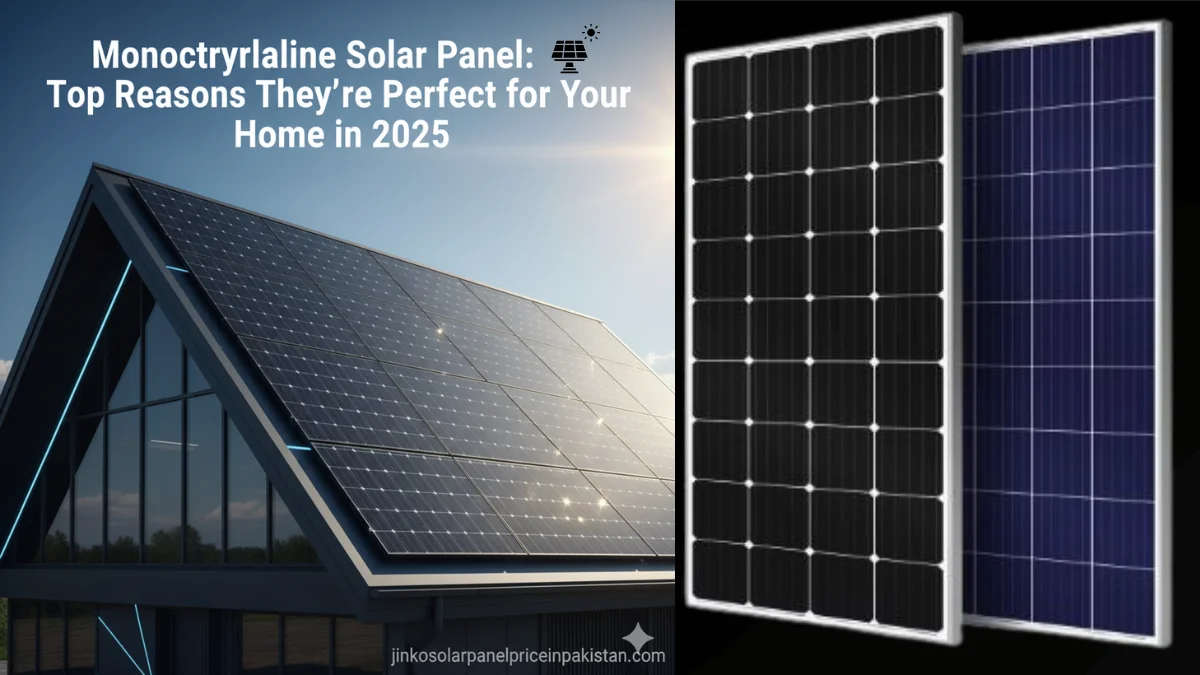
Monocrystalline Solar Panel: Top Reasons They’re Perfect for Your Home

Table of Contents
Table of Contents
Introduction – The Future of Home Energy
As energy costs continue to rise worldwide, millions of homeowners are turning to solar power for a reliable and cost-effective energy solution. Among all solar technologies available today, Monocrystalline Solar Panels have proven to be the most efficient, durable, and future-ready option.
Their ability to generate high power output from limited roof space, along with long-term reliability, makes them a top choice in countries across Asia, Europe, the Middle East, and North America.
Market Reality (2026): Solar panel prices are expected to rise due to new 18% GST on imported panels in Pakistan [Source: Pakistan Solar Market Report, March 2026].
📌 For the latest Jinko solar panel prices in Pakistan, 👉 click here to check updated rates
What Are Monocrystalline Solar Panels?
Monocrystalline Solar Panels are made from a single silicon crystal ingot, giving them a uniform black appearance and superior performance. This single-crystal structure allows the panel to convert sunlight into electricity more efficiently than other solar types.
Key Stats (2026):
- Efficiency rates: 20% to 23% for standard panels
- TOPCon & HJT panels: 24% to 25.6% efficiency [Source: NREL, April 2026]
- Market share: ~98% of global production (2024-2026) [Source: International Energy Agency]
Compared to polycrystalline and thin-film panels, monocrystalline offers better efficiency, longer life, and a premium look.
📌 Want to compare with other brands? Read our guide on 👉 Jinko N-Type vs P-Type Solar Panels
How Monocrystalline Solar Panels Work
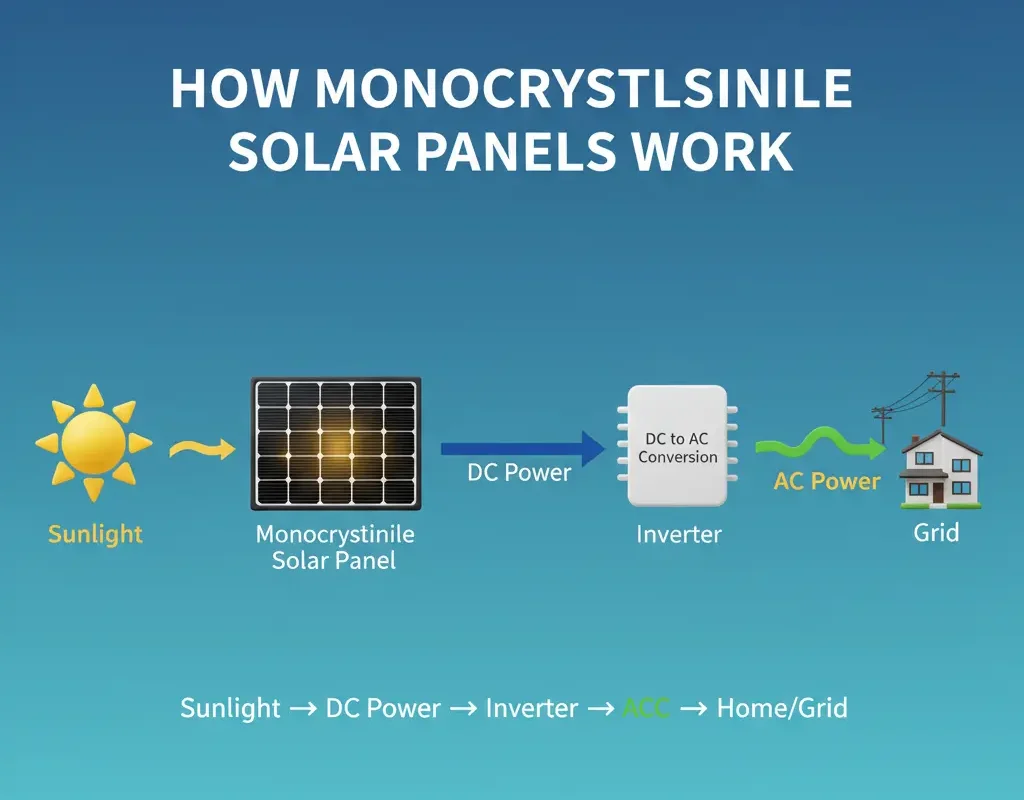
The working process of a Monocrystalline Solar Panel is based on the photovoltaic (PV) effect. When sunlight hits the surface of the panel, photons excite the electrons within the silicon cells, generating a direct current (DC).
These cells are made from thin wafers connected to form solar modules. The DC current is then converted into alternating current (AC) through an inverter, making it usable for household appliances.
Modern advancements pushing efficiency beyond 24%:
| Technology | Efficiency | Status (2026) |
|---|---|---|
| TOPCon | 24.5-25.5% | Commercially available |
| HJT | 24-25% | Commercially available |
| IBC | 24-25.5% | Premium segment |
| Perovskite-Tandem | 30.02% | Lab stage (EPFL Switzerland, March 2026) |
📌 Curious about future solar tech? Read 👉 Future of Solar Energy
Key Features Comparison: Choosing the Right Solar Technology
| Feature | Monocrystalline | Polycrystalline | Thin-Film |
|---|---|---|---|
| Efficiency | ⭐ 20–23% | ⭐ 16–18% | ⭐ 10–12% |
| Lifespan | 25–30 years | 20–25 years | 10–15 years |
| Appearance | Black | Blue | Matte Grey |
| Cost | Higher | Medium | Lower |
| Temperature Coefficient | -0.35%/°C | -0.40%/°C | -0.20%/°C |
This table clearly shows why Monocrystalline Solar Panels are the best choice for homeowners who want premium efficiency, modern aesthetics, and maximum long-term savings.
📌 See bifacial options: 👉 Bifacial Solar Panel Guide
The Benefits of Monocrystalline Solar Panels for Your Home
1️⃣ Superior Efficiency (20–23%) in Limited Space
Monocrystalline panels deliver the highest energy output per square meter, making them ideal for rooftops with limited space or high energy demand.
2026 Update: TOPCon technology now pushes efficiency to 25.6% for premium panels [Source: Trina Solar, Q1 2026].
2️⃣ 25+ Year Lifespan & Long-Term Reliability
Most panels last between 25 to 30 years with minimal degradation (average 0.5% per year). Manufacturers like Jinko Solar, Longi, Trina, and Canadian Solar back their products with long-term warranties.
📌 Check Jinko panel serial numbers: 👉 Jinko Solar Panel Serial Number Check
3️⃣ Excellent Performance in High Temperatures & Low Light
Thanks to their low temperature coefficient (-0.35%/°C), monocrystalline panels maintain high performance in hot climates and still produce up to 90% of rated power on cloudy days.
Example: At 45°C panel temperature (common in Pakistan summer):
- Monocrystalline loses ~7% efficiency
- Polycrystalline loses ~10% efficiency
4️⃣ Sleek, All-Black Aesthetic Design
The uniform black color gives them a sleek, premium look — perfect for modern homes, smart buildings, and green architecture.
5️⃣ Proven Technology with Reliable Warranty Support
With over 40 years of market history, Monocrystalline Solar Panels have consistently proven their reliability, making them a safe long-term investment.
6️⃣ Ideal for Net Metering & Hybrid Solar Systems
Monocrystalline panels integrate seamlessly with net metering, off-grid, and hybrid battery setups, allowing homeowners to store or sell excess energy efficiently.
📌 Best inverters for your system: 👉 Top 5 Best Hybrid Inverters
7️⃣ Cost vs ROI — The Long-Term Value
Although the initial investment is slightly higher, the return on investment (ROI) typically occurs within 3-5 years, after which homeowners enjoy free electricity for decades.
Updated ROI Calculation (Pakistan 2026):
- Average electricity rate: Rs 35-45/unit
- 5kW system cost: Rs 600,000-750,000
- Monthly savings: Rs 15,000-20,000
- Payback period: 3-4 years
📌 Calculate your exact needs: 👉 Calculate Solar Panel Load
How Many Solar Panels Are Needed to Power a Home?
Here’s a simple way to calculate how many Monocrystalline Solar Panels you need for your home:
Step-by-Step Formula:
| Step | Calculation |
|---|---|
| 1 | Find your monthly electricity usage (in kWh) |
| 2 | Multiply by 12 to get yearly usage |
| 3 | Divide by 1600 (average kWh produced by 1kW solar per year) |
Example:
If your home uses 600 kWh per month:
- 600 × 12 = 7,200 kWh per year
- 7,200 ÷ 1600 = 4.5 kW solar system needed
➡️ This means you’ll need approximately 12-15 Monocrystalline Panels (400W each) for an average family home.
Cost of Monocrystalline Solar Panels in 2026
| System Size | Average Global Price (USD) | Ideal For |
|---|---|---|
| 1kW | $750 – $1,000 | Small homes / backup |
| 3kW | $2,000 – $2,500 | Medium homes |
| 5kW | $3,200 – $4,000 | Family homes |
| 10kW | $6,000 – $7,500 | Villas / businesses |
💡 Note: These prices include panels, mounting, and inverter systems but may vary depending on region, taxes, import duties, and installation complexity.
Pakistan Specific (April 2026):
- 18% GST applied on imported solar panels [Source: FBR, March 2026]
- Prices expected to rise by Rs 3-5 per watt
📌 For the latest solar panel prices and updated market trends in Pakistan, visit 👉 JinkoSolarPanelPriceInPakistan.com
Latest Innovations in Monocrystalline Solar Technology (2026)
Solar technology is evolving rapidly, and 2026 brings several groundbreaking innovations:
| Technology | Efficiency | Commercial Status |
|---|---|---|
| TOPCon Cells | 24.5-25.5% | Widely available |
| HJT Technology | 24-25% | Growing market share |
| IBC Cells | 24-25.5% | Premium segment |
| Bifacial Panels | +10-15% yield | Available |
| Perovskite-Silicon Tandem | 30.02% | Lab stage (EPFL, 2026) |
Record Alert: In March 2026, EPFL Switzerland achieved 30.02% certified efficiency for triple-junction perovskite-silicon tandem cells [Source: EPFL News, March 2026].
📌 Read about advanced panels: 👉 Jinko Bifacial N-Type 585 Watt
Maintenance & Longevity Tips
To ensure your Monocrystalline Solar Panels last decades:
| Task | Frequency |
|---|---|
| Clean panels with soft water + microfiber cloth | Every 2 weeks |
| Avoid shading from trees, antennas, or nearby structures | Check monthly |
| Check wiring, inverter, and connections | Every 3 months |
| Schedule professional inspection | Annually |
Proper maintenance can extend your system’s lifespan and preserve efficiency beyond 25 years.
📌 Do you really need to clean them? 👉 Do I Need to Clean My Solar Panels?
Are Monocrystalline Solar Panels Worth It?
Absolutely! Monocrystalline Solar Panels offer the best balance of performance, aesthetics, and reliability among all solar technologies.
✅ Pros:
- Highest conversion efficiency (20-23%, up to 25.6% for TOPCon)
- Long lifespan (25-30 years)
- Works efficiently in all climates
- Sleek and modern appearance
- Low degradation rate (0.5% per year)
⚠️ Cons:
- Slightly higher upfront cost (10-20% more than polycrystalline)
However, given the durability, energy savings, and reduced carbon footprint, the investment pays off quickly and sustainably.
📌 Is solar worth it in Pakistan? 👉 Is Solar Panels Worth It?
Conclusion
If you’re looking for a premium, efficient, and future-proof solar energy solution, Monocrystalline Solar Panels are the ultimate choice for 2026 and beyond.
They provide unmatched efficiency, durability, and design appeal, ensuring long-term savings and energy independence for your home or business.
⚡ Note: Due to global market fluctuations, changing tax rates (18% GST in Pakistan), and material costs (like silicon and gold), solar panel prices may vary from time to time.
Start your solar journey today — and invest in a cleaner, smarter future!
📌 Get authorized distributor info: 👉 Authorized Solar Panel Distributor in Pakistan
H2: FAQs About Monocrystalline Solar Panels
Is the higher cost of monocrystalline panels justified?
Yes. Their superior efficiency, longer lifespan, and low maintenance make them a smart long-term investment. The 3-5 year payback period proves the value.
Do monocrystalline panels work on cloudy days?
Yes. They perform efficiently even in diffused or low-light conditions, producing up to 90% of rated power.
Can I mix monocrystalline and polycrystalline panels?
Technically yes, but it’s not recommended due to performance and voltage mismatches.
What kind of maintenance do they require?
Simple cleaning every 2 weeks and occasional professional inspection are enough to maintain efficiency.
What’s the payback period for a solar system in Pakistan?
Usually 3-5 years, depending on sunlight hours and local electricity rates (currently Rs 35-45/unit).
Are these panels suitable for businesses?
Yes, they’re widely used in commercial, industrial, and utility-scale projects.
What’s the difference between HJT and TOPCon?
HJT offers better temperature stability; TOPCon provides higher conversion efficiency (up to 25.6%).
Do I need a battery with my solar setup?
Only if you’re using an off-grid or hybrid system; otherwise, net metering works fine.
How much space does a 5kW system need?
Roughly 25-30 square meters depending on panel wattage (12-15 panels of 400W each).
Are monocrystalline panels environmentally friendly?
Yes, they reduce CO₂ emissions and support sustainable energy production. One 5kW system saves approximately 5-6 tons of CO₂ annually.

📌 Read more FAQs: 👉 FAQs – Solar Panel Guide
